


What exactly is the message the U.S. and the U.K. governments are communicating by issuing travel warnings in Ethiopia? On the surface, a travel warning is just that. But does it signify something deeper about U.S./U.K. perceptions of the political situation in the country? Is there a hidden message buried in the warnings?
A strike by judges in South Sudan has paralyzed operations in the Judiciary, adding to the misery of the country currently hit by a civil war. While supporting the peaceful industrial action, the Communist Party of South Sudan has called on the government resolve the strike, which threatens the rule of law.
Britain has always supported the idea of one indivisible Nigeria in its opposition to the Biafran people’s quest for self-determination. But the same Britain has no problem breaking away from the European Union after more than four decades. Or recognizing the right of the Scots to go their way after three centuries of their union.

A group of Nigerian citizens has expressed serious concern about the state of the nation, citing rising intolerance, violence and division. They call upon leaders at all levels and the people to confront the growing sense of uncertainty and fear by taking action to reassure all that there is a clear pathway to equity, unity and security in Africa’s most populous nation.
The judgment has been handed down on Helen Zille, leader of South Africa’s opposition Democratic Alliance, muzzling her from any party related communications in future. She said that colonialism wasn’t all bad. Her tweet was insensitive but true, the backlash furious and nonsensical. Why? I blame black guilt, which I understand very well, because I’m white.
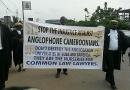
The crisis in Cameroon continues to fester without much international concern about serious human rights violations. With his close ties to France and his support for the American-led war against Boko Haram terrorism in the north of the country, President Paul Biya may ignore local pressure. But the conflict between the French-speaking and English-speaking parts of Cameroon will not simply vanish.
Shutting down and criminalizing use of the internet has become a weapon in the government’s cyber warfare strategy against the Ethiopian people, particularly the youth. The internet is making it exceedingly difficult for dictatorships to cling to power and rule tyrannically. It has created a walless, borderless, wireless, seamless, restless and fearless world.
The political climate remains fragile and the mentality of most opposition politicians hardly offers meaningful alternatives. This is possibly an explanation – but no excuse – for the undemocratic practices permeating almost every one of the region’s nations. Beyond multi-party systems with regular elections, they resemble very little of true democracies.
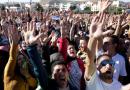
Often considered to be largely insulated from the unrest and upheaval brought about by the Arab Spring, Morocco is now facing mounting turmoil throughout the country. The methods inherited from colonization and currently used by the government are doing little to appease the basic demands of a population hungry for equal opportunities and social justice.
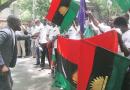
The Igbo cannot possibly be a part of the proposed new Nigeria, no matter how attractive the idea is made to look by its advocates. On 29 May 1966, the Igbo renounced forever their Nigerian citizenship. While wishing Nigeria and Nigerians well in their quest for a workable solution to their national problem, the Igbo have unequivocally opted for a separate Igbo identity and the separation of their territory from Nigeria.
Nigerian author Chido Onumah argues that Nigeria’s key problem is nationhood. Except for a popular revolution that would fundamentally change the country, restructuring is the best option. That way, the country will remain one in order to deal with other serious issues such as poverty. “And the restructuring we are pushing is not to divide the country along ethno-religious lines but to create a civic nation along the principles of federalism.”
The author’s recent trip to Cuba confirmed his confidence in the power of people to transform their lives. It is also clear that “the US government has not stopped its ceaseless attack on the Cuban Revolution and probably never will as long as the US possesses an imperialist system.” Nevertheless, every Cuban he spoke to “reiterated how the revolution remains non-negotiable.”

Without an iota of suspicion, a German national who fell in love with Kenya and embarked on a business venture there lost his marriage, was fleeced of his investments and could not get any help from the authorities. Last year, a stroke certainly related to these frustrations nearly sent him to the grave.
This week 26 years ago a new regime took power in Addis Ababa. The Tigrean People’s Liberation Front (TPLF) is listed as a global terrorist organization. Unsurprisingly, its scorecard in Ethiopia features endless famine, land grabs, violent repression, dictatorship and corruption – with the generous support of the US and its allies.
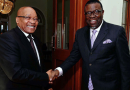
The ruling parties in the two countries have adjusted in different ways since taking power. SWAPO has entrenched its political dominance in all spheres of society since independence. The ANC is in decline and faces massive public protest and political opposition. In both cases the presidents have resorted to populism to pursue their agendas.

The notion of state capture is currently very topical in South Africa, in both popular and academic circles. According to the popular view, President Jacob Zuma, along with a number of senior civil servants, has been captured and is doing the bidding of a well-heeled expatriate Indian family, the Guptas. A more plausible explanation of the nature of this relationship is required.

Faced with a growing crisis, President Zuma has raised the prospect of a radical reorientation of the ANC and the possibility of radical economic transformation. Alarmed, another faction of the South Africa’s capitalist class has thrown its support behind the Zuma Must Fall movement. In this article Zimbabwean socialist Munyaradzi Gwisai unpicks the situation in South Africa. He explains that the working class and poor must avoid the dangers of both Zuma’s ‘fake left-turn’ and the Zuma Must Fall protests. What are the lessons, Gwisai asks, for South Africa from the movement that rose-up against Mugabe in Zimbabwe in the late 1990s?
Nigeria began to unravel 50 years ago, on 27 May 1967. Since then, successive governments have failed to forge a nation out of what was left behind by the British colonialists. Nigeria works for only a small part of the population. The rest are largely on their own. There have been calls – and attempts - to break up the country. But this is not feasible today. Nigeria needs to be restructured in a way that ensures the interests of all its people are given top priority.
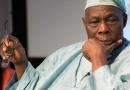
The Igbo genocide is the foundational genocide of post-(European)conquest Africa. It inaugurated Africa’s current age of pestilence. The genocide has been studied most expansively. Thus, to understand the politics of the genocide and the politics of the “post”-Igbo genocide is to have an invaluable insight into the salient features and constitutive indices of politics across Africa in the past 51 years.
Preparations are under way around the world for protests against the G20 summit in Hamburg, Germany, this July. Protesters will be resisting attempts to restrict civil liberties, criminalise protest and/or justify repression.The protests will include a congress, blockades, actions of mass civil disobedience and a big demonstration.