


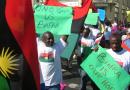
Britain has always supported the idea of one indivisible Nigeria in its opposition to the Biafran people’s quest for self-determination. But the same Britain has no problem breaking away from the European Union after more than four decades. Or recognizing the right of the Scots to go their way after three centuries of their union.

A group of Nigerian citizens has expressed serious concern about the state of the nation, citing rising intolerance, violence and division. They call upon leaders at all levels and the people to confront the growing sense of uncertainty and fear by taking action to reassure all that there is a clear pathway to equity, unity and security in Africa’s most populous nation.

The Igbo cannot possibly be a part of the proposed new Nigeria, no matter how attractive the idea is made to look by its advocates. On 29 May 1966, the Igbo renounced forever their Nigerian citizenship. While wishing Nigeria and Nigerians well in their quest for a workable solution to their national problem, the Igbo have unequivocally opted for a separate Igbo identity and the separation of their territory from Nigeria.
Nigerian author Chido Onumah argues that Nigeria’s key problem is nationhood. Except for a popular revolution that would fundamentally change the country, restructuring is the best option. That way, the country will remain one in order to deal with other serious issues such as poverty. “And the restructuring we are pushing is not to divide the country along ethno-religious lines but to create a civic nation along the principles of federalism.”