


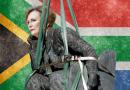
The judgment has been handed down on Helen Zille, leader of South Africa’s opposition Democratic Alliance, muzzling her from any party related communications in future. She said that colonialism wasn’t all bad. Her tweet was insensitive but true, the backlash furious and nonsensical. Why? I blame black guilt, which I understand very well, because I’m white.

Campaigns demanding the fall of something or someone have been a feature of the South African movements scene in recent times. How far have these campaigns succeeded in articulating and achieving their agendas? The author argues that fallism represents both continuity and discontinuity of the traditions of the historic liberation movements and emergent social movements in South Africa.
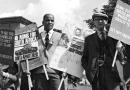
Monopoly capitalists and their allies in the ANC have corrupted something very precious in South Africa’s history – the proud and militant tradition of struggle for social justice. They have corrupted the dream of a free and egalitarian nation. For over two decades, the ANC has presided over entrenched corruption, which must now be resisted. But that struggle will constitute a whole new historical epoch.

Is there really no explanation for Khalid Masood’s lone attack on Westminster Palace, as Scotland Yard sleuths say? Masood could not change his “blackness”, nor the reality of racism in England. He could not get over his schoolmates calling him “Black Ade”. He laughed about it, and even as he grew up into manhood he behaved convivially, behaving like a “good boy”, so as not to appear rude.
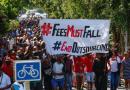
The South African student #FeesMustFall uprising at its peak has been largely single-issue driven – scrapping of tuition fees - rather than calling for systemic societal, political, social and economic change, and pushing for change of national leadership, as was the case in North Africa.

What are the lessons from Cuba in dealing with racism? Denial of racism is clearly not an option. Discouraging public discourse about it can not help either. Greater awareness is needed of the systemic nature, the multiple forms and the seeming invisibility of racism in institutions, social spaces and relations.

For South Africa to dismantle its colonial economic structures it will have to urgently address the knowledge and resources impasse. Through equitable distribution of wealth and resources, free decolonial education should be implemented to cater for the financially excluded Black majority now.
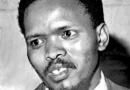
To think Black first is a revolutionary call to equip Black people with the necessary mental and practical capacity to liberate themselves from the bottom of society where white supremacy through slavery, colonialism and apartheid has condemned them. The legacy of Biko teaches that to think Black first is the means to end divisions among Black people and to forge a united front against white power.

South African colonial modernity fabulously benefited those who prosecuted cruel adventuring; their descendants still enjoy the ill-gotten social wages. 1994 didn’t usher a new society, so decolonisation remains an unfinished undertaking. A national project that rehabilitates and restores the full humanity of the victims of racism is an urgent necessity now.

Between September 2015 and January 2016, African-Brazilian activist Rafaela Araujo visited Azania/South Africa on a share/ study program. She was hosted by eBukhosini Solutions – a community-based company specialized in Afrikan centered education and youth/community empowerment. She spent most of her time studying English, getting to know the situation of Afrikan people in South Afrika and assisting in eBukhosini’s activities. She also undertook some speaking engagements in neighboring Namibia.