


Daley situates the young academic’s tragic death in the recent history of anti-Blackness and marketisation in UK higher education, amidst performative diversity and enduring white supremacy.
An incisive analysis that reveals how anti-immigration policies and the inhumane treatment of migrants are rooted in enduring colonial and imperial forms of violence that uproot people from their homes and deny them dignity, belonging, and recognition in societies that portray themselves as havens of freedom and opportunity.
A review of a book challenging selective restitution that sidelines Global Africa.

A review of Fitz's acclaimed book on Cuba’s Health Care System
Daley argues against the celebration of ‘aid pushers’ and their complicity with the said extractive capitalism that impoverishes the people they purport to save.

“Wherever Wode Maya goes, he unearths and retells African history.” Daley celebrates the practical and digital Pan African engagements of one of Africa’s social media sensation “Wode Maya”
Reparations Now! Daley makes a clarion call for reparations and reparative justice, redeeming it from neoliberal hijack and reductionism in some leftist circles. A timely contribution to the clarity and key answers required in the struggle for reparations.
Patricia Daley interrogates Black hate directed towards Black women, the attendant abuses and femicides, and its disservice to the full emancipation of Black people globally.

Patricia Daley discusses the strategic (re)production of disorder by the liberal world order in the global South over the past 80 years and its implications for worker solidarity

A critical analysis of the ideals and rhetoric of a Black African Woman who has ascended to the leadership of the UK's Conservative Party
President Nkurunziza, a former rebel leader, has run Burundi according to the only model he knows: an authoritarian, predatory and aid-dependent regime. But this week's coup against him must be condemned. The African Union and the continent’s leading nations must support Burundians to attain democracy.
Belinda Allan, who was a founding Director and Trustee of Fahamu, died in June this year at the age of 77. Belinda was a strong supporter of all the things that Fahamu stands for – social justice and human rights. Victoria Britain, in an obituary in the Guardian Newspaper (14 July 2013), refers to Belinda’s 'early days of Amnesty International, [as a co-founder in] the successful launching of refugee studies as an Oxford University discipline, to years of active support for Palestinians in Gaza, the West Bank and the grim camps in Lebanon’.
Belinda was unassuming in character, but had a strong presence in any audience, partly due to her commanding stature and colourful dress sense. Belinda resigned as a Director and Trustee in 2010, but remained a loyal friend of the charity, such that when Fahamu started to experience difficulties in 2012 and she discovered that her resignation had not been, as presumed, made official, she returned to support the organization, despite the diagnosis of a life threatening illness. During this difficult time she only wanted good news and was cheered whenever she was told about the determination of the staff to ensure the survival of Fahamu. Not all the current Fahamu staff had the chance to meet her, but those who did write about her generosity of spirit and her welcoming home.
Her support is sadly missed by all.
* Dr Patricia Daley is the Chairperson of Fahamu Board.

In the wake of London’s riots, Patricia Daley reflects on her teenage years growing up in Hackney, the long-term challenges presented by the riots and the hypocrisy behind elite pontificating in response: ‘How can we teach our children to respect human lives, property and their communities, if those with power do not set an example?’
Just as we must condemn homophobia and support ‘the rights of consenting individuals to privacy in their sexual relations’, we must also grant far greater attention to the sexual abuse of children, argues Patricia Daley.
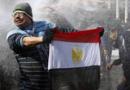
In the context of the popular uprisings in North Africa, Patricia Daley draws on the work of Nigerian scholar Claude Ake and asks how social justice scholars can operationalise the democratic principles he articulated.
The prominence of the Obama family has brought black people's humanity onto the world stage, writes Patricia Daley. The Obama family's success challenges patriarchal systems headed by white alpha-males and reveals possibilities of overcoming exclusion for non-white people across North and South America and Europe, Daley contends, albeit in the face of a backlash aimed at reinforcing white supremacy. But if struggles in the West over racial exclusivity can ultimately promote greater confidence from Africans and black people around the world, will there be a fresh impetus to challenge explicit and implicit claims of superiority?
Patricia Daley reviews Aernout Zevenbergen's 'Spots of a Leopard: on being a man in Africa' in this week's Pambazuka News. If the book suffers for the absence of non-violent male figures and an unclear focus towards its end, Zevenbergen's work successfully debunks myths and provides a springboard for discussion around the 'destructive effects of redundant traditionalism', Daley concludes.
In a comprehensive review of the latest global capitalist crisis and its consequences for African populations, Patricia Daley explores how greed has continued to hinder African educational opportunities and the realisation of a Walter Rodney-esque development rooted in personal freedom, well-being and security. With the hegemonic narratives of the West failing to improve the lot of the majority, Africans must return to creating their own narratives of development, central to which will prove the more effective use of technological change and the access to information offered by media outlets such as Pambazuka News.
Bob Geldof is only the latest in a long line of Europeans who have appointed themselves as spokespersons for Africans, writes Patricia Daley. With a distinct brand of humanitarianism they have acted to serve the demands of global capitalism, suppressing African voices and aiding the exploitation of the continent.
Bob Geldof’s rally against poverty in Africa seems to have incurred admiration from well-meaning whites and indifference or resentment from Africans. The questions the critics pose are: who gave this pop star the authority to speak for us; why does he represent Africa in such a one dimensional way? Can’t he and his supporters see the realities on the ground? Can’t he see that Africans want to speak for themselves? Geldof seems to believe that his mission is noble. To him and his supporters, the moral argument is clear: the West is rich, Africa is poor; the West has the means to help Africa out of poverty. The argument is so simple that only the easily cynical would seek to dispute it. Through his celebrity status Geldof hopes to mobilise western public opinion to put pressure on the leaders of the capitalist world to be more benevolent to Africa.
To understand the Geldof phenomenon, we need to look historically at the role that Africa has played in the European imagination and in global capitalism. Geldof’s crusade and attitude is not new. He is only the latest in a long line of European men whose personal mission has been to transform Africa and Africans. David Livingstone, the celebrity of his day, embarked on a similar crusade in the late 19th century, painting Africa as a land of ‘evil’, of hopelessness and of child-like humans. His mission was to raise money to pursue his personal ambitions.
‘Darkest Africa’ occupies a special place in the white man’s psyche; it remains a place where he [and she] can achieve heroic status. Therefore, does it not make sense that African voices are silenced? Michel Foucault’s treatise on the relationship between power and knowledge may be old hat in academia, but still relevant in the real world. Sir Bob would lose his authenticity and thus his power if he was to give space to the multiplicity of African voices; many of which would certainly challenge his stance.
It may seem amazing that in the twenty-first century, with increased mobility, greater communication and an African heading the United Nations that many westerners are more comfortable with European interlopers translating Africa for them. Perhaps, only then could some be persuaded, as one famous Irish comedian was, ‘to give money to those bloody niggers’. Africa remains the object of western desires not the subject of its own destiny.
Livingstone’s and Geldof’s humanitarianism fits well with the demands of global capitalism, serving to obscure distinct phases in the exploitation of Africa. Livingstone’s redemption of the African savage was very much tied to colonial conquest and exploitation of the continent’s resources; a mission that Livingstone supported in the marriage of commerce and Christian morality. The consequence for most of Africa was dispossession, forced labour, de-humanization, oppression and genocide, as in the Congo Free State.
Geldof’s Live Aid also occurred at a time when neo-liberal policies were being forced on recalcitrant African countries. The results are fully documented: collapse of health and education services, increased unemployment and privatization, leading to greater impoverishment of the masses. All this occurring while westerners bathe in the glory of their collective benevolence to the ‘lost continent’. Geldof was even rewarded for his chivalry with a knighthood.
How convenient for Live 8 - an upsurge of western popular goodwill - to occur at the same time as a new scramble for African resources? With the threat from China, Africa’s oil and other strategic minerals are even more critical to the continuance of western economic dominance. One just has to consider the significance of Africa’s resources in the west’s push for peace settlements in Sudan and the Democratic Republic of Congo.
It is beneficial to western capital for Africans to be seen as the architects of their own misery. Mugabe, thug as he is, is no worse, and certainly less so, than many other leaders in Africa’s post-colonial history, yet his vilification fits into the discourse of corruption and self-inflicted harm and justifies the prevailing view that Africans cannot be trusted with their own destiny. Racism is not often used in explanations of the west’s attitude towards Africa, yet it remains a fundamental component of the west’s interaction with Africans – nowhere is it more visible than in the diaspora. How can one claim to want to save a people, when one is complicit in the marginalization of their relatives? The irony has not been lost on Africans.
Geldof, like Livingstone before him, represents the cultural arm of global capitalism. The inequalities he rallies against are reproduced by the very capitalist system he supports. How many artists, fading or otherwise, would turn down the promotional opportunity of playing to an audience of the magnitude predicted for Live 8? In the cultural as well as in the development industry, African poverty serves as a vehicle for wealth creation.
Those people, whether on the right or the left, who are conversant with the realities of Africa, know that aid will not ‘save’ the continent and deliver the promised land; that the problem in Africa is not poverty but impoverishment and that Africa needs freedom not redemption. Africa’s creativity has to be released through true democracy and not the compromise of ‘good governance’ and western tutelage.
Livingstone’s and Geldof’s suppression of African voices, whether deliberately or inadvertently, aids the continued exploitation of the continent. Geldof has the capacity to transcend Livingstone’s shortcomings, if only he would listen to Africans and engage with issues of reparations and the politics of truth. He would certainly get more diaspora Africans among his London audience, despite their lack of appreciation for rock music.
After Live 8, when African resources are delivering wealth to western trans-nationals and African people suffer further degradation, be it wars, hunger or political oppression, they are likely to find little external support. After all, a whole generation of western civil society will say, “did they not receive debt relief?” “Are they so incompetent or corrupt that they could not make good use of our bountifulness?” In Africa, people will continue to live and die and a lutta continua…
* Dr Patricia Daley holds the posts of University lecturer in Human Geography, and Fellow and Tutor in Geography at Jesus College, Oxford. She is an African from Jamaica.
* Please send comments to