


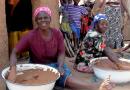
When Ghana attempted to restructure the women-dominated shea industry in line with foreign imposed structural adjustment programmes, the women protested. Since then, technological assistance and other initiatives by the government in collaboration with various knowledge institutions have enabled women shea producers to expand their professional knowledge and networks, and introduced them to new markets.
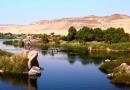
In Africa, water activism is characterized by building collective visions and sharing knowledge and experiences about the resource. But targeting state water policies and agitating for reform does not feature much in the objectives of trans-boundary water organizations. So, to what extent do civil organizations have the power to penetrate decision-making processes and ensure formulation of policies that prioritize the people?
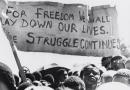
As long as societies are built on needless greed and exploitation, the seeds of revolution and radical change will always be present - more so in societies where the potential for dissent has not been emasculated by a lifeless, uncritical penchant for “order”, conformism and a culture of silence enforced by the most cynical, most advanced mechanisms and stratagems of power.
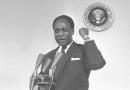
Africa needs a democratic revolution led by the working people. For that to happen, the united peoples of Africa must start their own socialist party whose primary goal is to take over state power from the neocolonial bourgeoisie and their imperialist allies. Once in power, the party must embark on a revolutionary programme of actualizing Africa’s unfinished liberation.
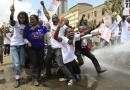
Often too reform-oriented, current activism is incapable of midwifing radical transformation. Today’s activism is only mildly disruptive, is fragmented and addresses symptoms not systems. Its aims are short-term and it doesn't engage the masses. No coherent and convincing alternative visions are proffered. Instead, activists are busy petitioning the same oppressive powers they should be fighting. Entrenched systemic oppression can only be ended by a revolution.
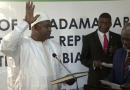
Without the courage and determination of the Gambian people, it is unimaginable that dictator Yahya Jammeh could have been forced out of power at the ballot box and into exile. The Gambia now does feel like quite a different country to the one many oppressed citizens always knew. No effort should be spared to consolidate the gains of democracy for the good of the people.

The role of the activist within Rwanda is extremely fraught as it involves balancing the desire and need to express oneself in order to build a better future for the country, while entering increasingly dangerous territory for even attempting to do so. Diane Rwigara’s bravery is a call to other activists within Rwanda to begin to assert themselves peacefully on their government, reminding it that they want to be heard, reminding it that they too are part of its developmental project.
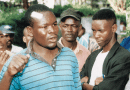
Student movements in many African countries have historically confronted contradictions of colonial and post-colonial rule. In Kenya, these movements sent generations of young people into the streets, underground, into exile or death. Isaac Otidi Amuke retraces heady years of involvement in student politics, and the rise and fall of arguably the most renowned activist at the University of Nairobi.
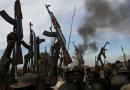
In the midst of a civil war in South Sudan, young artists are learning the art of building a social movement, claiming civic space and empowering youth to seize their destiny.
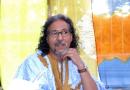
Morocco’s vociferous attempts to legitimise its occupation is the foundation of a duplicitous narrative it continues to propagate. Foreign journalists are often banned and censorship of the local press goes so far as to prohibit the printing of the name Western Sahara. This occupation is supported by the so-called leading world democracies such as the US and France. Saharawi cultural activists are fighting this oppression – with their words.
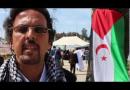
What does it mean to live under colonialism today? Despite numerous UN resolutions affirming the right to self-determination of the Saharawi people, Morocco with international support continues its illegal and atrocious occupation. From about the age of 14, Saharawi journalist and activist Malainin Lakhal has been fighting for his people’s liberation. In Nairobi this week, he told Pambazuka News editor Henry Makori his experience.
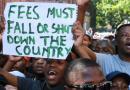
Campaigns demanding the fall of something or someone have been a feature of the South African movements scene in recent times. How far have these campaigns succeeded in articulating and achieving their agendas? The author argues that fallism represents both continuity and discontinuity of the traditions of the historic liberation movements and emergent social movements in South Africa.

African citizens, activists and organisations are finding new and innovative ways to resist, organise and mobilise in the face of mounting restrictions on their rights to freedom of expression, assembly and association.

The idea of Le Pen becoming president is a frightening prospect to millions in France and elsewhere. But voting for Macron can only mean accepting France as it is today, with all that many people find unacceptable, and in opposition to the interests of humanity. What is needed instead is to seek to use this situation and the turmoil that it is creating to begin to work for a revolution to topple French imperialism and support revolution everywhere.
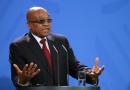
The continuity of corporate capture, of corruption, of the arrogance of state and executive power, of the demobilisation of the grassroots, is crucial to understanding what Zuma has done and will continue to do. And this rot did not start with the rise of Zuma to the throne. It is deeply rooted in the politics of the ruling ANC party post-apartheid.

Zuma shouldn’t be president, that’s obvious. But that he is the problem and that to replace him with Gordhan or Rhamaposa is the answer, is totally misguided. The problem reaches back to Zuma’s predecessors and to economic policy as a whole. Zuma is a symptom, not the cause.
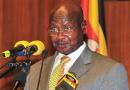
Typical of Africa’s big-man “liberators”, Yoweri Museveni is unlikely to handover power to another leader. He has reached a point where he believes he alone is qualified to rule Uganda. Contrary to his self-glorification, Museveni is not in power because Ugandans love him. Rather, he has carefully manipulated national politics to enable him to rule for life.
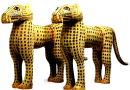
The idea of Europeans establishing in Benin City a permanent display of looted Benin artefacts that continue to be in European ownership should be considered by every African as an insult to Nigerians and African peoples. Successors to looters become arbiters of the location and display of Benin artefacts. The wishes of the Oba of Benin are simply ignored. The Benin artefacts should be returned to the Oba of Benin and his people who may decide to organize a display showing artefacts that were looted in 1897 by a violent British army.
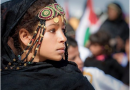
For more than 40 years, Morocco has forcefully and illegally occupied Western Sahara despite provisions of international law that recognize the country’s sovereignty. The suffering but resolute Saharawi people, especially the younger generation, are getting impatient with endless colonialism. African people and all who value human dignity and freedom must stand up in solidarity with Western Sahara by demanding an end to Moroccan occupation.

Frelimo has ruled Mozambique since independence in 1975. The party’s sense of entitlement raises obstacles in achieving reconciliation or compromise. The existence of Renamo as a potential threat convinces members of Frelimo to close ranks, while the party’s long tenure of power means that it can sustain its client base in a political system that has become increasingly patrimonial.