


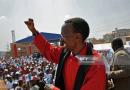
Rwandan dictator Paul Kagame will stage sham elections this week to keep himself in power for another term. He has already arranged to stay in office until 2034, if he chooses. Those who challenge the vote count often wind up dead, or in prison, like Victoire Ingabire – which is fine with Washington, Kagame’s major backer.

Kenya’s ethnic diversity is both a blessing and a curse. Whereas the diversity is a great heritage to celebrate, ethnicity has been used to create division for political ends. The country goes into elections on 8 August sharply divided along ethnic lines. Kenyan voters will do well in this election to elect leaders who are dedicated to serving the whole country, not sections of it.
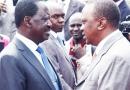
Given Kenya’s generally violent politics, next week’s election has raised considerable anxiety inside the country and throughout East Africa. A lot depends on whether the electoral body will deliver a free, fair and credible poll. Or Kenyans will be well advised to store up some Ugali – the national staple food – in case the post-election period stretches out before things are finally settled.

The proposed amendment of the Constitution is not only unjust; it raises questions of the democratic principle of separation of powers among the arms of government. Government (Executive) is arbitrarily seeking to overturn the decision of the Supreme Court (Judiciary) using its parliamentary majority (Legislature).
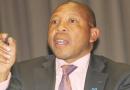
The new government of Lesotho has promised to tackle the scourge of corruption. But Basotho are familiar with such pledges that never translate into action. Political will is not enough to eliminate corruption where the vice is endemic, performs the basic function of maintaining political stability and is key to winning an election.
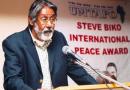
The crisis facing South Africa and the world today has its roots in: (1) the barbarism and injustices of market supremacism, racial supremacism and patriarchy; (2) the inadequacy of liberal democracy; (3) the excesses of commandist communism and vanguardist Marxism and (4) the failure of the dominant discourse to locate racism and patriarchy as much central to the problems we face as capitalism. The crisis can only be appropriately dealt with by appealing to the radical humanism of Socialism.
Gambians must not forget the atrocities committed by President Jammeh’s regime and demand that the perpetrators of crimes be brought to justice. The government of President Barrow should relentlessly pursue and reclaim all the ill-gotten wealth accumulated by Jammeh’s family and its cronies. Any call for unity, reconciliation and forgiveness will be meaningless without truth and justice.
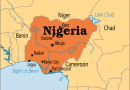
Breaking up Nigeria into several nations to solve its current problems, as some people suggest, will not work. The resulting chaos will be unimaginable, throwing much of West Africa into crisis. The better option is for all Nigerians to commit to work to build one Nigeria that works for all.
The call on Bukola Saraki, the senate president, to assume the position of acting president because the president and acting president were allegedly out of the country, was not only contrary to the provisions of the constitution but had all the elements of a coup d'état.

The economy is destroyed. Inflation is the highest in the world. Fertile land has been left fallow because the danger of a violent death has kept farmers from tilling their soil. Food is so scarce and food prices so high that onions are cut into quarters for sale in markets in Yei! South Sudan is in desperate need of leadership.
The South African Federation of Trade Unions turned down an invitation to the congress of the South African Communist Party. SACP is an ally of the ruling African National Congress. SAFTU says SACP is as guilty as the Jacob Zuma government in implementing a neoliberal programme that is anti-poor, anti-working class, pro-capitalist and anti-socialist.
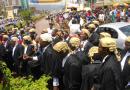
Lawyers should claim their place in society by espousing Pan-African ideals. They should stop defending and colluding with corrupt African elites. A remarkable example is Henry Sylvester Williams, the Trinidadian barrister who, together with other Pan-Africanists, organised the first Pan-African conference in London in 1900.

Betrayal of the liberation struggle by post-independent regimes and elites in many African countries is the reason I am making a clarion call to civil society, in particular my contemporaries, the youth, and the electorate to reconceptualise their thoughts about state governance and leadership. Corruption, cronyism, looting of the national purse, state capture and service delivery strikes are a stark reminder of this reality.

It was Michelangelo, the world famous sculptor, painter, architect and poet who once articulated that, “Every block of stone has a statue inside it and it is the task of the sculptor to discover it”. All it required was imagination. So, join me in a journey of imagination about South Africa.

It is not clear what genre the movie unfolding in the South African landscape falls under. Is it a thriller whose plot revolves around the heist of the political system? Or a horror movie, filled with macabre scenes of zombies feasting on the flesh of a dying state? No matter the genre, this is one movie guaranteed to keep South Africans glued to their screens.

The proposed formula contains appealing guidelines for initiating economic development in Africa, but it does not address long-term stability and protection from risks and global volatility. Risks are only understood as risks for the investors. Thus, this development strategy embraces the prevailing neoliberalism that re-enacts colonialism.
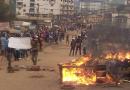
Cameroon is an Orwellian Animal Farm where the English-speaking minority is brutally subjugated by the Francophones. The Cameroon Anglophone Problem raises pertinent questions about shared governance, participatory democracy, national identity and language policy. But the 35-year-old dictatorship of Biya pays no attention to these questions.

The President of the United States of America has forcefully asserted the idea that only rich people can save society, a message that, till now, has been conveyed all too subtly. Society needed such a message in order to convince everyone of the great benevolence and moral uprightness of rich people.
Dismantling white monopoly capital in South Africa has always been central to the national liberation struggle. White monopoly capital simultaneously implies colonialism of a special type. The two concepts are inter-twined. To fail to mention the racial character of monopoly capital is to fail to acknowledge the colonial character of South Africa and the special nature of that colonialism.

One of the main issues around Lesotho’s general elections, including the recent poll of 3 June 2017, is the incredibly low voter turnout. Much of the commentary on this blames election fatigue, among other things. The 3 June general election was, for example, the third in five years. But, is there more to Lesotho’s voter apathy than election fatigue?