


corruption

In my other article, titled “Achebe versus Obasanjo, Danjuma and Agbese”, I argued that bad political leadership is primarily responsible for the failed state of Nigeria, not corruption as many would like us believe. The duty of this article is to present some of the generally approved qualities of good political leadership and apply them on Nigeria’s past and present presidents and heads of state to see if the findings corroborate this position. It may also assist us to understand why Nigeria has remained underdeveloped since 1960 despite the huge resources available for its development.
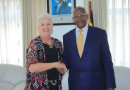
The meeting between US ambassador to Uganda Debra Malac with Uganda's disgraced Minister for Foreign Affairs Sam Kutesa on 19 January 2018 demonstrated that the value of Uganda’s cooperation in furthering American foreign policy and corporate interests clearly outweighs any embarrassment caused by Kutesa’s alleged incontinence.

It has always been a source of pride that one of the principal factors underlying Somaliland’s success in achieving reconciliation, peace and the establishment of an indigenous democracy was the integrity, basic honesty and national commitment of its leaders. But during the last seven years, this record of largely clean and open governance has surrendered to a culture of greed, nepotism and rampant corruption.

Betrayal of the liberation struggle by post-independent regimes and elites in many African countries is the reason I am making a clarion call to civil society, in particular my contemporaries, the youth, and the electorate to reconceptualise their thoughts about state governance and leadership. Corruption, cronyism, looting of the national purse, state capture and service delivery strikes are a stark reminder of this reality.
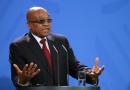
The continuity of corporate capture, of corruption, of the arrogance of state and executive power, of the demobilisation of the grassroots, is crucial to understanding what Zuma has done and will continue to do. And this rot did not start with the rise of Zuma to the throne. It is deeply rooted in the politics of the ruling ANC party post-apartheid.
Given the corruption and exploitation by the top dogs within the factions of the ruling ANC, it is clear that none of the factions has anything to offer the working people of South Africa. Instead of backing one faction over the other, the working class (and the black section in particular) rather needs to fight against class rule, capitalism and the state. That is the system that is rotten to the core.
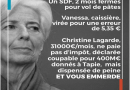
While the IMF loudly boasts “good governance” and demands the highest standards of discipline from states that it puts into debt with adjustment plans, Christine Lagarde endorses the theft of 403 million Euros of public money and emerges with a clean record, an improved image and remains at the head of one of the most powerful financial institutions in the world.

The attempts to President Buhari’s nominee for anti-corruption chief, Ibrahim Magu has nothing to do with Magu being unsuitable for job. This is a grand scheme of a formidable network of highly placed crooks inside and outside government who are hell-bent on stopping Magu, given the rare vigour and impetus he has introduced to the anti-corruption crusade. Buhari should resubmit Magu’s name to the Senate for confirmation.

The wild celebrations in honour of top-level thief James Ibori's release from prison, though detestable, are quite understandable. Nigerians seem not to be in agreement on what constitutes corruption or who a corrupt person is. What one Nigerian sees as corruption, another sees as a "blessing from God".

The golden era of Nigeria’s civil society featured names such as Wole Soyinka, Alao Aka-Bashorun, Gani Fawehinmi, Beko Ransome-Kuti, Olisa Agbakoba, Femi Falana, Baba Omojola, Comrade Ola Oni, Ayo Obe, Dr. Segun Osoba, Idowu Awopetu, Clement Nwankwo, Frank Kokori, Chidi Odinkalu, Abdul Oroh, Richard Akinnola…But today things are sadly different.
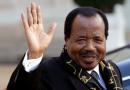
President Biya does not live in Cameroon and, therefore, does not know Cameroonians. The absentee landlord spends several months in Europe with no specific agenda in mind. Once back home, he retires to his million-dollar castle to play golf and drink champagne. Biya’s inept governance has brought Cameroon to its knees. Cameroonians should rise up and replace him.

Since assuming office on May 29, 2015, President Buhari has lived up to his campaign promise of tackling corruption headlong and providing a fresh template for instilling transparency and accountability. Nigeria could be a model for fighting this monster that gobbles up some $2.6 trillion annually from the global economy.
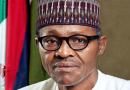
Nigeria is gripped by the familiar anxieties of an economy in distress. This escalating crisis has demystified a president once thought capable of astute, if not magical, economic management. In their desperation for respite, many Nigerians are now paradoxically yearning for the corruption that they and their leaders blame for their economic woes.

The author refreshingly re-engages with the public discourse, rumours, gossips and local idioms of corruption in her native Liberia in a way that strips it of its taken-for-grantedness in popular discourse, and subjects it to a much more rigorous analysis. The book expands the focus of corruption to interrogate its embeddedness in social life and routine forms.

Isn’t it the height of hypocrisy for a British politician to label Nigeria as fantastically corrupt? Britain built its economy on the wealth looted from colonies such as Nigeria. Today, British politicians collude with their thieving Nigerian counterparts to spirit away money that is then invested in London and other Western cities. Cameron’s neo-colonial moralism fools no one.

In South Africa, over $60 million was lost through a well-orchestrated fraud from the mineworkers’ death benefits pool. 46,000 widows and orphans lost their benefits in this fraud revealed in the Panama Papers. Can you I imagine the pain of a widow going to claim her husband’s death benefits only to find it all gone? Imagine that this widow has four children and no real source of income. We must resist!
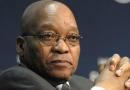
On Friday, 8 April 2016, activists across Africa who call themselves “Africa’s future” published an open letter to South African President Jacob Zuma. They believe he no longer has moral authority and are calling for him to resign.

The leak once again reveals how states collude with private interests to protect the criminality of the powerful. Or how could journalists uncover the Panama Papers while states which carry on surveillance on millions of people, listen to billions of phone calls and read billions of e-mails were apparently unaware of the underhand dealings?
If the South African political economy continues to be ‘privatised’ by large business, it will weaken the state through corruption and cronyism and undermine good governance and the rule of law. It will systematically deter new private investment, both foreign and domestic, and create obstacles to small and medium-sized enterprises, the backbone of any competitive economy.