



How does a man whose close and immediate family are designated by neo-Nazis as filth and the dregs of humanity then fail to condemn, without equivocation or excuses, such racism? Trump is either ignorant of history, or is so enarmoured by the idea of White supremacy, that he fails to comprehend that the ideas enacted under Hitler being regurgitated in the US in 2017 by persons who see him as President and being equivalently praiseworthy as Hitler is an affront and not a compliment.
Nation building is a serious business that requires clarity of vision and self-sacrifice, preparing the grounds for succeeding generations to prosper. It is not the prestige and grandeur of office that facilitates development and progress but the due attendance to the responsibilities of office.
Since independence 53 years ago, Kenya has had four presidents – three of them from one ethnic community. Control of state power has ensured that the Kikuyu and related groups have benefited from national wealth far more than other communities. Recently, economist Dr. David Ndii sensationally called on those communities that feel excluded to secede.
Attempts to foster a Black capitalist class in South Africa in co-operation with white capital have failed spectacularly. The price that white capital extracted for their co-operation was a neoliberal state that trapped the Black working class and poor in unemployment, inequality, poverty and gender based violence inherited from Apartheid and made worse.
From commemorating Rwanda’s dubious Liberation Day to applauding Paul Kagame’s questionable landslide election victory, Canada’s High Commissioner in Kigali has provided various forms of ideological support to Africa’s most ruthless dictator. That should embarrass everyone who wants Canada to be a force for good in the world.
The Igbo now dictate the terms of their freedom from Nigeria. They have acquired this pivotal status, in the past 24 months, it should be stressed, without firing a shot – either in defence or offence. They insist on a referendum to democratically secure the next crucial phase of the process.
Nigerian President Muhammadu Buhari returned to the country this week after spending more than three months in the United Kingdom being treated for an undisclosed illness. His short, pre-recorded speech upon arrival did little to address the many concerns of the Nigerian people at this time - at least according to this author.

It has always been a source of pride that one of the principal factors underlying Somaliland’s success in achieving reconciliation, peace and the establishment of an indigenous democracy was the integrity, basic honesty and national commitment of its leaders. But during the last seven years, this record of largely clean and open governance has surrendered to a culture of greed, nepotism and rampant corruption.
Kenyan political elites are using the mechanism of the election to cloak their authoritarianism in democratic credibility and shield themselves from international suspicion. The vote, so essential to popular participation and self-government, has become a critical component for a new electoral authoritarianism.
Over the last 38 years, particularly since the end of the civil war in 2002, President Dos Santos has ruled Angola through securitisation of the society, repressing all dissent and restricting freedom of expression, association and assembly. Will space for civil participation open up after one of Africa’s longest serving rulers leaves power following elections this week?

Americans must acknowledge the scourge of open and concealed racism whose ugly face appears in the form of Charlottesville, hundreds of thousands of black people and other minorities languishing in incarceration, police brutality, discrimination against minorities, as well as diseases rampant in impoverished communities at the bottom of America’s social, economic and political pyramid.
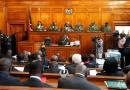
The book ploughs through the complex issues relating judicial struggles over sexual and gender-based discrimination, social justice and poverty and the adjudication of presidential elections in East Africa.
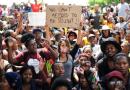
The urgent need for South Africa’s rehabilitation may only begin with a united voice of the people that speaks and acts on behalf of all who live in the country and gives the highest priority to the elimination of a political regime that has gone rogue. As former minister of finance, Pravin Gordhan, said, “We did during apartheid, we can do it again”.
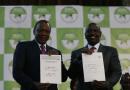
What is now being praised as a “peaceful” election was in fact the connivance of racist global capital against the Kenyan people. The so-called victory of Uhuru Kenyatta is a victory of private business. Kenyans should expect the collapse of public institutions in the next few years and increased militarization to keep the people in perpetual fear.
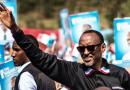
Rwanda’s sole hero Paul Kagame “won” the 4 August election by 99%. Emboldened by his Western benefactors and cheerleaders, Kagame rules with reckless intransigence and impunity. He has conveniently forgotten that the civil wars of 1959 and 1990s were about the exclusion of whole ethnic groups from state power. The dream of freedom and peace remains distant for Rwandans.
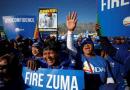
Indicative was the debate preceding the vote: not a single speaker spoke in defense of President Zuma, who after all is also the party leader. The opposition was eager to explain that the motion was not about removing the ANC from government, but Zuma from presidency. In contrast, those taking the floor for the ANC, appealed to members to protect the government from regime change and not abandon the party loyalty.
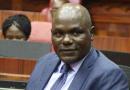
Kenya’s election this year amounts to nothing less than a coup by the incumbent, Uhuru Kenyatta. Every effort was made to infiltrate and control the electoral body. The heavy security preparations and the deluge of peace messages suggest that the outcome was already predetermined and the people’s resistance anticipated.
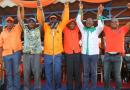
Kenyans, like other citizens elsewhere in Africa, demand and hope for “free and fair” elections. But the key issue is that Kenya is still a neo-colony. In these circumstances elections, whatever the outcome, will not fundamentally change the material conditions of life the people. The struggle against neocolonialism must continue.
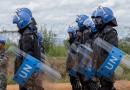
Schulenburg has provided a blueprint that is both original and far more attractive and coherent than any of the recommendations of the many reviews of peacekeeping authorised by the UN Secretariat for the past 15 to 20 years.
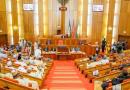
Nigeria’s historic problem of failed nation-building cannot be cured by merely amending the flawed constitution handed down by the military in 1999. The exercise is futile. What the country needs is a national Constituent Assembly to draw up a new constitution restructuring Nigeria, which then should be put to a referendum.