


Durban Never Reached the Jubba River
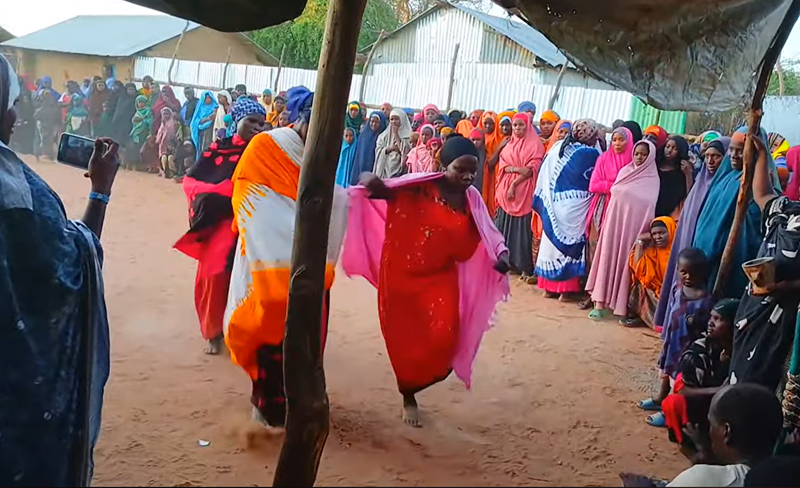

Twenty-five years after Durban, Somalia's Jareerweyne minority is still paying for an unrecognised nineteenth-century slave trade — in its courts, marriages, and prisons. Abukar calls Pan Africanists to look inwards, including Somalia's forgotten slave trade and the need to expand reparative justice to such communities.
In December 2025, police in Jowhar, Somalia, arrested journalist Sharif Shuriye Hashi at his home. His crime: marrying a woman from a different clan. Sharif belongs to the Jareerweyne, a Bantu minority community in southern Somalia. His wife, Hamdi Muse Digow, comes from the Hawiye/Hawadle clan. The two had been together for ten years before their nikah — the Islamic marriage ceremony — in Jowhar on September 25, 2025. Police beat Sharif and bound him with a rope during the arrest, then denied him medical care for his injuries.[1] Hamdi was arrested too. She later said the couple were detained "due to pressure from her clan." The official charge was that their marriage was "illegitimate." The deputy police commander who led the arrest belongs to the same clan as Hamdi's family.[2]
The couple was arraigned before the Jowhar District Court on December 13, 2025. The sheikh — the Islamic cleric — who had performed their nikah initially confirmed it to the court, then recanted; a clan-elder mediation the same day failed to resolve the dispute, with Hamdi's family reportedly insisting that marriage into the Bantu community "was unacceptable." By December 15, the case had reached a third day of hearings before regional prosecutors went on leave, stalling the process until January 2026.[3][4][5] The Somali Journalists Syndicate's secretary general urged the international partners who fund Somali policing to scrutinize whether their support was enabling the abuse.[6] No further public update on the case has surfaced since — as of this writing, Sharif and Hamdi's marriage has been contested in Somali courts for the better part of a year.
This year marks twenty-five years since the World Conference Against Racism in Durban declared the transatlantic slave trade a crime against humanity.[7] In 2026, the UN General Assembly went further, naming the racialised chattel enslavement of Africans the gravest crime against humanity.[8] Both reckonings focus on the Atlantic. Neither of them has reached the Jubba River, where a separate history of enslavement produced a minority population Somalia’s institutions still treat as disposable.
The Trade Durban Never Named
The Jareerweyne — also called Bantu or Jareer — are documented by the EU Agency for Asylum and Minority Rights Group International as descendants of people captured in what is now Malawi, Tanzania and Zimbabwe. Traders brought them into Somalia through the nineteenth-century Arab slave trade.[9] Somali scholar Mohamed Eno has traced how their distinct Bantu ancestry — physically and ethnically different from Somalia's Cushitic-descended majority — became the basis for a racialised system of exclusion that persists today.[10] They were put to work, unpaid, on plantations along the Shabelle and Jubba rivers, growing sorghum and sesame for export.[11] Slavery in southern Somalia was not formally abolished until 1903, under Italian colonial administration. Even after abolition, freed people who stayed in the areas where they had been enslaved often continued working for their former owners in conditions that barely changed.[12]
That history did not end with abolition. It calcified into a caste position inside the Somali clan system. Jareerweyne communities were incorporated into that system not as members but as subordinates — bound to "patron" clans through a customary arrangement that supplied protection in name only.[13] The Durban Declaration and Programme of Action recognised slavery and the slave trade as crimes against humanity and called for reparative justice. Due to the global scale, however, the discourse it produced has centred almost entirely on transatlantic trade. The East African trade that built Somalia's plantation economy has no comparable place in that reckoning. Neither does the minority population still living with its consequences — not inside Somalia, not beyond it.
Two Systems, One Goal
Since 2016, the Organization for Prisoners' Rights (OPR) has documented a pattern in Somalia's justice system:[14] when a majority-clan member — someone from one of Somalia's four dominant clan families — commits a crime, investigators often do not pursue them. Instead, they find someone without clan protection to blame.
Sharafow Garaara Gedi is a concrete example. On December 23, 2013, he was arrested in Mogadishu after a passenger reportedly fell from the bus he was driving; the man had not, in fact, died. The court never investigated the claim of death. It simply accepted the family's word and sentenced Sharafow, on January 18, 2014, to six months in prison plus compensation — known under Somali customary law as diya — to the family. Sharafow had no money for diya, and no clan to pay on his behalf or challenge the case. When the court could not locate the family to deliver the payment, he remained imprisoned regardless. A six-month sentence became thirteen years, on an incomplete file, for a death that had never occurred.[15]
OPR investigated Sharafow's case directly. Investigators traced the alleged victim's family and found his uncle, who admitted the family had fabricated the story to extract compensation from a man with no clan to protect him — the victim was alive and had never been injured. OPR presented these findings to the authorities, and a campaign led by fellow prisoner Maxamed Bulbul helped secure his release on March 11, 2026; in footage recorded by Universal Somali TV that day, Sharafow himself credited Bulbul with winning his freedom.[16] He was twenty-one years old when arrested; he is now thirty-four. Following his release, he reported that he had lost his father, his mother, and his only son while incarcerated.[17]
He is not alone. Mohamed Jeylani received a thirteen-year sentence after a civilian snatched his firearm at a checkpoint near the KM4 intersection in Mogadishu and used it to kill another civilian.[18] Jeylani, who belongs to a minority group, was convicted of complicity, while the person who actually fired the shot was never prosecuted. Hussein Ahmadey was tortured for several days after being accused, without evidence, of impregnating his employer's daughter; he never confessed, and was convicted of rape anyway, with no DNA, no physical evidence, and no legal representation.[19] An engineer, Mohamed Haji Osman, who renovated a district administration building in Mogadishu was never paid by the police commissioner who had commissioned the work;[20] when he tried to recover payment, the commissioner had him detained. As of OPR's April 2026 report, he had been held for two years, with no charges filed and no process initiated.[21]
The pattern is structural. When a majority-clan member commits a crime, investigators can pursue them — risky, since the clan will demand compensation — or find someone without clan protection to blame instead. Minorities have no militia and no clan elders to negotiate for them. They are the easiest targets. The same logic made their ancestors available for sale a century and a half ago: people without kin-based power are property for whoever holds power to use.
This targeting does not stop at the courtroom door. Ahmed Dawlo was beaten, doused in petrol and set alight in his garage in the Mogadishu suburb of Yaqshid in 2018. His crime was helping his nephew, a Jareerweyne man, marry a woman from another Somali clan. The bride's family opposed the marriage and suspected Dawlo of hiding the couple during their honeymoon; they were behind the attack.[22] The government, religious leaders and civil society all condemned the killing. No one was ever convicted for it. A family with enough power does not need a law to enforce the same prohibition that undergirded the old plantation order. Sharif Shuriye Hashi's arrest borrowed that same logic and gave it a government stamp, criminalising his marriage as "illegitimate."
The pattern reaches even the community's rare success story. Sheegow Ahmed Ali, a Jareerweyne man who defected from al-Shabaab, rose to become one of the only Bantu generals in the Somali armed forces.[23] In late 2023, he returned from exile to support Operation Black Lion, the government's campaign to retake Bantu homelands from al-Shabaab.[24] A clash between his team and police left four people dead; a military court convicted him and sentenced him to ten years.[25] Analysts have noted that assembling an armed following is common practice among senior commanders from major clans, who face no such consequences.[26] Many in the Bantu community dispute the circumstances of his prosecution.[27] Sheegow died in April 2025 while serving his sentence, at Digfeer Hospital in Mogadishu; his family rejected rumours that he was poisoned.[28]
Why Sovereignty Without Reckoning Fails
Somalia's government is organised along clan lines by design. Since 2000, seats in the Federal Parliament have been allocated under the "4.5 formula": the four major clans — Hawiye, Darod, Dir, and Rahanweyn — each receive an equal share of seats, while every minority combined, including the Jareerweyne, shares a single half-share.[29] Of the 275 seats in the House of the People, 61 go to each major clan. Minorities share 31.[30] The Senate offers no comparable quota at all. Its 54 seats are allocated to federal member states rather than clan blocs, but those states are themselves dominated by major clans; minorities typically hold one Senate seat nationwide.[31]
Neither of Somalia's constitutions — the 2012 provisional constitution or its 2026 replacement — has closed this gap. In 2010, Minority Rights Group demanded that the constitution then being drafted "recognize the country's minorities and guarantee their right to non-discrimination," at a time when Somalia's transitional charter made no mention of minorities.[32] The new constitution, signed into law on March 8, 2026, overhauled the electoral system and extended presidential terms. Reporting on its contents describes no new protection for minorities either.[33]
Customary law does not close the gap either. Xeer, the network of clan treaties that governs blood-compensation and dispute resolution, runs between clans that can each back a claim with force. Minority clans, historically disarmed, hold no such treaties with the four major clans — only the one-sided "patron" arrangement described above. Research on Somalia's customary courts confirms minority clans have been "historically and systematically excluded from the decision-making process" of Xeer.[34] The EU Agency for Asylum similarly found minorities "lacking effective access to either customary or statutory justice mechanisms" in Somalia.[35] That absence is why Sharafow, thirteen years into a false diya claim, had no clan of his own to negotiate on his behalf.
Ministers, judges, and senior officials come overwhelmingly from the four major clans. A judge from a major clan cannot fairly try a case implicating a fellow clan member. A prosecutor from that clan cannot pursue a case against it without personal risk. The 2017 draft Penal Code has been stalled for nine years. A Sexual Offences Bill remains in debate. International donors keep funding legal reform projects that never reach the villages where minorities are beaten for marrying outside their clan, nor the police stations where confessions are extracted through torture.[36]
This is not simply institutional weakness. Donor-funded reform programmes are built around Western benchmarks of rule-of-law and treat Somalia's exclusion of the Jareerweyne as a governance gap. It is not a governance gap. It is unfinished business from an internal slave economy that the post-colonial, post-conflict state inherited and never dismantled. The benchmarking is itself part of the problem: it measures Somalia against imported standards of institutional capacity while leaving the actual hierarchy — the judges, police and elders who still benefit from it — outside the metric altogether. No amount of externally financed legal drafting reaches a system donor benchmarks were never designed to see. Without an honest domestic reckoning with that history, sovereignty just reproduces the same hierarchy under new institutional names.
What Accountability Actually Looks Like
When Sharafow was imprisoned for more than a decade, no court reviewed his case and no state institution investigated the fraud that put him there. The system worked exactly as designed. What eventually freed him was not government accountability but something built outside government: investigation to document the case with the rigour a prosecutor should have applied; legal advocacy to press for review; and community organising to make the case impossible to ignore. Applied together, these elements produced what the state would not.
This model is necessarily limited. Individual wins are real but rare, and freed prisoners face stigma, unemployment and housing instability with little support once released. The organisations doing this work operate on unreliable donor funding, in a hostile environment where security forces have arrested and threatened journalists and activists for documenting these same abuses. This is not a success story. It is evidence that where the state will not act, minorities are building the infrastructure of justice themselves — case by case, without waiting for a reckoning that formal institutions show no sign of attempting on their own.
A Reckoning Still Owed
Sharafow was sentenced to six months and served thirteen years for a death that never happened. Ahmed Dawlo was burned alive for helping his nephew marry outside the clan, and no one was ever convicted. Sheegow reached the rank of general and still died serving a ten-year sentence. Sharif is still waiting for the state to recognise his marriage. Twenty-five years after Durban, the world's reckoning with racism still has no vocabulary for a case like this one: an African state, an African slave trade, an African minority still paying for both. Pan-African solidarity keeps looking outward — at Western reparations, Western borders, Western racism. It is yet to look here. Somalia's Jareerweyne do not need inclusion in a system that was never built for them. They need the same reckoning with historical enslavement that Durban demanded of the rest of the world — applied to the rivers where their ancestors worked without pay, and to the courtrooms and villages where their descendants are still paying today.
Ismail Abukar is a Somali investigative journalist and Co-founder and Chairperson of the Organization for Prisoners' Rights (OPR), a civil society organization based in Mogadishu, Somalia, whose research has been cited by Amnesty International, Human Rights Watch, and the United States State Department. He has conducted primary field research in Somalia for seven years. His investigations have been published internationally. [email protected] | opr.org.so | ORCID: 0009-0003-1435-3691
Endnotes
[1] Somali Journalists Syndicate. “Critical Somali Bantu Journalist Beaten, Arrested with His Wife, and Falsely Accused of Illegitimate Marriage in Hirshabelle State.” Somali Journalists Syndicate, December 14, 2025. https://sjsyndicate.org/2025/12/14/critical-somali-bantu-journalist-beaten-arrested-with-his-wife-and-falsely-accused-of-illegitimate-marriage/.
[2] Somali Journalists Syndicate, “Critical Somali Bantu Journalist Beaten, Arrested with His Wife, and Falsely Accused of Illegitimate Marriage in Hirshabelle State,” https://sjsyndicate.org/2025/12/14/critical-somali-bantu-journalist-beaten-arrested-with-his-wife-and-falsely-accused-of-illegitimate-marriage/.
[3] Somali Journalists Syndicate, “Critical Somali Bantu Journalist Beaten, Arrested with His Wife, and Falsely Accused of Illegitimate Marriage in Hirshabelle State,” https://sjsyndicate.org/2025/12/14/critical-somali-bantu-journalist-beaten-arrested-with-his-wife-and-falsely-accused-of-illegitimate-marriage/.
[4] Kaab TV. “WATCH: Third Day of Journalist Shariif’s Discrimination Case Continues at Jowhar City Court.” Kaab TV, December 15, 2025. https://en.kaabtv.com/watch-third-day-of-journalist-shariifs-discrimination-case-continues-at-jowhar-city-court/.
[5] Somali Journalists Syndicate. “Radio MarkaFM Reopens; Puntland’s Mudug Prosecutor Drops Summons; Bantu Journalist Still Detained in Hirshabelle.” Somali Journalists Syndicate, December 23, 2025. https://sjsyndicate.org/2025/12/23/radio-markafm-reopens-puntlands-mudug-prosecutor-drops-summons-bantu-journalist-still-detained-in-hirshabelle/.
[6] Somali Journalists Syndicate, “Critical Somali Bantu Journalist Beaten, Arrested with His Wife, and Falsely Accused of Illegitimate Marriage in Hirshabelle State,” https://sjsyndicate.org/2025/12/14/critical-somali-bantu-journalist-beaten-arrested-with-his-wife-and-falsely-accused-of-illegitimate-marriage/.
[7] Office of the United Nations High Commissioner for Human Rights. Durban Declaration and Programme of Action. Geneva: OHCHR, 2002. https://www.ohchr.org/sites/default/files/Documents/Publications/Durban_text_en.pdf.
[8] United Nations General Assembly. Declaration of the Trafficking of Enslaved Africans and Racialized Chattel Enslavement of Africans as the Gravest Crime against Humanity, A/RES/80/250, March 25, 2026. https://docs.un.org/en/A/RES/80/250.
[9] European Union Agency for Asylum. “Somalia: Country Focus.” EUAA Country of Origin Information Report, May 2025. https://euaa.europa.eu/coi/somalia/2025/country-focus/14-minorities/142-ethnic-minorities.
[10] Eno, Mohamed A. The Bantu-Jareer Somalis: Unearthing Apartheid in the Horn of Africa. London: Adonis & Abbey, 2008. https://search.worldcat.org/oclc/638660234.
[11] Minority Rights Group International. “Bantu in Somalia.” World Directory of Minorities and Indigenous Peoples. https://minorityrights.org/minorities/bantu.
[12] Minority Rights Group International, “Bantu in Somalia,” https://minorityrights.org/minorities/bantu.
[13] Minority Rights Group International, “Bantu in Somalia,” https://minorityrights.org/minorities/bantu.
[14] Organization for Prisoners’ Rights. “Scapegoats of the System: The Deliberate Conviction of Somalia’s Innocent Minorities.” Mogadishu: OPR, April 14, 2026. https://opr.org.so/news/scapegoats-of-the-system-the-deliberate-conviction-of-somalias-innocent-minorities/.
[15] Organization for Prisoners’ Rights, “Scapegoats of the System,” https://opr.org.so/news/scapegoats-of-the-system-the-deliberate-conviction-of-somalias-innocent-minorities/.
[16] Universal Somali TV. Video of Sharafow Garaara Gedi’s release, featuring Maxamed Bulbul. Facebook. https://www.facebook.com/share/v/1EffgGxgZD/.
[17] Organization for Prisoners’ Rights, “Scapegoats of the System,” https://opr.org.so/news/scapegoats-of-the-system-the-deliberate-conviction-of-somalias-innocent-minorities/.
[18] Abukar, Ismail, for the Organization for Prisoners' Rights. (2026). Scapegoats of the System: The Deliberate Conviction of Somalia's Innocent Minorities. Mogadishu: OPR. https://opr.org.so/news/scapegoats-of-the-system-the-deliberate-convict…
[19] ibid
[20] Organization for Prisoners’ Rights. Video featuring engineer Mohamed Haji Osman. Facebook. https://www.facebook.com/share/v/1GG8Y4mgRy/.
[21] Organization for Prisoners’ Rights, “Scapegoats of the System,” https://opr.org.so/news/scapegoats-of-the-system-the-deliberate-conviction-of-somalias-innocent-minorities/.
[22] Jama, Hassan. “Somalis Hope to End Inter-Clan Marriage Discrimination After Violent Dispute.” SBS Somali, October 22, 2018. https://www.sbs.com.au/language/somali/en/article/somalis-hope-to-end-inter-clan-marriage-discrimination-after-violent-dispute/g7ai6agxd.
[23] Minority Rights Group International, “Bantu in Somalia,” https://minorityrights.org/minorities/bantu.
[24] Minority Rights Group International, “Bantu in Somalia,” https://minorityrights.org/minorities/bantu.
[25] Minority Rights Group International, “Bantu in Somalia,” https://minorityrights.org/minorities/bantu.
[26] de Waal, Matthew. “The Fate of the Somali Bantu Reveals the Failure of Somalia’s State-Building Project.” Africa at LSE, July 1, 2026. https://blogs.lse.ac.uk/africaatlse/2026/07/01/the-fate-of-the-somali-bantu-reveals-the-failure-of-somalias-state-building-project/.
[27] Minority Rights Group International, “Bantu in Somalia,” https://minorityrights.org/minorities/bantu.
[28] de Waal, “The Fate of the Somali Bantu,” https://blogs.lse.ac.uk/africaatlse/2026/07/01/the-fate-of-the-somali-bantu-reveals-the-failure-of-somalias-state-building-project/.
[29] European Union Agency for Asylum. “Glossary and Abbreviations.” In COI Report – Somalia: Country Focus, May 2025. https://www.euaa.europa.eu/coi/somalia/2025/country-focus/coi-report-somalia-country-focus/glossary-and-abbreviations.
[30] “Somalia — 2026 Federal Elections.” GlobalSecurity.org. https://www.globalsecurity.org/military/world/somalia/politics-2026.htm.
[31] “Petition: Stop Aid to Somalia Until It Eradicates the Discriminatory 4.5 Political Formula.” UK Parliament Petitions. https://petition.parliament.uk/petitions/332534.
[32] Minority Rights Group International, quoted in “Somalia’s Embattled Minorities Seek Recognition.” Al Arabiya English, November 24, 2010. https://english.alarabiya.net/articles/2010/11/24/127278.
[33] Mohamud Ismail Kulane. “Somali Parliament Approves New Constitution.” Anadolu Agency, March 4, 2026. https://www.aa.com.tr/en/africa/somali-parliament-approves-new-constitution/3850086.
[34] Leite, Natasha. “Reinvigoration of Somali Traditional Justice through Inclusive Conflict Resolution Approaches.” Conflict Trends, no. 3 (2017), ACCORD. https://www.accord.org.za/conflict-trends/reinvigoration-somali-traditional-justice-inclusive-conflict-resolution-approaches/.
[35] European Union Agency for Asylum. “State Protection.” In Country Guidance: Somalia. https://www.euaa.europa.eu/country-guidance-somalia/51-state.
[36] U.S. Department of State. “2024 Country Reports on Human Rights Practices: Somalia.” U.S. Department of State, 2025. https://www.ecoi.net/de/dokument/2128435.html.