


World Cup, Sexuality, Religion and Health: Power and Consciousness in the Global South.

The 2026 World Cup runs from June 11 to July 19, 2026. The articles in this issue examine power, imperialism, inequality, sexuality and resistance through the lens of the World Cup moment.

Pambazuka’s interview with Navid Farnia reveals that the repression, exclusion, and humiliation of athletes, support staff, and fans from other countries, including FIFA and team officials from Somalia, Iran and Iraq, is deeply connected to racialized logic, the repression and violence against migrant workers and immigrants in general.
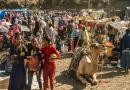
Assault on an Ethiopian journalist reveals the fears, persecution and oppression sexual minorities face in Ethiopia amid growing criminalisation of these sexual expressions in Africa.

An insightful commentary on the music, drama, and expectations of the 2026 FIFA World Cup through the reconstruction of historical World Cups.

An investigation of the political economy of religion in Nigeria that breaks down the various ways imperialism operates from Western think tanks to local politicians, at the expense of social cohesion. The intent is to raise political consciousness and expose the imperialist strategy of divide-and-conquer through subversion of religious beliefs that are of spiritual importance to Africans.

The manipulation of the world’s biggest sport to avert political accountability and justice is a disservice to football’s unifying spirit. In a broader analysis of how sportswashing is used as a distraction from political grievances, Rubara hones in on the October 2025 election violence in Tanzania alongside the state’s recent efforts to publicize official invitations to Didier Drogba and Rio Ferdinand.
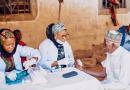
Global health disparities between poor and wealthy populations do not reflect merely quantitative differences in access to resources, rather poverty produces qualitatively distinct patterns of cognition, disease, and life expectancy. Drawing on epidemiology, developmental psychology, and political economy, Danielle argues that prolonged material deprivation does not simply reduce the quantity of health outcomes; it restructures the biological, psychological, and social conditions of human life for the impoverished in ways that are categorically distinct from those experienced by affluent populations.
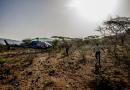
Reflecting on the book The Big Conservation Lie, conservation as an enterprise is not only critiqued but understood beyond its institutional basis, in its epistemic and psychological impacts. In a letter to the authors, James Mulei uses Franz Fanon and Gayatri Spivak to expand and challenge our understanding of conservation practices and those considered authorities.
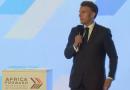
On May 11 and 12, 2026, France and Kenya co-hosted the “Africa Forward: Partnerships Between Africa and France for Innovation and Growth" summit in Nairobi. France's colonial reflexes betray its partnership rhetoric.
In the spirit of revolutionary solidarity of the University of Dar es Salaam and renewed scholarly activism, UDASA stands with Cuba in this moment of siege.