


Global health disparities between poor and wealthy populations do not reflect merely quantitative differences in access to resources, rather poverty produces qualitatively distinct patterns of cognition, disease, and life expectancy. Drawing on epidemiology, developmental psychology, and political economy, Danielle argues that prolonged material deprivation does not simply reduce the quantity of health outcomes; it restructures the biological, psychological, and social conditions of human life for the impoverished in ways that are categorically distinct from those experienced by affluent populations.

A critique of the global pharmaceutical industry. The current global health model prioritizes private profit over human life. Viral sovereignty and struggles for the protection of life and health against biocapitalism are central components of reparative justice and resistance.

Kenya's efforts to achieve universal health coverage can be derailed due to devolution challenges and crises in the management of healthcare workers.

A call for rethinking the production and supply of anti-retroviral drugs in Africa
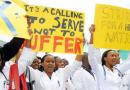
A recent conference in South Africa raised issues on whether universal healthcare should be a private or state-driven endeavour.

The author, a public servant in the Department of Health of South Africa, offers an analytical view of the country's current state of the health sector, especially in rural areas of South Africa.
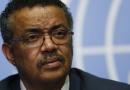
What kind of a moron appoints Robert Mugabe as goodwill ambassador for health? That is what the new Ethiopian-born Director General of the World Health Organization did – sparking global consternation. The appointment, now reversed, underlines one fact: Tedros Adhanom lacks what it takes to head even a village clinic.
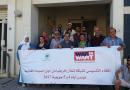
Activists from anti-capitalist militant organizations in North Africa met in Tunis on 4th and 5th July 2017 to set up the North African Network for Food Sovereignty. The network is a unifying structure for struggles in the region and will be involved in local, continental and international mobilisation.
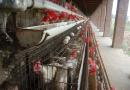
On 23 May 2017 Tedros Adhanom Ghebreyesus of Ethiopia was elected WHO Director-General. In a letter released a head of the election, over 200 scientists, policy experts and others concerned persons are urging the new Director-General to recognize and address factory farming as a growing public health challenge. Just as the WHO has bravely confronted companies that harm human health by peddling tobacco and sugar-sweetened beverages, it must not waver in advocating for the regulation of industrial animal farming.
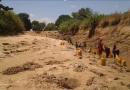
Somalia’s president has declared the famine ravaging the country a national disaster. There has been little response from the world. Drought is a natural calamity that can happen anywhere, but what makes it more deadly in Somalia is the continued conflict that prevents relief aid from reaching the needy or makes it difficult for affected nomads to travel to other places to find help.

As Babsy confronted the duty nurse, he saw his neighbour, still bent, exhausted, over the stretcher on which her son lay motionless in the deadly grip of meningitis. He had not moved since he had been brought to St Patrick’s. Babsy wondered if he would ever move again.

Uhuru Kenyatta’s administration can be summed up in two oscillating swings – promising incredibly big, and falling resoundingly short. He is a showman in every respect, and his First Lady is a part of his duplicitous act. Last week, public ridicule forced Uhuru’s wife to suspend her annual marathon that is meant to raise funds for maternal healthcare.
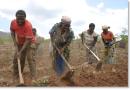
Multinational corporations that are directly responsible for the destruction of food systems in Africa and globally are now purporting to provide innovative approaches to addressing the crisis – the so-called “green revolution.” Absent from these discussions are the voices of smallholder farmers who in reality feed the world. But these farmers are fighting back by establishing resistance networks to restore the power over food into their own hands.
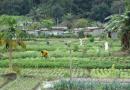
At a time when human well-being is measured not only in terms of economic development, but also on the resilience of the environment and the society we live in, it is important to question the nature of livelihood opportunities that young people are being encouraged to pursue and their implications for the future.
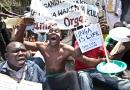
Instead of heeding the just calls for food, land, and food sovereignty being raised by the farmers and peoples of the world, the powers that be are responding with intensified repression.
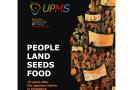
(Harare, July 11, 2016) – Over the past 15 years, Zimbabwe's fast track land reform programme has redressed colonial land inequalities and now provides lessons for its neighbours on how to democratise land ownership and broaden economic participation. From July 12-15, various social movements and academics from Zimbabwe, Mozambique, South Africa, Ghana, Spain and Portugal will gather in Zimbabwe's capital, Harare to discuss and debate the state of land, seeds, food, climate and people in Southern Africa. The event is being held under the banner/auspices of Portugal's Popular University of Social Movements, known by its Portutguese acronym, UPMS.
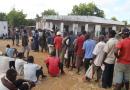
Almost four million Malawians are battling severe famine due to poor or no harvests because of the effect of El Nino, which last year affected most of the country’s southern and northern regions. The numbers of those starving could double by the end of the year.

The Moral Complexities of Eating Meat offers an appetizing sociological account of food politics, contemporary patterns of cultural identity, and the effect of meat-eating as an informal hypothesis of unity that can be useful in a country such as Kenya, whose metaphoric ‘man eat man’ greasy politics are well documented.
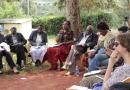
Organic farmers from Machakos, Kenya, say that fertiliser and seed companies even deploy their own extension officers and agro-dealers in the villages, who aggressively advertise the use of their products. When their promises prove false, nobody compensates the farmers for their losses.

When it comes to food justice, environmentalism and ecological practices, Thomas Sankara was way ahead of his time. Thomas Sankara helped Burkina Faso become self-sufficient before in basic foodstuffs in just a few years before he was assassinated.