


A group of civil society activists who had locked Education minister Sam Ongeri's office to demand his resignation have been arrested. The activists had been camping at the reception of Ongeri’s office demanding his resignation or sacking and be made to face charges following a Ministry of Finance audit report showing Sh4.6 billion was lost in the Ministry of Education.
It will no longer be business as usual for those who have been discriminating against Aids patients, reports The Daily Nation. That was the message by the seven-member HIV and Aids Tribunal after they were sworn in at the High Court by deputy registrar Rose Ougo. Lawyer Ambrose Otieno Rachier, who will chair the tribunal, said it was a great occasion and a new dawn for those who have been victimised as a result of their HIV status, adding, the time for silent suffering was over. 'The tribunal is going to address fundamental human rights abuses as a result of an individual’s HIV status and come with remedies to redress the injustices,' Mr Rachier said.
The current drought in Kenya and the Horn of Africa is expected to affect millions. Farm Radio Weekly has a story that tells how affected families in a semi-arid region of Kenya are changing their opinions about cassava. Once stigmatized as a crop for the desperately poor, it is now feeding families in areas with insufficient rain to grow maize.
The biggest refugee camp in the world is full, creating a humanitarian emergency that threatens thousands of malnourished children, Médecins sans Frontiéres (MSF) has warned. Dadaab, a sprawling desert 'city' in Kenya with a population expected to reach 450,000 by the end of the year, has run out of space, the medical charity said. Many children who fled war in neighbouring Somalia are without food or shelter in dry heat of 50°C.
Successive poor rains coupled with rising food and fuel prices are leading to a worsening food security situation with alarming levels of acute malnutrition being recorded in drought affected parts of Kenya, mainly in the north of the country, say experts. According to the UN Office for the Coordination of Humanitarian Affairs, 2011 is the driest period in the eastern Horn of Africa since 1995 'with no likelihood of improvement until early 2012'.
Kenya goes to elections again in about a year’s time, but already concerns are being raised that there could be a repeat of 2007/2008 when a disputed presidential election left more than 1,000 dead and over 600,000 homeless. Some leaders have warned that political tension persists in Rift Valley, the region which bore the brunt of Kenya’s post election in 2008. Bishop Cornelius Korir cited the fact that some people have chosen not to spend the nights in their homes because of the tension. President Kibaki’s advisor on ethnic relations, Raphael Tuju, has blamed joblessness amongst the youth and the failure of the Kazi kwa Vijana programme as providing tribal lords with idle youth to recruit into their armies.
Amnesty International has said it backs the International Criminal Court's proposal to conduct the confirmation of charges hearings for the suspected post-poll violence sponsors (Ocampo Six) in Kenya. The rights organisation said the move, if successful, would bring justice closer to the victims who bore the brunt of the post election violence that left 1,133 people and 650,000 others uprooted from their homes.
Discriminatory laws and a largely homophobic society mean that men who have sex with men (MSM) in Kenya generally find it difficult to access HIV-related information and health services, but rural MSM have an especially hard time. When Kibet Kipsowen*, 30, a cattle keeper in Kenya’s Rift Valley Province, and his partner have sex, they use the oil-based jelly he applies when milking his cows; he’s never heard of a water-based lubricant, let alone used one. Health practitioners discourage the use of oil-based lubricants for anal sex, as the oil degrades condoms, increasing the likelihood that they will break. Studies have found that most African MSM use oil-based lubricants, heightening their risk of contracting HIV.
Mobile phone users should not expect any further call price cuts for now. This is after Safaricom and Telkom Kenya got backing from the country’s top offices - that of the President and of the Prime Minister to suspend implementation of new termination rates. Safaricom and Telkom Kenya had warned that a further cut would have a negative effect on the sector’s profitability, risk of job losses, curtail new capital investments, reduce government revenue and competitiveness.
Dr Willy Mutunga, the man set to become Kenya’s next chief justice had to publicly declare he was not gay this week in front of a committee that was vetting him for office. Opponents of Dr Mutunga's nomination for the post who included leading members of the clergy had implied that because he wears a stud and has in the past been supportive of LGBTI causes, Dr Mutunga was gay or might support an LGBTI agenda and as such was unfit for office.
Two witnesses were taken to task by the truth commission over their contradicting and inconsistent testimonies on the 1984 Wagalla massacre, reports the Daily Nation. Former Finance minister David Mwiraria maintained that a visit by the Kenya Intelligence Committee to Wajir a day before the killings was purely to assess development projects. But on closer scrutiny, he admitted that the trip was sanctioned to resolve the Shifta movement in north eastern Province.
Producing electricity from the local waterfall was once just a dream for two farming communities on the fertile lower slopes of Mount Kenya. But thanks to a local initiative backed by UN cash and know-how, it is now a reality. Eager to harness power from the waterfall, villagers started the project by building a weir and powerhouse. But without a turbine, the work was in vain. But then the UN Industrial Development Organisation, or UNIDO, stepped in to provide the turbines.
Since discovering that her 13-year-old daughter was pregnant about a month ago, Juanita* has paid several visits to the local chief in her village in western Kenya, seeking justice for her daughter and punishment for the man who abused her. 'She told me it was her teacher who did it. I confronted him and he admitted [he was the father] - he told me we could just settle it as adults,' Juanita, 47, told IRIN at her home in Migori District. 'We have been going to the chief because the teacher tells me he wants to marry my daughter and take care of the child, but I don't want that. Let him take care of the child who is a result of his bad behaviour, but leave my daughter alone because I want her to go on [with her education],' she added.
AwaaZ is a magazine published tri-annually out of Nairobi, Kenya, under the Institute of Kenya South Asian History and Culture (IKSAH). The latest issues contains articles on:
- Judicial reforms and the difficulties ahead.
- Evictions, social justice and the constitution.
- Marginalisation of the Lamu people.
- Justice or the LGBTI community in Kenya.
- Making the constitution of Kenya the constitution for Kenyans.
'Iman Tari,' a voice calls forward. Tari, a stout woman wearing a black burqa and white headscarf, rises from her seat. A young man in his late 20s stands up beside her and supports her as she walks. Her feet step slowly and steadily across the cement floor to a table laden with microphones and earpieces. Tari inches closer to the microphone and begins her testimony to the Truth, Justice and Reconciliation Commission, TJRC, established by Parliament in 2008 to investigate the gross human rights violations and other historical injustices in Kenya committed between 12 December 1963 and 28 February 2008. The TJRC spent 32 days in April and May holding hearings in the Eastern and North Eastern provinces.
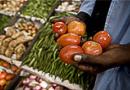
As part of the ‘Unga Revolution’, Kenyan civil society has been demonstrating over rising food prices and the escalating costs of living, writes Stephen Musau. And Kenyans should not feel alone in this struggle, Musau stresses, with the farmer-led movements across the global South like Via Campesina leading the fight for food sovereignty and the right to food.
The Kenyan government has pledged to support ongoing investigations into post-election violence, a senior official of the International Criminal Court said. Mr Phakiso Mochochoko, the head of Jurisdiction, Complementarity and Cooperation Division at the court, spoke after a meeting with the Cabinet committee on ICC. Mochochoko said his trip was triggered by government attempts to defer the ICC cases. 'We have received reassurance and recommitment from the government but we will see whether they will change,' he said.
Members of the gay and lesbian community have said they will lobby for the abolition of laws which criminalise their sexual orientation. Speaking at a dinner to mark the international day against homophobia and the minority groups, they said they will seek to have sections 162 to 165 of the Penal Code repealed. It was hosted by the Coast regional office of the Lesbians, Gays, Bisexuals,Transgender and Intersexuals.
Do you know that you have a constitutional right to eat a healthy meal everyday?
Do you know that you have a constitutional right to have a good house?
Do you know that the state should pay for you if you are unable to pay for yourself?
Why do you allow your human and constitutional rights to be violated?
Why do we suffer in silence as our leaders watch?
For real answers, join all other Kenyans at:
'Unga-30 Bob' Rally
Date: 31 May 2011
Time: 1pm
Venue: Outside Harambee House, Harambee Avenue
President Kibaki and Prime Minister Odinga are invited to explain to all Kenyans!
Email: [email][email protected]
In order to reduce instances where pharmacists are inflating the cost of subsidised malaria drugs, the Kenyan government has embarked on awareness campaigns through the media to inform Kenyans of the availability of the drugs, and the recommended prices per dose. According to Dr John Logedi, the deputy program manager at the Division of Malaria Control, the awareness campaign will help consumers make an informed choice and enable them to seek outlets that sell the drugs at the right price.