Felix Alain Flémin, secretary general of the Guadeloupe Communist Party (GCP) has called for international solidarity in support of the struggle for independence and self-determination of the people of those Caribbean islands under French colonial dominion. “We are a nation whose right to self-determination is not recognized by France. We are looking for international support for the islands to return to the UN list of colonial territories”, stated Flémin during a visit to OSPAAAL headquarters.
Tributes to Tajudeen Abdul Raheem, pan-Africanist, fighter, comrade and friend to so many, continue to pour in at Pambazuka News. Since last week, we have received nearly 60 tributes bringing the total to more than 250. Tributes include those from Dismas Nkunda, Norah Matovu-Winyi Executive Director FEMNET, Breyten Breytenbach, Juma V. Mwapachu, East African Community, Tukumbi Lumumba-Kasongo, Owei Lakemfa, Ibrahim Abdullah, Ama Biney, Ernest Wamba dia Wamba, L Muthoni Wanyeki, Bisi Adeleye-Fayemi and many more. If you wish to contribute, please go to
Pambazuka News has published Tajudeen’s weekly Pan-African Postcard regularly since 2004. While we joke that Tajudeen’s writing was ‘an editor’s nightmare’, it was first and foremost a source of penetrating, incisive insight into pan-African affairs, expressed with humour and an underlying sense of optimism and belief that, however great the challenges the continent faces, by uniting and organising, we can build Africa into a great place for all its citizens. In celebration of Tajudeen’s commitment and contribution to Pan-Africanism – and to the Pambazuka community – we have picked a few of our favourite postcards to share with you. These postcards, listed in chronological order, demonstrate Tajudeen’s uncanny ability to see to the heart of the matter, to understand the workings of the human heart, to clarify complex and controversial issues and to inspire people to work for change.
Kilombo was set up in the UK in 1997 by African anti-IMF (International Monetary Fund) activists forced into exile in the 1980s. However, when they arrived in the West they found that little or nothing was known about the fierce struggles waged by the African street in opposition to the IMF's structural adjustment policies. This resistance, ruthlessly repressed in large parts of the continent, received little media coverage outside Africa. Kilombo was set up partly to address the lack of reporting of Africa's home-grown struggles for social justice, and partly to provide an independent alternative to the myths and misinformation that pass as news about Africa.
Capturing the spirit of his inimitable public-speaking style, this [mp3] of Tajudeen's comments at a debate on the union government at the 2007 African Union summit in Accra is a fitting testament to his ability to combine quick-thinking and humour when delivering a critical message.
The irony of Africa being a very rich continent but Africans being some of the poorest peoples in the world is no longer lost on anyone. While we can argue about the historical, structural, attitudinal, personal and institutional causes of this state of affairs the fact remains that majority of our peoples remain in need amidst plenty. Decades of Aid, humanitarian intervention, prayers, activism, development plans, action plans, government declarations and so many other initiatives have not produced fundamental change for the poorest and weakest sections of our societies, writes the late Tajudeen in his last Pan African Postcard.
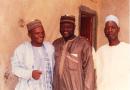
25 May is Africa Liberation Day. What a day to be woken in the early hours of the morning with the terrible news that one of the leading proponents of Africa's liberation – Tajudeen Abdul Raheem should be so tragically lost in a senseless car accident in Nairobi. Messages have been pouring in from across the world as we all fail to hold back our tears at this loss.
Tajudeen led Justice Africa's work with the African Union since its early days. He combined this with his role as General Secretary of the Pan-African Movement, chairperson of the Centre for Democracy and Development, the Pan-African Development Education and Advocacy Programme, and was a fighter in the struggle to get the UN's Millennium Development Campaign to support meaningful programmes. There was hardly a pan African initiative that took place without Tajudeen's inimitable presence, support, humour and perceptive political perspectives.
Tajudeen's departure leaves a massive hole in all our lives. We all need to grieve the loss of this giant of a man. But if his life is to mean anything, we must follow his call in the signature line of his every email – 'Don't agonise, Organise!'
[email protected] or comment online at http://www.pambazuka.org/
For a larger collection of images of Tajudeen, please see the Pambazuka account on Flickr.
The LPM is organising a march from Maurice Issacs High School to the Hector Peterson Museum in Soweto on the 16th June 2009 to repoliticise the meaning of the 1976 Soweto Uprisings. This march is a response to the ANC’s hijacking of the 16th June as they have turned it into a bourgeois event. We as the LPM believe we should not celebrate this day, as our government does, but commemorate it by reflecting on the struggle for the liberation of the youth that is still being fought for by poor communities 15 years into our so-called democracy..
Its no surprise that the African Union (AU) can’t persuade people to ratify the when not even the commisioners’ countries are prepared to do so, writes Tajudeen Abdul-Raheem. Although 28 nations have already signed up to the charter, they are not obliged to comply with it unless they ratify it. Nor can the charter come into force until it is ratified by 15 countries, a goal, Tajudeen suggests, that the AU is unlikely to achieve given the lack of ‘political will’.
As the US opens up political channels with Cuba, activist Assata Shakur faces extradition from the country where she has lived under political asylum since 1984, writes Paul Scott. While the mainstream media portrays Shakur harshly, Scott is calling for bloggers to tell the ‘true story’ of a woman sentenced to life imprisonment for murder in 1977, under the repressive policies and ‘dirty tricks’ of a Hoover government that made it impossible for her to receive a fair trial.

Outlining the essential differences between the respective approaches of Julius Nyerere and Kwame Nkrumah, Issa G. Shivji discusses the gradualist and radical positions of two pillars of the Pan-Africanist movement. Underlining the notion of an independent African state as a ‘national liberation movement in power’ as being at the very core of the movement, Shivji stresses that genuine African nationalism can only ever be Pan-Africanism. As both a head of state and leading Pan-Africanist intellectual, Nyerere found himself supporting contradictory ideas around contesting the imposition of colonial borders while emphasising the centrality of states' sovereignty, Shivji notes. While admitting that he is without a complete answer to the question of what intellectuals' role will be in the development of a new Pan-Africanism for today, Shivji stresses that the challenge will be to push forward a 'new nationalist insurrection', one which perhaps ultimately recognises African unity as a dream rather than a vision.
Highlighting the relative strength of Kenyans' voting power despite the country's difficulties, Tajudeen Abdul-Raheem contends that Nigerians have no illusions around their own votes. With Ekiti State witnessing the re-run of its local election following the Court of Appeal's 17 February 2009 ruling, the State Governor and People's Democratic Party's (PDP) Olusegun Oni faced Dr Kayode Fayemi of Action Congress (AC) on 25 April. Of national significance in potentially denting the PDP's near-monopoly of political power, the determination of electoral monitors to oversee a clean count led to their suffering a brutal attack by PDP thugs while en route back to the state capital Ado Ekiti, an attack observed with amusement by local police. While the intervention of a senior officer stopped the attack, the victims were then ludicrously arrested and detained over a 48-hour period in Abuja. This situation, Abdul-Raheem contends, is tantamount to a June 12 1992 – when Ibrahim Badamosi Babangida oversaw the forceful detention of a candidate he found unpalatable – at state level, the overall responsibility for which must lay at President Umaru Yar' Adua's door.
This project deals with the Pan- African e- Network Project launched by the government of India on 26 February 2009 as a part of its ‘aid to Africa’ programme. This project connects the nodal centres in India with 53 nations of Africa through the use of electronic information and technology (ICT) and provides tele-medicine and tele-education to its African counterparts. The pilot project in Ethiopia launched in mid 2007 whereby connectivity between educational and medical centers of excellence in India and Ethiopia was launched has proved to be a success.
 cc In an open letter addressed to US President Obama, Muadi Mukenge calls on his administration to enter into dialogue with African and Africa activists to address ‘how change can come to the IMF and other instruments of economic policy that the US supports’. Despite evidence that the IMF’s economic policies for Africa have left the continent worse today than it was 30 years ago, the G20 Summit has recommended the injection of significant funding into IMF to rectify endemic poverty in developing regions. Mukenge argues that if the G20 decides to prioritise new funding to the IMF to address an economic crisis – which in Africa dates 20 years – the IMF’s ‘philosophy and modalities must change’.
 cc As Kenya and Uganda face off over the sovereignty of the tiny Migingo Island in Lake Victoria, Tajudeen Abdul-Raheem suggests explanations for why two previously highly cordial nations have allowed the dispute to escalate to such a degree. While Uganda echoes the view of the Kenyan government that the dispute should be solved diplomatically, Abdul-Raheem suspects Ugandan President Yoweri Museveni's talk of peace belies military preparations behind the scenes. Kenya, for its part, has seen the opposite situation, with President Mwai Kibaki employing a typically 'hands off' approach while his country's media becomes increasingly frustrated and militant in its demands over how to deal with Uganda. If these 'patriotic' frustrations reflect deep dissatisfaction with the deficiencies of the Grand Coalition government, Abdul-Raheem states, they should not be permitted to spill over into calls for definitive military action or jeopardise wider East African integration.
I congratulate your efforts in Pambazuka News to celebrate and promote the Pan-African symbols like Nyerere and Nkrumah.
You may not know that I listened to Kwame Nkrumah's speech in 1960, as member of Egypt's Nasser delegation, at that time headed by his assistant on African Affairs.
We really felt the revival of Pan-Africanism after the independence of Ghana 1957.
I remember all that now, when reading on your innovated celebration of these spiritual events. Best wishes for all.
 © While many African leaders have aspired to inherit Nkrumah’s mantle as the visionary and driver of Pan-Africanism and continental unity, writes Yao Graham, a gaping political leadership vacuum remains at the heart of the continent’s collective expression. From an age when there were a number of outstanding African leaders, among whom Nkrumah was preeminent, Graham argues that the African Union’s election of Gaddafi as its leader is a statement of a collective failure of leadership and underlines the crisis in which the Pan-African project is currently mired at the inter-state level. Where, asks Graham, are the African leaders who see opportunities for change in the current crisis, and who are ‘ready to dare and look beyond guaranteeing the sanctity of aid flows?’
 cc Pan-Africanism gave rise to the civil rights movement in the US and to independence and anti-imperialist movements in Africa, writes Salma Maoulidi, but what is Pan-Africanism to the average African today? To a large extent, Maoulidi argues, it remains a global phenomenon that has focused on global political agendas and less so on struggles on the ground. What is missing, suggests Maoulidi, is ‘a popular expression of Pan-Africanism and a matching consciousness such that the concept does not appear surreal, abstract and out of touch with reality and the populace, particularly the youth who are the inheritors of its future.’
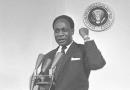
The debate on how to unite African states has not changed significantly since Kwame Nkrumah and Julius Nyerere locked horns on the matter in the early 1960s, writes Chambi Chachage. Exploring Nyerere’s ‘step by step’ approach to building African unity in relation to Nkrumah’s desire to ‘fast track’ the creation of a Unites States of Africa, Chachage concludes that while Nkrumah’s Pan-African vision remains powerful, his approach is unrealistic even today.’ ‘To that end, I will feel with Nkrumah, yet I shall think with Nyerere’, he writes, ‘Africa must unite, albeit pragmatically’.