


Astounding allegations have come forth about the 1987 assassination of the former president of Burkina Faso, Thomas Sankara, through a documentary aired on Italy’s public channel RAI3. The documentary, entitled ‘African Shadows’ and by Silvestro Montanaro, details the alleged links of the American and French secret services to Sankara’s assassins and the involvement of the current President of Burkina Faso Blaise Compaoré. This week’s Pambazuka News brings you the striking three-part transcript of the recent documentary, featuring the testimonies of well-known Liberian figures.
The Pan-African Reading for All (RFA) Conference is one of the most exciting and most memorable literacy events on the African continent. It is organized bi-annually by the International Reading Association’s International Development Committee in Africa (IRA/IDAC) and the National Reading Association in the host country. Under the theme: “Literacy for Community Based Socio-economic Transformation and Development” participants from all over the world will converge in Dar Es Salaam, Tanzania from August 10th – 14th, 2009 to share their experiences in literacy and reading promotion initiatives and practices from different countries.
The preserved head of King Badu Bonsu II has been returned to the Ghana by the Netherlands, 170 years after the Ahanta chief was hanged for ordering the murder of two Dutch emissaries, Ama Biney tells Pambazuka News. The return of the head is not just of cultural importance for the Ahanta people, says Biney, it’s also a significant step in ‘setting right colonial wrongs’.
Huge, multi-billion-dollar dams are often seen as the only solution to Africa's critical shortage of power. In this week’s Pambazuka News Khadija Sharife asks whether this is really the case, given the environmental damage caused by dams and the suffering that the relocation of vast populations entails. In an article that looks at the reality behind the damming of Africa’s waterways, Sharife questions whether dams are the solution or the problem, arguing that they rarely benefit the poorest and often cause them greater hardship.
Currently, the country of Honduras in Central America is experiencing its worst political crisis in decades. In the aftermath of the military coup that forcibly removed President Manuel Zelaya Rosales, there have been various developments that have raised our concern about the security of citizens’ rights and the impact of the situation on people of African descent.
Nelson Mandela is undeniably ‘one of the most charismatic, suave and diplomatic statesmen that South Africa and the world ever had’, writes Mphutlane wa Bofelo, as Madiba celebrates his 91st birthday. Despite ‘efforts to romanticise and deify’ him, however, wa Bofelo reminds Pambazuka readers that Mandela was also ‘the architect of neoliberal, neo-capitalist dispensation’, publicly recanting the Freedom Charter’s stance on the nationalisation of the mines and mineral resources, following opposition from big business. A ‘great human being’ and ‘a statesman par excellence’, Mandela is ‘human still, prone to error, capable of misjudgement on issues, and open to questioning’, says wa Bofelo.
We're 'skating on thin ice', warns Khadija Sharife: GDP has doubled over the past 25 years but the ecological costs have been steep, with over 60 per cent of the global environment critically exploited. A focus on boosting GDP figures – which measure the quantity rather than the quality of growth and do not take into account environmental impacts – is legitimising ecological plunder across Africa, and putting the ecosystems that support all life and livelihoods in peril.
Beset by antagonism and lack of solidarity, both the Pan-African and the trades unions movements are letting down Africans, says Vincent Nuwagaba. The reason, Nuwagaba argues, is that there are two categories of members: Those that are 'genuinely passionate about the ideals, values and objectives of the movements, which are centred on social welfare, and those that seek personal and self-aggrandisement'. The movements must ‘extricate themselves from the claws of African predatory leaders,’ says Nuwagaba, who ‘promised too much upon capturing power and have destroyed too much instead’.
Understanding Organisational Leadership through Ubuntu offers a creative, innovative and holistic approach to understanding organizational leadership using the principles embodied in the African philosophy of personhood known as ubuntu – or the essence of being human. Using African proverbs, folktales and indigenous concepts, the book discusses the organizational principles of ubuntu and the leadership lessons that modern organizations can learn from these principles.
 cc Pan-Africanism is not just a throwback to the post-colonial period, writes Zaya Yeebo, the people of Africa are still ‘united by culture, history and identity’. Africans around the continent feel each other’s pain and are bound together as a people by events, says Yeebo, whether it is the struggle for emancipation in the Niger Delta, or the crisis in the DRC. Charting a history of the Pan-African Movement from the first conference in 1900 to the present day, Yeebo calls for Pan-African solutions to African problems, with Pan-Africanism as a ‘collective understanding’ of how ‘we intend to conduct our affairs in today’s globalised world’.
In his tribute to the late Tajudeen Abdul-Raheem, Horace Campbell points out that if Tajudeen could mobilise 7 million people to stand up against poverty in Africa, just think what all of us could achieve in the name of Pan-African unity and reconstruction. Buoyed by an inspirational life, Campbell outlines the tasks before the Pan-Africanist movement, highlighting the need to re-politicise Africa's youth along democratic, emancipatory lines in a spirit befitting Tajudeen's legacy.
Anne Khaminwa acknowledges to her thoughts on what Kenya can learn from Haiti.
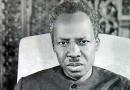
Mwalimu Nyerere professor of Pan-African Studies at the University of Dar es Salaam, interviews Bereket Habte Selassie, an observer and participant in African politics for almost five decades. From the first All Africa People’s Conference in 1958, to the ‘doubt’ and ‘desperation’ of the current African reality, Selassie provides a thoughtful perspective on the history Pan-Africanism, as well as advice for the future of the African Union. This interview first appeared in Pan-African journal Chemchemi.
What is the true wealth of nations? Do GDP statistics provide an accurate pointer to economic progress? Why are resource-rich countries, particularly in Africa, poor, while resource-poor countries in the North are prosperous? How does one assess the value of the ecology? Khadija Sharife analyses a startling report from the World Bank that sets out to answer some of these questions.
With a 40-day period of mourning having elapsed following the untimely death of Tajudeen Abdul-Raheem on Africa Liberation Day, Kayode Fayemi looks back on the life and work of the great Pan-Africanist activist and scholar. Highlighting his extraordinary energy and compassion for ordinary people, Fayemi salutes Tajudeen's unfaltering commitment to speaking truth to power. Looking back on an array of institutional, activist and scholarly achievements, Fayemi points out that while Africa may have lost one its brightest gems, Tajudeen will forever remain a symbol and inspiration for ongoing struggles.
he United Nations Development Programme (UNDP) and IOM are joining forces to tap into key technical expertise among the Somali diaspora in a bid to help rebuild key governance foundations in parts of the country. Somalis with professional expertise in policy and legislation, human resources management and public financial management living in North America, the UK and Scandinavia will be targeted for temporary return for an average period of six months to provide on-the-job peer-to-peer training in their respective fields in northern Somalia initially, including Somaliland and Puntland.
 cc The Global Pan African Movement is a ’dying institution’, writes Vincent Nuwagaba, and the whole continent and Africans in the diaspora must ‘rededicate their efforts to revive it’. Dismayed by its half-hearted commemoration of the day of the African child, Nuwagaba writes that the problem is that the Uganda-based ‘global’ secretariat ‘has been reduced to a branch and extension of the National Resistance Movement (NRM) and State House’. In order to de-link a mass movement from a partisan movement, argues Nuwagaba, ‘all Africans of goodwill must demand the holding of the 8th Pan African Congress and a shift of the ‘global’ secretariat.’
 cc Kwame Nkrumah brought the Convention People's Party into power within two years of its formation, creating independent Ghana, writes Yao Graham. An overwhelming electoral victory gave Nkrumah a platform for mass anti-colonial mobilisation around Africa. Accra became a staging point for the African anti-colonial movement with the All-African People's Conference, drawing delegates from 62 nationalist organisations, including future ruling parties and post-colonial leaders, who were urged to 'fight for independence now'. Post-colonial construction, however, was different from bringing down colonialism and Nkrumah struggled to generate resources for steady improvement in the living standards of people with expectations fuelled by independence and his own visionary pronouncements. Today Ghana is seen as a development icon, but the challenges Nkrumah grappled with have not been overcome, argues Graham. Reliant on a few commodities for export earnings and aid for public investment, it is far from the independent structurally transformed model Nkrumah wanted to establish as a ‘black star’ for Africa.
 cc With a view to wresting Ghana and Africa at large from the entrenched control of neocolonial institutions, Kofi Mawuli Klu looks to Kwame Nkrumah's legacy for inspiration. While broadly optimistic about Ghana's potential under President John Atta Mills, Klu cautions that achieving effective change will rely on supporting progressive forces through both words and deeds and the ability to involve the country's masses in an ongoing process of 'conscientisation'. If country and continent are to liberate themselves from external influence, the author concludes, the focus must be on drawing on the cultural, organisational and politico-ideological resources of the masses in the pursuit of 'genuine pan-African community regeneration'.
 From left, Olivier Fanon, Gacheke Gachihi
and an Algerian diplomat in Tanzania
(cc Gacheke Gachihi)Following his attendance at the Julius Nyerere Intellectual Festival Week from 13 to 17 2009 in Dar es Salaam, Gacheke Gachihi discusses the engaging talks given by speakers like Issa G. Shivji, Oliver Fanon and Adebayo Olukoshi and the inspiration he draws from the Pan-Africanist struggle.