


Thousands of security personnel have been deployed across northern Kenya to confiscate weapons after a voluntary disarmament exercise netted only a small fraction of the 50,000 guns thought to be in civilian hands. Firearms are widespread among pastoralist communities in east Africa, where police are rare and cattle theft and intercommunal conflict is common. Similar operations are taking place in neighbouring Ethiopia, Sudan and Uganda. Borders between these countries have been temporarily sealed.
Dozens of people are dead or missing after a boat capsized in a river in the Democratic Republic of Congo. The boat, carrying 125 people, overturned on Wednesday evening in the Congo River near the city of Kindu, the capital of Congo's eastern Maniema province.
Sudan's largest rebel group says it will suspend peace talks with the Sudanese government because of alleged violence in the west of the country. The Justice and Equality Movement (JEM) accuses the Sudanese government of bombing its positions in West Darfur state, near the Chadian border.
Armed men ambushed U.N.-African Union peacekeepers in Darfur on Friday, killing two soldiers and seriously injuring three in Sudan's troubled west, the latest in a wave of attacks on the under-equipped force. Separately Darfur's main rebel group said on Friday it had clashed twice with government troops in the past three days, warning more attacks would mean "all-out war" and the collapse of a fragile peace process.
UNHCR has completed and inaugurated a multi-million dollar water and electrification project that will benefit tens of thousands of people, including Somali refugees and members of the local community, in a semi-arid region of eastern Ethiopia. The US$5 million Jarrar Valley Water Supply scheme in the country's Somali region is using electricity to pump 1.3 million litres of fresh water a day to 51,000 people, including 16,000 refugees.
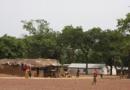
 Kountaya refugee camp"Kountaya was one of the biggest refugee camps in West Africa," Sheku said, pointing at the old buildings surrounded by the Guinean jungle. After a long pause, he added, somewhat nostalgic, "while UNHCR and the other agencies were here, we had schools and medical assistance; we had many cultural and sport events. I used to play basketball. But then they said that, since the war in Sierra Leone was over, we had no reason to be here. And they abandoned us."
In a remote southern part of Chad, the UNHCR began this week the transfer of some 1,100 newly arrived Central African refugees from the border to a refugee camp where they can be assisted. These refugees crossed into southern Chad's Moyen Chari province two weeks ago, after violence forced them from villages in northern Central African Republic (CAR).
Twenty villages in Botswana have been evacuated after the Okavango River burst its banks. Water in the river, which starts in Angola, passes through Namibia and empties into Botswana's Okavango swamp, has reached unprecedented levels.
They may number as few as 100 men, women and adolescents, but Lord's Resistance Army (LRA) units scattered across the forests of northeastern Democratic Republic of Congo's Orientale Province have sown sufficient terror to make some 318,000 people take flight, abandoning their homes and fields, in many cases to the uncertain sanctuary of urban centres.
African Rights, REDRESS and the Southern Africa Litigation Centre have sent a confidential report to President Rupiah Banda of Zambia detailing the names and roles of 16 key suspects of the 1994 genocide in Rwanda who are believed to be living in Zambia. The report follows a visit of President Banda to Rwanda in mid- January 2010 during which he expressed determination to take timely and effective action to ensure that Zambia is no longer a safe haven for individuals who are alleged to have taken part in planning, organizing and executing the 1994 genocide in Rwanda.
Were it not for the police men in blue tunics with a Botswana coat of arms patrolling the cordoned off area, most visitors to the Dukwi refugee camp would barely realize that they are in Botswana. The camp, which is synonymous with Botswana’s hard line policy towards refugees, is a grim hovel where those inside have different rights from those outside. Residents can not move out of the camp without an official pass.
Michael Uredi, 37, a cabinet maker, came to South Africa from the Eastern Kivu region of the Democratic Republic of Congo (DRC) eight years ago. He is a member of the Bembe ethnic group, married to a woman from the Banyamulenge, so he is not welcome at home and his wife was raped by his "own people" before they fled. This is his story.
The April edition of the , Rwandan refugees in Uganda fear forced repatriation as threat of Cessation Clause looms, Ethiopians repatriated from Puntland, urgent action needed to save lives of Saharawi activists, and Kakuma Refugee Free Press threatened.
The anniversaries of the Rwandan and Armenian genocides and the Jewish Holocaust all occur in April, writes Gerald Caplan, but last month’s memorial service at Tufts University in Boston was unusual in bringing together survivors from all three affected communities to bear witness together.
Gertrude Hambira doesn’t look like someone who gets arrested regularly. Nor do the other women and men in suits who work with her at the General Agricultural and Plantation Workers Union of Zimbabwe (GAPWUZ), formed in the mid-1980s to protect farm laborers. But arrest, harassment and even torture have been regular occupational hazards for Gertrude—the General Secretary of GAPWUZ—and her staff for many years. Unfortunately, things have not gotten much better since the 2008 elections when President Mugabe refused to cede power to the democratically elected Morgan Tsvangirai, a former union leader himself.
Most NGOs and UN agencies in Niger agree that in 2010 humanitarian actors are better geared to respond to the food security crisis than they were in 2005, but some say there is a risk of repeating mistakes in information-sharing, planning appropriate responses, and raising funds more quickly. "There are similarities to 2005 that donors and the aid community must heed in order to avert a disaster in 2010," warned CARE, an NGO focusing on poverty eradication, in a communiqué on 26 April.
Sixteen years after the Rwandan genocide, thousands of perpetrators who confessed their roles before the traditional Gacaca Courts have been released and sentenced to community service, but survivors say this is an inadequate punishment. "The punishment should be [close] to the pain those inmates inflicted," Theodore Simburudali, the chairman of the genocide survivor organization, Ibuka, said.
At least 14 civilians have been killed during a battle between government soldiers and al-Qaeda-linked fighters, witnesses say. Tuesday's clashes followed a separate suicide car bomb attack in Mogadishu, Somalia's capital, by al-Shabab fighters on the base of African Union peacekeepers.
South Africa should start looking for alternative solutions to control malaria-carrying mosquitoes, a study has found. Using DDT to curb the spread of malaria has been proven by researchers to pose a huge risk to human beings with those consuming chicken, fish and vegetables produced in DDT-sprayed areas at risk of developing illnesses such as cancer.
The pre-trial chamber of the International Criminal Court (ICC) has rejected an appeal by prosecutors to overturn an earlier decision declining to confirm charges against a rebel leader accused of directing the September 2007 attack that killed a dozen African Union peacekeepers in Sudan’s strife-torn Darfur region. In February, the chamber said there was insufficient evidence to establish that Bahar Idriss Abu Garda, who commands a splinter group of the rebel Justice and Equality Movement (JEM), could be held criminally responsible for the crimes he has been charged with.