


From Rights on Paper to Rights in Practice: Legal Literacy, Access and the Limits of Formal Equality

Saad Kassis-Mohamed argues that legal literacy is one necessary part of turning formal equality into rights women can understand, reach and use in practice.
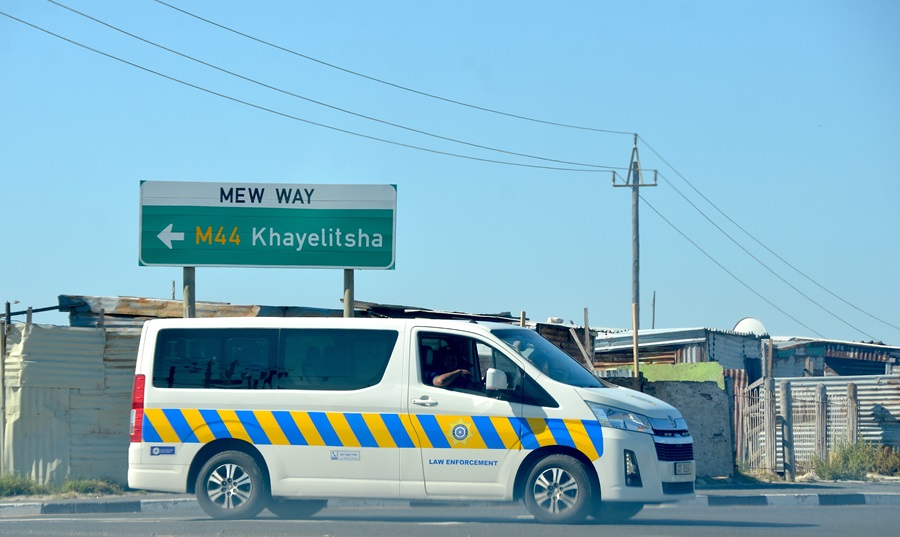
Khayelitsha, Cape Town, South Africa
Formal legal equality is not the same thing as lived protection. South Africa has one of the continent's strongest constitutional and statutory frameworks for gender equality and protection from domestic violence. The Constitution guarantees equal protection and benefit of the law and prohibits unfair discrimination on the grounds of gender.[1] The Domestic Violence Act provides protection orders and related remedies intended to protect people from abuse within domestic relationships.[2] Yet the distance between a right on paper and a right in use is produced by more than one problem. A woman may not know the right exists; she may know it exists but not know the procedure; she may understand the procedure but face cost, distance, language, fear of retaliation or economic dependency; or the institution meant to enforce the right may lack capacity. Legal literacy is therefore one necessary link in a longer chain of access and implementation, not a substitute for either.
That distinction matters because it would be inaccurate to reduce women's unequal access to justice to ignorance of the law. South Africa does not publish a single national "legal literacy rate" for women or for the population as a whole. Available indicators instead show uneven knowledge of particular institutions and remedies. Statistics South Africa's Governance, Public Safety and Justice Survey 2024/25 found that only 34 per cent of people aged 16 and over were aware of the National Prosecuting Authority, with men more likely than women to be aware of it. The same survey found that about 61 per cent of households could reach a magistrate's court in under 30 minutes, yet fewer than 5 per cent of individuals reported going to court during the year. These figures do not prove a general female legal-literacy deficit; they show why proximity to an institution and knowledge of how the justice system works should not be treated as the same thing.
The Department of Justice has itself described low legal awareness as an ongoing challenge. In 2025 it reported 141 public-education interventions on gender-based violence and femicide between April and June alone, alongside efforts to simplify forms and make rights information available in multiple formats.[3] The relevant question, then, is narrower and more practical: when a woman needs a protection order, an inheritance remedy, legal aid or another form of protection, does she know what exists, how to begin, where to go, and whom she can trust to help her? Knowledge is not the whole of access to justice, but without a usable first step, formal rights can remain remote.
Where Formal Rights Break Down
This is not a uniquely South African problem. The Maputo Protocol, adopted in 2003, remains the continent's most comprehensive regional instrument on women's rights. By July 2026, 46 African Union member states had ratified it.[4] But ratification is only the beginning. The African Commission on Human and Peoples' Rights has itself called for implementation through effective institutions, adequate budgets, accountability mechanisms and meaningful engagement with women, girls and civil society. A treaty ratified in a capital city does not automatically become a remedy that can be understood and used in a township, a village or a household. Courts, chiefs, paralegals, women's organisations, social workers, police and community institutions all play roles in translating formal rights into claims people can actually make.
The implementation gap is visible in public finance as well as legal knowledge. The United Nations' 2026 reporting on Sustainable Development Goal 5 found that 91 per cent of countries reported having gender-equality policies in 2025, but only just over half had allocated sufficient budgets to implement them. It also found that, although 123 countries had adopted elements of gender-responsive budgeting, only about one in four had comprehensive systems for tracking and making public allocations for gender equality.[5] Formal commitments can therefore fail because people do not know their rights, because institutions are difficult to navigate, or because the institutions themselves are under-resourced. A serious account of formal equality has to keep those failures analytically separate while recognising how they reinforce one another.
Inheritance and property rights make the problem especially visible. South Africa's Reform of Customary Law of Succession and Regulation of Related Matters Act abolished the customary-law principle of male primogeniture, under which sons inherited to the exclusion of daughters and widows, and replaced it with a common system of intestate succession applying equally regardless of gender.[6] Yet research on implementation in rural communities has continued to identify practical difficulties created by the relationship between official law, living customary practice and the administration of estates.[7] A woman may not know that a discriminatory rule has been abolished; she may know and still face family pressure, administrative uncertainty or a competing understanding of customary authority. Legal literacy and institutional access are distinct, but in cases like these they meet.
Part of what sustains this gap is the layered legal architecture much of the continent inherited from the colonial period, in which formal statutory law and customary or religious systems of authority operate alongside one another. Reform efforts have often concentrated on rewriting the statutory layer. That is necessary, but it is not sufficient, because a woman's actual experience of a property dispute, a marriage breakdown or a claim to inheritance may be mediated first through family, customary or religious structures long before it reaches a courtroom, if it reaches one at all. Legal-literacy work therefore has to explain not only what a statute says, but how the formal system interacts with the authority structures women are actually navigating day to day.
This terrain demands precision, not a simple story of tradition versus modernity. Religious and customary institutions are sources of belonging, support and legitimate authority for many women, not obstacles to be overcome. The question is not whether these structures should be dismantled. It is whether women within them have equal access to information, allies and institutional support when they need to exercise rights the state has recognised as theirs. Programmes that frame legal literacy as an attack on culture or belief can alienate the communities they are meant to serve. Programmes that make existing rights legible while engaging seriously with the institutions through which people live are more likely to build trust.
Making Rights Usable
The Saad Kassis-Mohamed Center runs this kind of programme in Khayelitsha, working alongside an existing local women's organisation rather than building new structures from outside. The Center delivers a legal-literacy and rights-awareness session series covering practical, immediately usable ground: how a protection order is obtained, what reporting pathways exist, and how inheritance and property rights function under both common and customary law. The programme does not resolve the deeper gaps between legislation and enforcement across the justice system, and it does not replace the courts, the police or existing legal-aid structures. Its value is narrower and more specific: it tries to reduce the distance between a right and a woman's knowledge of how to begin using it, at community scale, without pretending that information alone can repair the wider system.
That work should be designed around women's time constraints and women's existing agency. Legal literacy does not have to mean long classroom sessions or a sweeping civics curriculum. Short repeat sessions, one-page guides in locally used languages, WhatsApp voice notes, community radio, referral cards, drop-in hours and peer navigators can all reduce the time cost of obtaining basic legal information. Women already exchange knowledge through families, neighbourhood networks, savings groups, faith communities, unions and community organisations. Effective programmes should strengthen those routes rather than treat participants as empty vessels waiting to receive expertise from outside. The first goal is not to turn every participant into a lawyer; it is to make the next step visible, understandable and safe enough to take.
What makes a programme of this kind credible rather than performative is design discipline. Sessions delivered in the languages women already speak at home, by facilitators drawn from or trusted within the community rather than parachuted in, and covering a small number of concrete, immediately usable pieces of information are more likely to produce knowledge that survives past the end of the session. Partnering with an organisation already rooted in the community matters for the same reason: trust is an actual delivery mechanism for this kind of work, and trust cannot be manufactured quickly by an outside institution. None of this is glamorous. That is the point. The gap being addressed is rarely one dramatic failure; it is an accumulation of ordinary distances between a woman and the rights she already holds.
Evaluation must be equally disciplined. A legal-literacy programme should be measured first against what it can plausibly change: whether participants can later identify a relevant right, explain the first procedural step, name a trusted referral point, or successfully reach an appropriate service. Follow-up after several weeks or months can test whether knowledge was retained. Referral completion can show whether information translated into contact with an institution. Those are different measures from whether a court ultimately grants relief, whether police enforce an order, or whether violence declines. The latter outcomes matter enormously, but claiming them requires evidence about the justice system that a small community programme cannot generate on its own.
Structural accountability therefore has to include the last mile between law and woman without pretending that the last mile is the whole journey. Governments and funders that support legislative reform should also support the institutions and community organisations that make rights understandable and reachable. The United Nations data on gender-responsive budgeting show that implementation and financing are increasingly recognised as part of the equality problem. Community-level legal-literacy work belongs within that implementation architecture: not as a substitute for courts, enforcement or legal aid, but as one of the mechanisms that helps people enter those systems with greater knowledge and confidence. Predictable, multi-year support is more useful than short pilot projects that disappear before local relationships and referral networks have had time to become reliable.
Womanist and Pan-African feminist traditions have long argued that liberation cannot be abstracted from material conditions.[8] A woman's practical, everyday ability to understand and use the protections she is legally owed is one such material condition. Passing a law is a visible event. Making that law legible across languages, literacy levels, economic constraints and competing authority structures is slower and less visible. That work deserves attention precisely because it is easy to celebrate legislative victories while overlooking whether the people they were written for can use them.
This argument is not a claim that legal literacy is the whole of gender justice. Here, gender justice means something narrower and testable: women having a practical and equal ability to understand, invoke and benefit from rights and remedies already recognised in law. Formal equality is the opening premise, not the end of the work. The Saad Kassis-Mohamed Center's programme in Khayelitsha is a modest example of what can be done at one point in that chain. Its value should not be measured by whether it transforms the national justice system, but by whether women who pass through it can still explain what they learned, know where to seek help and act with greater confidence when a legal problem arises. A right becomes more real when the person it is meant to protect can identify it, reach it and use it.
Saad Kassis-Mohamed is a Zimbabwean-Indian human rights defender and social activist. His work focuses on migrant worker protection, humanitarian action, climate justice, social equality, and access to rights. Across these areas, he is particularly concerned with the gap between legal protections on paper and the way those protections are experienced in practice by vulnerable and marginalized communities. His advocacy has focused especially on migrant and domestic workers in the Gulf region, where he has called attention to weaknesses in labour protections, access to complaints procedures and effective remedies, and the accountability of public and private actors when abuses occur. More broadly, Kassis-Mohamed’s work examines how failures in enforcement, oversight, and institutional responsibility can limit the effectiveness of legal reform. His approach places the experiences of affected communities at the centre of wider discussions about labour rights, human rights protection, and institutional reform.
Endnotes
[1] Constitution of the Republic of South Africa, 1996, section 9 (the equality clause).
[2] Domestic Violence Act 116 of 1998, as amended by the Domestic Violence Amendment Act 14 of 2021 (Republic of South Africa).
[3] Statistics South Africa, Governance, Public Safety and Justice Survey 2024/25, discussed in “South Africans’ Access to Courts and Correctional Services: What the Data Reveal”, 30 October 2025;
Department of Justice and Constitutional Development, address by Deputy Minister Andries Nel at the launch of a Centre for the Study of Violence and Reconciliation policy paper, 3 September 2025.
[4] African Commission on Human and Peoples’ Rights, “Press Statement on the 23rd Anniversary of the Adoption of the Maputo Protocol”, 14 July 2026. The Commission reported that 46 African Union member states had ratified the Protocol.
[5] United Nations, The Sustainable Development Goals Report 2026, Goal 5: Gender Equality.
[6] Reform of Customary Law of Succession and Regulation of Related Matters Act 11 of 2009 (Republic of South Africa).
[7] Fatima Osman, The Administration of Customary Law Estates Post the Enactment of the Reform of Customary Law of Succession Act: A Case Study from Rural Eastern Cape, South Africa (University of Cape Town, 2019);
Kgopotso Maunatlala and Charles Maimela, “The implementation of customary law of succession and common law of succession respectively: With a specific focus on the eradication of the rule of male primogeniture”, De Jure 53 (2020), 36–53.
[8] See Amadiume, Ifi. Male daughters, female husbands. Zed Books. 1987;
Oyewumi, Oyeronke. The Invention of Women: Making an African Sense of Western Gender Discourses. Minneapolis: University of Minnesota Press. 1997;
Sankara, Thomas. Women's Liberation and the African Freedom Struggle. New York: Pathfinder Press. 1990;
Tamale, Sylvia. Decolonization and Afro-Feminism. Ottawa: Daraja Press. 2020