


There is a question that has vexed me – and, I am sure, so many others – as to why, after being subjected to so much untold suffering for nearly four decades by the Zimbabwe Africa National Union-Patriotic Front (ZANU-PF), any “normal” person would still prefer to vote for their tormentor to keep on tormenting them.
Some reflections on the various political alliances involving the Nigerian Left.
The rise of Abiy Ahmed in Ethiopia and the revival of Africa’s short memory of hate are inseparably linked.
The recent grenade attack in Bulawayo, Zimbabwe has been described by close allies of the president, as an assassination attempt against President Emmerson Mnangagwa. Whether that is true or not remains to be seen. What is a fact is that the president might have politically benefited from that unfortunate event.
The author examines the current socio-economic and political situation of Mozambique after 43 years of the country's independence from Portugal.
Although participation in “bourgeois politics”—as we used to call electoral politics—has never been absent from the Nigerian Left’s general programme, it has also not been made a “categorical imperative”. I am, however, now persuaded that it has become generally accepted in the ranks of contemporary Nigerian Leftists that intervention and participation in the country’s electoral struggle—for office or for power, as an organised political force and in alliance or acting separately—have become both categorical and urgent.
There are renewed calls for an independent state of Igbo people, but what form would Biafra of 2018 look like? The author shares his thinking.

Ideas we have been told, rule the world. Some ideas could start as being ridiculous or laughable, and then they become global success stories. Like electricity, like rail travel, like air travel, and Facebook, and Twitter, they all started as abstract ideas in the heads of some folks with unusual thoughts. Sometimes, I would marvel at the 21st century leaps of technology and would wonder how we had been able to fare for so long without them. Ideas come as answers to questions raised with the intention of solving problems.
The author offers a personal assessment of the state of politics in South Africa, just a few months leading to the 2019 national and provincial elections
The political terrain in Nigeria, today has two colossal parties—PDP and APC—vying for power at the national level. However, it appears to be merely déjà vu as the binary trend has had similar appearances in Nigeria’s chequered history and experiment with democratic politics. Indeed, they have all been alignments and realignments of Nigeria’s ruling elite classes.

The election, on 1 June 2018, of a Woman Representative of the Rukungiri District, South Western Uganda from the opposition Forum for Democratic Change was a big blow to the ruling National Resistance Movement. Was this just an ordinary by-election that went wrong for the ruling party or there is more to worry about? In any case, President Museveni's party needs to do some soul-searching.

Nigeria’s Fourth Republic, which is currently running, was born on 29 May 1999—with Olusegun Obasanjo as inaugural executive president. A year later, on 29 May 2000, the president proclaimed 29 May of every year Nigeria’s “Democracy Day”. The day was also added to the list of the country’s national public holidays. It was a unilateral executive decision—by which I mean that neither the proclamation of “Democracy Day” nor the declaration of public holiday was endorsed, before the acts, by the constitution or any legislative body or any other institution of the Nigerian state or any organised public opinion.

Hillary Clinton, former Democratic presidential candidate, former senator and former first lady of the country, claimed that, “The US democracy is facing threat”. Thence, there’s no scope to consider the cautionary signal in a casual way.
I would like to preface this piece with the following four declarations: One: My dominant interest in Election 2019 is the strengthening of the Nigerian Left in the country’s electoral and non-electoral politics. That is the only real change that can take place and that Nigerian masses deserve. Two: By the Left I mean the aggregate of socialism and popular democracy. This historical-ideological-political tendency is both anti-capitalist and anti-imperialist in orientation and logic. Three: Nigerian Leftism in the present historical epoch goes beyond being a “weapon of criticism”. It is also a programme of liberation. Four: The effectiveness of Left political interventions depends, to a large extent, on Leftists’ understanding of what is actually happening. This is an elementary service the Left owes itself. None of these declarations is new. They are only being pulled together for this piece.

The author offers his views on how to solve the current socio-economic and political problems currently preventing Zambia from achieving its potential.

In my other article, titled “Achebe versus Obasanjo, Danjuma and Agbese”, I argued that bad political leadership is primarily responsible for the failed state of Nigeria, not corruption as many would like us believe. The duty of this article is to present some of the generally approved qualities of good political leadership and apply them on Nigeria’s past and present presidents and heads of state to see if the findings corroborate this position. It may also assist us to understand why Nigeria has remained underdeveloped since 1960 despite the huge resources available for its development.
Nigeria has many problems, but the root cause of all of them is poor leadership and not corruption, as some commentators including a former head of state would like us believe.
This piece is a memo to the Nigerian Left. In an ideal situation, on account of the importance I attach to the subject, the document would have appeared, first, as an internal memo to an appropriate organ of the movement. For the same reason of importance, it would not have stopped at the organ or leadership level. The memo would have passed to the movement as a whole and, thereafter, to the public.
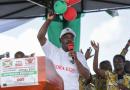
Burundi’s President Pierre Nkurunziza has intensified his brutal campaign to stay in power by stifling international news reporting of his government’s repressive actions, events ahead of his controversial referendum to extend presidential term limits.
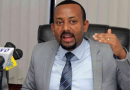
This paper offers an aspirational and prescriptive analysis to the the current political trajectory that Dr. Abiy Ahmed, the new prime minister of Ethiopia, has embarked on, as a young, dynamic, forwarding looking, and Pan-African, peace and security analyst. However, it is too early to tell what his political and economic performance will be in the years to come, as Ethiopia remains an enigmatic polity that defies clear-cut categorisation and conceptualisation.