


America First, Africa Last: Data Extraction from Africa’s Bodies and the Erosion of Health Sovereignty
Health data is Africa’s new gold. How can African peoples stop imperial capitalist efforts to exploit African health information and the related erosion of African sovereignty?
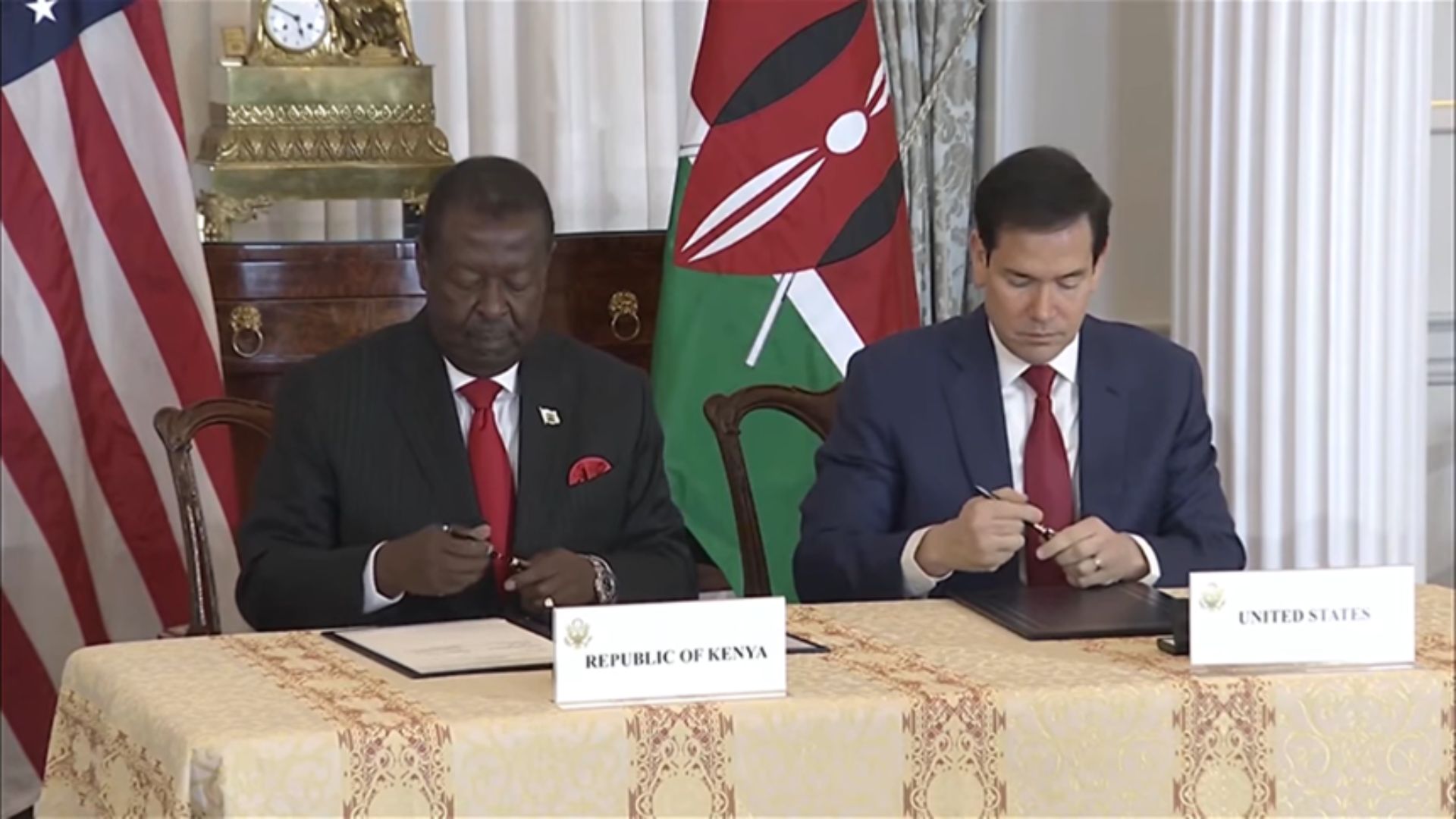
In September 2025, Marco Rubio, the US Secretary of State, launched the America First Global Health Strategy (AFGHS). According to Rubio, the AFGHS was implemented because the previous U.S. global health program had failed. The objective of the strategy is to “Prioritize the interests of Americans and make America safer, stronger, and more prosperous.” As part of the strategy, the US has entered into bilateral agreements with several countries to advance its “National interests while saving millions of lives, and help promote and export American health innovation around the world.” According to the Strategy document, the U.S. government aimed to complete bilateral agreements with recipient countries that receive the vast majority of U.S. health foreign assistance by December 31, 2025, and to begin implementing these new agreements by April 2026.
As of the beginning of 2026, the US government has entered into multi-year bilateral health agreements with several African countries, namely Kenya, Uganda, Rwanda, Liberia, Cameroon, Eswatini, Lesotho, Mozambique, Nigeria, Côte d’Ivoire, Botswana, Madagascar, Sierra Leone, and Ethiopia, worth a total of $16bn. Strangely enough, at the time of writing, the US has not entered into any bilateral agreement with any country in Asia, North America, South America, Antarctica, Europe, or Australia. At face value, there is nothing sinister about these agreements; after all, the US is providing these African countries billions of dollars to improve their health outcomes. If one skims through the America First Global Health Strategy document, one will read about how its global health interventions have saved millions of lives; one will read about how the US government plans to fund commodity purchases and frontline healthcare workers who directly deliver services to patients; one will read about how over the long run the recipient countries healthcare programs will produce concrete results and there will be a reduction in the culture of dependency. One will read that it enables the detection of an outbreak with epidemic potential within seven days of its emergence. What is not to like about these lofty ideals?
I conducted a comprehensive analysis of the America First Global Health Strategy and the bilateral agreements between the U.S. government and recipient countries, and I identified several aspects that should be ringing alarm bells in every African country. While the AFGHS is publicly available, none of the bilateral agreements between the US and the African participating countries are publicly available, except for the bilateral health agreements between the US and Kenya. In the next couple of paragraphs, I will highlight the fine print that raises concerns.
The first point worth noting concerns the strategy's name. The fact that it is named the America First Global Health Strategy speaks volumes. The Trump administration views the world on a zero-sum basis in which one’s gain is the other's pain. The subtext of “America First” means that the objective of these agreements is to benefit America, and any other benefit that accrues to the other participating country is mainly ancillary. If America comes first in implementing this agreement, it is evident that Africa comes last. The strategy document also explicitly addresses geopolitical considerations. Page 17 of the AFGHS notes that this bilateral agreement could serve as an important counterweight to China, particularly in Africa, a continent of strategic importance to U.S. national interests. It states, “Africa also contains several of the largest deposits of key minerals and rare earth elements needed as inputs into advanced technologies that fuel critical military and commercial applications.” Oddly, why does Africa’s mineral serving as inputs to the U.S. military-industrial complex feature in a global health strategy? It is also incredulous that African leaders in 14 countries can bind their countries to such a contract after reading these statements. The reference to America First and Africa’s mineral resources clearly demonstrates that these bilateral agreements are one-sided.
The bilateral agreement grants the United States Food and Drug Administration (FDA) emergency use authorisation to respond to an outbreak in the African country that is party to the agreement. The US FDA is responsible for protecting US public safety by regulating food safety, medicines, medical devices, radiation-emitting products, vaccines, blood, and biologics, animal and veterinary cosmetics, and tobacco products. Furthermore, the African participant country, by signing the agreement, agrees to recognise U.S. FDA approvals and Emergency Use Authorisations as the basis for authorising corresponding health products in the country. This is very concerning as these African countries have surrendered their health sovereignty by allowing the US to mandate medical products to use on African citizens in the event of a disease outbreak, thereby bypassing the countries' internal health architecture.
The FDA is not infallible. It has a long history of regulatory failure. It has failed to protect the public from hazardous products. For instance, in the 1980s, Bayer's Cutter Biological division exported HIV contaminated blood products overseas. As news of this scandal began to emerge, the FDA sought to suppress the information by resolving the issue quietly to avoid alerting Congress and the public. Bayer continued exporting contaminated blood to Latin America and Asia despite selling treated and safer blood to Western countries. The FDA also played a key role in the Opioid Crisis as it approved OxyContin, relying on the manufacturer's claims despite knowledge of the early warnings about the drug's addictive features. The FDA was also found wanting in its delayed response to the release of Vioxx, a painkiller which increased stroke and heart attack risks. There is also evidence of a revolving door between the FDA and the pharmaceutical companies it regulates. A regulator with such a long history of regulatory failure and regulatory capture should not be granted emergency use authorisation in Africa.
The Trump administration recently laid off thousands of employees at the FDA. This is part of the 10,000 positions that have been sacked across the Health and Human Services. The arbitrary nature of these sackings of seasoned public officers has further eroded the professionalism and scientific accuracy emerging from the FDA. During the Emergency Use Authorization for COVID 19 vaccines, the long-term effects on various demographic constituencies, fatal outcomes for children and people with underlying conditions, and specific efficacy of the vaccines were also not examined. Ongoing research is still unravelling the effects of COVID-19 vaccines approved by the US FDA. Would the US government ever grant the Nigerian National Agency for Food and Drug Administration and Control Emergency Use Authorisations as the basis for authorising corresponding health products in the USA?
African signatories to the bilateral agreement are expected to share information about detected pathogens with the United States. Also, the agreement stipulates that the US and the signing African country “Intend to continue specimen testing, including genetic sequencing and sharing data on detected pathogens.” The bilateral agreement includes a paragraph stating that the parties will enter into separate specimen-testing agreements to specify detailed specimens, samples, and sequencing data with pandemic potential. According to a model specimen sharing agreement seen by Health Policy Watch, upon request from the US Government, the participant country agrees to share specimen data within five days of receiving the request. The African signing countries also consent to the U.S. Government sharing the specimen and related data for the purpose of developing diagnostics and medical countermeasures with up to ten non-U.S. Government entities. According to the agreement, the duration shall be 25 years.
Due to the power imbalance between the USA and the African countries participating in this specimen-sharing agreement on pathogen and genetic sequencing sharing, Africa has placed itself in a highly vulnerable position. Pathogens and genetic data are biological assets of a country, and by yielding such data to the USA, these countries have surrendered their health sovereignty. Once these biological assets leave the shores of Africa for the USA, control over the assets is lost forever. In granting the USA 25 years to keep the pathogens, Africa has given the USA a licence to do whatever it desires with the asset. Without sounding alarmist, there is a risk that the pathogens could be used to develop biological weapons to the detriment of Africa. Furthermore, with America’s scientific advancement, it is in a position to use specimen sharing to develop ethnic specific pathogens that could be detrimental to Africans. This may appear to be a conspiracy, but when one observes the West's decade-long crusade to control Africa’s population, coupled with the West's declining fertility in addition to claims by fringe elements that black and brown people are replacing white people in the West, this scenario, though theoretically unlikely, cannot be ruled out. We have all seen how the Trump administration has disparaged African countries by describing them as shithole countries, how Trump has singled out Somalia for insults and his visa bans on predominantly African countries. With access to Africa’s pathogen and genetic sequencing data, the US could weaponise the information to impose travel bans and isolate African countries.
The Bilateral agreement also grants the United States access to the digital health infrastructure of the participating countries. According to the agreement, the USA will partner with the government to ensure that data systems are in place to monitor potential outbreaks and broader health outcomes. The US will also operationalise a unified national digital health architecture with the participating countries. Furthermore, the USA intends to utilise artificial intelligence and machine learning to modernise the participating countries' digital health infrastructure, with particular focus on clinical decision support, supply chain forecasting, and enhanced surveillance to detect and anticipate health threats. In her book The Age of Surveillance Capitalism, Professor Shoshana Zuboff notes that surveillance capitalism operates through unprecedented asymmetries in knowledge: “Surveillance capitalists know everything about us, whereas their operations are designed to be unknowable to us.”
Data is the new gold, and by granting the USA backdoor access to its health data, Africa has deprived itself of the opportunity to benefit from this rich mine of information. The upside derived from this data will accrue to American businesses, who will commercialise the intellectual property. It also deprives Africa of the opportunity to stop the onslaught of capital accumulation through African bodies, the reinvention of Tuskegee, and the goals of eugenics. At the same time, Africans will once again find themselves in a position of dependence on the USA. According to the America First Global Health Strategy, “We will also leverage our bilateral relationships with countries to promote American health innovations and products more broadly globally, helping ensure that American innovation becomes a cornerstone of health systems around the world.” Africa has put itself in a position in which its raw material (read health data) is mined in the USA, commercially exploited, and then sold back to Africa at a price well above the amount the USA has spent on its foreign health assistance. In addition, as the USA uses machine learning on Africa’s health data, Africa could find itself unable to retrain the AI model and dependent on US algorithms and technical personnel.
A key feature of the bilateral agreement between the USA and the participating African countries is that, although the two parties have signed it, it is asymmetric. Under the agreement between the USA and Kenya, the latter must provide any information required for audits of up to 5% of randomly selected or designated health facilities, clinics, and laboratories. However, there is no provision for Kenya to audit any specific USA health facility or laboratory. The African countries are expected to detect infectious disease outbreaks with epidemic or pandemic potential within 7 days and notify the US government within 1 day of detection, and respond to the outbreak within 7 days; in contrast, in the event of any disease outbreak in the USA, there is no requirement for the US to notify the participating African countries. While specimen testing, genetic sequencing, pathogen surveillance, biobanking systems, and infectious disease reporting flow from Kenya to America, there is no reciprocal exchange of information that flows back to Kenya.
From a legal perspective, the African participating countries are at a disadvantage relative to the USA. African countries lack recourse to international or domestic courts in the event of disputes, as the agreement stipulates that “This Framework is not an international agreement and does not give rise to rights or obligations under international or domestic law.” Furthermore, the agreement states that any dispute will be resolved amicably through consultations and negotiations via diplomatic channels, without recourse to the courts. With America's outsized role on the global stage, any dispute arising from this agreement is most likely to be in the US's favour, as the participating African countries lack the military, economic, or diplomatic power to negotiate in their favour.
From the above, it is evident that this asymmetric bilateral agreement, which results in Africa’s loss of sovereign control over its biological assets, poses a threat to the continent. It is concerning that African leaders could sign such an agreement despite the numerous dangerous clauses it contains. The leaders appear to have also ignored history and how the West has weaponised biology and medicine against the Global South. In a speech titled "Black Man's History," Malcom X highlighted the importance of history for Black people. According to him, “You have to have a knowledge of history no matter what you are going to do; anything that you undertake, you have to have a knowledge of history in order to be successful in it… the only thing that puts you and me at a disadvantage is our lack of knowledge concerning history. The USA's interest in African health data follows a long history of its interest in the anatomy and biology of black people. Harriet Washington, in her book Medical Apartheid, chronicles America’s obsession with carrying out medical experiments on black bodies.
According to Washington, American university research centres were historically situated in black populated areas, where a large number were involved in carrying out abusive medical experiments on African Americans. Doctors carried out experiments on black people to test new medical procedures, and there was a time in America when blacks were at the greatest risk of being used as cadavers. Thomas Murrell, a doctor in Jim Crow America, said, “The future of the Negro lies more in the research laboratory than in the schools.” While the Tuskegee Syphilis Study is one of the most high-profile examples of the abuse of the health sovereignty of black and brown bodies, there are many other instances where black and brown people have had their health sovereignty compromised. In fact, the original inhabitants of America, upon contact with Europeans, were exterminated as they contracted smallpox, influenza, diphtheria and measles from the invaders.
To persuade African countries to sign these one-sided bilateral health agreements, the U.S. government employed the classic divide-and-rule tactic to push them through. By negotiating with individual countries, the USA has greater bargaining power, especially since it has closed its USAID programme, which several African countries relied on. In the case of Nigeria, the USA was able to exploit the religious divide by placing a strong emphasis on Christian faith-based healthcare providers. As the Nigerian Christians sang “Hallelujah”, their Muslim counterparts shouted "Ḥasha lillah." The Muslim Rights Concern (MURIC), which described the pact as “pro-Christian, parochial, divisive and discriminatory”, demanded that the agreement be revoked. Instead of focusing on the potential danger of the terms of the agreement for all Nigerians, MURIC, like a lamb asking to be led to the slaughter, requested that the US government sign another health pact with the Nigerian government, this time focusing on Muslims. It has been completely lost on Nigerians that this agreement is an “American First” health pact.
A lack of transparency has reinforced this divide-and-rule strategy, as the details of the bilateral agreement have not been made public. Of the 14 African countries that have entered into bilateral agreements with the U.S. government, only the health pact between the U.S. and Kenya is publicly available. As a result of this opacity, African citizens, legislators and civil society have been unable to review the agreement which their leaders have signed on their behalf. It is therefore unsurprising that the primary pushback to this agreement has come from Kenya, the only country to make the deal publicly available. In contrast to Nigeria, where people on the religious divide are elbowing each other to be “worthy guinea pigs” for an American First Healthcare strategy, Kenyans have rallied to resist the pact. A Kenyan court suspended part of the healthcare agreement on data-privacy grounds, following a petition by the Consumer Federation of Kenya, a consumer-rights lobby group.
Where do we go from here? With the US in the lead with its Africa-focused America First Global Health strategy, other Western nations may rush to the scene to extract value from African bodies. Recently, the US Centres for Disease Control and Prevention granted a $1.6 million grant to Danish researchers to conduct controversial hepatitis B vaccine research in newborn babies in Guinea-Bissau. For Africa to reclaim its health sovereignty, several measures need to be implemented.
First and foremost, African leaders need to look beyond their self-interest and pursue Africa First policies that benefit the people they govern. Centuries ago, the coastal elites from Senegal to Mombasa in West, East and Central Africa betrayed their own people by selling them to the enslavers in exchange for gin, mirrors and guns. The spiritual descendants of those coastal elites should break the trend and be their brothers and sisters' keepers.
Second, the African Union should convene an extraordinary summit of all African Heads of State. The African leaders should agree to rescind all the bilateral healthcare agreements signed by the participating countries with the US government. In the future, Africa should negotiate such agreements with Western countries, such as the United States, as a collective bloc and in accordance with Agenda 2063. This pan-African approach will give Africa greater bargaining power, enabling it to enter into such agreements as an equal.
Third, transparency must be non-negotiable. The governments of the participating countries should make the healthcare agreement publicly available to their citizens and present the pact to their legislators for deliberation and approval. Furthermore, medical and legal professionals in each country should be involved in drafting the agreement. This way, everyone will be aware of the agreement's pros and cons and can debate which terms should be removed or revised.
Fourth, the terms of the agreement should be revised to ensure reciprocity; no African country should share epidemiological data, modelling outputs, or genetic sequencing unless the USA is willing to share theirs in return.
Fifth, Africa should insist that the agreement's legal status confer on the participants rights and obligations under international and domestic law.
Finally, in the first Scramble for Africa, the continent lost its land, and now it faces imperial control over its health data; and the old saying rings truer than ever: fool me once, shame on you; fool me twice, shame on me.
Selah
Ahmed Olayinka Sule, CFA, is a Nigerian writer, financial analyst, and documentary filmmaker based in London. He can be reached at [email protected] and @Alatenumo