


Bargain prices on Ethiopia's prime farmland! Who's down for some land grabbing?! Anybody? This spoof commercial follows a Human Rights Watch report stating that the Ethiopian government under its 'villagization' program is forcibly relocating approximately 70,000 indigenous people from the western Gambella region to new villages that lack adequate food, farmland, healthcare, and educational facilities.
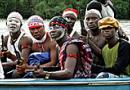
Unlike the Biafra experience, indigenous peoples confronting land dispossession are looking beyond the nation-state for justice.
Mozambique granted concessions to investors for more than 2.5 million hectares (ha) of land between 2004 and the end of 2009, says the Oakland Institute's country report on Mozambique, which forms part of a multi-country study on understanding land investment deals in Africa. 'Mozambique’s history of Portuguese colonialism, three wars, and then the imposition by the World Bank and International Monetary Fund of a harsh neo-liberal economic model led the government in the 1990s to accept the idea that the only way to promote development and end poverty was through encouraging foreign investment. Mozambique was identified by the World Bank as one of five sparsely populated African countries with large tracts of land available for rainfed cultivation. After 2000 rising food and fuel prices and new climate change-related attention on forests triggered the interest of investors in Mozambique, particularly for trees (for paper, timber and carbon credits) and agrofuels (notably sugar and jatropha).'
Visit the website to read about the People's Land! Housing! and Jobs! Summit that was due to take place 27 - 29 January, but instead led to a number of arrests. The summit was to discuss and develop 'a more radical people driven program for the proper integration of our cities and establishing the right of families to a basic income, jobs, economic opportunities, social mobility, housing, land and the right to the city.'
A dozen traditional gold mining sites have appeared in recent years in the province of Ganzourgou. Gold panners from all over flock there to work the sites, most often living in the greatest promiscuity, without any infrastructure for sanitation and with no access to public basic services. The miners migrate according to the discovery of new veins of gold, usually moving there from the rural areas of Burkina Faso as well as from neighbouring countries (Togo, Benin, Ghana). Between one quarter and one third of them are under 18.
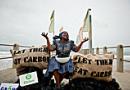
Climate gamblers have been led astray since 1997 when the Kyoto Protocol was amended to let corporations buy the right to pollute in exchange for endorsing the treaty. Predictably, Washington has refused to honour this ever since.
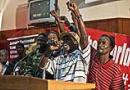
By taking back the commons, thousands of poor and working-class people, together with many middle-class allies, are saying that they no longer want to live in a city which remains segregated.
Ethiopia, which is deemed an 'important regional security partner' by the US government and one of the largest recipients of US aid (over $1 billion a year since 2007), is forcibly relocating 70,000 people from Gambella to make land available for investment in agriculture. In doing this they are also aggravating current hunger while laying the groundwork for future famine in Ethiopia, as people are losing their livelihoods and being moved to areas where they cannot readily feed themselves.
South Sudan has said it ordered the halt of oil production that provides some 98 per cent of its revenue, amid a deepening dispute with the Sudanese government over pipeline fees. Sudan admits to taking some South Sudanese oil destined for export as compensation until an agreement, but the South has said this is theft. 'The government has instructed the minister of petroleum and mining to proceed with arrangements for a complete shutdown of oil production,' Barnaba Marial Benjamin, South Sudan's minister of information, told the AFP news agency on Friday.
Population growth and rising consumption by a minority of people around the world are fuelling global land acquisitions and Africa is a 'prime target', says the International Land Coalition. 'The best land is often being targeted for acquisition. It is often irrigable, with proximity to infrastructure, making conflict with existing land users more likely,' says a 14 December 2011 report. Africa accounts for 134 million hectares of reported land deals. Worldwide, between 2000 and 2010, deals under consideration or negotiation amounted to 203 million hectares, the Coalition says.
Recently hundreds of dead fish floated to the surface of a stream which was the only water source for a rural community in Swaziland's drought-prone eastern region. A local sugar processing plant admitted to accidentally discharging toxic effluent into the stream, and brought in water tanks to supply the community until clean-up operations could be completed. Communities like this one were at the mercy of polluters until the Swaziland Environmental Authority (SEA) was established five years ago. An environmental watchdog group comprising 16 scientists from various fields, SEA is tasked with enforcing Swaziland's 2002 Environmental Management Act as well as various international environmental treaties to which Swaziland is a signatory.
Several years ago, Lakes Kamnarok and Ol Bollosat in Kenya were vibrant water bodies that supported and shaped the ecosystems around them. But today they are shells of their former selves, due to heavy siltation caused by human activities. 'Siltation is still happening, the lake is drying up and this is threatening Lake Kamnarok and the wildlife with extinction, besides affecting the lives of people around it,' Elijah Chemitei, senior warden in Baringo County, in the Rift Valley Province, told IPS. 'Much of it is caused by upstream activities like tree-felling and charcoal-burning, agricultural activities, grazing and sand collection.'
This report from the Hunger Safety Net Programme Secretariat (HNSP) defines the behavior of HNSP beneficiaries receiving cash transfers in coping with and overcoming the challenges of extreme poverty magnified by shocks of environmental extremities of drought, famine, floods and socio-economic marginalisation. Further, it documents how some beneficiaries have been able to build some form of stable livelihoods (a desired knock on effect) using the cash transfers and in the context of the three year prolonged drought.
A group of young scientists meeting on the sidelines of COP17, held in Durban, South Africa last year, has resolved to mobilise African young scientists and youth within and outside Africa to promote the role of African indigenous knowledge systems in climate change adaptation and mitigation through
research and community engagement.
When South Sudan became an independent state in July 2011, northern Sudan lost most of its oil fields to its new neighbouring country. In an effort to revive the country's struggling economy, the Sudanese government has been selling or leasing vast swaths of fertile land to foreign investors. But in areas where agricultural land is the basic source of living for people, there is much anger over what farmers say is a government policy that promotes foreign land grabs, favouritism, and exploitation, reports Al Jazeera.
30 January 2012 is the latest date set for the sentencing of Zoliswa Nkonyana’s murderers, according to blog Writing Rights. Nkonyana was killed because she was lesbian. Activist Zackie Achmat writes in commentary on a reposted news article on the site that the inefficient, ineffective and unjust criminal justice system in Khayelitsha and throughout our country continues to punish Nkonyana’s family and friends with the delay in sentencing the killers. The Social Justice Coalition together with Equal Education, Treatment Action Campaign and Triangle Project have instituted a formal complaint for a Commission of Inquiry into SAPS, the Metro Police and the other agencies.
Last month, on the other side of the Atlantic, the oil giant Royal Dutch Shell's operation caused from 1m to 2m gallons of oil to spill into the ocean off the coast of Nigeria, also as the result of an industrial accident. 'You may wonder where the outrage against Shell is?' asks Michael Keating in this article on the website. 'To say that it is nonexistent except for a few responses from the environmental community would be an understatement. The simple fact is that Shell and its "sisters" in the West African oil patches are rarely scrutinized except in the most egregious cases – which this one surely is – and the world seems to simply expect that the people of Nigeria should live with these sorts of occurrences because they unfortunately lack the political and media clout to do otherwise.'
A staggering $32 billion is missing from the state coffers of Angola, a nation that is steeped in poverty, blatant social inequality, and among the worst-ranked in the world for its life expectancy, infant mortality and corruption. New York-based Human Rights Watch said in December that the government of Angola should promptly provide a full public accounting for $32 billion in missing government funds, thought to be linked to the country's state oil company Sonangol.
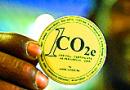
'As the soul-deprived, brain-dead, heartless climate-policy Zombie stumbled off the Durban platform in the direction of Qatar for the COP18 next year, it immediately tripped on the crumpled carbon markets,' writes Patrick Bond.
The global rush to acquire large amounts of land in developing countries has done more harm than good, especially to the poorest people who often lose access to land and resources essential to their livelihoods, a new study says. The problem is fuelled by ineffective governance, corruption, a lack of transparency in decision-making and weak rights for local landholders, according to the study by the International Land Coalition (ILC), which presents findings from the Global Commercial Pressures on Land Research Project.