


In February, Pambazuka News plans to carry a special issue dedicated to the LGBTI situation in Africa. Send in your contribution
Among some of the important ways to continue to honour, cherish and act upon Madiba’s legacy are for Africans to stop fighting one another and the white minority to give up their white privileges and economic might
Despite South Africa’s liberal constitution, gay refugees and asylum seekers face widespread xenophobia and homophobia that does not allow them to seek stable employment nor receive legal redress when discriminated against
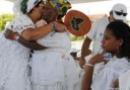
Black women in Brazil are still the class with least access to social goods and services and are deeply affected by widespread exploitation, discrimination and social exclusion. Their struggles for a politicised and healthy black identity continue
A new six-part video series from provides practical tips and insight from activists, survivors and experts on interviewing techniques, creating appropriate questions, safety and security, and the effects of trauma on survivors of sexual and gender-based violence. The video series accompanies our written guide on

In the context of changing climates and increased stresses on the natural environment, women farmers need consistent, relevant and intelligent support, in a timely manner, to secure their critically important roles in food security, health and biodiversity conservation. There are important lessons from the Caribbean in this regard
Kwame Ture was a champion of women’s rights and empowerment. Foremost he recognised, acknowledged and accepted that African women must lead their own emancipation
Dear Chambi,
I love this . It is brilliant.
However, I am not convinced of the need to 'collapse' gender, class and race into one grand category called patriarchy .. and wonder how others feel about it?
I don't agree with the idea that patriarchy as patriarchy is a gendering classing and racializing system of domination .... for me, I remain comfortable with the idea of intersecting social forces of patriarchy and neoliberalism and racism [you may assist me in updating what conceptual tool is used these days for 'intersecting' or interweaving ..]
However I agree and believe you have advanced our analysis forward by insisting on the primacy of gender analysis of patriarchy when analysing any form of power relations in society .. though I would still add 'along with eg imperialism and race'
Thanks for this thoughtful essay.
Marge
Understanding gender as the primary way of signifying relationships of people enables one to see that even racial and class relations are constructed in relation to gender. One is not simply racialized as black, or classed as working class, but as a black man/woman and as a working class man/woman respectively
Political Islam in Sudan remains very strong and manifests itself in floggings of Sudanese women that are justified by the constitution in the Indecent and Immoral Acts. Yet, Sudanese women remain defiant and resist these unjust and misogynistic laws
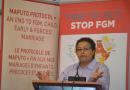
Much has been achieved since the Protocol came into force. But to ensure gender equality and transformation in gender relations between women and men, a comprehensive change that radically alters the status quo of the power relations rather than ad hoc or piecemeal reforms is needed.
57 years ago women took to the streets challenging national and gender oppression. Today, South Africa requires a transformation of capitalist property relations which inherently oppress, exploit and abuse women. At the same time more women must be brought into the revolutionary movement as organizers and leaders
New York, 10 July 2013 - UN Secretary-General Ban Ki-moon today announced the appointment of Ms. Phumzile Mlambo-Ngcuka from South Africa as the new Executive Director of UN Women, the organization leading UN’s work on advancing gender equality and women’s rights.
The announcement was made through the Spokesperson of the UN Secretary-General at today’s news briefing. The statement says: “Ms. Phumzile Mlambo-Ngcuka brings to this position, a wealth of experience in advocating for women’s issues with a combination of strategic leadership, consensus building and hands-on management experience. She was the first woman to hold the position of Deputy President of South Africa from 2005 to 2008. Ms. Mlambo-Ngcuka initially became a member of parliament in 1994 chairing the Public Service Portfolio Committee. She was deputy minister in the Department of Trade and Industry (1996-1999), Minister of Minerals and Energy (1999-2005) and briefly served as acting Minister of Arts, Culture, Science and Technology in 2004.
Ms. Mlambo-Ngcuka was Young Women’s Coordinator for the World Young Women’s Christian Association in Geneva (1984-1986) and served as the first President of the Natal Organization of Women, an affiliate of the United Democratic Front, when it was formed in December 1983. Ms. Mlambo-Ngcuka established Umlambo Foundation in 2008 to provide support to schools in impoverished areas in South Africa through mentorship and coaching for teachers and in Malawi through school improvements with local partners.
Ms. Mlambo-Ngcuka holds a Master’s degree in Philosophy in Educational Planning and Policy from the University of Cape Town (2003) and a BA in Education from the University of Lesotho (1980). In 2003, she was awarded an Honorary Doctorate from the University of Western Cape.
Born in 1955, Ms. Mlambo-Ngcuka is married with three children.
Significant gains have been achieved, but the Protocol will only have real meaning when governments go further and show their commitment to the protection and advancement of African women’s rights by domesticating and fully implementing the instrument

Being a young African woman is perhaps the most perilous form of identity in the continent. But there is growing recognition that Africa’s progress will be directly determined by how well it performs in improving the lives of its women and girls
Since March a combination of factors, including the fall in popularity of Zambia's ruling party PF, has led to a hate campaign against LGBT people in the country
Addis Ababa, May 2013. FEMNET (African Women’s Development and Communication Network) and UNDP (United Nations Development Program) launched Women Rising – a documentary on Political Leadership in Africa in Addis in the margins of the AU Summit and during the celebrations of Pan-Africanism and African Renaissance.
Though little acknowledged, one year prior to the founding of the OAU, Pan African Women’s Organization was formed in 1962 in Dar es Salaam, Tanzania. It could be said that PAWO was the building block, the impetus, for the establishment of the OAU
Gender based violence is entrenched in the strong patriarchal ideologies of control, subversion and subordination of women and girls. Efforts to resists this has mostly been undertaken at individual level. As a result, patriarchy continues to thrive
 Brutal crimes of violence against women and girls have massively increased and become pervasive in the country.