


A majority of African countries continue to be run by governments of greatly limited democratic clout, writes Ronald Elly Wanda, with multiparty politics and local people’s access to influence severely restricted.
As part of a broader effort to consider who’s who in Tanzanian society, Chambi Chachage discusses the reproduction of the country’s elite class and stresses that if you want to understand the underprivileged, you must also study the privileged.
http://www.pambazuka.org/images/articles/494/pok_group_tmb.jpgPillars of Kibera is a theatre-for-social-change group based in Kibera, Nairobi. Comprised of 25 passionate young people, this theatre group creates their own performance pieces using dance, drama, music and poetry to address the social issues faced by Kibera residents. is made up of photographs from the group’s rehearsals and performances, along with interviews from group members about Pillars of Kibera discussing how it brings change to the community and how it has changed themselves.
http://www.pambazuka.org/images/articles/494/angola_tmb.jpgAs communities in Angola’s municipality of Matala and Quipungo face up to demolitions as part of the government’s ‘Operation Combat and Demolition of Shacks and Anarchic Constructions in the Municipality of Lubango’, civil society work by local groups has proven crucial in enabling families to prepare adequately and begin to organise, writes Sylvia Croese.
In conversation with Pambazuka News, Executive Director Franck Kamunga of the Kinshasa-based Droits Humains Sans Frontières discusses the struggle for justice for murdered civil society activists in the DRC (Democratic Republic of Congo) and the role of the International Criminal Court (ICC).

The UN is rapidly becoming a breeding ground for corruption and impunity, writes Rasna Warah. Warah, a former UN staff member, investigates how voices raised against wrongdoings in the organisation are hastily muted, and often met with severe reprisals.

As ‘Africa’s top kleptocrats … gathered at their annual summit’ in Kampala, US Attorney General Eric Holder and US Assistant Secretary for African Affairs Johnnie Carson told those assembled that the US Justice Department has established the Kleptocracy Asset Recovery Initiative (KARI) to recover criminally acquired funds, writes Alemayehu G. Mariam. Corruption and the misappropriation of funds have a devastating impact, Mariam stresses, and in developing an initiative to combat elite impunity, it seems that ‘President Obama … has finally found the silver bullet to deal with Africa’s corrupt thugs.’
In an interview about ICT (information and communication technology) and its social effects on women, GenderIT.org writer Mavic Cabrera-Balleza speaks with Sylvie Niombo and Francoise Mukuku, activists from Congo-Brazzaville and the Democratic Republic of Congo (DRC) respectively.

Following a century of colonialism, contemporary neoliberal imperialism is the cause of many of the crises ravaging Africa, writes Ayo Ademiluyi, with particularly harsh consequences for Nigeria’s working class. With oil accounting for over 90 per cent of government revenue, local industry has collapsed, leading to widespread unemployment and increasing poverty. As child and maternal mortality rates continue to increase and life expectancy decreases despite the wealth oil exports have brought the government, Ademiluyi calls for the workers’ movement to galvanise itself to transform society.

Government and civil society need to ensure that exploration in Angola’s diamond provinces brings greater benefit to the lives of the local populations, according to a new report about the country’s diamond sector, writes Sylvia Croese. Prepared by the Episcopal Commission for Justice and Peace, the report focuses on the growth of the sector from 2002 to 2009 and analyses the effects of the economic crisis, diamond legislation and the development of the diamond provinces of the country.

Although a moratorium on ‘Terminator’ technology was reaffirmed by the United Nations Convention on Biological Diversity four years ago, proposals to develop and commercialise ‘genetic-use restriction technologies’ are ‘back on the agenda for policymakers and the biotechnology industry’, writes Via Campesina. Ending the moratorium on ‘Terminator’ crops, modified to produce sterile seeds, poses threats to both food sovereignty and agrobiodiversity, Via Campesina warns.

Kenya is once again at a crucial stage in its pursuit of a democratic constitution capable of bringing stability and unity to the country. Energy and resources are being focused towards ensuring the constitution referendum process is not plagued with violence in a repeat of the tragic events following the 2007 election. One innovative initiative is to allow the citizens themselves to provide up-to-date reports of potential trouble through the use of mobile phones and the internet.
The 2010 State of the Union Continental Report ranks 10 African countries in order of most to least progressive based on a number of areas of focus, including the promotion of human rights amongst the citizenry and the level of democratic governance. The African Union comes under scrutiny in this report in a bid to effectively promote development. Lucy Bamforth takes a look at the report’s findings and implications for the countries investigated, and the continent at large.

Recent tragedies of domestic violence from within the African community in the United States leave Roland Bankole Marke posing the question: ‘Are Africans losing out on their community-based cultural and spiritual values in pursuit of the American dream that is fast becoming a myth and nightmare rather than a reality for many?’ Marke raises fears that a separation from Africa has weakened the resonation of African culture in the lives of those who have chosen to live outside the continent. Marke warns that the deterioration of African culture is resulting in such societal devastation and must be stopped in its tracks.
In 70 days time, writes Brenda Kombo, the African Union will launch, in collaboration with the Kenya government and civil society organisations, the AU African Women's Decade 2010-2020. African governments will need to go beyond mere paper endorsements and deliver fully on their commitments to gender equality.
History and Africa will always remember Basil Davidson, not just for being a Pan-Africanist and prolific revolutionary scholar, but also for being a humanist, writes Horace Campbell.
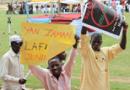
Nigeria must unite in its pursuit of democratic freedom, writes Oluwole Onemola. Onemola urges Nigerians to shed a history of timidity in the face of government repression. This vast country can indeed unite to hold those with power to account, writes Onemola, if only drive and diversity can catalyse reactions of change amongst the populace, ‘the dormant daggers of the southern hemisphere’.
Following Basil Davidson’s passing, Ama Biney salutes the historian’s work as a European scholar who was not blighted by ‘a Eurocentric, prejudiced paradigm’ in analysing Africa’s past.
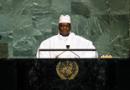
Released in response to Gambia’s ‘Freedom Day’ on Thursday 22 July, this joint statement from civil society organisations aims to draw attention to Gambian President Yahya Jammeh’s ‘appalling human rights record’. The statement underlines that: 'Freedom remains an illusion for most Gambians, who live in fear of arbitrary arrest, torture, incommunicado detention, unfair trials, rape, disappearance and extrajudicial executions.'
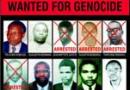
With Rwanda’s presidential elections scheduled for August, Chi Mgbako looks at the country's post-genocide government and argues that the Kagame administration is using the memory of the genocide to hold onto power. Highlighting the government’s censorship of the media and its alleged involvement in silencing the opposition, Mgbako argues that such actions trivialise the memory of those who lost their lives in the genocide and questions how this will help Rwanda achieve national unity.