


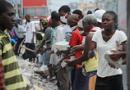
The earthquake in Haiti has served only to worsen the condition of the Haitian people, writes Kamau Karl Franklin, of the US-based Malcolm X Grassroots Movement (MXGM). As grassroots organisations attempt to make up for post-disaster aid shortfalls and an unaccountable government, MXGM made this statement in solidarity with Haiti’s people, following a visit to the country earlier this year.

South Africa’s President Zuma is defending the funding of political parties by business ‘on the basis that corporate citizens should invest in democracy’. But, observes Mphutlane wa Bofelo, these donations are not about supporting democracy, they are attempts to ‘cajole and capture the political establishment and the state to be beholden to and defensive’ of corporate interests.
Greater investment is needed to boost adult literacy initiatives, but this doesn’t have to be spearheaded by government or donors. Salma Maoulidi explores how communities can promote a culture of intergenerational inquiry and learning by encouraging children to share the skills they gain at school with non-literate members of their family.

Looking at trends within China’s work with Africa around human research development, especially in the areas of education and training, Kenneth King finds certain elements of ‘cooperation’ to be rather one-way and asymmetrical, while others are more based on partnerships.

In early September, Rwandan President Paul Kagame was sworn in for his second seven-year term. During the run-up to the recent elections, which Kagame and his Rwandese Patriotic Front (RPF) won easily, Jenerali Ulimwengu got a chance to talk to President Kagame, who answered his critics on a wide range of issues, including Rwanda’s human rights record. The following are excerpts from that interview.
While leader of the Democratic Alliance Helen Zille and leader of the Independent Democrats Patricia de Lille have announced that they will work together, Mphutlane wa Bofelo asks why the South African left can’t find areas of agreement instead of squabbling over differences.

For the last year and a half two creative Zimbabweans, Juma and Willard, have hustled their way from the traffic lights on Roeland Street to a studio in Woodstock, Cape Town, crafting everything from bags made out of old t-shirts to recycled crate-chairs for corporate clients. Not content to just be small time capitalists, from Mondays to Fridays they run art and craft workshops for 100 kids in Khayelitsha and on Saturday mornings they teach conversational English with a group called Chatterbox (made up of primary school kids). This is their story.
With Ethiopian Prime Minister Meles Zenawi speaking at Columbia University in the US this week, Alemayehu G. Mariam calls upon the institution’s President Lee C. Bollinger to extend the same reservations towards Zenawi that he did towards Iranian President Mahmoud Ahmadinejad in 2007.
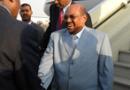
Following Omar al-Bashir’s attendance at Kenya’s constitutional celebration last month, Francis Kornegay speculates on strategic reasons behind Kenya’s defiance of the ICC’s arrest warrant on the Sudanese president. ‘Could there be a connection between al-Bashir’s visit’ and ‘a regional conflict prevention diplomacy addressing the anticipated referendum on South Sudan self-determination in 2011?’ asks Kornegay.
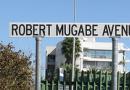
Requests to accord national hero status to the late Gibson Sibanda, former trade union leader and MDC (Movement for Democratic Change) founder, have been denied, despite petitions to Zimbabwe’s President Mugabe. Sokwanele’s Glow argues that ‘the definition of heroism’ in the country should not be 'controlled by Zanu PF alone’, given the 'multi-party political reality'.

The South African Parliament has just released a report that investigates the service delivery protests that have rocked the country over the last decade. But, argues Patrick Bond, the report is ‘utterly inadequate’ and fails to identify the root cause of the protests.
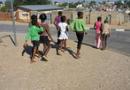
In permitting the rise and enrichment of a self-serving political elite, Namibia’s party of liberation, SWAPO (South West Africa People’s Organisation), has betrayed its once noble goals of creating a more egalitarian society, writes Henning Melber. In the absence of a ‘human-’ rather than ‘elite-centred’ postcolonial trajectory, the country now sustains two sides of an ugly face of privilege and poverty, Melber concludes.

With former Nigerian president Ibrahim Badamasi Babangida (IBB) suggesting a desire to run the country once more, Okachikwu Dibia argues that IBB would be wise to clarify the question marks around his past actions, in particular by agreeing to be prosecuted over his government’s annulment of the 12 June 1993 elections.
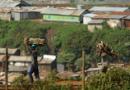
Situated outside the Kenyan capital Nairobi, the densely populated Kibera slum was thought to have been home to as many as 1 million people. International agencies, NGOs and governments scrambled to attention, but recent figures show the numbers of people living in Kibera are much less than previously thought. Rasna Warah explains how a lie became the truth.
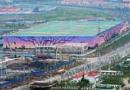
Following a visit to the Shanghai Expo 2010, Kenneth King shares his insights into how 'the continent with the largest number of developing countries' represented itself to 'the largest developing country'.
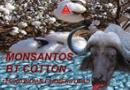
Farmers and civil society organisations around the world are outraged by the recent discovery of further connections between the Bill and Melinda Gates Foundation and agribusiness titan Monsanto, writes AGRA Watch. Given Monsanto’s history of disregard for the interests and well-being of small farmers around the world, the foundation’s connections to the company 'cast serious doubt' on its funding of agricultural development in Africa, as well as representing 'an enormous conflict of interests'.

Across the globe, from the floodplains of the Amazon to the foothills of the Himalayas, from Burmese forests to Ethiopia’s Omo Valley, peasant and indigenous communities are fighting against destructive dams. Dams have deprived hundreds of millions of people of their homes, farmlands, fisheries and forests. Millions more are threatened by projects that are planned or under construction, writes Peter Bosshard.

With International Literacy Day having taken place on 8 September, Steve Sharra considers the significance of ‘literacy’ in the Malawian context. Literacy – understood in a broad sense to include more than merely the capacity to read and write – should be at the heart of efforts to improve livelihoods and rights, while the country’s domestic book industry and greater digital resources should be embraced, Sharra contends.

Surveying a range of development-related literature, Phil ya Nangoloh considers the power and politics behind donors’ relationships to southern non-governmental organisations (SNGOs) and the potentially more progressive role of the ‘reverse agenda’.