


The Forgotten Architects: Pan-African Clerics and the Making of African Liberation
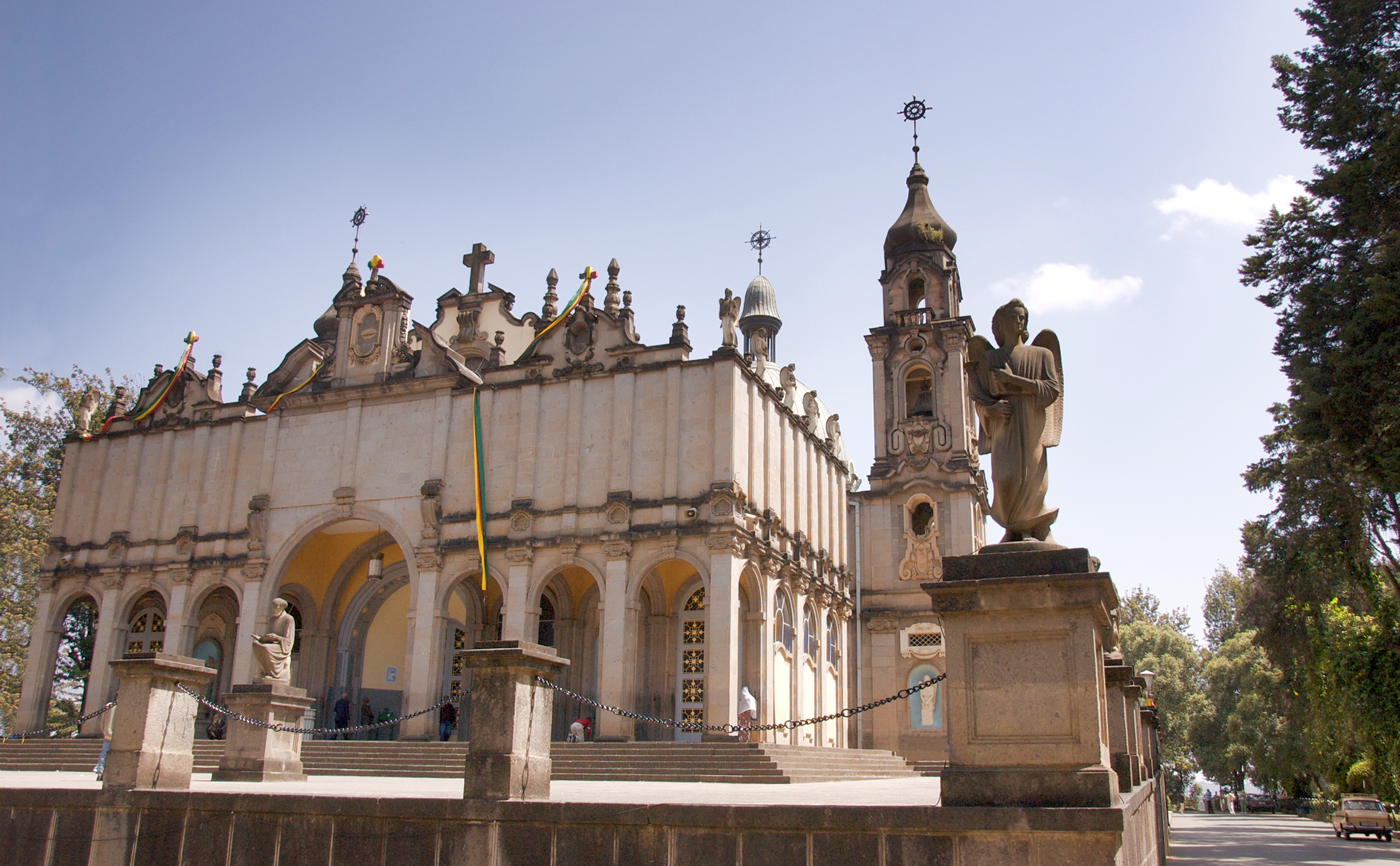
.jpg)
Often treated only as a political movement, Nathan argues that one of Pan Africanism’s strongholds has always been the church. Black churches and clergy not only created international networks and political organizations, but insisted that the Gospel could never be reconciled with racial oppression.
"Princes shall come out of Egypt; Ethiopia shall soon stretch out her hands unto God." Ps. 68:31[1]
The Sanctuary Where Pan-Africanism Was Born
The history of Pan-Africanism is usually told through politicians, intellectuals and revolutionaries.[2] We celebrate W. E. B. Du Bois, Marcus Garvey, George Padmore and Kwame Nkrumah as architects of African unity. Yet this familiar narrative overlooks an earlier generation of pioneers. Long before Pan-Africanism became a political movement, it was nurtured in churches, proclaimed from pulpits and sustained by Black clergy who transformed Christianity into a language of freedom.
This forgotten history matters because the oppression of African peoples was never maintained by military conquest or economic exploitation alone. Slavery, colonialism and apartheid were also sustained by theology. Scripture was invoked to defend slavery, colonial governments portrayed European civilisation as God's design for Africa, and missionaries often dismissed African cultures as inferior. White supremacy was not simply a political system; it became a religious ideology.[3]
Resistance therefore emerged not only in political movements but also in the Church. Across Africa and the Black Atlantic, Black clergy reclaimed Christianity from imperial control and proclaimed it as a gospel of dignity, justice and self-determination. Their churches became schools of leadership, centres of political education and laboratories of African self-government. Before Pan-Africanism acquired a political vocabulary, it possessed a theological imagination.[4]
The clearest expression of that imagination was Ethiopianism. Inspired by Psalm 68:31, African Christians interpreted Ethiopia not merely as a biblical place but as a symbol of African redemption and self-determination. Demands for independent African churches soon became demands for African self-government, making ecclesiastical independence a rehearsal for political liberation.[5]
Across the continent, African Independent Churches translated these convictions into practice. Mangena Mokone's Ethiopian Church in South Africa rejected missionary control, while John Chilembwe's Providence Industrial Mission in Nyasaland united Christian education with African dignity and resistance to colonial rule. These churches were far more than places of worship; they trained leaders, cultivated organisational skills and gave Africans practical experience in governing their own institutions.[6]
Nor was this awakening confined to the continent. Throughout the Caribbean and North America, Black churches nurtured a similar vision of African identity and redemption. Ministers travelled across the Atlantic, denominational networks exchanged ideas, and congregations forged relationships that connected Africa with its diasporas long before governments or universities did. Through these religious networks, Africans and people of African descent began to imagine themselves as members of a single historical community.
This history compels us to rethink the origins of Pan-Africanism. The movement did not begin in conference halls or nationalist parties. It was first cultivated in congregations where ministers proclaimed that God stood with the oppressed, that Christianity could not be reconciled with racial domination, and that African liberation was both a political necessity and a moral imperative.
Before there were Pan-African congresses, there were congregations. Before there were liberation movements, there were revival meetings. The sanctuary was the first school of modern Pan-Africanism.
The Clerics Who Built a Movement
The rise of independent Black churches did more than create new denominations. It produced an international network of ministers, educators and intellectuals who carried ideas across the Atlantic world decades before colonial governments contemplated African independence. Through churches, schools, newspapers and missionary societies, Black clergy connected communities in Africa, the Caribbean and the Americas into a shared moral and political conversation. In doing so, they transformed Christianity from an instrument of imperial control into a platform for African liberation.
Among the earliest architects of this vision was Alexander Crummell. An Episcopal priest who spent two decades in Liberia, Crummell rejected the racist assumptions of nineteenth-century scholarship and argued that Africans on the continent and throughout the diaspora shared a common destiny. Although some of his ideas reflected the paternalism of his Victorian age, his central insight proved prophetic: the liberation of African peoples could never be achieved within national boundaries alone. Africa and its diaspora would rise or fall together.[7]
If Crummell provided Pan-Africanism with an intellectual framework, Edward Wilmot Blyden gave it cultural confidence. Serving in Liberia and Sierra Leone, Blyden challenged the notion that African civilisation required European approval. He argued that political freedom would remain incomplete unless Africans also recovered confidence in their own history, culture and identity. Long before the language of decolonisation emerged, Blyden was calling for the liberation of the African mind.[8]
The movement acquired institutional strength through Bishop Alexander Walters of the African Methodist Episcopal Zion Church. As a leading organiser of the 1900 Pan-African Conference and later president of the Pan-African Association, Walters demonstrated that the Black Church could become the organisational backbone of international Black solidarity. George Alexander McGuire carried that vision further by founding the African Orthodox Church in 1921, convinced that a people seeking political freedom also required spiritual autonomy under Black leadership.[9]
By the mid-twentieth century, these ecclesiastical foundations had become inseparable from Africa's liberation struggles. In South Africa, Albert Luthuli embodied the conviction that Christian discipleship demanded resistance to injustice. That prophetic witness reached its fullest expression in Desmond Tutu and Allan Boesak, who exposed apartheid as a theological heresy and mobilised churches around the world to challenge its legitimacy. Their ministry demonstrated that faith could become a powerful force for political transformation without surrendering its moral authority.
The influence of this tradition also shaped the wider Black Atlantic. Martin Luther King Jr. increasingly understood the struggle for civil rights as part of a global movement against colonialism, racism and economic injustice. Even W. E. B. Du Bois, though later moving beyond orthodox Christianity, recognised the Black Church as the first institution created and governed by formerly enslaved people, a community that nurtured leadership, education and collective identity.[10]
These leaders differed in denomination, theology and political strategy, but they shared one conviction: the Gospel could never be reconciled with racial oppression. Their churches became schools of leadership, centres of political organisation and international networks of resistance. Long before Pan-Africanism found expression in political congresses and nationalist parties, Black clergy had already forged the moral vision, institutional foundations and transatlantic relationships that made the movement possible. They were not simply participants in Pan-Africanism; they were among its first architects.
The Unfinished Work of the Pan-African Church
Recovering the role of Black clergy in the making of Pan-Africanism is more than an exercise in historical correction. It challenges us to ask what kind of Church Africa needs today. Crummell, Blyden, Walters, Luthuli and Tutu understood that the Gospel was inseparable from the dignity, freedom and flourishing of African peoples. They built schools, newspapers, churches and international networks because they believed that faith demanded justice.
That legacy poses uncomfortable questions for the contemporary Church. Has our vision become too local, too denominational and too individualistic?[11] Have we exchanged the pursuit of collective liberation for the promise of personal prosperity? While empire has changed its methods from colonial rule to debt dependency, extractive economics, digital domination and the unfinished struggle for reparative justice the Church is still called to discern the signs of the times and bear prophetic witness.
The first Pan-African clergy did not merely defend African Christianity; they confronted the defining injustices of their age. That remains the Church's calling today. The sanctuary was where Africa first learned to imagine its freedom.[12] If the Church is to recover its Pan-African vocation, it must once again become a place where faith inspires justice, cultivates human dignity and nurtures hope for the whole African family.
Their story reminds us that Pan-Africanism was never only a political project; it was also a moral and spiritual vision.[13] If that vision helped shape Africa's struggle for freedom in the past, it may yet help shape its future.
Ronald A. Nathan is a Pan-African preacher, writer, and cultural commentator exploring the intersection of theology, power, and African liberation. Through his Diary of a Pan-African Preacher, his reflections and public commentary, he interrogates empire, belief systems, and moral imagination in African public life. His work is grounded in Pan-African thought, liberation theology, and a commitment to African self-determination.
Endnotes
[1] Psalm 68:31 King James Version of the Bible.
[2] Hakim Adi, Pan-Africanism: A History (London: Bloomsbury Academic, 2018); J. Ayodele Langley, Pan-Africanism and Nationalism in West Africa, 1900–1945 (Oxford: Clarendon Press, 1973).
[3] Andrew F. Walls, The Missionary Movement in Christian History (Maryknoll, NY: Orbis Books, 1996); Elizabeth Isichei, A History of Christianity in Africa: From Antiquity to the Present (Grand Rapids, MI: Eerdmans, 1995).
[4] Gayraud S. Wilmore, Black Religion and Black Radicalism: An Interpretation of the Religious History of African Americans, 3rd ed. (Maryknoll, NY: Orbis Books, 1998).
[5] Bengt Sundkler and Christopher Steed, A History of the Church in Africa (Cambridge: Cambridge University Press, 2000), 602–621; Isichei, History of Christianity in Africa, 175–194.
[6] David Killingray, ed., The Cross and the Flag in Africa: The "White Fathers" during the Colonial Scramble (1880–1914) (Leiden: Brill, 2012); Sundkler and Steed, History of the Church in Africa.
[7] Wilson Jeremiah Moses, Alexander Crummell: A Study of Civilization and Discontent (New York: Oxford University Press, 1989).
[8] Edward Wilmot Blyden, Christianity, Islam and the Negro Race (Edinburgh: Edinburgh University Press, 1967 [1887]); Wilson Jeremiah Moses, Edward Wilmot Blyden and the Racial National Imagination (Cambridge: Cambridge University Press, 2014).
[9] Gayraud S. Wilmore, Black Religion and Black Radicalism; C. Eric Lincoln and Lawrence H. Mamiya, The Black Church in the African American Experience (Durham, NC: Duke University Press, 1990).
[10] Albert Luthuli, Let My People Go (London: Collins, 1962); Desmond Tutu, No Future Without Forgiveness (London: Rider, 1999); Allan Boesak, Farewell to Innocence: A Socio-Ethical Study on Black Theology and Black Power (Maryknoll, NY: Orbis Books, 1977).
[11] Jesse N. K. Mugambi, From Liberation to Reconstruction: African Christian Theology after the Cold War (Nairobi: East African Educational Publishers, 1995); Kwame Bediako, Theology and Identity: The Impact of Culture upon Christian Thought in the Second Century and Modern Africa (Carlisle: Regnum Books, 1992).
[12] Olufemi Vaughan. Religion and the Making of Nigeria. (Duke University Press, 2016)
[13] Kwame Bediako, Christianity in Africa: The Renewal of a Non-Western Religion (Edinburgh: Edinburgh University Press, 1995); John S. Mbiti, African Religions and Philosophy, 2nd ed. (Oxford: Heinemann, 1990).
References
Adi, Hakim. Pan-Africanism: A History. London: Bloomsbury Academic, 2018.
Bediako, Kwame. Christianity in Africa: The Renewal of a Non-Western Religion. Edinburgh: Edinburgh University Press, 1995.
Bediako, Kwame. Theology and Identity: The Impact of Culture upon Christian Thought in the Second Century and Modern Africa. Carlisle: Regnum Books, 1992.
Blyden, Edward Wilmot. Christianity, Islam and the Negro Race. Edinburgh: Edinburgh University Press, 1967 (orig. 1887).
Boesak, Allan. Farewell to Innocence: A Socio-Ethical Study on Black Theology and Black Power. Maryknoll, NY: Orbis Books, 1977.
Carson, Clayborne, ed. The Autobiography of Martin Luther King, Jr. London: Little, Brown, 1998.
Du Bois, W. E. B. The Souls of Black Folk. Chicago: A. C. McClurg, 1903.
Isichei, Elizabeth. A History of Christianity in Africa: From Antiquity to the Present. Grand Rapids, MI: Eerdmans, 1995.
Killingray, David, ed. The Cross and the Flag in Africa: The "White Fathers" during the Colonial Scramble (1880–1914). Leiden: Brill, 2012.
Langley, J. Ayodele. Pan-Africanism and Nationalism in West Africa, 1900–1945. Oxford: Clarendon Press, 1973.
Lincoln, C. Eric, and Lawrence H. Mamiya. The Black Church in the African American Experience. Durham, NC: Duke University Press, 1990.
Luthuli, Albert. Let My People Go. London: Collins, 1962.
Moses, Wilson Jeremiah. Alexander Crummell: A Study of Civilization and Discontent. New York: Oxford University Press, 1989.
Moses, Wilson Jeremiah. Edward Wilmot Blyden and the Racial National Imagination. Cambridge: Cambridge University Press, 2014.
Mugambi, Jesse N. K. From Liberation to Reconstruction: African Christian Theology after the Cold War. Nairobi: East African Educational Publishers, 1995.
Sundkler, Bengt, and Christopher Steed. A History of the Church in Africa. Cambridge: Cambridge University Press, 2000.
Tutu, Desmond. No Future Without Forgiveness. London: Rider, 1999.
Vaughan, Olufemi. Religion and the Making of Nigeria. Durham, N.C.: Duke University Press, 2016
Walls, Andrew F. The Missionary Movement in Christian History. Maryknoll, NY: Orbis Books, 1996.
Wilmore, Gayraud S. Black Religion and Black Radicalism: An Interpretation of the Religious History of African Americans. 3rd ed. Maryknoll, NY: Orbis Books, 1998.