


In Zambia, as with elsewhere in Africa, Canada’s mining industry, foreign policy and neoliberalism overlap tightly. It is a subject Canadians ought to pay attention to if they want their country to be a force for good in the world.

The G20’s Compact with Africa is meant to force open African doors to European and generally western investments. African governments have been told in no uncertain terms that for them to receive foreign direct investments, they must improve conditions for such investments. Using its financial muscle the west (through Berlin) is waging war against Africa.
The rules, institutions and operations of global markets, unchanged since the end of formal colonialism, are among the greatest obstacles to the development of African countries.

The investigation represents an important opportunity to deepen the debate on the controversial program and allow public reflection on the models of developments that have been imposed in Mozambique.

It was Michelangelo, the world famous sculptor, painter, architect and poet who once articulated that, “Every block of stone has a statue inside it and it is the task of the sculptor to discover it”. All it required was imagination. So, join me in a journey of imagination about South Africa.

As in many post-colonies, the Socialist movement in Nigeria has failed due to the organic divorce of the movement from the struggles of the oppressed. Revolution is no longer seen as a practical necessity, largely because of the movement’s petty bourgeoisie class origins. To revive the movement, this class needs a deep and radicalising experience of privation and oppression out of which it can find no escape but revolution.

The so-called middle class appears to be a “muddling class”. Rigorously explored differentiation remains largely absent – not to mention any substantial class analysis. Fortunately, though, the debate has created sufficient awareness among scholars to explore the fact and fiction of the assumed transformative power of a middle class.

Some arguments made today on why Africa cannot catch up with the West were also made 100 years ago when Africa was under European colonization, with the colonizers blaming everything but imperialism as the root cause of underdevelopment. The world economic structure has not changed, no matter the rhetoric of globalization. Africa remains semi-colonial: increasingly dependent on developed countries for overvalued manufactured goods while exporting raw materials at prices determined by commodity markets in the West.
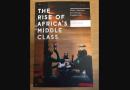
A major claim of the purveyors of the ‘Africa rising’ narrative is the expansion of the African middle classes. Africanist scholarship has built upon this narrative, placing heavy emphasis upon such key issues as definition, consumption and the fragility of the ‘new’ middle classes across the continent. This book, the latest such offering amidst a burgeoning literature, confirms this trend, and is set to become a standard work of reference.

Development capacitation through local resource exploitation, mass industrial production and domestic prosperity-generation is what Africa requires to become the self-actuated mover of its own development that does not depend on the vagaries of external demand for primary commodities. But sometimes even such initiatives are resisted by anti-African development leaderships.
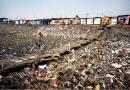
The importance of poverty eradication characterises African and global development priorities, and seems to lie at the foundation of Official Development Assistance. Africa, the region with the greatest number of the world’s poor, should be the logical focus of development cooperation partnerships. Yet only 20% of reported ODA is spent in Africa, and there’s evidence that it’s getting less.

The Global Partnership for Effective Development Cooperation will be holding its second High-Level Meeting in Nairobi from 28 November to 1 December 2016. Why will this meeting matter, and how can it drive development players to scale up the effectiveness and quality of their actions in view of delivering the ambitious Sustainable Development Goals?

Africa has not benefited substantially from its mineral wealth. It is, therefore, essential for resource-rich nations to tailor their economic policies to effectively harness and utilise mineral revenues to improve the productivity of non-mineral sectors to break out of the extractive enclave.

It must be emphasised that if sustainable development and real transformation are to be achieved, infrastructure development and the approaches chosen to finance it must serve the people, bring education, health and clean energy to the poor and marginalised.
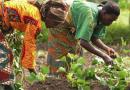
This article reflects on the status and progress made in the revitalisation of the agriculture sector in Africa. It looks at the challenges that make it difficult to increase food productivity, create decent employment, and end inequalities in our food systems, and what it will take to transform agriculture in Africa.

Gender inequality in Africa is one of the key drivers of poverty, yet there is the lack of political will to make substantive and concrete financial commitments to achieving gender equality. The money simply must follow the rhetoric.

What is required now, more than ever before, is action. The financing architectures of many African countries need overhauling. They need to engender equity, child rights, transparency and accountability. Unless that is don, the many regional and international commitments that touch on children will remain mere political pronouncements.
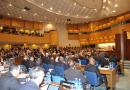
This special issue of Pambazuka News brings you analysis and commentary by experts, most based on the continent, outlining what it will take for Africa to achieve its much sought after transformation in the post-MDGs era.
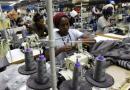
It takes quite some fantasy to imagine how, based on the living costs in Africa’s urban centres, a $2-a-day threshold catapults someone from the $1.99 margin as criteria for poor into a middle-class existence. And then into playing a pioneering role in the continent’s future transformation.