


The Wretched Still Rise: Fanonism, Neo-Colonialism, and the Unfinished African Revolution
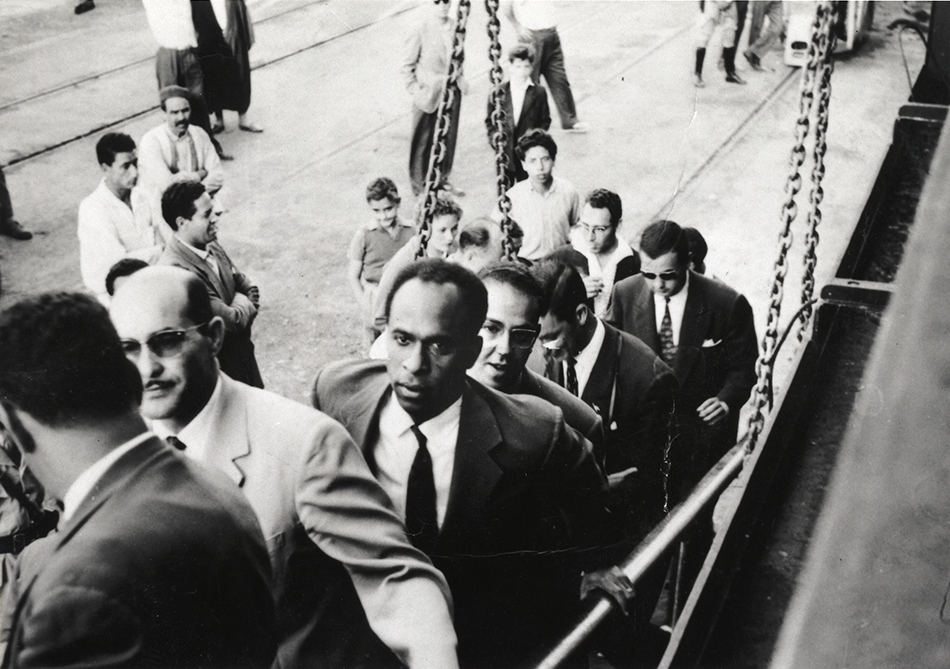
"Fanonism today functions as a critique of both external imperialism and internal oppression.” Explore with Orovwuje how Fanonism expresses this critique and the corrective mechanisms required for revolutionary transformation.
The intellectual and political legacy of Frantz Fanon occupies a foundational place in the history of African liberation thought. His works—Black Skin, White Masks (1952) and The Wretched of the Earth (1961)—provided both a theoretical lens and a moral compass for revolutionary struggles against colonial domination. Fanon envisioned decolonization not as a transfer of power, but as a total reconfiguration of the human condition—a process through which the colonized reclaim history, and humanity (Fanon, 1961/2004).
Today, more than sixty years after the wave of political independence across Africa, Fanon’s warning about the pitfalls of national consciousness (Fanon, 1961) resonates powerfully. Many postcolonial states have replaced colonial hierarchies with domestic forms of elite domination, leaving structural dependency intact. Frantz Fanon’s revolutionary thought continues to shape intellectual and political discourses across Africa more than six decades after his death. His critical engagement with colonialism, psychological subjugation, and the necessity of violent liberation remains central to understanding the continent’s ongoing struggle for genuine emancipation. This paper revisits Fanon’s central ideas through the lens of the African experience in the 21st century, focusing on the persistence of neo-colonial structures and the unfulfilled promise of the postcolonial revolution. Drawing on Fanon’s seminal works, contemporary African scholarship, and political realities, the paper argues that the African revolution remains incomplete not for lack of struggle, but because liberation was often confined to political independence rather than a full transformation of consciousness, culture, and economic power. This paper argues that the African revolution remains unfinished precisely because it has not fulfilled Fanon’s demand for psychological, cultural, and economic transformation. It concludes by reasserting Fanon’s relevance as a framework for reimagining African freedom and development in a globalized yet unequal world.
The discussion proceeds by first revisiting Fanon’s revolutionary framework, then analyzing the persistence of neo-colonialism and the African bourgeoisie. It concludes by reasserting Fanon’s enduring relevance for contemporary struggles toward liberation.
Fanon’s theory of revolution emerges from his dual identity as psychiatrist and activist. His work in Algeria with the FLN (Front de Libération Nationale) grounded his ideas in the lived experience of colonial violence. For Fanon, colonialism was not merely a political system but a totalizing structure that dehumanized both the colonized and the colonizer (Gibson, 2017).
Central to Fanon’s framework is the concept of decolonization as a violent, cleansing process. He argued that liberation cannot occur through dialogue or reform but through confrontation that destroys the colonial order and creates new human relations (Fanon, 1961/2004). Violence, in this sense, is both material and metaphysical: it restores the agency and dignity stripped from the colonized subject. Moreover, Fanon saw psychological liberation as integral to revolution. In Black Skin, White Masks, he diagnosed the inferiority complex and alienation produced by colonial discourse, showing how colonial education and religion reproduced self-hatred among the colonized (Fanon, 1952/2008). Thus, revolution must dismantle not only political domination but also the epistemic structures of colonialism—the ways of knowing, valuing, and imagining shaped by empire (Gordon, 2015).
In contemporary African studies, this epistemic dimension has found renewed attention through the decolonial turn, emphasizing knowledge sovereignty and the revalidation of indigenous epistemologies (Ndlovu-Gatsheni, 2018). Yet, as Fanon foresaw, the struggle for decolonization is incomplete when political independence coexists with economic dependency and mental colonization.
In The Wretched of the Earth, Fanon’s critique of the “national bourgeoisie” stands as one of his most prophetic insights. He warned that postcolonial elites might inherit colonial institutions without transforming them, turning independence into mere symbolism (Fanon, 1961/2004). Instead of pursuing a people-centered revolution, these elites often became intermediaries in the global capitalist system—consumers of imported goods, agents of foreign interests, and custodians of inequality (Adi, 2018). This critique remains profoundly relevant. Neo-colonialism, as Kwame Nkrumah (1965) defined it, operates through economic control, debt dependency, and the cultural dominance of Western norms. African economies remain tied to the export of raw materials and the import of manufactured goods, perpetuating the logic of colonial extraction (Rodney, 2018).
Moreover, the African middle class, often celebrated as the sign of modern progress, has largely assimilated the values of consumer capitalism rather than advancing revolutionary transformation (Mamdani, 2020). The persistence of neo-colonial governance reveals that Fanon’s warning about a “false decolonization” has come to pass. Fanon’s critique of postcolonial elites was not merely pessimistic but diagnostic. He insisted that the future of Africa depended on the capacity of the people—the peasantry, the working class, and the intellectual vanguard to reinvent political life beyond imitation of Europe. The African revolution, therefore, required a redefinition of power rooted in local realities, culture, and communal ethics (Serequeberhan, 2019).
Fanon’s socio-political thought continues to animate African and global intellectual debates. Contemporary movements such as Rhodes Must Fall (South Africa), End SARS (Nigeria), and Fees Must Fall (South Africa) amongst others have revived Fanon’s call for radical restructuring of power and knowledge. These movements, while situated in different contexts, express a shared frustration with unfulfilled promises of postcolonial freedom. Fanonism today functions as a critique of both external imperialism and internal oppression. As Mbembe (2017) observes, the African postcolony is characterized by a paradoxical coexistence of sovereignty and dependency, freedom and subjection. Fanon’s insistence on the unity of political, psychological, and cultural liberation provides a framework for understanding this contradiction.
Recent African scholars extend Fanon’s work toward questions of development and governance. For instance, Ndlovu-Gatsheni (2021) argues that decolonization must be reconceptualised as an ongoing epistemic revolution rather than a historical event. Similarly, Adesina (2019) stresses the need for intellectual sovereignty to accompany political independence.
Fundamentally, Fanon’s existential vision of a new humanism also speaks to Africa’s place in a globalized world. He warned that nationalism without international solidarity risks reproducing the same hierarchies it sought to dismantle. In this sense, Fanon anticipates today’s calls for Pan-African unity, South-South cooperation, and post-Western global ethics (Amin, 2018).
Yet, the challenge remains translating Fanonian ideals into institutional practice. Education systems, political parties, and development agendas across Africa often remain structured around colonial logics of hierarchy and dependency. Without structural change, the revolution stagnates as rhetoric rather than praxis. Fanon’s concept of the unfinished revolution is not merely a lament but a call to continuous struggle. For him, liberation was an ethical and existential project—creating a new human being through collective transformation (Fanon, 1961/2004).
The African revolution, therefore, is incomplete because it halted at the stage of state formation without realizing social justice, cultural renewal, and economic autonomy. As Ngũgĩ wa Thiong’o (2016) argues, true decolonization requires the liberation of language, imagination, and production from the colonial matrix of power.
Sadly, this unfinished revolution manifests in persistent inequality, resource dependency, and political alienation. Across the continent, grassroots movements continue to challenge these legacies through local empowerment, feminist resistance, and ecological justice—all areas where Fanon’s humanist radicalism remains instructive (Oyěwùmí, 2020). The task, then, is not to merely commemorate Fanon but to actualize his ideas in contemporary governance, education, and social movements. This requires rethinking development as a process of liberation—centering dignity, equity, and indigenous knowledge
In the final analysis, Frantz Fanon’s revolutionary ideology remains indispensable to understanding and confronting Africa’s postcolonial realities. His insistence that decolonization is both material and psychological continues to challenge the continent to transcend dependency and reclaim autonomy. The persistence of neo-colonial structures, elite domination, and epistemic subjugation confirms Fanon’s insight that the African revolution remains unfinished.
Lastly, to revive this revolution requires a return to Fanon’s radical humanism—one that integrates liberation with responsibility, freedom with solidarity, and nation-building with moral renewal. As the wretched still rise, Africa’s future depends on transforming Fanon’s prophetic critique into a praxis of justice, dignity, and self-determination.
Samuel Orovwuje is a policy analyst and independent scholar at the Africa Development Studies Center, Nigeria. His research interests include postcolonial thought, African political development, and decolonial theory.
References
Adesina, J. O. (2019). Reclaiming the human sciences and humanities through Afrocentrism. CODESRIA Bulletin, 2(3), 1–14.
Adi, H. (2018). Pan-Africanism: A history. Bloomsbury.
Amin, S. (2018). Modern imperialism, monopoly finance capital, and Marx’s law of value. Monthly Review Press.
Fanon, F. (1952/2008). Black skin, white masks (R. Philcox, Trans.). Grove Press.
Fanon, F. (1961/2004). The wretched of the earth (R. Philcox, Trans.). Grove Press.
Gibson, N. C. (2017). Fanon today: Reason and revolt of the wretched. Lexington Books.
Gordon, L. R. (2015). What Fanon said: A philosophical introduction to his life and thought. Fordham University Press.
Mamdani, M. (2020). Neither settler nor native: The making and unmaking of permanent minorities. Harvard University Press.
Mbembe, A. (2017). Critique of black reason. Duke University Press.
Ndlovu-Gatsheni, S. J. (2018). Epistemic freedom in Africa: Deprovincialization and decolonization. Routledge.
Ndlovu-Gatsheni, S. J. (2021). The decolonial Mandela: Peace, justice, and the politics of life. Berghahn Books.
Ngũgĩ wa Thiong’o. (2016). Decolonising the mind: The politics of language in African literature. Heinemann.
Nkrumah, K. (1965). Neo-colonialism: The last stage of imperialism. Thomas Nelson.
Orovwuje, S.A. (2017). Federalism, Leadership & Development. Dictus Publishing.
Oyěwùmí, O. (2020). What gender is motherhood? Changing Yoruba ideals of power, procreation, and identity in the age of modernity. Palgrave Macmillan.
Rodney, W. (2018). How Europe underdeveloped Africa (Rev. ed.). Verso.
Serequeberhan, T. (2019). Existence and heritage: Hermeneutic explorations in African and contemporary thought. SUNY Press.