


The gold rush in Eritrea has attracted many Western companies, among them Canada’s Nevsun Resources Ltd. and Sunridge Gold; Britain’s Andiamo Exploration and London Africa; and Australia’s South Boulder, Sub Sahara Resources, Chalice Gold Mines Ltd. and Gippsland Ltd. And this doesn’t tell all that there is to the involvement of Western companies, for there are many subcontracted companies rushing to get in too, such as AMEC of Canada doing engineering study and Capital Drilling and Geo Drilling of Australia and Boart Longey of Canada doing drilling.
Two Eritrean rebel groups said they killed 11 government soldiers and wounded some 20 others in a coordinated attack on military camps in southern Eritrea. The groups -- the Red Sea Afar Democratic Organisation (RSADO) and the Eritrean National Salvation Front (ENSF) -- said in a joint statement that they had briefly taken control of the camps on Thursday and seized weapons and military intelligence.
An Eritrean refugee in Halifax killed himself in late February after losing an asylum appeal to Canada’s Immigration and Refugee Board. Habtom Kibraeb, 40, was found dead, hanging from a tree in the Clayton Park area. Kibraeb had spent several years on the run from Eritrea’s military, says Beku Feshaye, who owns Kilimanjaro Café, a store on Titus Street in Halifax.
The United States has intensified its criticism of Eritrea, saying the Red Sea state systematically abuses human rights and is a destabilising influence in the Horn of Africa
The African Union Commission Chief Jean Ping, has informed Eritrea to send an ambassador to represent it in Addis Ababa, the seat of the African Union (AU), despite Eritrea's frosty relations with hosts, Ethiopia.
On 11 January 2010, the third anniversary of Eritrean journalist Fessehaye "Joshua" Yohannes' death in detention, Reporters Without Borders wrote to Manfred Nowak, the United Nations Special Rapporteur on torture and other cruel, inhuman or degrading treatment or punishment, asking him to do everything possible to obtain an improvement in the conditions of journalists imprisoned in Eritrea.
Reporters Without Borders has written, on the third anniversary of Eritrean journalist Fessehaye “Joshua” Yohannes’ death in detention, to Manfred Nowak, the United Nations Special Rapporteur on torture and other cruel, inhuman or degrading treatment or punishment, asking him to do everything possible to obtain an improvement in the conditions of journalists imprisoned in Eritrea.
Eastern Sudan hosts more than 66,000 registered Eritrean refugees, the first of whom arrived in 1968 during the early years of Eritrea’s war of independence against Ethiopia. These days, Eritrea’s policy of indefinite military conscription, coupled with drought and poor economic opportunities, prompt some 1,800 people to cross into Sudan every month, according to the UN Refugee Agency, UNHCR.
The time that Swedish-Eritrean journalist Dawit Isaak has spent in a jail in Eritrea, without a trial and without any visits from his family or lawyers, today reached 3,000 days.
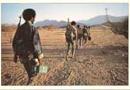
Commenting on events at a Brussels conference for the promotion of peace and human rights in Eritrea, Nikolaj Nielsen reports on a country which Reporters Without Borders ranks lower on press freedom than North Korea. 'Eritrea', Nielsen writes, 'was the promise that never evolved' and a country 'unable to come to terms with lasting peace'.
Eritrea ranks at the very bottom of Reporters without Borders index of press freedom for 2009, released in October. This AfricaFocus Bulletin contains two recent short reports from Reporters without Borders on the situation of journalists in Eritrea, and an account on by exiled journalist Tedros Abraham on his experiences as a journalist in Asmara and and his journey through Sudan to eventual refugee status in Norway.
by Yohannes Woldemariam is one of the best written analysis I have read on this matter in a long time. Good points on the policies of the Eritrean government that are driving hundreds and thousands out of their country, the role of EU's migration policy and the overall responsibility of the global community. Thank you.
P.S. I happened to be visiting Italy, in Sicily at the time of this and you can read more of the findings of my organisation from www.BlackAllianceBlog.blogspot.com
A new report on Eritrea has been commissioned by the Oslo Center for Peace and Human Rights. Contributions were also made by other NGOs, including Human Rights House Foundation. “The HR violations are extensive and systematic, and the oppression by the authorities is total”, says the president of the Oslo Center, Kjell Magne Bondevik.
With a government that makes it illegal to leave the country and military service compulsory for all men and women aged 18 to 40 in the name of a festering border conflict with the more powerful Ethiopia, it’s no wonder Eritreans undertake perilous journeys in search of a better life. But getting out of Eritrea itself is no guarantee of change for the better, thanks to flawed international responses that fail to see the humans behind ‘the refugee problem’, Yohannes Woldemariam writes in Pambazuka News.
Eritrea ranks last place on the latest Reporters Without Borders (RSF) index measuring the level of press freedom in 173 countries. Privately owned press have been banished by the authoritarian President Issaias Afeworki since 2001, and the few journalists who dare to criticise the regime are thrown in prison, says RSF. Four journalists have died in detention and, currently, at least 30 journalists and two media workers are believed to be in prison without trial.
 cc UK-based lawyer Mihret Goitom tells how his sister–in-law’s attempt to escape Eritrea and join her husband ended in tragedy, after she and her children were incarcerated in a refugee camp in Sudan en-route.
 cc Since winning its de facto independence in May 1991, Eritrea has come to represent a tragedy, laments Selam Kidane. Having fought and suffered alongside one another during the country's liberation struggle, Eritreans have seen their country embroiled in conflicts with every one of its neighbours under the leadership of Isaias Afewerki. With President Isaias increasingly viewing power as 'a weapon of self-aggrandisement' and surrounding himself with a sycophantic clique of military associates, the hope of the post-independence years has tragically faded, Kidane concludes.
"Remember 'We Are the World'?" asked Mahmoud Abdalla, a leader of the Hidareb ethnic community in Eritrea's arid Anseba region along the northwestern border with Sudan, referring to the 1985 hit song by more than 40 top artists. "Remember the 1984 famine in Ethiopia? This region was right in the middle of it." In 1984 Eritrea was part of Ethiopia, where some of the song’s proceeds were spent.
Eritrea has avoided international attention in recent years in ways that may have protected the Red Sea country's rulers from proper scrutiny but benefit no one else. Even those who recall that the continent's youngest state gained its unlikely independence from Ethiopia in 1993 after a bloody thirty-year struggle may be shocked to hear that the optimistic nationalism of the 1990s has been dissolved under President Isaias Afewerki into a despairing void, causing thousands of Eritreans to flee the country that they fought so hard to establish.
The title of this article is borrowed from what President Isaias Afwerki said in an interview with China Business Weekly Magazine in 2007, talking about Chinese and Eritrean relations and with particular reference to what Chinese investors see when they look at Eritrea. Indeed, Sino-Eritrean relationship goes far beyond what appears on the surface. Eritrea and China's friendly relationship dates back to 1993. China was in fact the first country to establish diplomatic relations with sovereign Eritrea in May 1993, and it has been contributing a great deal to various aspects of the Eritrean endeavors for economic rehabilitation and national reconstruction.