



In the wake of South Africa’s public sector strike, Leonard Gentle cuts through the negativity towards the strikers presented by much of the media and argues that the situation overall may well prove ‘a watershed in South African politics’. While officialdom has sought to demonise the strikers, their concerns around high interest rates, debt, high costs and inadequate pay may well come to chime with further disillusionment across key components of the ANC’s (African National Congress) base, Gentle writes.
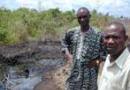
Umuorie Isimiri Community is located in Ukwa West Local Government Area of Abia State. Umuorie Isimiri is an hour and 20 minutes drive from Umuahia, capital of Abia State. It is a community of about 5,000 people, made up of mostly farmers. Shell Petroleum Development Company (SPDC) Isimiri Flow Station in Umuorie Isimiri Community is by the Imo River at the boundary between Abia and Rivers State. ERA monitors visited the community on 3 August 2010 to ascertain SPDC level of compliance with a court judgement delivered by Court of Appeal Owerri, Imo State ordering it to pay special damages of N1.49 billion to the community for oil spill and environmental degradation.
Following last year’s Copenhagen Climate Summit, the five days of negotiations in Bonn last week in preparation for the big climate change meeting in Cancun, Mexico, at the end of the year, has been met by a profound display of disinterest.
Four bodies have been found in an unused shaft of a mine run by relatives of South Africa's President Jacob Zuma and ex-leader Nelson Mandela. Police said investigations were continuing into reports that up to 20 alleged illegal miners were shot dead by security at the mine.
Sierra Leone's human rights body has urged the government and the special court in The Hague to "retrieve the blood diamonds" that Naomi Campbell was given by war crimes accused Charles Taylor. "We have urged both parties to contact the South African government for the diamonds to be handed over to Sierra Leone," human rights commissioner Yasmin Jusu-Sheriff told journalists.
Zimbabwe's government netted around $71 million from a major sell-off of rough diamonds from its controversial Chiadzwa diamond fields, the country's mining minister has said. On Wednesday, Zimbabwe resumed full-scale diamond exports by auctioning close to 1 million carats to international buyers at Harare airport.
Since March 2008, Beatrice Tamaska Kae has lived under a tarpaulin with her seven children in a camp after their eviction from a government forest in Trans Nzoia West district in western Kenya. "It is hard to get used to life in a camp when you had a lot of space before; during the dry season life is slightly better because it is not cold but now with the heavy rains and the cold, it is pure misery, however closely we sit or sleep, we cannot get warm in this weather," Kae said on 29 July at Teldet primary school, in Kissawai location of Saboti Division.
South Africa's draft climate change policy, known as the green paper, would be submitted to Cabinet by the end of August, after which it would be gazetted for public comment, the Department of Environmental Affairs (DEA). DEA communications chief director Albi Modise further explained that following engagement on the comments received, a widely-consulted white paper would be submitted into the Parliamentary process by the end of the year, for promulgation which was expected in the first quarter of 201
The U.N. General Assembly has declared access to safe, clean drinking water and sanitation to be a "'human right' in a resolution that more than 40 countries including the United States didn't support. South Africa did support it. The UN General Assembly passed a resolution last Wednesday that access to water and sanitation is a human right. The resolution passed with 122 votes in favor, none against, and 41 abstentions.
Foreign land barons are using millions of shillings to hire elite law firms for advice on how to protect their property should Kenyans pass the proposed Constitution — that bars them from owning land — in Wednesday’s vote. Commercial lawyers said the number of clients seeking land ownership advice under a new constitution has risen steadily in the past three months to peak at the end of July as the referendum drew closer.

Government and civil society need to ensure that exploration in Angola’s diamond provinces brings greater benefit to the lives of the local populations, according to a new report about the country’s diamond sector, writes Sylvia Croese. Prepared by the Episcopal Commission for Justice and Peace, the report focuses on the growth of the sector from 2002 to 2009 and analyses the effects of the economic crisis, diamond legislation and the development of the diamond provinces of the country.
As Ghana gears up to develop its petroleum industry, Cameron Duodu strongly laments the absence of greater public sharing of information around the sector. Duodu stresses that Nigeria’s tumultuous history with petroleum ‘is a rehearsal of what could be waiting for us’ and that Ghana should pay particular attention to its neighbour’s experience if it is to avoid ‘so much cheating and thievery’.
Africa's unified stance at the Copenhagen climate summit last December showed that the continent has woken up to potential 'climate cash' from international mitigation and adaptation programmes and confirmed African leaders' political commitment to tackling climate change. But the skills and infrastructure needed to use climate cash for making sense of local climate change impacts and also for designing and managing sustainable development projects are still thin on the ground in many African countries.
Thousands of hectares of fragile mountainous forest in north-eastern Tanzania have been preserved through a recently completed seven-year biodiversity project managed by the United Nations Development Programme (UNDP). The Eastern Arc Mountains project, financed by the Global Environment Facility (GEF), was concluded last month after an independent evaluation reported that at least 10,000 hectares of forest had been saved from destruction, and that the rate of forest loss had been reduced by 10 per cent.
Frans Bauduin, presiding judge, said in the Amsterdam district court that the Swiss-based company was guilty of breaking European waste export laws. It was also found guilty of concealing what the charge sheet referred to as the "harmful nature" of the waste on board the Probo Koala ship that arrived at the port of Amsterdam in July 2006, but was redirected to the Ivory Coast.

Throughout the continent, ‘oil has correlated with imperial subjugation, local authoritarianism and flagrant human rights abuses’, writes Oilwatch Africa. Citing examples of the devastating consequences a growing global hunger for energy has had for communities and ecosytems in oil-bearing regions, the advocacy group calls for the world to start weaning itself from its ‘addiction to oil’ by ‘investing more in renewable energy, energy efficiency, better public transportation and small decentralised energy projects.’
San bushmen in Botswana have lost a court case to allow them to re-open a vital waterhole in the centre of the Kalahari desert. Diamonds were found in the Central Kalahari Game Reserve, traditional home to the bushmen, in the 1980s - and the government asked them to leave.
Mining firm Randgold Resources says it is to begin mining Africa's largest undeveloped gold deposit - in eastern DR Congo. The mine will require the re-location of 15,000 people, but Randgold says the project has the support of the government and the local community. The mine is thought to have a reserve of about 320 tonnes of gold, it says.
Algeria has adopted a law which will allow private firms for the first time to lease state-owned farmland but it also imposed restrictions on foreign investment. Gulf investors have shown an interest in Algerian farmland, part of a global trend for countries with large cash reserves to try to secure food supplies by targeting farmland abroad.

‘Given the context of blood diamonds, the real conflict rests not with militias mining diamonds’, but with ‘the battle to control markets and pricing’, argues Khadija Sharife, in an assessment of the structure of the international diamond industry. For developing country governments ‘at the helm of diamond-producing economies, corporate control over diamond markets means limited choices and fewer opportunities to collect equitable revenue from diamond resources’, says Sharife.