


 cc. A year after the signing of Kenya’s National Accord, Tom Kagwe of the Kenya Human Rights Commission (KHRC) reviews the successes and limitations of the formation of the coalition government. Highlighting the fragmented progress towards truth and justice, Kagwe argues that while the issue of post-election internally displaced persons remains a troublesome reality for the country, the CIPEV report represented a celebrated step towards ending political impunity.
 cc. Highlighting the success of a leader able to command respect through calm resolve, Pitso Tsibolane charts the rise and broad support for Kgalema Motlanthe from both the Zuma and Mbeki camps in the ANC in the wake of Mbeki’s resignation. But with growing grumbles about alleged dithering over decisions and suggestions of extra-marital affairs, Tsibolane argues that the caretaker president’s initial honeymoon period is long gone in the face of ever greater ANC and media scrutiny.
http://www.pambazuka.org/images/articles/418/53780_tmb.jpg]cc.In a poetic piece subtly traversing Nigerian post-colonial experiences, Chioma Oruh evokes a history of disunity, theft, rhetoric, marginalisation and the social toxicity of oil.
 cc. Over the last two years, the People’s Health Movement (PHM) campaign has advanced significantly in Africa. It now has active, funded campaigns in the DR Congo, Congo-Brazzaville, Benin, Burkina Faso, Togo and Cameroon, with Zimbabwe and South Africa also involved (without receiving PHM funding), as well as advanced negotiations to launch the campaign in Senegal and Djibouti. Elsewhere, new PHM circles have been formed in the last three months in Mali, Kenya, Morocco and Uganda, where representatives will be submitting campaign proposals shortly. The countries that are on the verge of completing the assessment are now eligible for small, additional funding to hold national workshops through which to present the results to their respective governments, along with UN agencies, international and national NGOs and the media.
 cc. Criticising the Kenyan parliament’s failure to push through legislation to create a special tribunal to bring those involved in the country’s post-election violence to justice, Ndung'u Wainaina and Haron Ndubi argue that parliamentary stalling simply reflects politicians covering their backs. Highlighting the political class’s efforts to escape punishment through defensive strategising, Wainaina and Ndubi reiterate that the tribunal was intended for justice for victims rather than allowing perpetrators to merely devise ways to forgive themselves.
 cc. The following is an extract from the diary of Patrick Kamotho Githinji, a community organiser in Kenya with Bunge La Mwananchi. Arrested on 13 November 2008 at a community gathering over the illegal sale of 56 acres of residential land – inhabited by 1,120 households – by the Ministry of Local Government, Githinji was ultimately detained until 27 November. His diary grants us a first-hand view of the prison and his inspirational efforts to improve conditions for fellow inmates.
 cc. Following the unprecedented focus on sexual and gender-based violence by the Waki Commission, Kenyans for Peace, Truth and Justice (KPTJ) reviews the commission’s findings. While supportive of its recommendations, KPTJ emphasises that the commission’s report is lacking in its focus on individual experiences at the expense of investigating patterns of conflicts, violations and violence. For the purpose of ensuring the implementation of these recommendations, KPTJ sets out a series of essential steps for the prevention and response to instances of sexual and gender-based violence, including greatly improved access to health and legal services for victims, and the removal of any form of amnesty for the perpetrators of sexual crimes.
 cc. While all of Kenyan officialdom in political and civil society alike decries the endurance of tribalism, there remains a pervasive unwillingness to address the consequences of a phenomenon still prevalent across the country and with powerful implications for democracy, representation and stability, writes Mugambi Kiai. Though understood at a rudimentary level, the theme of ethnicity, argues Kiai, persists at the heart of the architecture of power in Kenya, the negative effects of which will only begin to be tackled through decisive action to consolidate widespread faith in Kenyan identity and citizenship.
 cc. Ordinary Kenyans are suffering from their coalition government’s lack of focus, writes George Nyongesa. High food prices, the attempted stifling of the media and increases in the cost of fuel all conspire to aggravate the hardship felt around much of the country, the author contends, a hardship that is all the more unpalatable in the face of tax exemptions for MPs. From the grassroots perspective, Nyongesa maintains, the coalition government looks decidedly out of touch.
 cc. Reviewing the misguided and inaccurate data informing the Independent Review of Election Commission’s (IREC) Kriegler report, Kenyans for Peace, Truth and Justice (KPTJ) offers its conclusions on the statistical inadequacies that have precluded the drawing of a definitive picture of electoral fraud. Without an effective research design to establish where and why vote counting inaccuracies developed, KPTJ argues that the IREC’s inferring of ‘materially defective’ results has failed to add anything meaningful to what Kenyans already know about what went wrong with the election process.
 cc. Following the creation of two commissions by the Kenya National Dialogue and Reconciliation (KNDR) to address both post-election atrocities and historical human rights violations, Ndung’u Wainaina considers the limitations and weaknesses of an amnesty process likely to disadvantage victims in multiple ways. Signed into law with minimal public consultation, the Truth Justice and Reconciliation Commission (TJRC), Wainaina argues, possesses deep flaws that will ultimately block rather than facilitate the accountability and national healing the country so desperately needs.
 cc. Maina Kiai, a former chair of the Kenya National Commission on Human Rights, was a driving force behind
 cc. Ann Njogu argues that in addition to having their property destroyed and being forced to flee from their homes, women’s "bodies were also used as the war zone - a battlefield for opposing forces that often times included the police." Post-violence has not brought much peace to these women. They are still trying to "reconstruct their lives. Children born out of rape, physical scars, HIV and other dreaded sexually transmitted infections; widowhood, divorce, homelessness and biting poverty." Read on for Ann Njogu’s recommendations...
 cc. Do refugees have a rights, or are they eternally bound to the status of victimhood and homelessness, asks Rob Cook. The severe crackdown and mass deportation by the Ghanaian authorities over a protest by Liberian refugees who demanded a larger say has highlighted the ineffective solutions provided by UNHCR, whose reaction is evidence of an outdated mode of thinking towards the problems affecting refugees around the world, the author argues.
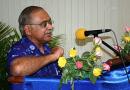
In this interview conducted by Marc Wuyts, Issa Shivji, one of Africa's revolutionary scholars long before the term public intellectual became vogue, shares his intellectual history, his analysis of Ujamaa, his take on the land question in Africa and the state of African political economy and much more.
 cc. Following Israeli Foreign Minister Tzipi Livni’s visit to French President Nicolas Sarkozy at beginning of the year, Annar Cassam questions Israeli’s self-identity as a member of the ‘free world’. Heavily critical of the state’s self-appointed role as a bastion of Western values restraining savage Arab hordes, Annar Cassam explores the parallels between current Israeli action and the history of the destructive, pseudo-civilising mission pursued by erstwhile Western colonial powers, underlining the power of ‘master race’ and ‘promised land’ ideologies in paving the way for domination. "Exactly like the Afrikaners," she writes,"the Israelis have come to Palestine from Europe with convictions about their own uniqueness and superiority which they have imposed on the local inhabitants on pain of death and destruction. The Jewish ‘homeland’ may have started out as a refuge for the persecuted but it has now become a law unto itself, a fanatical fortress to which no international standards and obligations apply."
 cc. Questioning the validity of the linear from-Martin-Luther-King-to-Barack-Obama interpretation of the US civil rights movement featured within many mainstream channels, Alan Singer argues that the emphasis should in reality be on the role of mass participation in engendering progressive social change. In turbulent times of severe economic downturn, the author insists, it is up to individuals to provide the energy and momentum needed for climbing the mountains of social justice on the horizon.
 cc. Kakuma News Reflector (KANERE) is an independent news magazine produced by Ethiopian, Congolese, Ugandan, Rwandan, Somali, Sudanese and Kenyan journalists operating in Kakuma Refugee Camp, Kenya. KANERE urgently seeks the support of international organisations and advocacy groups everywhere, as the group is facing pressure from local organisations that do not fully support an independent refugee press.
 cc. Since 27 December 2008, the Zionist state of Israel has embarked on an unprecedented onslaught against the residents of Gaza. The massive bombings have killed over 500 Palestinians and injured over 2,500 more. The Israeli air force has targeted hospitals, schools, roads, bridges, universities, mosques, and even markets. As with previous attacks, the Western media has carried fallacious reports, echoing the Israeli government’s official claim to be responding to, and defending itself against, Palestinian rocket attacks. The Gaza strip has been under both sustained military attack and an inhumane blockade for the last two years since Hamas’s victory over Fatah.
http://www.pambazuka.org/images/articles/416/53434_Ghandhi_statue_tmb.j… Palestine still facing brutal Israeli action, our attention has been drawn to a pair of articles on Zionist politics and the Palestinian plight written by Mahatma Gandhi in the period immediately preceding the creation of the Israeli state. Entitled simply ‘The Jews’ and ‘Jews and Palestine’ and written in 1938 and 1946 respectively, these articles outline Gandhi’s sympathy to the Jewish cause yet strong desire not to see Palestinians wronged. Deeply sceptical of the morality behind marginalising Palestinians through the formation of the Israeli state, the father of the Indian nation argues a more morally-legitimate course would be to insist on the just treatment of Jews wherever they are born and bred.