



The 15th Session of the Assembly of States Parties to the Rome Statute is going at The Hague, the seat of the International Criminal Court. A network of civil society organisations in Kenya delivered the following statement to the Assembly:
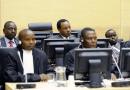
KPTJ says the cases collapsed as a result of contamination of evidence through systematic victim/witness interference and an orchestrated political and diplomatic campaign by the Kenyan government at the behest of suspects of international crimes to intimidate and discredit the Court.
The Kenya civil society network KPTJ has written to the UK Serious Fraud Office providing context about the real cost of bribing election officials ahead of the sentencing of Smith and Ouzman and two of its directors who were recently convicted of bribing IIEC officials in the 'Chickengate' scandal.
Civil society’s response to Ambassador Macharia Kamau’s statement to the 69th Session of the United Nations General Assembly (UNGA) on 30th October 2014 regarding the Report of the International Criminal Court (ICC) to the UNGA.
Sam Mohochi, executive director of the has been nominated for the Front Line Award 2009. Congratulations from us all at Pambazuka News.
 cc The absence of both President Mwai Kibaki and Prime Minister Raila Odinga from UN-convened talks in Geneva to assess Kenya's power-sharing deal is a sign that the country's mediation process has run into problems, writes coalition Kenyans for Peace, Truth and Justice (KPTJ). The mediation process, KPTJ says, is vunerable and in crisis 'because Kenya’s political leadership has continuously and consistently undermined it'.
Three Kenyan activists have been arrested and beaten by the Kenyan police after peacefully standing outside parliament. The three were among a handful of Kenyans hoping to grab the attention of Minister for Agriculture William Ruto and Finance Minister Uhuru Kenyatta to plead with them to act swiftly to prevent more deaths from starvation in the looming famine that is threatening 10 million Kenyans.
The minister of agriculture is facing a censure motion in parliament today for his role in the recent maize scandal where more than 1 million bags of maize from the National Cereals and Produce Board (NCPB) have disappeared. MP Dr Bonny Khalwale has moved the motion, accusing the agriculture minister of failing to give satisfactory answers over the disappearance.
 cc. If the bi-partisan commission, headed by South African Judge Johann Kriegler, hoped to avoid controversy by making ambiguous statements and generalised conclusions, it walked into the eye of a storm. Although the commission completed its work on schedule and adopted many recommendations Kenyans have been making on the kind of electoral system they would like to have, a keen reading of its report shows that it went off the tracks as soon as it began the search for truth.
Civil society monitors noted that after successful countrywide visits, in which investigators identified 114 potential witnesses, the Kriegler commission chose not to record their statements or summon them to give evidence. Based on the information and evidence received even before the commission was set up, there were complaints about the results from 49 constituencies. The IREC (Independent Review of Election Commission) chose not to summon the concerned returning officers to explain alleged anomalies, which ranged from the alteration of documents to filing improper election returns.
The commission chose not to summon many of the 32 ECK (Electoral Commission of Kenya) commissioners and staff who were at the nerve centre of the discredited tallying system that produced a presidential result that even IREC does not believe. Instead, the commission chose to listen to the ECK chairman, one commissioner and 10 staff. For corroboration, it took evidence from only one domestic observer, and then closed shop.
No heed was paid to allegations of a break-in at the Kenyatta International Conference Centre (KICC) on 31 December 2007, which is recorded at the KICC police station as OB NO. 7 of 2 January 2008. No attention was paid to issues that required further investigation, such as local administration officers issuing identity cards to schoolchildren so they could vote. Or presiding officers neglecting to accompany ballot boxes. Or fake ballot papers floating around, or even parallel ballot papers being printed.
No inquiry was made into the allegations that security agents were deployed to rig elections, despite the fact that two police officers lost their lives because of such information reaching the public.
The commission did everything possible to avoid getting to the truth. The statistical analysis it chose to use was not only ineffective and poorly employed, but also blinded the commission to what else it could do with the results to obtain the truth. The IREC chose not to draw on local experts who could have performed a more effective analysis.
In sum, the Kriegler report is a half-baked job that attempts to cover up offences committed by people who deserve no such protection. A detailed analysis of its methodological flaws is carried in the Comments & Analysis section of this issue of Pambazuka News, and what follows is an overview of the IREC’s performance.
10 QUESTIONS KRIEGLER REFUSED TO ANSWER
1. Why did President Kibaki choose to ignore the Inter-Party Parliamentary Group (IPPG) in selecting the electoral commissioners?
2. Why was the mandate of the experienced deputy chairman of the ECK not renewed and why was he replaced by Kibaki’s former family lawyer?
3. Why were previous demands for electoral reforms ignored?
4. Why did the ECK choose not to utilise the IT equipment it had access to?
5. Why did the ECK recruit staff who lacked competence, and not give them adequate training?
6. Why were the ECK staff posted to work in their home areas?
7. Why did the Nation Media Group’s database crash on the evening of 28 December, and why did KTN (the other major Kenyan news network) management around the same time tell newsrooms to only broadcast ECK data?
8. Why did the ECK chairman, on the morning of 29 December, complain that he couldn’t reach his commissioners in PNU (Party of National Unity) strongholds on the phone and hint at a ‘cooking of figures’?
9. Why was the counting and tallying marred by ‘massive arithmetical errors by returning officers’ when every mobile phone had a calculator function?
10. Why did the commissioner of police prevent the public from coming near the KICC?
THE GOOD, THE BAD AND THE INCOMPETENT
The IREC deserves praise for producing its report on deadline. This is a marked departure from the conduct of previous commissions of inquiry.
It is important to point out, however, that the report suffers from two principal shortcomings resulting from the methods the commission adopted:
1. On witnesses, the investigation appears to have largely relied on the evidence of the prime players, that is the Electoral Commission of Kenya (ECK). It failed to look for evidence either to corroborate or contradict what the ECK said. In dealing with complaints about constituency results issues, evidence from others present during the process such as security agents, observers or voters, and not just from the returning officers in question, would shed light and sharpen the findings.
The rules of evidence and investigation require that you do not rely on the uncorroborated evidence of one player. One would also have expected that the interviews of ECK commissioners could have been expanded to include other commissioners (only a small selection of them was interviewed). The total number and spread of people who testified under oath is too thin to have given the commission the totality of the evidence required to arrive at factual and accurate findings.
2. On the statutory forms and the allegations surrounding the tallying process, the approach adopted by the commission in determining whether it was error or fraud that occurred at the KICC was also limited. A more thorough forensic analysis would have determined whether it was error or fraud that occurred during the tallying of results and filling of statutory forms. This audit could have included examining documents, such as selected Forms 16, 16A and 17A. In addition, it might have helped, after dealing with the legal issues surrounding this, to have conducted a physical inspection and recount of ballots in a random, select number of ballot boxes.
The commission’s full report is analysed below along six thematic lines drawn from its terms of reference.
1. CONSTITUTIONAL AND LEGAL FRAMEWORK
THE GOOD
The report admits that there is a need to expressly provide for the right to vote in the constitution. It also recommends merging all electoral laws into one, with a provision included to set up a court to resolve disputes over elections.
Not every problem facing the country can be resolved through constitutional and legal change alone, however. Kenya, the report says, must undergo societal change and develop a culture for tolerance, fidelity to the law, honesty and transparency.
THE BAD
Although the report indicts the ECK for incompetence and cites institutional collapse, it fails to assign individual responsibility for critical lapses. This presents opportunities for the Kenyan habit of blaming everything on the need for legal reform without requiring adherence to existing laws. The IREC is right to call for an end to the culture of impunity, but it is not forthright enough in pointing out officials and institutions that did not carry out their mandate as required by law, and suggesting what should happen to them.
THE INCOMPETENT
The need to change Kenya’s electoral system has been acknowledged for a long time. Part of the blame for the crisis Kenya found itself in has been laid on the first-past-the-post electoral system, which is said to encourage conflict and not conciliation. Although the report points out the shortcomings of the current system and deficiencies in the systems proposed in the Bomas and Wako draft constitutions, its attempts to highlight the shortcomings of a mixed-member representative system are unconvincing.
The report also fails to discuss the law governing presidential elections and thus passes up an opportunity to tie up all the issues requiring reform around the electoral process.
2. THE ELECTORAL COMMISSION OF KENYA (ECK)
THE GOOD
The president’s unilateral appointment of commissioners, the ECK’s unwieldy structure of too many commissioners, and the lack of separation of functions between commissioners and the secretariat are identified as problematic. The report also finds shortcomings in the lack of specific qualifications and qualities needed for one to be appointed commissioner, and the poor training for staff who handled the elections.
THE BAD
The report is thin on the role the appointments played in the ECK’s loss of credibility and performance. A more robust analysis of this issue would have been useful.
Although the report recommends that clear lines of individual responsibility are needed for service delivery among commissioners and staff, it fails to identify instances of the commissioners or staff failing to be accountable.
THE INCOMPETENT
Due to the inept manner in which the ECK conducted the elections, the IREC should have suggested how to hold individuals and the institution accountable to their mandate and actions. Even as currently structured, it is clear what particular aspects for which individuals are responsible. What measures can be used to review the performance of the institution and of the individuals in it? How do you hold people and the institution accountable to their mandate and actions?
3. PUBLIC PARTICIPATION
THE GOOD
The report decries the partisan nature in which most institutions carried out their mandates and the pervasive levels of negative ethnicity that accompanied the electoral process. The discussion on opinion polls and the media is largely apt. The discussions about levels of partiality by faith-based organisations and civil society organisations (CSOs) and performance of the Kenya Elections Domestic Observation Forum (KEDOF) are also apt and worth greater introspection by the different categories.
THE BAD
The report proceeds as if there were only two political parties in Kenya: the Party of National Unity (PNU) and the Orange Democratic Movement (ODM). Although they were the main protagonists in the dispute, there were other parties, notably ODM-Kenya. A more comprehensive analysis and inquiry is required, incorporating other parties in the discussions on skewed party nominations and performance.
In the run-up to the 2007 elections, political parties were registered and run in a loose legal environment. Although the Political Parties Act is now in force, it is the discredited ECK that is expected to midwife it. A major shortcoming of the report is the failure to lay out how to restore confidence in the ECK.
THE INCOMPETENT
The section on complaints against civil society organisations and election observers lacks dispassionate and rigorous analysis. It merely catalogues verbatim complaints from various groups without contextual analysis.
4. ORGANISATION AND CONDUCT OF THE 2007 ELECTIONS
THE BAD
The finding that the ECK did not perform its role adequately with regard to redrawing constituency boundaries is overly harsh and misplaced. The current number of constituencies is the maximum allowed by the constitution. The ECK had called for changes and pleaded with parliament, but partisan politics ensured that the review of constituencies never took place.
THE INCOMPETENT
The discussions on party nominations are also conservative. The high number of irregularities, incidents of violence and outright manipulation during the party nominations was markedly graver than the report paints them.
5. TALLYING
THE GOOD
The report says it is impossible to know who won the presidential election since the results and the process of recording them were heavily polluted. The ECK failed to guarantee that the results accurately reflected the votes cast. There were many problems in the tallying at the polling station and at the constituency level.
THE BAD
The report adds that there was no evidence of crime or irregularities at the national tallying centre. The commission appears to have handled the national tallying centre differently from the field, adopting a defensive approach to some of the issues raised, including KPTJ’s reports.
THE INCOMPETENT
The most important aspect of the election cycle, requiring utmost integrity, is the counting and tallying. Yet the commission does not say whether these two processes met the standard. The report says counting and tallying at polling stations and/or constituency tallying centres lacked integrity, but shies away from making a definite conclusion on the integrity of the tallying process at the KICC. The report dismisses the complaints raised about the tallying process. If one puts aside the complaints, what does the commission think of the integrity of the tallying process at the KICC? Failing to address this question adequately is a negation of the IREC’s mandate. Without addressing this aspect of the process, is it not possible to reach a conclusion on the integrity of the results of the 2007 elections.
A more thorough and factual analysis was needed to determine whether the pollution of the results was due to errors from the field, errors at the KICC, or both. Were these errors deliberate and schematic, pointing to some element of fraud, or were they accidental and due to incompetence?
6. ANNOUNCEMENT OF RESULTS
THE GOOD
The report reveals that provisional results announced at the KICC differed from the actual results captured in the original Form 16. The manner in which these errors were treated differed from case to case. In some cases, the errors were corrected, while in others they were not. The report indicates, however, that changes continued being made to the results even after the declaration of the winner, some of which were evident in the published results of 9 January 2008 and after.
THE BAD
Officials at the ECK seem to disagree on whether it was permissible to make changes once the provisional results had been announced. The results announced by the ECK are, therefore, not accurate. The issue that the IREC should have answered is the reasons for these anomalies. It fails to do so.
THE INCOMPETENT
Although the IREC concludes that there was no evidence of fraud or rigging at the KICC, two issues stand out in the chapter discussing this fact. First is the dissent by some commissioners. Since this was a critical component of the IREC’s mandate, one should not just take the finding at face value. The commission was unable to arrive at a unanimous verdict on the accuracy and integrity of the national tallying process. Several commissioners, who were not convinced about the conclusion on the lack of fraud at the tallying centre, dissented.
Normally, dissenting minority opinion is noted as the position of the majority is adopted. In this instance, the totality of unanswered questions and errors documented by the commission – including differences between announced figures and those on some copies of Form 16, and wrong entries in the forms and the ECK database resulting in the supply of false information – points to two possibilities:
a) That all these were due only to the poor training and poor calibre of staff; or
b) That this resulted from a deliberate and planned scheme to rig the elections, as the dissenting commissioners imply.
Without attempting to conclusively determine which of these two groups is factually right, the commission should not have conclusively taken either of these positions on the basis of gut feelings or inconclusive investigations, as is evident from chapter six of the report.
GLARING OMISSIONS
The report discusses the hurried and low-key swearing-in ceremony of the president and the reported unhappiness of the ECK chairman with the manner in which the ceremony was conducted. This event needs to be viewed on a continuum with the announcement of the results. If the ECK chairman says he was not happy yet played along, does it suggest that ECK was fully in control of the elections? If the evidence was that the ECK was not in control, then who was?
Although the report says that it is unnecessary to reach a verdict on whether the stated complaints and irregularities result from human error or fraud, this issue is crucial to the integrity of the presidential results. The report only says that the conduct of the 2007 elections was so materially defective as to make it impossible to determine the true and reliable results for the presidential election. What does this mean in practice and in law? The commission needed to answer this question.
One of the key issues that has bedevilled Kenyan society is the culture of impunity. Many Kenyans, especially in public service, operate in total disregard of the law. In many cases the public officers who disregard the law do so fully aware that no legal action and culpability will follow their actions. Invariably, the manner in which the legal system has operated supports this position. This culture was neatly evident in the manner in which the 2007 elections were conducted.
Although falling short of assigning individual blame for the 2007 election debacle, the report touches on the cause of the problem. The IREC correctly identifies the culture of impunity as having pervaded most sectors of the Kenyan society and recommends urgent redress. However, except for these positive statements, the report fails to identify any participant in electoral malfeasance. It does not even say that such and such person or institution requires further investigation.
After determining that the ECK is structurally and functionally defective, the commission should have proposed a way forward. It should have offered Kenya a clear roadmap to deal with the failure of the ECK and its managers.
The Kriegler report did not provide Kenya with that roadmap for dealing with the ECK. Neither did it determine the extent of electoral offences committed, or identify who committed them. Simple as these actions may appear, they would have gone some way to restoring Kenyans’ faith in the power of the ballot.
* This report was jointly produced by [email protected] or comment online at http://www.pambazuka.org/.
 cc. Following the unprecedented focus on sexual and gender-based violence by the Waki Commission, Kenyans for Peace, Truth and Justice (KPTJ) reviews the commission’s findings. While supportive of its recommendations, KPTJ emphasises that the commission’s report is lacking in its focus on individual experiences at the expense of investigating patterns of conflicts, violations and violence. For the purpose of ensuring the implementation of these recommendations, KPTJ sets out a series of essential steps for the prevention and response to instances of sexual and gender-based violence, including greatly improved access to health and legal services for victims, and the removal of any form of amnesty for the perpetrators of sexual crimes.
 cc. Reviewing the misguided and inaccurate data informing the Independent Review of Election Commission’s (IREC) Kriegler report, Kenyans for Peace, Truth and Justice (KPTJ) offers its conclusions on the statistical inadequacies that have precluded the drawing of a definitive picture of electoral fraud. Without an effective research design to establish where and why vote counting inaccuracies developed, KPTJ argues that the IREC’s inferring of ‘materially defective’ results has failed to add anything meaningful to what Kenyans already know about what went wrong with the election process.
 cc. Going the extra mile to find the truth and ensure accountability for perpetrators of post-election violence.
Excitement. Then panic. Then terrified powerlessness. Kenya’s politicians have ridden the rollercoaster of emotions since the Commission of Inquiry into the Post Election-Violence presented its report.
They have said the report is a threat to peace and national cohesion. They have said it is a product of illegal processes. They have also come round to accepting that they must implement it.
One of the expectations in setting up the Commission of Inquiry into Post-Election Violence was that it would find the people responsible for gross human rights violations and recommend appropriate punishment.
The decision not to publish the names of people the commission believes bore responsibility for the violence has elicited mixed reactions.
The commission handed the coalition government two tough political choices involving complex tradeoffs. While there are those who would prefer that justice for perpetrators of the post-election violations be secondary to structural reforms of the institutions that failed the country, Kenya’s recent crisis suggests that failure to punish those responsible would set a bad precedent.
The single most important recommendation in the Waki Report is the setting up of a Special Tribunal to seek accountability from persons bearing the greatest responsibility for serious violations relating to the 2007 elections. The tribunal should apply Kenyan law as well as international criminal law through the International Crimes Bill, which is pending enactment into law.
Further, an agreement on the tribunal’s formation must be signed within 60 days of the Panel of Eminent Persons receiving the report. The Special Tribunal should be created by law within 45 days of the agreement being signed. The tribunal will be anchored in the constitution and insulated from challenges arising from constitutional provisions about its jurisdiction.
If the Special Tribunal is established in any other manner than what has been set out, a list containing the names of suspects and relevant information will be handed over to the Prosecutor at the International Criminal Court.
The commission not only set general guidelines and principles on how to bring to justice those who were behind the post-election violence. It also provided measurable benchmarks within a specific timeframe. Failure to comply would spring referral to the ICC. This is by far the most ingenious proposal visited on Kenyans. The threat of enforcement is real in the event of default.
GENDER-BASED VIOLENCE
For the first time in Kenya’s history, a commission of inquiry isolated sexual and gender-based violence for special attention. An analysis of the Commission’s investigation on sexual and gender-based violence is carried in the COMMENTS AND ANALYSIS section of this issue.
WEIGHED, MEASURED, AND FOUND WANTING
Security agents failed to protect citizens and instead engaged in criminal behaviour.
How did state security agencies act in the lead up to polling day? Answering this question enabled the Commission of Inquiry into the Post-Election Violence to determine how prepared security agencies were for what would come.
The Waki report analyses how the security apparatus runs as well as its failures in the period after the elections. Overall, its verdict is that the state security agencies failed institutionally to anticipate, prepare for, and contain the violence and that individual members of the state security agencies were [often] guilty of acts of violence and gross violations of the human rights of the citizens.
In many ways, the report complements, confirms and builds on previous findings by various actors in the security sector. Its recommendations form a good basis on which to establish governance systems in the security agencies that bring them in line with democratic practice.
HOW THE POLICE FAILED KENYA
The report analyses how the state security machinery works in detail. It identifies this machinery as consisting of politicians, civil servants and officials in the national intelligence service, the police, the administration police, the prison service and the military.
Usually, this system develops security intelligence, which it delivers to the police or the military for action. The system is administrative and not subject to regulation by law. This makes it difficult for the public to hold it to account for its actions or omissions.
In summary, the Waki commission found the following anomalies in the way the security system was run:
1. MONOPLOY OF FORCE: The President unilaterally appoints all the people who occupy senior positions in this system. In the post-election period, the security machinery, which is designed to serve the interests of the political regime in power, was under the sole control of the Party of National Unity.
2. PARTISAN SPY AGENCY: The National Security Intelligence Service conducted an opinion poll and seemed to communicate the results outside the formal and established channels. The NSIS also became an agent of government in the electoral process. It sought accreditation badges for its officers from the Electoral Commission of Kenya; and it wrote to the ECK advising on how certificates should be dealt with by agents and that ECK should meet with media house owners and editors and the candidates with a view to striking a deal on the modalities of transmission and announcement of results. Specific advice of this nature was unwise and outside the NSIS mandate.
In the run-up to the December elections, NSIS had warned of... emerging allegations that the government is planning to use some sections of government organs including the provincial Administration and the Administration Police (APs) to rig the forthcoming elections. It seems that NSIS chose to do nothing about these allegations.
3. ABUSE OF POWER: It appears that the Head of Public Service and Secretary to the Cabinet, Mr Francis Muthaura, ordered that a large number of Administration Police officers be trained to act as election agents for the Party of National Unity. A senior academic together with high-ranking government officials, commanders of the Administration Police, conducted the training.
The role of the AP officers was to disrupt polling and where possible ensure that government supporters amongst the candidates and voters prevailed. Mr Muthaura told that Commission that this deployment was approved by the Government and was commissioned for security reasons and that the reason for sending these people under plainclothes is that the area was very unfriendly.
4. LICENCE TO KILL: The police often used excessive force and killed many citizens using live bullets in efforts to maintain law and order. In some cases, victims were “shot whilst in and around their own homes.As a result, 405 people died of gunshot wounds, while 557 received treatment for gunshot wounds. The commission largely attributes these excesses to the police, saying it did not receive any evidence to show that anyone else shot or killed people with guns.
Police armoury records relating, for example, to the use of firearms and ammunition in Nyanza Province were analysed and revealed that significant amounts of ammunition and tear gas were expended and in very many cases there is no record at all of ammunition expended. Witnesses also testified that police use of firearms was indiscriminate.
The police themselves had a prime difficulty in defending the use of lethal force on retreating crowds. There was “no legal or operational basis for justifying the shooting of civilians from behind at any given time during the circumstances presented to it.
The use of live ammunition also raises two important questions. For example, the Homa Bay police boss told the Commission that his staff were only issued with live rounds and not blanks or rubber bullets. How was it that this district only received live ammunition? Perhaps the police had run out of rubber bullets, were overwhelmed and therefore resorted to using whatever means at their disposal to deal with the emergency. Or it could be that a deliberate decision was made to use live bullets in areas hostile to the government.
5. COVER-UPS AND INCOMPETENCE: Even when provided with strong evidence identifying offenders, police did not investigate complaints -- especially those relating to property offences, deaths by shooting, and rape. Where inquest files were opened, at best [only] a superficial investigative effort was undertaken. This failure to investigate is attributable to factors such as self censorship or fear on the part of the investigators who are susceptible to pressure and manipulation. Senior public officials told the commission that such self-censorship is real especially in respect of investigating individuals who could influence an investigator’s work prospects or pose a personal threat.
6. CRIMINALS IN UNIFORM: The commission found credible evidence of criminal behaviour by the police, including murder, gang rape and looting. For example, an Administrative Police officer in Nairobi, who was identified by many witnesses, is alleged to have shot a number of citizens, many of whom were killed. There were numerous instances of police officers committing acts of sexual violence, including gang rape.
7. WINKING ON RAPE: The police failed to take allegations of rape seriously. For example, some senior officers told the Commission they did not include figures relating to sexual violence in their statistics, apparently not deeming it important. The presentation by the Commissioner of Police does not have any statistics on sexual violence. The Commissioner of Police should also be held accountable for this serious omission. Indeed, the commission says victims of sexual violence who went to the police to report were met with a dismissive response.
8. TRIBAL POLICE: Policing agencies were divided along ethnic lines. In Naivasha, for example, the commission established that there were breaks in the chain of command and parallel ethnic command structures within the police meant that even with the best planning the police were too weak to respond adequately to the violence.
In addition, victims testified that they received assistance from police officers from their ethnic groups while facing hostility from officers who were not from their tribe. This testimony is corroborated by the Kenya National Commission on Human Rights and the International Crisis Group, which observes that there was considerable evidence that officers have taken sides and that in many cases, decisive police action came only when officers thought their tribes or those who voted with their communities were under siege.
The commission also observed, at least four senior police officers were transferred or retired from their area of responsibility during the violence and at the height of operations. It is plausible that ethnic considerations were a major motivation for these transfers and retirements.
9. MISPLACED ARROGANCE: The police were simply too far off the mark in terms of being prepared to deal with the post-election violence. Their preparation and planning was scant, commenced far too close to the event, failed to take account of the intelligence received and information available on the ground, and did not encompass preventive activities designed to reduce and/or ameliorate the impact of violence around the 2007 General Election.
The approach taken by the police reflected misplaced arrogance that they would always be able to control what came up. Second, the policing system in Kenya is designed for reactive, as opposed to, preventive policing. It was, therefore, incapable of preparing and planning properly to manage the General Election. Many police officers said their plans were not written. Many seemed to be actions or reactions to events as they unfolded on the ground.
10. PLANNING FAILRUE: The National Security Advisory Committee did not meet during the crisis period. Few of the other systems that run the security machinery were working.
The provincial and district Intelligence committees put in a mixed performance. The police force does not have their own highly developed information gathering and intelligence systems. Its chain of command orientation undermines speedy and accurate dissemination of information. As information moves up and down the chain of command, it is not only distorted but also precious time is lost.
There are poor linkages and incompatibility between various intelligence arms and reporting systems. The functions of the NSIS overlap with those of the police’s Criminal Investigation Department. The law fails to spell out how the activities of the NSIS and the CID are supposed to be coordinated. The Commissioner of Police is not even a member of the National Intelligence Security Committee. The whole system is also prone to leakages.
The commission established that the security agencies do not review their performance as a matter of practice, and have not made credible efforts to assess how they worked during the post-election violence period.
WHAT NEEDS TO BE DONE
1. Policing reforms should be guided by the principles of fair representation of all ethnic groups in the policing entities, impartiality and cultural sensitivity, decentralization informed by a single integrated command model based upon community policing, respect for human rights, legal and political accountability, and integration of the Kenya Police Service and Administration Police. These principles are based on best international practices.
2. The Police Act should be amended to strengthen police governance, accountability and organisational arrangements in a way which is suitable for a contemporary age” and improving the effectiveness of the police.
3. A new and modern Code of Conduct should be enacted to build trust in the police because trust is an essential component without which the police cannot function effectively. Such a code of conduct would seek to instill ethical standards in policing, including honesty, integrity, professionalism, fairness and impartiality, respect for people and confidentiality.
4. Criminal investigations should be strengthened. The question of independent investigations is particularly important because the commission says the police have a fundamental problem with its investigative capability and capacity. The commission also found that there was inability or reluctance to investigate effectively, serious crimes and their perpetrators even when strong evidence existed. The omission also established that the Police service has weak systems and approaches to investigating incidents where police officers are involved. There is therefore a compelling case for establishing an independent and autonomous Directorate of Criminal Investigations.
5. A Police Service Commission must be established, and with it a Civilian Oversight of Policing. The Police Service Commission would be responsible for holding an amalgamated police agency (that integrates the Kenya Police Service and Administration Police Service) to account. With respect to civilian oversight of policing, it envisages the establishment of a well researched, legally based, professional and independent Police Conduct Authority.
Among other things, the Police Conduct Authority would be responsible for investigating the conduct of policing agencies and officers. A specialized and independent Police Reform Group (PRG) consisting of both national and international policing experts would lead this reform process. The PRG is supposed to be established immediately (presumably following the presentation of Waki Report) and report to the Minister of Justice within six months.
ANALYSIS: WHAT THE WAKI REPORT DID NOT DO
As political temperatures rose and the election loomed, Kenya had a security machinery that was dominated by the regime in power. This security machinery gave wide unrestricted powers to various individuals. The commission made a number of important recommendations that should be implemented. However, it does not provide a clear plan for prosecuting and punishing security agents who committed various crimes against the citizenry; and it does not recommend how the security intelligence apparatus can account to the citizenry, as well as be integrated with policing agencies.
The Waki report is an excellent account of how police officers exploit and violate the human rights of Kenyans. It collected credible evidence to show that a number of officers committed murder, rape, and theft, as well as soliciting bribes. These findings support those of other organizations such as the International Crisis Group, Human Rights Watch and the Kenya National Commission on Human Rights. Abuse of power by police officers greatly compromises the effectiveness of policing.
The commission appears to suggest that errant police officers should be investigated and dealt with through the machinery of the proposed Independent Police Conduct Authority. This Authority is expected to have power to investigate public complaints against police and retrospective powers to deal with historical serious misconduct. Since there are no timelines on when this authority must be in place, it is hard to tell how long the victims of police crime will wait for justice.
The recommendations concentrate too much on the reform of the Kenya Police Service and the Administration Police. The NSIS also requires a total overhaul if the goal of democratic governance of security intelligence is to be achieved. Additionally, security reform will need to embrace the military
Specifically, it is important to take note of the following gaps in the report:
1. It is clear that Mr Muthaura acted arbitrarily, abused the powers of his office, and violated the tenets of civil service neutrality. It is not clear why the commission did not recommend sanctions against Mr Muthaura for abuse of office. These circumstances the commission established raise questions about whether, in a multi-party democracy that preaches political neutrality for the civil service, the Head of the Public Service and Secretary to the Cabinet should sit in, and exercise power over, the state’s key security agencies.
2. Kenya needs to re-examine the NSIS to determine how best it can serve the interests of Kenyans as opposed to the parochial interests of the regime in power. Although the Waki report says that NSIS was perhaps the best-prepared state security agency, it fails to sanction it for its blatant partisanship. The NSIS is one of the institutions that Kenya must constitute afresh as a matter of necessity and urgency. For as long as the President retains the power to appoint the Director-General of NSIS, security intelligence will always be dictated by the imperatives of keeping the ruling regime in power. The NSIS is not a democratic institution and its preoccupation with helping the ruling regime to hold power has ruled out the need for public accountability in its work.
3. The commission says the security machinery did a good job of collecting security intelligence in the run up to the election, but this information was not shared in time and in the right way. There is an urgent need to overhaul the police structure to embrace preventive policing. Among other things, this will require that quality, extensive and specialized planning that begins many months if not years before an event such as a general election.
4. On investigations, the commission’s recommendations are not clear. On one hand, the commission seems to go along with the Attorney-General’s suggestion that an independent and autonomous Directorate of Criminal Investigations should be created. On the other hand, it also suggests that in addition to developing workable and functioning independent civilian oversight arrangements, there should be provisions for some less serious allegations to be investigated and resolved by the police themselves.
This raises a number of questions. What are less serious allegations? Should the police handle cases where the less serious allegations are made against police officers? How would an independent and autonomous Directorate of Criminal Investigations function alongside independent civilian oversight arrangements?
5. Although the military may not have been intimately involved in the post-election violence, it is worth noting that the police undertook a joint mission with the Kenya Army to deal with the challenge posed by the Sabaot Land Defence Force, a militia group fighting for land rights. As the dispute over the result of the presidential election was raging, the SLDF was wreaking havoc in the districts of Mt Elgon and Trans-Nzoia.
In a joint operation against the SLDF termed Operation Okoa Maisha, the police and the Kenya Army are said to have committed ‘truly shocking’ human rights violations, ‘in particular, systematic torture.’
This activity raises a number of fundamental questions. First, how should the citizenry be policed especially in times of war? Second, how should joint operations of the police and the armed forces be conducted in a democracy? Third, how should allegations of improper conduct made by the citizenry against security forces be handled? In particular, how can the citizenry hold security forces to account in times of peace and in times of war? In this respect, it will be necessary to interrogate how the military works.
It is also worth noting that the power to deploy the military in the maintenance of internal order is not regulated. The Defence Council is not required to consult or seek the approval of Parliament. Given that the Armed Forces are not subject to the ordinary courts of law, it is therefore difficult for the public to hold the army to account for transgressions in the course of maintaining internal order.
CONCLUSION
In view of the commission’s highly credible and damning findings, there is an urgent need to overhaul the state security machinery.
Overall, the Waki commission largely fulfilled its mandate. It established credible evidence that clearly demonstrates the actions or omissions of State security agencies during the period when the post-election violence occurred. Nevertheless, it did not suggest concrete measures for bringing to justice police officers responsible for criminal acts. This is a glaring shortcoming in the report. This could unduly delay efforts to give justice to the victims of police crime.
Secondly, the report does not make recommendations on how the security intelligence and policing agencies can be integrated in a legal and accountable manner. This measure is particularly necessary if Kenya is to have democratic governance of its security. Additionally, the commission should have suggested how public actors such as the Commissioner of Police, the Director-General of the NSIS, and the Head of the Public Service and Secretary to the Cabinet should be sanctioned for their abuse of office since evidence of this is abundant throughout the report.
The greatest obstacle to the implementation of the Waki report is lack of political will. Many politicians are apprehensive that their careers will come to a halt should the recommendations of the Waki report be acted on. The international community must stay engaged; Kenyans must view the Kenya National Dialogue and Reconciliation process as an international initiative.
* This article was written collaboratively by Kenyans For Peace, Truth and Justice (KPTJ). KPTJ is a coalition of over 30 Kenyan and east African legal, human rights, and governance organisations, together with ordinary Kenyans and friends of Kenya, working for equitable justice for all Kenyans. For more information, please visit: [email protected] or comment online at http://www.pambazuka.org/
Kenyans for Peace, Truth and Justice (KPTJ) evaluate the state of fundamental freedoms in Kenya, and their verdict is singularly unfavourable. The full statement is a condemnation of the record of the coalition government.
 cc Following the resignation of Kenyan Justice Minister Martha Karua,