


Following the assassinations of two human rights activists and a student earlier this month, Kenyan citizens and civil society organisations have called for the government to reiterate publicly its commitments to ending violence, disarming and demobilising armed groups and militias, and restoring fundamental rights and freedoms. In an open letter and an 11-point demand to the president and prime minister, signatories highlighted the government’s non-implementation of these commitments, demanding, among other actions, an independent investigation into the assassinations.
 cc The Nigerian government's alleged approval for field testing of genetically modified cassava plants by a US-based plant science centre puts Nigeria in danger of trading away its food future to colonialists under the guise of agricultural biotechnology, Friends of the Earth Nigeria/Environmental Rights Action (FoEN) have warned. They and over 30 local civil society groups have called for an immediate end to the trials, to be conducted by the National Root Crops Research Institute with the reported approval of the National Biosafety Committee – a body that currently has no legal power to grant such an approval. In addition to its concerns about the effects on biodiversity and human health of GM crops, FoEN says that Nigerian food security lies in building the capacity of its farmers, not in GM foods.
 cc A government conference encouraging citizens to tell them about ‘the Kenya we want’ via censored media channels is unlikely to yield positive change, suggests feminist activist Awino Okech. Okech calls for Kenyan women to self-organise and engage with political structures using the frameworks provided by feminism or, she cautions, history will not judge them kindly for failing to take on the issues of their time.
 cc While Kenya is formally a democracy, it lacks the political culture for this form of governance to thrive, says Makau wa Mutua. Wa Mutua argues that the successful investigation into and accounting for of British atrocities committed against members of the Mau Mau liberation movement currently being led by the Kenyan Human Rights Commission (KHRC) will trigger the process of national healing necessary to the sense of national identity and common purpose Kenya needs in order to succeed as a democratic state.
 cc Economic sanctions against Zimbabwe are worsening the plight of ordinary citizens in an already harsh climate and should be lifted immediately, urges an ‘Appeal for Zimbabwe’ launched in Mali in February. Signatories to the petition declared that drinkable water, food and medicine must ‘cease to be deployed as weapons of war’, and reminded the UK, the US and the EU ‘of the exorbitant social and human cost of the punitive measures’ they have used in a bid to drive regime change in Zimbabwe. Zimbabwe is grappling with 94 per cent unemployment, the highest inflation rates in the world and food shortages affecting an estimated seven million people.
 cc Comments made by South Africa’s Department of Housing after a Durban High Court Judge dismissed an application by the Abahlali baseMjondolo (shack dwellers) Movement SA to declare the KwaZulu-Natal Elimination and Prevention of Re-emergence of Slums Act 2007 unconstitutional have met with opposition from the church, academia and civil society organisations. In an article criticising Abahlali’s legal representatives for portraying the legislation as ‘inhumane and unconstitutional’ and ‘designed to allow the government to embark on irresponsible evictions of homeless people’, the department said that its policy was informed by consultation with slum dwellers and stakeholders including Slum Dwellers International (SDI). SDI countered that it does not support the Slums Act, which would make it legal to evict people living in informal settlements should the government choose to do so. Bishop Rubin added that independent experts have confirmed that there are serious reasons to be concerned by the legislation and that it was wrong and counterproductive to treat shackdwellers and the poor as stupid and criminal. ‘No one should fear that their fragile home will be bulldozed and that they will be banished to a transit camp far outside of the city where they work and their children attend school’, he said. A number of organisations have signed a statement in support of Abahlali baseMjondolo.
 cc In the face of the global economic downturn, ArcelorMittal and its Liberian employees and subcontractors are unlikely to reap the benefits of the steel company investment in iron ore production in Liberia any time soon, writes Rebecca Murray of IPS (Inter Press Service). ArcelorMittal met with the approval of watchdog Global Witness for negotiating ‘a deal that remains profitable and safeguards the interests of the host country and its people’. In the current climate, however, Liberia is reluctant to impose conditions on investors, while contractors are willing to compromise on working conditions, fearful that unionising would put their jobs in jeopardy. The company posted losses of over US$2.6 billion globally in their last quarter.
 cc The murders of the Kenyan human rights activists Oscar Kamau King'ara and Paul Oulu reveal a wide malaise across Kenyan society with regard to basic human rights, Kang’ethe Mungai writes. Stressing that the murders send a clear warning sign to human rights defenders of the existence of a ‘death squad’ likely operating under government auspices, Mungai reflects on some of the confusion around the underground Mungiki sect and its war with the country’s police. The author argues that the public deserves both greater objective information on the sect and public declarations by its leadership in order to make informed opinions detached from government rhetoric. This, Mungai contends, will enable the government and civil society to properly engage with a group of considerable appeal among the country’s marginalised youth in a peaceful way befitting the memories of campaigners like King’ara and Oulu.
 cc Cynthia McKinney, the 2008 Green Party US presidential nominee, calls for a ‘good dose of reality’ when evaluating the Obama administration’s first weeks in office. Lamenting the administration’s willingness to pull out of the ‘Durban II’ UN World Conference Against Racism in Geneva in April over concerns of potential anti-Semitism, McKinney argues that the conference represents a genuine opportunity for the US president to effectively engage with the plight of the world’s marginalised people.
 cc The Kenya Human Rights Commission (KHRC), in partnership with Royal Media Services, has embarked on a seven-week media blitz consisting of television, radio and print publicity beginning 24 February 2008.
The campaign is built on the platform of the programme Trilogy: Black Man’s Land: Images of Colonization and Independence produced and directed by Anthony Howarth and David Koff, written by David Koff and narrated by Msindo Mwinyipembe. KHRC will further support the series in screening its production of Itungati – the Mau Mau story, a production of Themescape Ltd.
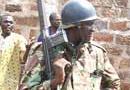
 cc Following his mission in Kenya over the period 16–25 February, UN Special Rapporteur on Extrajudicial, Arbitrary or Summary Executions Philip Alston issued a press statement outlining his findings. Drawing attention to the entrenched impunity of the country’s police force, Alston questions the complete absence of an accountability mechanism around police killings and the force’s broad reluctance to engage with detailed and comprehensive civil society concerns. The rapporteur likewise underlines the concerted efforts to block his access to records around security force activities, and need for independent investigation around events in Mt Elgon. Alston also argues the lack of any form of witness protection programme to be a key factor in the persistence of a culture of impunity, and states that the government must move to providing adequate reparations for families left unable to meet their needs through the deaths of husbands and fathers.
 cc Highlighting the importance of taking action on acts of large-scale theft and economic abuse, Gabriel Dolan argues that while corruption is certainly not restricted to the African continent, it is perhaps more apparent in the striking inequalities to be found between self-interested socio-political elites and impoverished masses. Criticising the tendency of human rights investigations to gloss over the role of social injustice and economic crimes in fuelling impunity and perpetuating corruption, Dolan states that Kenya’s Truth, Justice and Reconciliation Commission (TJRC) should fully acknowledge the plundering of the country’s resources by certain figures and ensure that recovered wealth is redistributed in the form of reparations for victims. With a view to enabling greater funding for educational initiatives, the author contends that the Kenya National Commission on Human Rights (KNCHR) should throw its weight behind a campaign to have grand corruption recognised as a crime against humanity.
 cc With Kenya continuing its recovery from its post-2008 election crisis, Maina Kiai asks whether the country’s political class has learnt its lessons or whether there has simply been a return to ‘business as usual’. Arguing for the strengths of the accountability mechanism set out in the Waki Report, Kiai suggests that the challenge remains to direct civil dissatisfaction and the momentum for change around Kenyan politics in a positive way representative of all Kenyans.
 cc The Chair of the Panel of Eminent African Personalities, His Excellency Kofi Annan, today [24 February] warned that further delays in establishing a tribunal to try those accused of post-election violence committed in Kenya in 2008 could have grave consequences for the country’s reform agenda, upon which Kenya’s stability and prosperity depend.
 cc President Marc Ravalomanana and beleaguered mayor of Antananarivo Andry Rajoelina – the two protagonists in the Malagasy crisis – have finally met. Thus the crisis that escalated into violence and which has left hundreds dead since 26 January seems to be headed for a negotiated settlement. But for Malagasy writer Jean-Luc Raharimanana, the blood that has been shed must not be washed away by yet another period of political games and treachery. The ‘Great Island’ must move away from the political vagaries that have plagued it since independence, the author writes.
 cc Drawing upon the parallels behind Cambodia’s experience of the trial of members of the brutal Khmer Rouge regime, Yash Ghai considers some of the lessons Kenya could learn in seeking justice around its post-election crisis. Following the collapse of the Khmer Rouge, the international community – primarily through the UN – played a central role in revitalising Cambodia’s economy and monitoring human rights. With corruption often entrenched and political players quick to interfere for their own benefit, Ghai discusses the inherent difficulty of ensuring the involvement of domestic legal figures without creating space for political self-interest.
 cc With Madagascar still in the throes of a political crisis, Zo Randriamaro discusses the broader background to the conflict outside of the media’s focus on the contest for power between President Marc Ravalomanana and Mayor of Antananarivo Andry Rajoelina. With presidential power becoming progressively more dictatorial in recent years, Randriamaro points to the heightened discontent of both the weakened opposition party and the country’s civil society groups in the face of neoliberal policies and growing social inequality. Underlining the key historic divide between urban and rural areas, Randriamaro argues that the current crisis represents a key opportunity to re-direct Madagascar onto a path towards democracy and improved human rights.
 cc With doubts lingering over its ultimate productivity, Lim Li Ching seeks to dispel fears around ecological agriculture’s low yields and demonstrate its capacity to be more than simply an idealistic socio-environmental approach. Drawing upon evidence from Ethiopia’s Tigray Project and data accrued from a variety of environments around the world, Lim Li discusses the benefits of using compost in place of chemical fertilisers and scope for ecological agriculture’s greater use in enabling countries, regions, and individual families to achieve improved crop yields and more sustainable food sources.
 Environmental Rights Action (ERA) demand that obscene oil company profits be used to clean up the environmental and social mess inflicted upon the Niger Delta population. Concerned about the government’s inability to tackle the problem of gas flaring, Bassey and the ERA propose a concerted endeavour to stop gas flaring, audit all oil spills and bring about a thorough clean-up of the region in order to detoxify the land once and for all. With a view to moving Nigeria away from its dependence on crude oil exports, Bassey and the ERA argue that offering new oil blocks should be resisted and oil kept in the soil.
 cc Statistics on disappearances, petty corruption and killings all point to a Kenyan police force in need of reform, the