


Moves to create a new leftist platform focused on addressing issues that affect people and on building socialism from the ground up rather than through state power are noble and worthy of support, Mphutlane wa Bofelo writes in this week’s Pambazuka News. But, says wa Bofelo, for the ‘soul-searching efforts to find and build a new platform for building power from below to yield a united socialist front’, they must be informed by and acknowledge the ‘multiplicity, plurality and diversity of traditions within the so-called “old left”, instead of lumping all past and present leftist and socialist/communist platforms with soviet-style communism.’
Mphutlane wa Bofelo reviews 'Bantu Ghost: A stream of (black) unconsciousness', by Lesego Rampolokeng and finds that the South African writer, playwright and performance poet ‘is to literature and theatre what Fanon and Biko are to sociopolitical analysis and activism’.
As protests against poor service delivery spill out across South Africa, Mphutlane wa Bofelo is irked by leaders who suggest that a third force is at play, mobilising communities against their local and provincial governments, with the implication that the poor are incapable of self-organising to improve their lives. There is a third force, wa Bofelo tells Pambazuka News, but it is not some ‘amorphous, abstract animal’ – it is ‘poverty, homelessness, hopelessness and despair’, and the ‘arrogance and indifference of the rich, the elites and the governing classes.’
Nelson Mandela is undeniably ‘one of the most charismatic, suave and diplomatic statesmen that South Africa and the world ever had’, writes Mphutlane wa Bofelo, as Madiba celebrates his 91st birthday. Despite ‘efforts to romanticise and deify’ him, however, wa Bofelo reminds Pambazuka readers that Mandela was also ‘the architect of neoliberal, neo-capitalist dispensation’, publicly recanting the Freedom Charter’s stance on the nationalisation of the mines and mineral resources, following opposition from big business. A ‘great human being’ and ‘a statesman par excellence’, Mandela is ‘human still, prone to error, capable of misjudgement on issues, and open to questioning’, says wa Bofelo.
 cc Deeply dissatisfied with the South African government's current economic record and policies, Mphutlane wa Bofelo calls on the country's leaders to implement a model of socio-economic redistribution. Rather than pursuing the spending cuts and reduced public sector prescribed by classic neoliberal orthodoxy, the Zuma administration should instead work towards the real and lasting developmental benefits to be found in spreading wealth around, wa Bofelo argues. For if labour and economic disparities simply breed social unrest, wa Bofelo contends, promoting fairer policy will foster social cohesion and people's lasting participation in a genuinely egalitarian society.
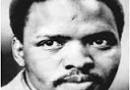
 cc Imprisoned at 17 as an anti-apartheid activist, Mphutlane wa Bofelo emerged even more determined to confront the system. It was the dream of ‘the freedom of our people’ that people act with boldness and bravery, he writes, even though ‘we knew the ultimate price could be death’. Yet 33 years after the 1976 youth uprising, confronting living conditions in Durban’s Kenville squatter camp, wa Bofelo considers why ‘former freedom fighters can sometimes be more vicious in attempts to abort freedom’. As Kenville residents consider class action against the government for decent housing, wa Bofelo wonders why South Africans should have to go to court to secure constitutionally enshrined basics of water and housing. ‘How can you have a sense of self-respect and dignity when you live in opulence but your brothers and sisters… live in squalor?’ asks wa Bofelo. ‘Pity how it seems we joined the struggle to be rich materially but poor in spirit!’
 cc Mphutlane wa Bofelo comments on the ‘barbarity of wage-slavery’, after confronting working conditions at a hotel in Mauritania, where staff work long hours for meagre wages. This situation prevails in the restaurant and hotel industry throughout the world, writes wa Bofelo, with big South African companies ‘paying their workers as little as three hundred rand per month and some who do not give a salary at all, paying their labourers with the tips from their clients’. Wa Bofelo is disturbed that ‘even Muslim-owned businesses have resorted to this… practice of employing people without a salary’. Halaal certification, wa Bofelo argues, should take into account labour-relations practices, labour rights and human rights culture, not just whether a enterprise is Muslim-owned or has prayer facilities.
When the incidents of cholera in Zimbabwe were first reported, the government in that country went on a denialism trip. It insisted that the disease was nowhere nearer to reaching epidemic proportions and that there was no humanitarian crisis in the country. This response was an effort to dismiss the view that the outbreak of cholera was a consequence of social policy failures and a result of the general decline of the Zimbabwean economy. Such obfuscation and obscuration of social reality by neglecting the systemic and structural factors behind problems is typical of the responses of the political establishment to crisis situations. Very often the easiest escape route is to blame it all on the ignorance and negligence of the poor or to find a scapegoat.
 cc. Citing the absence of viable political alternatives to ZANU-PF and the MDC, Mphutlane wa Bofelo laments the deadlock continuing to grip Zimbabwe. Considering a broader history of continental political developments and the entrenched dominance of particular parties within post-colonial African states, wa Bofelo discusses what lessons Zimbabwe’s experience offers for a South Africa approaching new general elections.
Exploring the growing support for the newly formed Congress of the People (COPE) in much of South Africa, Mphutlane wa Bofelo cautions against people’s unquestioning backing of the party. The author argues that for all the hope it inspires in many South Africans, COPE is likely to be even more unfavourable to social spending than the African National Congress (ANC).
http://www.pambazuka.org/images/articles/384/48994inflationzim.jpgThis is not the first time that America and the West, bankrolled and oversaw a one party dictatorship or military rule for decades only to ditch the regime when it is no longer serving their interests, writes Mphutlane Wa Bofelo. But only after dusting off blood from their hands and clothes, and presenting themselves as the moral voice, urging for war crimes against the very regime that they baby-seated, reared and mentored.
=====
The political and economic meltdown in Zimbabwe is traceable to the hold on the country’s policy alternatives and developmental possibilities by the restraints of the Lancaster House concessions and the constraints of the Structural Adjustment Programmes. Robert Mugabe and his ZANU (PF) implemented these programmes to the letter from 1981 up to 2000. Mugabe and ZANU’s reward was the blindness, silence and tacit collusion of the western powers in the genocidal attack on the people of Matabeleland in what is called the Gukurahundi.
Despite the fact that Mugabe and Zanu PF continued with the culture of violent clampdown on political dissidence and repression of media freedom and the freedom of association and assembly, the custodians of democracy remained prepared to portray Mugabe as an astute statesman and scrupulous ruler. For as long as he trod the path of the Washington Consensus and cracked his whip against labour and ensured that there was no room for leftists to raise their heads in Zimbabwe, Mugabe could reign on opposition to his rule by any means at his disposal.
Throughout the 1990’s, the International Monetary Fund (IMF) and the World Bank and the G8 gave a standing ovation to the social policy path and political economy trajectory pursued by Zimbabwe, South Africa, Uganda and Ethiopia. As late as 2001 political science textbooks at tertiary institutions celebrated Mugabe of Zimbabwe, Mandela of South Africa, Museveni of Uganda, and Zenawi of Ethiopia as the crème de la crème of African leaders, and hailed them as former guerillas who had woken up to the realism of running a country.
In 2001 popular disenchantment with the failure to meet liberation expectations and pressure from the war veterans forced the land reform project on the agenda of Mugabe and Zanu PF. Mugabe and Zanu PF then failed dismally to come up with a systematically designed land reform project, with clear targets, performance indicators and monitoring and impact assessment mechanisms. Instead of genuine land reform aimed at sustainable development of communities, they opted for a mixture of anarchist, populist, propagandistic theatrics and bureaucratic centralism, elite’ self-enrichment, and the politics of cronyism and patronage aimed at using the land reform project to prop up the power of the establishment.
Suddenly western governments, with the aid of the media and our ‘fuckademics’ started to shift the focus away from the suffering landless, jobless and poor multitudes of Zimbabwe - who continue to live in utter poverty and squalor - to the fate of white farmers. Both the Western governments and the White farmers in Zimbabwe never raised even a murmur of protest against the rule of Mugabe for as long as their bread remained buttered. All of a sudden, everybody forgot that Mugabe built his repressive machinery under the watchful eyes of the super powers and the so-called multilateral institutions. Nobody cared to remember the role played by the restraints of Lancaster House agreement on a legal-constitutional and peaceful land reform process in Zimbabwe and the ravages of the market forces unleashed by the Structural Adjustment Programmes on the people, economy and environment of Zimbabwe.
Whenever the issue of the war crimes against Mugabe is raised, often the focus is not the crime of the Gukurahundi or the genocidal impoverishment of the people through handing them over to the brutality of the market forces for a decade of subservience to the Washington Consensus. The focus is rather the “crime” of taking land from white farmers. When the Gukurahundi is mentioned no one speaks about the need to also charge Mugabe’s main backers throughout this period - the super powers and the Washington institutions - IMF and World Bank.
This is not the first time that America and the West, bankrolled and oversaw a one party dictatorship or military rule for decades only to ditch the regime when it is no longer serving their interests. But only after dusting off blood from their hands and clothes, and presenting themselves as the moral voice, urging for war crimes against the very regime that they baby-seated, reared and mentored. From Mobuto Seso Seko, Saddam Hussain, Charles Taylor and the Taliban to Uncle Bob—the list of rulers utilized and dumped like used condoms by Uncle Sam and his brethren is endless.
There is no prize if you guess what trajectory Morgan Tsvangirai and his Movement for Democratic Change are most likely to tread if they ascend power. My two year old son, Goitsemodimo, has whispered to me that Zimbabwe will be under the tyranny of the market and remote control by “the empire.”
*Mphutlane Wa Bofelo is a writer, activist, life-skills facilitator and performance poet who has been published in several journals, websites and anthologies and has performed at various events.
*Please send comments to or comment online at http://www.pambazuka.org/
Aryan Kaganof is a writer who possesses the rare capability to capture grotesque and bleak scenes and moments in words of a lyrical and poetic beauty that lands deep into the heart and mind of a reader like the melody of a serenading love song. In The Ballad of Sugar Moon and Coffin Deadly, Aryan Kaganof comes out as a brave and seasoned craftsman who is unflinching in dismantling the barricade between prose and poetry and between a poem and a novel. He goes into the depths of the dark and light areas of the heart of a murderer and blows to dust the false securities of the high-tech and securocratic world. Like a sharp-knife his words cut into the veil of order and security supposedly provided by the institutions of the sate, the army and the police as well as sophisticated technology. He exposes the gaps and lapses in the strictures and structures that are supposed to keep humanity in order.
The Ballad of Sugar Moon and Coffin Deadly tells the story of the romance between Coffin Deadly and Sugar Moon and their romance with death. Coffin Deadly is addicted to killing for its sake, just for the thrill and spasm that goes with the shattering shout of his Glock 19 mm parabelllum pistol and the shocked ogle of victims and onlookers whom he tells in advance what he is up to. He meets Sugar Moon at the abortion clinic, seduced by the look of greedy surprise in her eyes as he pulled out a bankroll of R200 notes, and drawn closer to her by her thin rubber-like legs and the tightness that clutches him beyond control during intercourse. The turning point in Coffin Deadly’s life is when he is rewarded not with the promised millions of dollars and the expected heroic status but time in prison for killing the most wanted terrorist in the world -Osama Bin Laden. To boot it all, this aesthetically progressive man who knows the inside-outs of Kwaito and listens to everything from opera music to house is bundled together in a cell with the crazy idiots of the Boeremag who cannot discern the poetics in Kwaito music. Inside he hears about the ill-fated death of Kwaito\Afro-Pop star Tebza of Mafikizolo fame and contemplates turning a new leaf.
Through the voice and deeds of Coffin Deadly- who personifies death and the death of conscience- Aryan Kaganof peers beneath the mask and veneer of civility and decorum to lay bare and open to the naked eye the frivolity and falsity of the li(f)e we live. Coffin Deadly commits his murders in broad-daylight, under the watchful eyes of the police and walking through the sophisticated vigilance of detectors and the security of digital cameras, electric fences and boom gates. His potent weapon is being and truthful about what he is, what he does and what drives him. All his killings and robberies are done under the public eye and yet he is the only audience of his actions. He provides the security guards, the police and the public with sincere answers of what he is up to and succinct clues that he is the murderer but they still do not get it. The only logical explanation of this is that society is too used to speaking and living a lie that it just cannot hear the voice that speaks about one real fact – death.
* Published by Pine Slopes Publications, 2007
Forget the Green (Springbok Rugby Special) Revolution – What we need is a Red Revolution “bottom-up, participatory, accountable democracy, worker-control of the product of their labor, the socialization of land, state control and public ownership of the major means of production”
Referring to the Springbok mania that is currently gripping South Africa as "The Green Revolution" is but just another example of how the mass media appropriates the language of justice for ends that have nothing to do with the real issues represented by the struggle lexicon. As the big wigs of world rugby and corporate capital smile to the bank-and the Springbok’s victory shift the focus away from the team’s lily-whiteness, the poorest of the poor, the working class and the rural and township majority return from the merry-making ceremonies to squalid, unsafe and unhealthy living and working conditions. Reality dawns upon them that South Africa and the world is far away from the realization of the real green revolution, which among others entails:
•Sustainable development of communities through equitable allocation and distribution of power, wealth and resources and people’s participation in designing, implementing, evaluating and reviewing policies and programmes geared towards their development.
•A break from policy programmes that sacrifice labor-demands and the welfare and wellbeing of society and the environment to profit-maximization, the deity of economic growth and the tyranny of the market.
•Taking tough measures against the ravages of big industry, high finance and corporate and speculative capital on the ecosystem and the economies and cultures of peoples of the world.
•Zero-waste initiatives promoting recycling, energy conversation and nature preservation, environmental awareness programmes at the grassroots, promoting responsible motoring and encouraging the use of public transport. Making big industry to pay reparation to the communities that are victims of their environmental terror.
This green revolution will not be possible without the red revolution: bottom-up, participatory, accountable democracy, worker-control of the product of their labor, the socialization of land, state control and public ownership of the major means of production(the commanding heights of the economy) and equitable redistribution of the wealth and resources of the land. Only when this is achieved will we do way with unequal social and power relations, and therefore be able to close all the doors of prejudice, which is the foundation upon which true integration and a South Africaness that transcends the boundaries of creed, color, language, ethnicity and gender shall be built. Real integration will be possible when access to quality arts, sports and cultural facilities, social amenities and social services, quality health services and good education does not depend on the socio-economic status, and racial background of individuals or their gender.
In other words, real integration will be realized when all the socio-economic factors and institutional and structural arrangements that work against workers and the rural and urban poor, the women, the disabled and Black people have been done away with. In the absence of these conditions the rainbowism that we suddenly fall in love with when the Springboks lift up the world cup only serve to give people a false sense of unity and one-nationess which ignore class contradictions.
Most importantly, the green revolution rainbowism put the enormous gap in the quality of life of the under-classes and the elites and upper-classes, the laborers and employers, and the poor and the rich under the carpet. This is a typical example of using popular sport as an opium, feeding the masses illusions of joy and happiness that distract their attention from issues such as the lethargic pace of transformation in rugby, the fact that in material and economic terms Black people and the poor have no real stake in rugby or 2010, and that the real beneficiaries in the world cup tournaments are the rich and the propertied. We are made to forget that the chances of poor Black hawkers selling at rugby match in South Africa are zilch as much as they will not be able to be within the reach of the stadiums during the 2010 football world cup.
The phantom display of a nation united behind the green banner and the national flag will not change the fact that invariably South Africa is two worlds in one country: the world of utter want, abject poverty, rampant disease and de-humanizing and brutalizing squalor and the world of raging consumerism, shameless opulence and decadent pomp. As Steve Biko put it, integration cannot be imposed on a people, it will automatically happen when all doors of prejudice have been closed. As of now, we are far from achieving what Biko posited as the struggle’s glittering prize: bestowing upon South Africa (and the world) a more human face.
* Mphutlane wa Bofelo is a creative writer, performance and social critic, and is currently the national General Secretary of the Muslim Youth Movement of South Africa. He writes in his personal capacity.
* Please send comments to or comment online at www.pambazuka.org
Mphutlane Wa Bofelo says that the programme planned by the Steve Biko Foundation as part of the 30th anniversary of the killing of Steve Biko looks like a homage to a writer and cultural worker rather than a tribute to a freedom fighter.
Looking at the weeklong programme planned by the Steve Biko Foundation at the BAT Center in Durban as part of the 30th anniversary of the martyrdom of Steve Biko, I realized that it is focused on literary and cultural discourses and the exhibition of works on, about and by Biko. It is noteworthy that the joint programme of the Steve Biko Foundation (SBF) and the newly established Biko Legacy Reference Committee (BLRC) are also focused on literary and theatrical activities. It is as if the initiative is paying homage to an ingenious writer and cultural worker rather than a tribute to a freedom fighter whose work and that of the movement he belonged to straddled the worlds of socio-political activism, mass mobilisation, community development, labour and working class politics. Biko is presented as an icon whose only claim to fame is the monumental piece of literature, 'I write what I like', and dying a lonely and gruesome death in an Apartheid cell rather than as a social and political activist who was a member and leader of a socio-political movement.
There is a conspicuous absence of activities and themes overtly dealing with the local and global socio-political and economic state of affairs. There is nothing in the programme that investigates how far the country that Biko laid his life for is with regard to the reclamation of the collective human dignity of Black People and the enhancement of their socio-economic wellbeing, and how far it is towards advancing Biko's vision of a South Africa with a human face; an anti-racist society in which there is equal allocation of power and equitable distribution of the wealth and resources of the land.
However, it will be a travesty of history and the truncation of the legacy of Biko to remember Biko without raising issues such as genuine transfer of political and economic power to the black majority and without any initiative to let Biko (and BC) speak to the issues and challenges facing black people and humanity in the era of the attack on the environment and the economies, cultures and natural resources of the global south by the regimes and regiments of global capitalism and the Washington consensus in the form of the structural adjustment programmes (implemented as GEAR in South Africa), liberalisation, privatisation, deregulation, socially unequal taxation and dependence on direct foreign investment and speculative capital.
The historical fact is that his writings, political activism and community work clearly articulates that, as opposed to the ideologically neutral humanist that he is portrayed to be, Biko subscribed to the philosophy of Black Consciousness and his affinities were towards a pro-poor, pro-working class political agenda geared towards an egalitarian society. He was a member of the BCM under the flagship of SASO-BPC. He led and was led within the structures of the BCM. If not combated, the subtle and not-so-subtle attempts to de-link Biko from the philosophy of Black Consciousness, the BCM and radical working-class oriented politics in order to look sexy and to court corporate capital and be in the good books of the powers that be, will result into turning Biko into a piece of iconoclast and a collectors item the same way that corporate capital and the corporate media is doing with Ernesto Che Guevara.
Simply put, this will be the case of remembering Biko so as to forget him, or as others have said, a matter of murder by memory. While the Steve Biko Foundation is said to have insisted on the exclusion of the Umtapo Center (which held up the name of Biko and BC when doing so invited being 'necklaced' and other things), it is interesting to see who the important figures in the BLRC are. Muntu Myeza's assertion that renegades cannot be advocates of a cause they have deserted will be instructive in this case. Sello Rasethaba jumped from the BCM to join the ruling ANC, saying the philosophy of BC and the BCM has run its course and went on to become an associate of the late corporate hooligan, Brett Kebble.
Rakhs Seakhwa's credentials in as far as governance and fiscal discipline is concerned include virtually leading the once dynamic Congress of South African Writers to its (un)natural death. The tale of how Rakhs and his comrades through COSAW directed the Staffrider magazine away from a BC line is another story. Duma Ka Ndhlovu was recently reported to have received R4.5 million shares from Tokyo Sexwale as part of Sexwale's attempt to have influential people in society tied to his wallet. People who allegedly received Sexwale's shares include the SBF's Xolela Mangcu. Let's remember how Mangcu wrote an opinion piece extolling the virtues of Sexwale and overtly canvassing for him, immediately his chief announced his availability for the ANC presidential race.
I might be accused of being subjective in my argument that people with a proclivity to dance to the tune of corporate capital are not the right candidates to preserve the legacy of Biko. But who can argue that as it stands, the current programme of the SBF and the BLRC points in the direction of fossilising the legacy of Biko, restricting our memory of Steve Biko to the remembrance of 'that guy who wrote "I Write What I like" and died in a prison cell', and steering away from any recollection of Biko the member and leader of SASO-BPC and founder of the Black Consciousness Movement; Biko the activist, Biko the militant, let alone Biko the socialist? Otherwise, why is the BLRC constituted only by individuals who represent themselves instead of also including representatives from the various segments of the BCM, and why is the programme so apolitical?
Poetry is defined differently by different people. How do Africans define poetry? Is it possible to draw from the experiences of pre-colonial African oral traditions in developing an organically grown and contextualised slam poetry movement in South Africa? asks Mphutlane Wa Bofelo.
The emergence of Slam Poetry as a competitive, theatrical, participative and entertaining presentation of poetry and a social event involving a vibrant interaction between the poets is attributed to construction worker and poet, Mark Smith and the bunch of blue collar eccentric intellectuals who gathered at the Chicago Jazz Club, and the Get Me High Lounge for a series of poetry sessions in 1985. They continued the tradition under the framework of the Uptown Poetry Slam at another Chicago Jazz Club, the Green Mill from July 25,1986 to date. Looking for a way to breathe life into the open mic poetry format, construction worker and poet, Mark Smith (Slampapi) started a poetry reading series in 1985 at a Chicago jazz club, the Get Me High Lounge; which was owned by finger-popping’ hipster, Butchie (James Dukaris) who allowed anything to happen. The series' emphasis on performance laid the groundwork for a style poetry and performance which would eventually be spread across the world.
In 1986, Smith approached Dave Jemilo, the owner of the Green Mill (a Chicago jazz club and former haunt of Al Capone); with a plan to host a weekly poetry cabaret on the club’s slows Sunday nights. Jemilo welcomed him, and on July 25 that year, the Uptown Poetry Slam was born. Smith drew on baseball and bridge terminology for the name, and instituted the show’s basic structure of an open mic, guest performers, and a competition. The Green Mill evolved into the Mecca for performance poets, and the Uptown Poetry Slam still continues 18 years after its inception. Explaining the slam poetry craze and vibe at The Green Mill, the Idiot’s Guide to ? declares: “The experimenters in this new style of poetry presentation gyrated, rotated, spewed, and stepped their words along the bar top, dancing between the bottles, bellowing out the backdoor, standing on the street or on their stools, turning the west side of Chicago into a rainforest of dripping whispers or a blast furnace of fiery elongated syllables, phrases, snatches of scripts, and verse that electrified the night.”
Poetry in the Boxing ring
But in Chicago itself the idea of reading poetry in non-literary settings and in a theatrical and sporting and somewhat eccentric and experimental style often bothering on the break with conventions, could be traced to as early as the late1970s and early 1980s. Sometimes in 1978 (or 1979) Jerome Salla and Elaine Equi got for readings at Facets Multimedia. Elaine Equi recalls, “Jerome was getting bigger audiences, drawing from bars, the Art Institute scene, from clubs such as O'Banyon's, La Mer, artists, and publishers. The people around the Body Politic were one scene. But when Jerome and I would read, it was not really a literary crowd. By 1980 Salla constructed his own poetry competition based on a boxing match and the crowd was rowdy. Elaine Equi explains how this started "My husband was reading at some space in Chicago... His readings were always accompanied by a lot of audience participation. There was one particular musician, named Jimmy Desmond, who got irritated easily when he was drunk. He grabbed a chair and swung at Jerome. There was a fight, but it didn't actually come to blows." Jerome Salla continues, "A couple days later I got call from Al-Simmons. He was involved with the old poetry scene in New York’s lower east side, and in Chicago too, and hung with Ted Berrigan. He said, 'Jimmy Desmond would like to challenge you to a ten-round poetry fight to the death...” (Kurt Heintz, 1996)
Pioneer of the Slam Poetry scene in New York, Bob Holman recalls seeing Ted Berrigan and Ann Waldman in a poetry bout dressed in boxing gear, around 1979 but indicates that he didn't first communicate with Mark Smith until after he visited the Green Mill in person. Elaine Equi proposes that Simmons might have got the idea from professional wrestling, but also adds that Simmons told her that he saw a couple poets in a boxing ring in New York and would love to stage a poetry fight between her and Simmons. The first fight took place in 1980 at a fly-by-night club. Equi has very fresh memories of these ‘poetry fights’: “I read a poem called 'Give Piss a Chance' shortly after the death of John Lennon, and the crowd booed..!" They had a stage like a boxing ring and girls in bikinis, holding up cards for the number of the rounds. They also had and judges... each round Jerome and Jimmy reading one poem. Jerome won." It was not a fluke. They had a rematch and he won again. About two hundred people witnessed the second match. There match was at Tut's on Belmont at Sheffield, now The Avalon. I read in leather boxing shorts, had a robe that said Baby Jerome. Jimmy had a nickname too. We didn’t really hate each other. It was just a funny, kind of weird event we threw to make money," says Salla. "There was little story in the Trib. We were with the punk scene. A lot of forces were converging in Chicago at the same time. Suddenly there was an audience for poetry. There really isn't anything that close to the experience today except in rap music." (Kurt Heintz, 1996)
The philosophies of slam
Equi’s reference to rap in relation to the late 1970’s Chicago poetry phenomenon is interesting given the link that today’s slam poetry has with hip hop, of which rap is one of the components. It is noteworthy that Mark Smith took the name from the game of basketball which is also having some cordial relations with hip hop. Based on this information, one can say with Slam Poetry, Mark Smith and his crew of convention-busting poets and lovers of the spoken continued a tradition that -in Chicago-started in the late 70’s, and gave it a format and name in tune with the times.
Perhaps confirming the communal spirit of slam and the universal nature of its ideal of creating an open space for expression, Mark Smith declares on his website that Slam does not belong to him but to “the thousands of people who have dedicated their time, money, and energy to this Chicago-born, interactive format for presenting poetry to a public that has a zillion other barks and belches and flashes to hold its attention”. However he expresses his wish that the slam phenomenon should grow in accordance with the philosophies that have become what I consider to be the backbone of what we call the "Slam Family". These include:
- The purpose of poetry (and indeed all art) is not to glorify the poet but rather to celebrate the community to which the poet belongs. (This idea is paraphrased from the works of Wendell Berry)
- The performance of poetry is an art -- just as much an art as the art of writing it.
- The Slam should be open to all people and all forms of poetry.
- We must all remember that we are each tied in some way to someone else's efforts. Our individual achievements are only extensions of some previous accomplishment.
- Success for one should translate into success for all.
- The National Slam began as a gift from one city to another. It should remain a gift passed on freely to all newcomers.
Towards an organic South African Slam Movement
These are lofty communal and humanistic ideas that in the dog-eat-dog individualistic and materialistic society might be easily dismissed as too idealistic and utopian indeed! Mark Smith himself confesses that “the idealism and cooperative forces of the Slam are in constant conflict with the competitive and self-serving appetites of its ambitious nature”. He asserts that the struggle between the idealism of slam and its competitive spirit has taught the slam family much but also threatens to obliterate all that has grown to be. And unequivocally and unambiguously declares that he is “on the side of idealism and hope.”
How many of us who have latched on the slam poetry buzz share the idealism and pro-humanism spirit? And to what extent are we able to contextualise the slam movement within the tangible and concrete realities of Azania, and locate it within the particularities and peculiarities of the Azanian\South African situation? How do we relate the slam movement to our own history of using poetry in particular, and literature and theatre in general, to open the space of discourse and critical engagement with prevailing socio-economic, political and cultural conditions? Can we draw from the experiences of pre-colonial African oral traditions in developing an organically grown and contextualised slam poetry movement in South Africa\Azania?
In South Africa\Azania the idea of doing poetry in a non-literary setting and of moving away from eurocentric conventions in as far as the stylistic concerns of poetry and the manner in which poetry is delivered, is not a new phenomenon. As early as the 1970’s, groups like Dashiki fused poetry with jazz. The Allah Poets, Mihloti, Medupi Writers and others recited their poetry over the beat of the drum and sounds of horns. People like Muthobi Motloatse and Gamakhulu Diniso of Busang Thakaneng used the term Proemdra to refer to a fusion prose, poetry, music and drama, and promoted the notion of participatory theatre. Muthobi Motloatse’s theatre piece, ‘Nkosi –the Healing song’ is a typical example of the fusion of the language of story telling, music, dance and drama. Here the barriers between the audience and the performer were broken, and in the words of a character in ‘Nkosi- the Healing Song’, “myths, legends and facts are interwoven and the story can “begin in the ending and end in the middle.”
The concept of participatory theatre gained ground in the 70’s and 80’s. Participatory theatre was informed not only by ‘the anti-poetry theory’ of the of Bertold Brecht, Jerry Grotowsky’s ‘poor theatre’ and Augusto Boal’s “theatre of the oppressed”, but also by pre-colonial African of cultural and artistic forms of expression where there were no rigid borderlines between music, poetry, dance, etc. When groups like Ujamaa (in Sharpeville), Rakgalema Medupi Arts Commune and Arts in Motion (in Sebokeng), (Mafube in the East rand) and Makana Poets (in Zamdela) emerged in the 1980’s and 1990’s, they followed the same trend began by their predecessors. These groups performed poetry at political rallies and social events like wedding ceremonies and birthday parties, at schools, in churches, in beer-halls and in stadiums. Poetry was performed in prisons, hostels, squatter camps, refugee camps, and in the trenches and guerrilla training camps in exile. In the words of Muthobi Motlaotse, this kind of literature and theatre deliberately shit on conventional English-English literary forms.
It mixed languages and genres and knew no holy cows. In as far as its dare-devil, passionate and energetic, genre-crossing, convention-defying multi-media spirit and its efforts to open up the space for self-expression and dialogue between the writer and society are concerned, the slam poetry phenomenon shares stylistic and thematic concerns with the poetry, literary and theatre movement of the 1970’s up to the early 90’s in South Africa\Azania. The efforts of many slam poets\ hip hop activists in Azania today to attune their artistic expressions to the historical-material experiences, politico-economic conditions and the cultural and linguistic heritage of our country is in many ways a continuation of the tradition and legacy of the 1970’s generation that was in the main inspired by the philosophy of Black Consciousness.
Conclusion
What is missing is a conscious and well-coordinated programme to link up the present literary and cultural movement with the past and to educate the current crop of poets and cultural activists about their predecessors. The ignorance of the present-day generation of poets and spoken word activists about the contributions and achievements of their predecessors and ancestors in the literary world is reflected by the scant respect shown to the legendary Mafika Pascal Gwala during his recital at Poetry Africa. The impatient audience heckled when Gwala recited on the opening day of Poetry Africa. The presenter of the programme is to blame for not informing the audience that Gwala was entitled to recite for more than the four minutes allocated to other poets, as he was the featured poet of the day. He also introduced Gwala with just one sentence whereas he went on and on about the other poets. Given proper direction, the poetry movement and the cultural movement in South Africa have a lot to offer to this country. And acknowledging the struggles, contributions and efforts of the ancestors of South African literary and theatre movement and learning from them would be the first step in the right direction.
Names that come to mind are Mirriam Tladi, Fatima Dike, Fikile Magadlela, Nardine Gordimer; Richard Rive, James Mathews, the late Strini Moodley (who founded the first union of Black theatre and upon whose request Gwala wrote the classical piece, ‘The Children of Nonti’), Mafika Gwala, Mazisi Kunene, Farouk Asvat, Benjy Francis, Athol Fugard, John Kani, Lefifi Tladi, Lesego Rampolokeng. The list is endless. The passion of most of these individuals for literature and theatre was fanned by the desire to use the word as an instrument for transformation and social change. Their works were part of the quest for a South Africa and a world with a more humane face. It is this understanding that will motivate the present-day writer, poet and artist to use podiums like the slam poetry\spoken word scene as mediums of self-expression as well as a platform for social dialogue and an instrument for social change. When this happens, the word will not cower to the dictates of capital, but will place the collective dignity and collective interests and aspirations of the people before narrow materialistic individual gains.
• Mphutlane Wa Bofelo is a writer, activist, life-skills facilitator and performance poet who has been published in several journals, websites and anthologies and has performed at various events. He won the Slam Poetry Champion of Championship organized by the Slam Poetry Operation Team (SPOT) in 2003. He also published the booklet, ‘The Journey Within' with Yaseen Islamic Publishers. In 2005, he won the Durban Slamjam at the 9th Poetry Africa held at the BAT Center. In June 2006, Mphutlane performed at the first Cape Town International Bookfair. He co-founded the Makana Poets with Sello Hlasa in the late 80's and is currently a member of the Nowadays Poets, the Live Poets Society (LiPS), the Slam Poetry Operation Team (SPOT), and the Open Stage Society.
• Please send comments to [email protected] or comment online at www.pambazuka.org
Sources
1. on 13\11\06)
3.3. www.e-poets.net/library/slam/converge.html (accessed on 13\11\06)