


Zimbabwe’s transition to a new democratic government remains a difficult challenge, given the current regime’s culture of corruption and military intransigence.

Mary Ndlovu paints a desolate picture of the Zimbabwe of now and its political future: ‘The “Unity Government” has stumbled from pillar to post, ending for the time being, paralysed in the intensive or perhaps terminal care unit of the political hospital.’ Ndlovu takes us through the events of the last year and argues that ZANU PF’s tactics have shifted from the defensive to the offensive. Analysing the various options, such as calls for elections now, Ndlovu finds strong reasons to eliminate each. But she ends on a note of hope: ‘Debate on the constitution has… sparked considerable interest and determination to participate. Hopefully… a more active citizenry will eventually evolve, bringing promise of an empowered society which will develop new strategies to put in place a democratic government.’
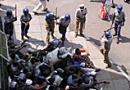
A season of fear has returned to Zimbabwe, following Morgan Tsvangirai’s decision to ‘disengage’ from the country’s dysfunctional Government of National Unity, Mary Ndlovu writes in Pambazuka News. With unlawful arrests, abductions, beatings, torture, burning of homes and killings by Zanu PF and state agents on the increase again, ordinary Zimbabweans are sceptical that SADC’s latest attempts at mediation will bring the country’s people closer to peace and prosperity. But says Ndlovu, there is ‘still room to hope for a miracle’.
 cc Human rights activist Mary Ndlovu considers the possible outcomes of a four-week-old ‘unholy alliance between Zimbabwe’s former ruling party Zanu PF (Zimbabwe African National Union – Patriotic Front) and the MDC (Movement for Democratic Change) into a ‘Government of National Unity’ (GNU). Already the GNU has survived the arrest and incarceration of senior MDC leaders, Zanu PF’s persistent failure to implement major clauses of the power-sharing agreement on which the government is based, and a car accident widely perceived as an assassination attempt on Prime Minister Morgan Tsvangirai, which killed his wife.
Some have been critical of the MDC’s decision to enter into a power-sharing agreement with Zanu PF before a fairer compromise was reached. But, notes Ndlovu, with the countrywide collapse of public services – from schools to electricity, hospitals, water treatment and banking – many Zimbabweans on the ground believed it was necessary for the MDC to get inside the government to begin the process of reconstruction.
There is cause for pessimism. Zanu PF hardliners seem determined to sabotage the GNU rather than work with the MDC to build Zimbabwe. Some say the MDC has been able to accomplish little since its swearing-in, and that the longer they are unable make progress on disputed issues, the more they will lose credibility and attract criticism from former supporters. Others fear the MDC will be swallowed by Zanu PF’s culture of corruption and cronyism, with Mercedes Benzes rolling out for both boys and girls alike.
But there is also cause for hope. Optimists believe that the combination of the finance ministry and several important service industries are enough for the MDC to show the people that they are concerned and are prepared to commit themselves to work feverishly to begin the formidable task of reconstruction.
Moreover, adds Ndlovu, rumours abound that the military top-brass are using the detainees as pawns or bargaining chips to obtain amnesty for their crimes, afraid to rely on the forces they command. Optimists believe hardliners won’t be able to hold the country hostage forever, as subtle power shifts begin to show themselves on the ground with a large percentage of intelligence officers and lower-ranking soldiers said to be disillusioned with Zanu PF and welcoming of change.
Nevertheless, Ndlovu is critical of the MDC’s failure to make any attempt to mobilise people to demonstrate the departure of the old and arrival of the new, with the task left to others like students and civil society groups such as WOZA (Women of Zimbabwe Arise) to test the waters and push the police to take a position.
It is unclear whether Tsvangirai’s injuries and bereavement will create a dangerous hiatus, causing the promise of the GNU to dissipate. What we do know, however, Ndlovu contends, is that each small step will be difficult and concessions will only be won through determination, perseverance and belief that progress can be achieved. And that belief can create reality.
 cc. With its power-sharing agreement manifestly failing, Zimbabwe is on the brink of collapse, writes Mary Ndlovu. The author argues that in the face of an entrenched kleptocratic elite, life grows ever more difficult for the country’s population, a situation markedly exacerbated by a broader political culture of selfishness undermining the development of any form of effective collective action. Without an internationally sponsored, technocratically based transitional authority to replace ZANU-PF as soon as possible, Zimbabwe may yet be spoken of in the same breath as Somalia and the eastern DR Congo, she concludes.
http://www.pambazuka.org/images/articles/384/49051brutality2.jpgSince March, Zimbabwe has had no Parliament, no local government councils, no legitimate executive, and ZANU PF has ruled by decree in response to the orders of the JOC – acronym for the military junta which now controls the nation, along with Mr. Mugabe and Reserve Bank Governor Mr. Gono, who is needed to print money, writes Mary Ndlovu. SADC governments allowed the charade to continue, talked to and dealt with the illegitimate government as if nothing was wrong. If SADC fails in its self-assigned disaster management, if the AU is unable or unwilling to step into the breach - hunger, terror, displacement, and death stare Zimbabweans in the face.
====
A collective and audible sigh of relief spread through Zimbabwe on Sunday evening, June 22, as word got around that Morgan Tsvangirai had pulled out of the presidential run-off election. There were, to be sure, also some voices of dismay and anger that we would now be deprived of the opportunity of speaking with our ballots and finishing the task of liberation. Both responses were based on false assumptions – first that the violence could end if there were no contested election and second that voting in a re-run would mean a ZANU PF exit.
Tsvangirai’s reasons for withdrawing were clearly stated and unassailable – under the current circumstances of torture, burning of homes, rape, systematic destruction of MDC structures, killings and arrests, there could be no valid election. What made it possible for him to withdraw at all was the shift in position by the majority of SADC governments.
The MDC and most Zimbabweans believe that Tsvangirai won the first round. He won the contest in spite of it being seriously skewed against him at every stage of the process -from the bias of the Zimbabwe Election Commission, to voter registration, to delimitation of constituencies, to placement of polling stations, to counting and announcement of results. The charade of a run-off has been played out in an increasingly surreal atmosphere, not according to the law, not for democracy or the Zimbabwean people, but for the benefit of reluctant regional leaders who insisted that the MDC accept the deceitful maneuverings of a regime which had lost the support of the people but nevertheless maintained control of the levers of power.
Robert Mugabe and ZANU PF had ceased to enjoy legitimacy to rule Zimbabwe by April 1. The first election was held on March 29, and by the end of March 30 at the latest, all results should have been announced. Instead, the Zimbabwe Electoral Commission, evidently directed by ZANU PF, prevaricated and delayed and began a lengthy tragi-farce, pretending that they were re-counting, validating, and engaged in every other process they could devise to avoid admitting that they had been defeated at the polls, both in parliamentary and in presidential voting. They ignored all relevant provisions of the Electoral Act, and even proceeded to re-write the Act by statutory instrument. This gave them time to delay any run-off of the presidential vote until they could put in place their evil plan to terrorise the population into submission. Mugabe brazenly re-called the cabinet which was dissolved before the election; and without even a façade of legality, they resumed their positions, and continued to receive their salaries and perks of office in spite of the fact that many had themselves been defeated by the electorate.
Since March, Zimbabwe has had no Parliament, no local government councils, no legitimate executive, and ZANU PF has ruled by decree in response to the orders of the JOC – acronym for the military junta which now controls the nation, along with Mr. Mugabe and Reserve Bank Governor Mr. Gono, who is needed to print money. SADC governments allowed the charade to continue, talked to and dealt with the illegitimate government as if nothing was wrong. Although it is now painfully clear why the delay was orchestrated, it is not so clear why regional presidents supported it.
Through the past two months, the war, which Mugabe now threatens if he is defeated at the polls, has already been raging. The tactics used to terrorise opposition supporters are those, which were used during the liberation war. Militia bases recreate the guerilla bases of the 1970’s, while all-night meetings called “pungwes” claim to be re-educating the population. Those pungwes were and are meetings where people are forced to attend, sing songs and shout slogans while they watch anyone not openly supporting ZANU PF being beaten, tortured, and killed.
In April and May, ZANU PF militia and war vets were mobilized in the rural constituencies to eliminate known MDC supporters. Houses were burned, many people tortured and killed for the political allegiances not just of themselves, but also of their children, grandchildren, parents and neighbours. In June the terror spread to urban areas, especially Harare, and also to smaller cities, with ZANU PF mobs targeting not only opposition party officials but also anyone not displaying their regalia. The police force too has been targeted. It is not to intervene in “political” situations. Hence none of the perpetrators of this violence have been arrested or charged, while the victims have frequently been locked up and accused of inciting violence.
An election in such circumstances would be preposterous, a mockery of a process in which the will of the people is to be determined. The people’s voices are to be silenced and replaced by refrains echoing the slogans of ZANU PF. They are being informed that they voted “wrongly” and force will be used to ensure that the next vote is correct. But still, until two weeks ago the SADC governments sang a chorus of hope that the election would be free and fair, trying to pretend that something resembling an election would provide a “solution” to the Zimbabwean problem.
It was only after Thabo Mbeki sent his military mission to see what was happening, and early bird SADC election observers began witnessing the devastation and horror, that we began to hear noises from Southern African governments calling on Mugabe to restrain himself. One by one they have spoken out about the violence, calling on Mugabe to stop it, and finally in the past ten days sending a clearer message that if it did not stop they would not recognize the election result. Only then did Tsvangirai take the step of withdrawing from what most Zimbabweans had seen as an unnecessary punishment inflicted on them by regional governments. He could only afford to pull out when it was clear that those who had insisted that the charade be played out had understood the true nature of the ZANU PF regime, and its determination not to be removed from office by any electoral process.
Why has Zimbabwe been forced through this hell? Why couldn’t SADC do what should have been done in April – insist that ZANU PF adhere to the electoral law, produce results at the appropriate time, and accept their defeat? Were they too blind to see the truth? Or was it too painful and difficult for them to speak the truth, too complicated to devise a strategy for Mugabe’s removal? Only they can tell us, but the consequences of their blindness, hypocrisy or cowardice are clear for all to see. They gave ZANU PF three months’ leeway to bring Zimbabwe to its terrible fate of thousands more lives destroyed, trillions more worthless banknotes undermining an already dying economy, institutions in ruins, and the fallout strewn through the region.
But those three months have only made the problem more intractable – how to remove Mugabe. SADC governments have expressed the view that the violence must stop and that a Mugabe government after June 27 will not be legitimate. But they still have the task of devising both a solution and the means to achieve it – the same task they faced in April.
What next? In spite of Tsvangirai’s withdrawal, ZANU PF appears intent on proceeding with elections, forcing as many people as possible to vote, and declaring Mugabe the winner. What will the response be? What we have gained so far from the international community, both regional and global, is an agreement that the outcome of Friday’s re-vote will not produce a legitimate government. But beyond that we have nothing.
On Wednesday the Defence and Politics organ of SADC urged Mugabe to postpone the election until a conducive environment can be established. They did not state what should occur between now and the undecided date of such election. They did not indicate any action they might take to deal with Zimbabwe after Friday. On Saturday morning, Sunday and Monday, he will still be in State House, with every probability that his militia will still be terrorizing the population. And then what?
Tsvangirai has called for a transitional authority run by the African Union, and supported by peace-keepers. The most SADC seems to be able to do is to call for further negotiations between ZANU PF and the MDC – talks which have been on-going for over a year and have achieved very little. If Mugabe’s government is illegitimate after Friday, will he still be called “President” by his counterparts, and treated as such? Who will rule Zimbabwe while the “talks” are continuing? The illegitimate non-president and his non-ministers? Will SADC, the AU and the international community in general isolate their former comrade? Will they quickly find a mechanism, a means to remove his illegitimate government and install a transitional authority that can return the country to legitimacy? Can they rise to the occasion and act strongly and urgently enough to avert further catastrophe? The AU heads of state are meeting this weekend. Can they take over where SADC has so far failed? This is the challenge, this is what Zimbabweans wait for, but with more skepticism than hope. By withdrawing, Tsvangirai has effectively handed our fate to others to decide – others who have failed to act up to now.
If SADC fails in its self-assigned disaster management, if the AU is unable or unwilling to step into the breach - hunger, terror, displacement, and death stare Zimbabweans in the face. The economy has long since failed to sustain us; the rule of law was long ago abandoned; control by the military is presently established, but the prospect of total collapse into anarchy, warlord and mob rule looms ever closer. Only four short days later, even the echo of Sunday’s sigh of relief has faded, and Zimbabweans face the future with anxiety and fear.
*Mary Ndlovu is a Zimbabwean human rights activist.
*Also read more of Mary Ndlovu's Zimbabwe analysis by clicking on the following: ; .
*Please send comments to [email protected] or comment online at www.pambazuka.org
Mary Ndlovu argues that the MDC missed an opportunity to once and for all get rid of Mugabe and return democracy to the people. The likely outcome she argues is an agreement between Zimbabwean elites.
Zimbabwe’s opposition Movement for Democratic Change (MDC) has done it again – won an election but failed to dislodge the incumbent from power. Ever since 2000, when they first experienced the dismay of seeing a victory turn to defeat in the hands of authorities, the MDC has been wandering in the wilderness, looking for a policy that can bring success in the face of repression, open violence and electoral fraud. They have vacillated between taking to the courts, calling people onto the streets to protest, and boycotting outright. They have appealed to every international body, both legal and political, but nothing has brought the desired displacement from power of the aged “liberation” leader, Robert Mugabe.
What is wrong? Why has the MDC failed? Could they have succeeded with a different strategy? Should they have boycotted this election as they threatened to do?
CONDITIONS THAT MADE AN MDC VICTORY POSSIBLE
Many commentators warned that MDC could not win the recent election. They said that in spite of the people’s desperation and anger caused by the imploded economy, in the repressive situation where ZANU PF controlled everything, this could not translate into an election victory. Some were insisting until the announcement of the election date that the opposition should boycott the election. But it turned out that no one, including those who had boycotted senate elections, wanted to boycott, at least no one in the MDC party structures. They wanted to stand for office; maybe they would be “lucky” this time. Furthermore, many of the people wanted to vote.
And this time was different. The fated “mediation” by Thabo Mbeki established two important changes: there must be a minimum of visible pre-election violence perpetrated by ZANU PF; and the legislation which had been previously ignored must be adhered to – all results must be posted outside the stations when they had been counted - including the presidential vote. Probably Mbeki assured Mugabe that if these conditions were observed, then he would back the result. All other shenanigans such as a partisan electoral commission, gerrymandering of constituencies, tampering with the voters’ roll, inadequacy of the “indelible” ink, complete manipulation of postal votes would be forgiven in the interests of obtaining another ZANU PF win.
But these two conditions proved fatal to Mugabe and ZANU PF. By mid-morning of the day after the voting it was known that Mugabe had lost – not just the parliament but also the Presidential vote. ZESN observers had the results, MDC had them through their polling agents and through photographs, and it would be next to impossible to deny.
The second condition loosened up the rural vote. No longer intimidated, beaten tortured and burned out of their homes, the disaffected rural voters of Midlands, Mashonaland, Manicaland and Masvingo, who had previously voted for ZANU PF, took courage. Disappointed by the failure of the land reform and the deteriorating standards of living, they voted against Mugabe. They voted out his Ministers, they voted out the old man as President. Faced with a choice of opponents, they opted for Tsvangirai as the man they knew over Makoni, who had no structures on the ground and was tainted by his refusal to make a clean break with ZANU PF.
A ZIMBABWEAN HOUDINI
Since the 29 March elections Zimbabweans dared to hope that Mugabe would concede defeat.
And then what happened? MDC did not count on the Houdini they confronted. Mugabe still had tricks up his sleeves. He really didn’t care what the truth on the ground demonstrated or whether anyone believed the excuses and prevarications. While still in a state of shock, and divided about how to respond to the losses, ZANU PF released the House of Assembly results in a carefully crafted slow drip to keep people in suspense. But it was all a charade – the results were known by anyone who cared to ask.
The MDC were taken in by the “negotiations for a solution” which proceeded parallel to the release of results. Were they genuine or were they a deliberate delaying tactic? Or was it the agenda of one section of a divided ZANU PF? Probably the latter, but Tsvangirai now admits he agreed to many compromises to achieve a negotiated transfer of power. Mugabe rallied his troops at a Politburo meeting on April 4, and then it became clear that no deal would be made. ZANU PF would use all sorts of trickery, even dismantling the Electoral Commission command centre without releasing the presidential results.
The MDC then followed a double-barrelled strategy to get the results released: appeal to the court, and appeal to the SADC Presidents. The court was owned by Mugabe and the statement wrung from a reluctant and divided SADC a week later on April 12 was too little and too late. By then Mugabe had time to muster his shock troops and the retribution was taking place in the villages – burnings of homes, torture, forced meetings to witness atrocities, and a few killings. All of this would render both the results and a run-off second round of presidential voting irrelevant to MDC, as the people would this time be intimidated into either not voting or voting “correctly” to ensure the continuation of Mugabe’s Presidency.
THE INADEQUACY OF THE BALLOT BOX
The MDC have once again been taught a hard lesson: the ballot box is necessary, but is not enough. Where was the “Plan B”, the “defend your vote” campaign? Where is it now, as Tsvangirai shunts from one regional capital to another? Mugabe’s regime is tottering, even as they cling to power. What was needed in order to make it collapse, to deprive it immediately of the support of the police, the army and the civil service, was popular action. MDC had to show its people power outside the ballot box in order to dissolve the feet of sand.
But it did not. Why? Since at least 2002, the MDC has known it has been necessary to have a Plan B. At each election they have insisted that they had one but it has never been implemented.
Were the MDC afraid to get the people out to visibly demonstrate that they had the power in their hands? Were they incompetent to mobilise mass action? Probably a little of both. In the first few days, while people were still waiting for the results, MDC was saying privately and publicly that they could not call for mass action because ZANU-PF wanted to provoke them so that they could declare a state of emergency. They did not want people to suffer. That position looked less and less tenable as Mugabe’s terror began to spread through the countryside, targeting supporters and lower level organisers. It is a tough leadership decision to call the people to action which may put many in danger, but it has to be taken at critical moments. Tsvangirai has confirmed to his critics that he does not have the toughness to rise to the moment. MDC had neither organised the people on the ground nor were they prepared to lead them into the final push.
That last push could not just be taken by elites behind closed doors; nor could it be forced by an international midwife; that last push had to come from a disciplined, organised, people acting together. That action has to be understood by the people, it has to be worked for – it does not just happen. It should have been an integral part of the election campaign strategy, that the people would know what to do when the moment to act came. When the call finally did come, through foreign media, text messages, and some fliers in Harare, it barely reached a disheartened, frightened and confused people. The moment to act was not when elite deal-making had failed, but the minute the result was known and ZANU PF was in shock. The people could have spoken immediately, ZANU PF was divided, and might well have fallen. But the MDC leadership was afraid to call for the required sacrifices, and the moment was missed.
Progress has of course in some way been made. The world has seen, that Mugabe is not wanted by the people of this country; his hypocrisy, deceit and nakedness have been exposed; ZANU PF is further divided in spite of its façade of unity; the SADC establishment has been forced into an open split. But the opportunity to bring a popular party to power through their own struggle using democratic processes has been missed. The transition is now likely to come – and come it must – through the collapse by implosion of ZANU PF and its law enforcement agencies, possibly some open skirmishes and some type of negotiated agreement between elites. It is doubtful whether we have moved much towards any genuine democracy or achievement of social justice for the people. All we can hope is that lessons have been learned by the people and by their leaders and when the next opportunity knocks on the door they will be more ready.
*Mary Ndlovu is a Zimbabwean socialist. This article first appeared at
**Please send comments to [email protected] or comment online at www.pambazuka.org
Mary Ndlovu argues that in spite of the obstacles placed by ZANU-PF, Zimbabwean people must at a minimum strive to vote Mugabe out of power and elect a leadership that will unite Zimbabwe, rebuild the economy and deliver justice and healing as opposed to revenge
http://www.pambazuka.org/images/articles/356/46869mugabe.jpgAnyone trying to predict the outcome of the Zimbabwean election must be either bold or foolhardy or both. No sooner has a prophesy gone to press than a new factor slips into the equation and everything has to be re-calculated. Commentators are reduced to scenarios – and the number of scenarios required to cover all eventualities and twists of fate multiplies by the day.
And yet six short weeks ago it all looked sealed and delivered to Robert Mugabe. Morgan Tsvangirai’s formation of the MDC had refused, against their own party’s and President’s apparent interests, to form a coalition with the Mutambara faction. Without a united opposition, ZANU PF could not fail to win. Nothing would change, our downward rush to disaster would not be halted.
If a week is a long time in politics, six weeks is an eon. Enter Simba Makoni, and it all looked different. For the first time, the long talked-of split in ZANU PF would make a difference at the polling stations. For the first time, there would be a three-way contest for the top position. For the first time, Mugabe might not know who would do his bidding and who would subvert it. For the first time, there could be a run-off vote.
As campaigning has picked up to full steam, several further factors have come into play. The economy deteriorates at a faster pace than ever, with the value of the Zimbabwe dollar dropping by mid March to one tenth of its value in the middle of January. Food is either unavailable or unaffordable, and ZANU PF seems to be short of supplies to give out to their loyal supporters (if they can identify them). The civil service goes on strike and has to be enticed back by massive salary increases, which in fact, it seems will mostly not be paid before the election. Even the army have yet to be paid the amounts promised. The salary increases will further increase the pace of the downward plunge in standards of living as inflation spirals upward.
Even more important, as opposition candidates move into the rural areas, a miracle seems to be happening – the rural voters are awakening from the trance which made them believe that ZANU PF was their party and Robert Mugabe their man.
But the questions only multiply. Who will the rural voters support in place of Mugabe – Makoni or Tsvangirai? And who will they vote for in the parliamentary elections, where instead of the straight ZANU PF-MDC choice of the last three elections, there are sometimes two ZANU PF candidates and two or even three MDC candidates, plus several others, including independents supporting Makoni.
http://www.pambazuka.org/images/articles/356/46869billb.jpgWhat kind of chaos will result as the Zimbabwe Electoral Commission attempts to stage a highly complex election composed of four ballots being cast and counted in 11,000 polling stations? What will Mugabe do if he realizes that he has lost any possibility of winning the vote and at the same time can’t rely on a dedicated rigging system? Will he rely on the military brass, who insist they will not allow anyone else to win? And will they be able to rely on their troops, reportedly supporting opposition candidates, and even said to be short of ammunition? All or at least some of these questions will be answered very soon, but to try to predict them requires a high level of audacity.
Are there any certainties regarding this election? Two very important ones.
The first is that there is no minutest possibility of a “free and fair” election. Those observers from SADC who boast that it can still be so are only destroying their own credibility. The government has totally ignored amendments to the Electoral Act, to POSA and AIPPA. There is no independent electronic media, there is blatant campaigning for the ruling party in the state media, there is bias in the behaviour of the police, the arrangements for the electoral process are shambolic, with ZEC even having to withdraw some of their own information pamphlets, no meaningful voter education has been allowed, not to mention the chaos of the voters’ roll, the partisan nature of the delimitation which went before and the uneven allocation of polling stations. And now the familiar process of last-minute amendments to the Electoral Act has begun – using the Presidential Powers Act to reverse changes made by agreement during the Mbeki-led mediation
The second certainty is that this election presents the electorate with two tasks: getting rid of the incumbent President in spite of the unevenness of the playing field, and replacing his government with one which can unite Zimbabweans to renew and rebuild the Zimbabwean nation in all its aspects.
http://www.pambazuka.org/images/articles/356/46869Makoni.jpgAre Zimbabweans capable of using the seriously flawed electoral process to remove Mugabe, or will he manage to hang on once again? That is the first issue, and there is no doubt that with the entry of Simba Makoni into the game, it becomes a distinct possibility. Why? Because Makoni has created the necessary split in ZANU PF, and he has offered a three-way contest. This makes it very difficult for any of the three to win over 50% of the vote. But who will the ZANU PF deserters vote for? Sizes of crowds and results of rudimentary opinion polls can not be relied on, and people in rural areas are still making acquaintance with the challengers. Makoni apparently believed that he needed to present himself as ZANU PF in order to gain the disaffected vote, but he could be wrong. Once the spell is broken, people may desert not only the leader but the party as well. Tsvangirai is reported to be drawing large crowds at rallies in smaller towns, but Makoni too is being greeted with excitement as he whistle-stops through rural areas.
Will the people speak for Makoni, or will they speak for Tsvangirai, and will Mugabe be able to stifle their voices through manipulation of the process? These are the questions that this election should answer.
To look at the last question first. There is no doubt that there is a loosening of the hold of state security over the people, even in Mugabe strongholds. The fear factor and the patronage factor are still there, but their influence will not be as great this time in securing ZANU PF votes. The rigging factor is impossible to calculate. It will surely play some role, but if people vote in large numbers, as it seems they may do, it will be more difficult, it may have to take place at the very top, and the loyalty of the riggers is in any case in doubt.
But all Zimbabweans need to look around and see that the new political landscape requires new responses. They have, like many voters around the world, voted with their emotions and their hearts, demonstrating their loyalties to the parties with which they have long identified, and to individuals whom they trusted to govern them. That is no longer a viable approach to voting. Zimbabweans must learn to think strategically. What vote is most likely to dislodge Robert Mugabe, to end the corrupt and despotic rule of ZANU PF?
A vote for Tsvangirai assumes that his party can win enough votes from ZANU PF to carry the day. Mutambara’s MDC has already declared for Makoni, and there are signs that much of Matabeleland will heed that call. Can Tsvangirai, with so many of his supporters outside the country, retain the rest of his traditional following, and gain a very large number of former ZANU PF voters? Or is Makoni more likely to draw support as a new, fresh face appealing to both disaffected former MDC and former ZANU PF voters, and representing the idea of co-operation rather than polarisation? A vote for Makoni will assume that Tsvangirai’s time has passed and he would not be able to attract enough of ZANU PF to gain large numbers. Zimbabweans have to consider these possibilities carefully, and vote for the one they think is most likely to oust Mugabe.
If this election is primarily about showing Robert Mugabe the door, the key question for voters is which of the two challengers is likely to succeed in drawing more votes.
But the second task is to choose which of the two is more likely to take us into re-building mode selflessly, with the interests of social justice for the people the main motivation. Again, both have baggage – Tsvangirai is dragged down by the self-interested squabbling within his party which begins to look more and more like ZANU-PF itself; their tendency to insult and denigrate other opposition forces instead of seeing them as allies in a common cause is not promising. Makoni will bring with him some ZANU PF loyalists who could not stand up to criticize their party’s evil doings, and others who have been direct beneficiaries of that evil.
http://www.pambazuka.org/images/articles/356/46869airball.jpgWhat will be needed will be strong leadership which can give the country a new vision of a united people, while curbing any excesses of their adherents. Zimbabwe needs someone who can reach across party lines and treat the sicknesses of hatred and greed, while ensuring that evil-doers do not escape with impunity. Each voter will have to ask himself, not which candidate gains his sympathy, but which candidate can do both jobs.
Political goals cannot be reached in a single leap. This election will not bring social justice in Zimbabwe. But there are critical achievements that can be made through this election:
- Remove Robert Mugabe from power and end his catastrophic rule.
- Put into power a government that can unite the people to embark on the tasks of restoring rule of law, rebuilding the economy, bringing justice not revenge, healing and dignity to Zimbabweans.
We would dream for the achievement of both, but even if only the first is attained we will have taken at least one step forward.
There is of course the possibility that even the first task will fail. But it is clear that there is a seismic shift in the Zimbabwean political scene which has to produce significant change. If it is prevented from coming through the ballot box, then we surely will face some very dark days in Zimbabwe. Many dangers lurk in the coming weeks, whoever is declared the winner. But progressive Zimbabweans must not give way to despair and assume that the election is already pre-determined against us. If we want change through the vote we must hope and believe and work to reach our goals. In spite of all the odds, if Zimbabweans are prepared to overcome fear, to cast aside emotional loyalties, to think and vote strategically, and to keep their eyes on the goals of peace and social justice, much is possible.
*Mary Ndlovu is a Zimbabwean human rights activist.
**Please send comments to or comment online at www.pambazuka.org
***Also read more of Mary Ndlovu's Zimbabwe analysis.
Blowing Away the Rhetorical Smokescreeens in Zimbabwe
Mary Ndlovu presents some hard truths about life in Zimbabwe and questions those Pan Africanists who fall for Mugabe’s “anti-imperalist rhetoric”. She asks if there is hope? Yes there is but only if Pan Africanism is “turned on it’s head” and “seized by the people” away from leaders not just in Zimbabwe but across Africa who have consistently betrayed the people.
Thanks to Rotimi Sankore for blowing aside the smokescreen which obscures the real issues in Zimbabwe for many well-wishers of a Pan Africanist persuasion. President Mugabe is very clever in his use of anti-imperialistic rhetoric to attract the loyalty of many unsuspecting supporters throughout Africa. It saddens Zimbabweans to see how easily people can be misled by words and ignore the true facts on the ground, thus failing to reach a meaningful understanding of our tragedy. Perhaps their perspective could be improved by a few hard realities:
Zimbabweans have a lower material standard of living now than they have had since the 1940's up to one quarter of the population has fled the country, due either to political harassment and torture or to inability to survive and feed their families tens of thousands of Zimbabweans are dying of treatable diseases because the health system has collapsed teachers earn less than the cost of their transport to work; their monthly salary will buy ten litres of petrol, but none can afford a car chiefs, discredited during the liberation war as supporters of the Smith regime, are being restored and elevated, imposed on the rural population as unelected leaders, and placed on the government payroll a small elite of ruling party cronies, families and relatives, without any evidence of working for it, live at a standard far beyond the expectations of most middle class professionals of the developed world Anyone who wishes to study the situation honestly will have to admit that none of this is caused by western "sanctions".
Our government has systematically destroyed an already troubled economy, for the purpose of staying in power. Rather than respond falling living standards in the 1990's by devising rational policies which could serve the people - or alternatively admitting failure and allowing the opposition to try their own solutions - the government panicked, determined to stay in power at all costs, put politics ahead of economic sense, and the whole descent into repression and chaos resulted.
It is an insult to Zimbabweans to expect that, faced with declining living standards, they would not seek to change a government which might bring them something better. Why should they be used by foreign exploiters - any more than the nationalist movement of the 60's and 70's was being used by communist meddlers?
Here are better explanations of the current Zimbabwean crisis:
There is a shortage of food because government forcibly stopped the most knowledgeable and skilled farmers from growing food there is a shortage of almost everything, including food, medicine, transport, manufactures and services because government has forced everyone to sell their goods and services at less than the production cost people are dying of starvation because government would prefer them to die than to lose control of food distribution to donors Bulawayo, a city of a million people has no water because government, since Independence in 1980, has not constructed a single new source for a population which has multiplied five times; it would prefer to kill a city which has the reputation of being an opposition stronghold those who dare to protest publicly that the situation is intolerable are arrested, battered, tortured, and thrown into lice, flea and excrement infested cells It is also true that there were poor rains in 2007. There have been poor rains before, and much of Zimbabwe is drought-prone. It is the responsibility of governments to deal with this type of problem and develop contingencies. If the government has not found out in 27 years how to deal with recurring drought, then they do not know how to fulfil their responsibilities.
Imperialists have been around for at least two centuries. If government has not found out how to deal with modern day "imperialists" (or globalisation) to protect their own people, they do not know how to lead an African nation. No amount of rhetoric is going to change the world order. But the rhetoric, along with the repression that has destroyed the economy, the society and the polity has killed a once vibrant nation full of hope. The dismemberment of families and the moral and material destruction of an entire society may have kept our government in power; it will never solve the problem of imperialism.
It is one thing to analyse what has gone wrong in Zimbabwe. It is quite another to take action which will promote positive change. Zimbabweans once (only seven long years ago) naively believed that leaders in Africa would understand the true nature of the tragedy which has struck us. No longer. It is now crystal clear that they are cast in a similar mould. Problems in their own countries stem from some of the same causes. If other governments in the region faced the same strength of opposition as Zimbabwe did in 2000 and 2002, they might look very similar to ours. We have only to watch the repression of protesters over housing and service provision in South Africa to understand the true position. Yes Mbeki may succeed in forcing some kind of accommodation between the MDC and ZANU PF. It might just improve the sad lot of Zimbabweans in some small way. But let us not fool ourselves into believing that it will promote any kind of social justice.
Opposition parties are cut from the same cloth and in countries where they have gained power have yet to show that they can deliver to the people Our nationalist movements for independence were led by intellectuals, by petty bourgeoisie, by labour aristocrats frustrated by their own lack of opportunity. They gained the support of the peasantry and the workers. But once in power they became distracted by the comforts of office, the self-importance of command and the prospect of fabulous wealth through corruption. Africa as a whole has been betrayed by nationalist movements, by governments, by liberation movements, and even by the new elite- the NGOs. So let us not expect much from our "leaders". They are not going to bring us social justice, whatever elite-pacting may take place in the secret places behind closed doors.
Where, then lies the future? Must we stop hoping and trying? Does Pan Africanism have any role to play? Of course it does. But only if we claim it away from the rhetoricians and the charlatans and the leaders who have betrayed us. We must turn it on its head and seize it for the people. Only through Herculean efforts of the social movements who demand a share of the wealth, and respect and comfort for the people will we make progress. And for this purpose we must form cross-border alliances at grass roots level to counter those alliances of corrupt leaders that the AU and SADC have become.
No one said this could be easy. Just as the liberation struggle was long and hard, so will this one be. But this time we must be more aware of the reality of not just potential but probable betrayal by leaders. We must develop new styles of leadership based on service not power and privilege. Then we can support each other across Africa, and step by careful step build a new Pan Africanism based on social justice for the people.
* Mary Ndlovu is a Zimbabwean human rights activist.
* Please send comments to [email protected] or comment online at www.pambazuka.org
The past three weeks have seen an embattled Zimbabwean government unleash terror on its citizens. Mary Ndlovu believes that the last weeks have brought qualitative change to Zimbabwe that spells the end of Mugabe ‘s rule sooner than later. Change is coming, she writes, but it is not likely to bring us close to that goal. Rather it will be the first step of another very long journey.
Three weeks ago an embattled Zimbabwe government declared a ban on public meetings for three months. A week later, when a defiant opposition attempted to hold a prayer rally in a historic Harare suburb, government responded with brutal and calculated beatings of hundreds of opposition supporters, residents and stunned by-standers – resulting in two known deaths and many life-threatening injuries. Since then the world’s press and diplomatic communities have been in an uproar and newspaper editors have fallen over each other predicting the pending demise of Robert Mugabe’s 27 years of misrule.
Has Robert Mugabe’s game finally come to an end? Has he now gone a step too far for even his protectors to tolerate? Will the coming weeks see progress toward the genuine change so many Zimbabweans are longing for?
Opposition leaders have said so – we have reached the tipping point, claims Morgan Tsvangirai. Others are calling it the beginning of the end; Mugabe’s last stand. Not so hasty say the more cautious, it has happened before; we have had massive public protests; we have had government brutality and world condemnation before.
The Zimbabwean people are not ready to face the dangers of extended public protest, they say, and will likely again be cowed by the terror tactics of government. At this point, we do not even have a state of emergency; Mugabe still has many weapons in his arsenal, both literal and figurative. Mugabe may have been weakened, he may be down for the count, but he is not out, and could rise to his feet again.
The past weeks have indeed brought a qualitative change to Zimbabwe, with a significant shift in the balance of power between the forces which keep Mugabe in power and those which wish to remove him. Ultimately a government’s endurance rests on its success in maintaining a productive and healthy economy which delivers at least subsistence to the population. Mugabe has failed spectacularly in this sphere, with the economy in a state of contraction for the past seven years, and in free fall for the past year.
This collapse has effects which undermine his political support. Firstly, it makes it more difficult for him to dispense the largesse necessary to buy the continuing loyalty of the political and security elite, and to keep the lower ranks of the forces in line. Second, it makes the population, which has remained largely quiescent and submissive in the face of oppression, restive and prepared to risk more in confronting a hugely unpopular government which has destroyed their lives. And thirdly it has spill-over consequences in the region which are beginning to annoy and frustrate neighbouring governments.
Perceiving a weakening in Mugabe’s power base, opposition leaders in political parties, civil society organisations, student movements and churches, have taken their cue and demonstrated greater determination and willingness to come together to push him out.
Within the past weeks opposition elements have shown greater cohesion than at any time in the past few years, the people are less afraid, neighbouring governments are at last speaking out on the need for change, and the ZANU PF elite are themselves realising that they do not want Mugabe to continue in power any longer.
Add to this the alienation of the regular police, army and intelligence forces, and the increasing unwillingness of a previously tamed judiciary to play ball, and we do have a recipe for change in the near future. Most critical of these elements in effecting an early change, is the ZANU PF elite.
The opposition would take much more time to bring sufficient pressure to bear, but the ZANU PF hierarchy has seemingly realised that rather than squabbling about succession, their interests will be better served by working together to ditch their unpopular and ageing leader. That may be the only way they can save themselves, their positions and their misgotten wealth.
Certainly, Mugabe will not go easily. He is determined to hang on, and prepared to use any violent means within his grasp. In case the regular police waver in their support, he has side-stepped them by utilising youth militia and party thugs, with or without uniforms, to intimidate opposition forces by brutality, both targeted and indiscriminate.
Now he has declared that the traditionally loyal although also divided war veterans will form a reserve army. And a pact with Angola to provide police to support his rule is rumoured. Dissenters to Mugabe’s continued rule from within ZANU PF have the permanent threat of arrest and punishment for economic crimes dangled over them, and the implied threat of violence as well.
Clearly the food weapon will again be used against any who do not show their loyalty in another year of drought and scarcity. He is a master at splitting any social or political force which he does not control; in Zimbabwe he has split the churches, the political opposition, and civil society organisations; internationally he succeeded in splitting the Commonwealth and now there are signs that the Angolan alliance is an attempt to split SADC. Down he may be, perhaps, but certainly still fighting, with no intention of leaving the ring.
But Mugabe will eventually go, and it appears now that it will be sooner rather than later. If his own party supporters see him as a liability his days are numbered. Their loyalty has for some time been conditional on his ability to protect their criminal activities. With this becoming less and less possible, they have no reason to keep him in place. While it is useless to speculate on the timing, when Morgan Tsvangirai says that he will be gone before the end of this year, it is now believable.
Our focus then shifts to the question of how he will go, bringing us to consider the scenarios which could play out before us. We have reached the time of greatest hope but the time of greatest danger, because the way in which Mugabe goes is of utmost importance to the future of Zimbabwe and Zimbabweans.
There are two major issues – will it be a peaceful change, or will it be violent – and will the change bring progressive forces into power, or will it simply be more of the same?
Mugabe’s use of violence, denying non-violent means of resisting him, tends to provoke violence in response. Although all the opposition forces espouse non-violence, in the face of intensifying, irrational repression, it is possible that groups of dissenters will turn to violence.
The current sporadic use of sabotage tactics against police and civilian targets could be the work of agents provocateurs, but could also be the work of disgruntled opposition elements who want to do anything to express their anger. They are not a threat to the government, as they lack organisation and weaponry, at least at the present moment.
A more serious threat to government would be action by disaffected army units, with or without the connivance of senior military and political figures. Serious fighting could result if the army were to divide into units loyal to Mugabe and units loyal to other factions of ZANU PF, or acting independently. It might well lead to the removal of Mugabe, but could also usher in a period of civil strife and uncertainty such as has occurred in Cote d’Ivoire. It would probably also lead to international intervention of various sorts, which might or might not produce a satisfactory political resolution.
But experience in the rest of Africa shows that once weapons are used to promote the interests of individuals or groups, the results are highly detrimental to civilians at all levels, and the chaos produced is normally long-term, not short-term. Thus civil strife, or even a violent overthrow of Mugabe by his own soldiers can hardly be considered a desirable solution. Fortunately, it does not appear very likely, but is certainly a possibility.
The second scenario would be one in which opposition forces, acting on their own without support from the ZANU PF hierarchy, but possibly with assistance from within the police and army, were able to pressure Mugabe into resigning or fleeing as he sees his support base melting away. In such a case, opposition forces would be likely to call for international assistance in effecting a transition and holding new elections. A transition which is driven by popular mass action is desirable as it empowers the people to make the leaders accountable to them. Furthermore, it is likely to put in place a system of trial and punishment for perpetrators of violence and exploiters of the nation’s wealth, ending impunity for crimes.
But the truth is that the opposition in Zimbabwe would take many months to organise the people into such a powerful formation. Although the capacity of the combined opposition forces to pressurise Mugabe is probably underestimated, the main goal which unites them is to remove the man himself. Even if they were able to pull off an 'Orange revolution' which is always being held up as a model, their ability to deliver the dreams of the masses of Zimbabwe is highly questionable.
Elements amongst them which show a commitment to genuine participatory democracy and an economy of fair distribution of wealth are very weak. They have not shown that they have the will or the skills to replace a highly corrupt political and government structure which answer to the people’s needs.
Nevertheless, such a people driven change would be the most desirable, simply because it would remove the corrupt power structure of ZANU PF and hold it accountable for the destruction of a once vibrant nation and the immiseration of its people. We live in hope that it would at least produce something better than what we have been subjected to for the past 27 years.
The other likely prospect is a 'negotiated settlement'. This is currently being promoted, not only by Western governments, but also probably by South Africa and the majority of SADC. This position sees the opposition MDC as being too divided and too weak to effect the removal of Mugabe, making factions of ZANU PF opposed to Mugabe’s continuation in power critical to removing him.
The idea is to use some of his immediate subordinates in the party to broker a deal in which Mugabe is persuaded (or even forced) to vacate office in exchange for impunity from any form of accountability for his crimes against his people. Talks between ZANU PF and the MDC on a new constitution and arrangements for 'free and fair' internationally supervised elections in 2008, would follow, resulting in a new government taking office. It would then receive massive support from the IMF to resurrect the economy.
The first scenario is the most dangerous, the second the most desirable, but the third ultimately the most probable. If current reports of 'talks' can be believed, the second 'solution' may already be in process.
Much as we would like to see a change, we should not be fooled into believing that such an outcome will solve our problems. Since it relies on Mugabe’s lieutenants to remove him, it means they will remain in place; but they are equally guilty of the crimes of which he would stand charged. Unless they are also removed, impunity will prevail and they will keep the current corrupt anti-democratic patronage system in place. Moreover, can we trust SADC to supervise a transition? Who will repeal the oppressive legislation which ensured that recent elections could not be fair?
The same people who put it in place? Who will restore citizenship to those Zimbabweans who have been stripped of it and denied their vote? How do we install a new election machinery and overhaul the Registrar General’s electoral roll if ZANU PF leaders remain? And how can we trust those African governments which previously declared obviously flawed elections free and fair to guide us through new elections?
We may wish for a peaceful transition, but are we wise to again allow the perpetrators of massive human rights abuses to go unpunished? Many voices are raised to urge Zimbabweans to allow Mugabe to retire gracefully in order that we gain a peaceful transition. But does this mean we allow the establishment through which he perpetrated the abuses to continue as well? The lessons of history are that when there is impunity abuses continue. Such an outcome does not augur well for the future.
There is a danger in this scenario that we will see a sort of replay of 1979. At that time, when liberation movements had a complete victory over Ian Smith within their grasp, the international community intervened to prevent it, and force compromises whose consequences remained to haunt our independence.
Is this what is happening again? Will Western and Southern African nations intervene to help remove Mugabe himself, enforce compromises in the shape of impunity for perpetrators of human rights abuses, re-establish a safe environment for world and regional capital, and leave the people little better off than before?
The main difference, however, is that opposition forces in 2007 are much further from victory on their own, and history will not wait for those who are unable to seize the moment.
In spite of a history of 'people’s struggle' in Southern Africa, the outcome has almost always been the appropriation of the political process by the few. Deals are worked out between opposing elites which put one or the other or a combination in power.
In general, the need to deal with abuses is swept aside, international capital pours in to revitalise investment opportunities for the world’s entrepreneurs, and the people are fed an illusion that change has occurred.
Sadly, we must accept the truth that progressive forces have not yet evolved sufficiently to achieve power in Zimbabwe or indeed the region as a whole. A non-violent negotiated removal of Mugabe by elites in Zimbabwe and outside will at least break the current impasse.
We can only hope that it will open some cracks which the committed might use to create democratic space. In that space they must continue the struggle to achieve the vision of a just society. Change is coming, but it is not likely to bring us close to that goal. Rather it will be the first step of another very long journey.
* Mary Ndlovu is a Zimbabwean human rights activist.
* Please send comments to or comment online at www.pambazuka.org
Every March for the last four years, Pambazuka News has carried articles describing the situation in Zimbabwe and looking at options for the future. In 2006, is there any hope for Zimbabwe? What do developments such as the split in the Movement for Democratic Change mean for the future of the country? Can Zimbabwe be put back together again?
Every year since 2000, Zimbabweans have wondered: “Will this be it, will this be the year when it all ends, when Humpty Dumpty finally totters off the wall?” And if it is, what will it mean for each one of us, and for the nation as a whole – healing, restoration and return to “normality”, or deepened chaos, insecurity and catastrophe? We listen to talk about elections in 2008 and 2010 and deep down nurture a hope that there will be no more ZANU PF elections. But even deeper down we fear that even if there aren’t, things will never come right again, not in our life-times, unless we are still very young.
Several years ago, as Zimbabwe left the gentler rapids and began its headlong rush towards the precipice, some people declared loudly that we had reached the bottom and could now only go up. How deluded they were. We then began to hear an unfamiliar word tossed around by commentators – “meltdown”. We couldn’t really imagine what this might be, having associated the term mainly with nuclear reactors. When they overheat they meltdown, self-destructing in a spectacular display, lethal to anyone in the vicinity. Is this what happens when an economy or an entire nation melts down? Is this the year in which we will find out?
Certainly we know that the multiple crises which embody Zimbabwe’s millennium experience are intensifying, making life barely livable for the majority of the population. The crises have engulfed the working world, the learning world, the consumer world, the world of the supermarket and even of sport. The economy limps along, agriculture crawling, tourism virtually defunct, manufacturing crippled, and mining, the one still flickering light of the economy, under recent assault from government policies. Electricity comes and goes at will, water likewise in many places; fuel supplies (black market only) are erratic and prices exploitative. Schools are places of confusion, teachers demoralized, pupils unable to afford textbooks if they manage to pay fees, and only finding bus fare for half the school days. Courts barely function, police cells are filthy putrid hell holes, prisons even worse. The Commissioner of Prisons admits the entire prison system has no drugs as they have been stolen before reaching the system; prisoners simply die for want of treatment. Hospitals have no doctors, no medicines; their mal-functioning mortuaries overflow and the stench from too many bodies wafts through into some of the wards. All government “services” are riddled with nepotism, incompetence and corruption.
Living conditions are abysmal, with several families crowded into most houses, even in low density areas, each taking a room and sharing cooking and bathing facilities. It is hardly surprising that skilled personnel flee the country, not only for greener pastures, but for the opportunity to function as genuine professionals.
Year-on-year inflation has just reached the official figure of 782%. Imagine the daily trauma suffered by the working father who realizes he cannot pay for medicine for his sick child, the student in his final year who cannot raise the 1000% increase in fees imposed mid-year, the pensioner forced to sell his possessions in order to eat. And what of the estimated 80% who do not work? A thriving informal sector in which hundreds of thousands of people managed to survive through trading, cottage industry, deal-making, and personal services, was wiped out in June and July by brutal police attacks. A large percentage of them also lost their homes in the assault on the urban poor. Although many have resurfaced, enormous numbers had their livelihoods destroyed and will not be able to recover. How do they live in the environment which defines Zimbabwe today? Many don’t, and die quietly of malnutrition, exposure, cholera, pneumonia and broken spirits.
Is this it? Is this meltdown? While this is the question occupying most Zimbabweans, the more interesting question to political analysts and observers is what various actors on the stage are doing about the situation. Is there any hope of a solution emerging from this complete disaster?
Most governments confronted with such a situation, whether of their own making or otherwise, would either resign or scramble frantically to find solutions, but the Zimbabwean government is doing nothing of the kind. While blaming everyone from white farmers to the British Prime Minister and crowing constantly about the “turn-around” of the economy, our current band of ministers are fully occupied by two major activities:
1. Amassing wealth. This is done simply by pursuing purely private interests while in government offices, or more obviously, using their government contacts and positions to secure for themselves contracts, housing and land to which they arrange access. Price controlled goods in short supply offer welcome opportunities to make black-market fortunes.
2. Staying in power. ZANU PF must stay in power for two reasons: one is clearly to continue appropriating the little remaining wealth of the country for their own personal use. The other is to avoid the inevitable unpleasant consequences of their past and present illegal activities, should another government take power.
But staying in power takes a lot of effort when economic collapse has made the people so clearly discontented and desperate. It requires energy and resources to be channeled not to solve the problems created, but to systems of control: police, army and youth militia need support; tens of thousands must be given benefits for infiltrating “opposition” organizations and informing on others. Patronage must be supplied to the multitude of individuals whose loyalty is purchased, including the uniformed forces. The electoral machinery must be manipulated to ensure victories for ZANU PF, no matter what the ballots say. Operations such as Murambatsvina to disorganize the urban masses divert resources from elsewhere.
A substantial portion of legislation over the past few years has been repressive in nature; the constitutional amendment number 17 effectively nationalised land and made possible the denial of passports; the only Bill which has passed Parliament this year is the Education Amendment Bill, a mean-spirited piece whose prime aim seems to be to control, and therefore no doubt destroy, private education. Newly announced is another Bill to legalise government interception of telephone, email and postal communications, a practice previously declared unconstitutional by the Supreme Court.
Meanwhile are they doing anything about the economic meltdown? A lot of verbal energy is expended in insisting that the crisis either doesn’t exist, or exists only in the imaginations of “enemies”, or crowing about the “turn-around” which is taking place.
Gideon Gono, the only government official who ever in any way seems interested in solving the economic problems seems to be on a lonely road to nowhere. All his attempts to manipulate exchange rates, interest rates, prices, money supply, and the banking sector lead us round in circles like someone lost in the desert. Each time we return to where we started, with our resources further diminished. His attempts to re-engage the IMF by paying off the outstanding loan have back-fired, fuelling inflation further with the printing of trillions to buy forex on the black market. Of course it flopped as the IMF understood that with current policies the Zimbabwean economy is not going to revive, and no new loan could be negotiated. Currently, in spite of the announcement in November that price controls would be lifted and the dollar would be allowed to seek its own market-determined rate, we still have price controls and already by January the exchange rate was controlled. We have effectively returned to yet another failed policy.
The fact is, that as long as government is not able to restore productive activity and seriously tackle corruption, then the economy cannot be rescued. Inflation is not the number one enemy, it is merely a symptom, produced by both absence of production and corruption. Corruption cannot be tackled because it is the life-blood of the patronage system which keeps ZANU PF in power and production cannot be restored without major injections of foreign investment, impossible without a return to protected property rights sustained by the rule of law. Government is meanwhile hopelessly divided on whether to retreat from the brink.
It is not only the succession issue which has created open paralysing splits within ZANU PF: while Gono woos the IMF, Mugabe launches tirades against them. While Gono, backed by Msika, says no more farms must be invaded, Mutasa declares that all whites will be driven out. While Gono tries to accommodate the mining sector, the party floats legislation to effectively nationalize half the industry. Government appears to have check-mated itself. There is no longer a free square to move to.
The opposition has a golden opportunity to capitalize on ZANU PF’s paralysis and the people’s desperation and misery. But how? The normal election route has been closed by fraudulent manipulation. Calls for mass protests have in the past met with a poor response from the people. And the opposition itself is now paralysed by division.
Although MDC had enormous support through the early years of the decade, its failure to translate its mandate into success at the polls or to lead mass protests has made many people sceptical of its capacity to bring about “a new Zimbabwe”. Not surprisingly, the malaise led to a split in the party. Popular opinion describes the split as a policy dispute about participation in elections for the newly created senate; however, it reflected rather a dissatisfaction with the leadership style of the President, Morgan Tsvangirai, with the issue of the senate being merely the specific point at which the Gibson Sibanda group chose to take a stand.
What we have now is two versions of the MDC, which have held separate congresses. While one faction retained Tsvangirai, the other brought in a new personality, Arthur Mutambara, a well-known student leader of the 1980’s, to breathe new energy and perhaps new ideas into the struggle against ZANU PF. While Tsvangirai has clearly retained the loyalty of a larger percentage of the party members, both factions draw support from all parts of the country, belying the myth that this is a tribal split. It is sad, and inauspicious for the future, that those choosing to part ways with Tsvangirai’s leadership were viciously attacked as tribalists and sell-outs.
Intolerance of differences of opinion, resulting in insults and name calling, is a hallmark of ZANU PF politics, and it is alarming when opposition members in both factions begin doing the same. The position is not helped by the fact that both insist that they are the real MDC and are already battling over party assets. But the split itself does not necessarily mean that political opposition is hamstrung. If the two factions can get over the divorce and allow each other to go their separate ways with renewed vigour, it could even be a positive development if they desist from attacking and frustrating each other and get on with the real struggle.
It is unlikely that the two factions will reunite – probably the best that can be hoped for is that they agree to a loose alliance. In terms of policy, Tsvangirai has called once again for massive street demonstrations. Mutambara’s faction has not ruled out any activity which will bring down ZANU PF, and includes both elections and street protests within their possible tactics; however they are yet to show the public their true colours in terms of policy and capacity.
Many feel that now the time is ripe, and this time street protests may be successful. Since Tsvangirai has apparently abandoned national elections in spite of participating in some local government contests, he has staked his leadership on bringing people onto the streets. If he fails this time, he may not get another chance.
Some sections of civil society are also waking up to the desperation of the people and looking at ways to make a greater impact on government. The National Constitutional Assembly, Women of Zimbabwe Arise and the national students organisation are the only organizations that have so far succeeded in putting meaningful numbers in the streets to protest. But there are other stirrings. A new Christian Alliance has been formed from churches radicalized by the experience of tending to those affected by Murambatsvina; several meetings have taken place grouping various civic organizations and churches to find a collective way forward. If these combine with the efforts of both factions of the MDC, then perhaps a hitherto doubtful populace will come onto the streets in support.
And if they do? What is the mechanism whereby mass street protests lead to a collapse of the ZANU PF government? One of the reasons people have so far been reluctant is that they can’t envisage how mass protests will achieve their goals. Tsvangirai and others seem to believe that if masses of people get into the streets on a continuing basis, government will have no alternative but to capitulate and agree to a constitutional conference. A new constitution will be devised, followed by free and fair elections which will replace ZANU PF.
They are vague about the answers to important questions such as: What will make ZANU PF resign? Is power to be seized peacefully, and if so how and by whom? Who will be administering the country while the new constitution is written and elections organized? What legitimacy will any government have which is installed under such conditions? Is there a role for the international community?
All of this makes the assumption that ZANU PF will indeed give up. That is hugely unlikely. The government has given notice that it will crush any protests, and we have no reason not to believe them. Already we see signs everywhere of further repression – fake arms caches, road blocks searching for weapons everywhere, draft legislation to search our communications. ZANU PF will certainly fight.
To date there has indeed been harassment, arrests, torture and killings of opposition members. But to date there has not been any court conviction which has led to a lengthy term of imprisonment. Armed with new legislation with even stiffer penalties and new categories of illegal activity, if ZANU PF feels itself seriously threatened it will surely not hesitate to use every means to defend itself. As long as the police are prepared to arrest, the courts are prepared to refuse bail and to sentence, and police and army are prepared to use violence to suppress street demonstrations. Crushing of protests will be relatively easy for the government.
ZANU PF will only give up and run away in one circumstance: the law enforcement agents and soldiers on which they depend refuse orders to crush the protests. The economy can meltdown or blow up, but ZANU PF will only be defeated when meltdown strikes their own instruments of repression. Is this going to happen? We can’t yet know. The upper echelons of the services have been brought on board the ZANU PF train with the normal perks of patronage, especially farms, but there are signs of serious discontent in the lower ranks of the army and police, especially over their low salaries. How long will it take for the constables, the privates, the sergeants to decide that their interests are better served by listening to the people rather their bosses? No one knows, but when they do, that is when ZANU PF’s moment of truth will have arrived.
But supposing ZANU PF does give up the fight. That does not automatically mean the battle is won. The chaos of a collapse of government in the midst of economic meltdown and shortages of goods does not necessarily lead to the restoration of democratic practice. A disintegration of the law enforcement agencies would certainly lead to looting and lawlessness; who would restore order and how?
The army could easily fracture into rival factions or into gangs under political and military ZANU PF warlords who look after their own interests and live off the people. There is no magic wand to wave to ensure that pumpkins turn into coaches. We are in a very dangerous situation, and anyone calling for mass protests has the obligation to have a clear strategy for translating them into valid solutions. Certainly a concerted effort of all democratic forces is required, whether they be political parties, civic organizations or churches, but it will not be the easy walk to freedom that some would have us believe.
Once again we wait – wait to see what economic meltdown looks like and how many can survive it, wait to find out whether enough Zimbabweans are prepared to take to the streets to make their discontent known, wait for the inevitable intensified repression. And then wait to see what happens after that - a political meltdown to match the economic? A surrender by the government and turning over to some interim body to conduct new elections under a new constitution, or a fragmentation and disintegration into civil conflict?
The cracking of an egg does not always hatch a chick. Humpty Dumpty could not be put together again; perhaps Zimbabwe will not be so easy to put together again either. The tension of expectation is building as the people’s misery becomes unsustainable. Will this be the year, and if it is, will it hold hope for the future, or will we simply all fall down together?
* Mary Ndlovu is a Zimbabwean human rights activist.
* Please send comments to
* Previous editorials from Mary Ndlovu in Pambazuka News:
- Zimbabwe’s March: The struggle continues
- Zimbabwe’s March: Pambazuka News 105, 2003
Operation Murambatsvina - sweep out the trash – has torn through Zimbabwe like a Tsunami, describes Mary Ndlovu. Hundreds of thousands of people have been internally displaced, but the true cost of the government operation on the livelihoods of people is almost impossible to predict. As the G8 meets in Scotland and African leaders conclude an African Union Summit in Libya, Zimbabweans feel that the rest of Africa has turned its back on them.
Towards the end of May a tsunami struck Harare, flattering everything in its path - informal businesses, solidly built homes, shacks, orphanages, churches, even a mosque; it took with it people’s lives, livelihoods, family life, their spirit to survive. Like the Asian tsunami in December, the number of its victims and the total cost of the destruction are hard to quantify; unlike the Asian tsunami, it is man-made and continues in wave after wave of senseless brutality, reaching every corner of this increasingly miserable country.
The government calls it Murambatsvina – sweep out the trash – or Operation Restore Order. But Zimbabweans have rejected the government’s term, for they are not trash, and order has not been restored. Only the term “tsunami” adequately portrays the suddenness, the scale and the nature of the catastrophic destruction which has been visited on us - not by erratic nature, but by our own government.
Suddenly, with virtually no warning, police in central Harare descended on informal traders, breaking and burning their stalls, confiscating or destroying their wares, and arresting thousands. By the following week, the attacks had spread throughout Harare and to other urban centres in the country, and the assault on informal housing had begun. Six weeks later, the operation continues. Police of various descriptions move from township to township, ordering residents to destroy their illegal dwellings or have them smashed. Sometimes sufficient warning has been given for people to remove their furniture and salvage some of their building materials, other times the bulldozers are hot on the heels of the police, disrupting funerals, chasing people from their cooking and their bathing. At least six people have been killed directly by the police actions. Many others, especially babies, the aged and those suffering from AIDS have succumbed to exposure, shock and hunger as they huddle through the cold nights in the rubble of their homes.
Now, in the depth of the winter season, tens of thousands remain camped in the open, dazed and unbelieving. Others, perhaps hundreds of thousands, have moved into the houses of friends or neighbours or relatives, who were already overcrowded, or sleep on verandahs. Thousands are crammed into churches where they have been offered shelter and are being fed; some have managed to sell their furniture to raise the bus fare to go to their rural homes, where they face an uncertain future with no food or housing.
How do we expect them to react when our President tells UN experts that the action is for the good of the people, and they appreciate what has been done for them? Can it ever be for someone’s good to destroy their home when you have nothing to replace it with? When you tell them they are rubbish, maggots, who are not wanted? When you cause them the utmost trauma of preventing them from feeding their families? When you destroy the huts of orphans and smash the centres that were caring for them; when you bulldoze a clinic that was providing anti-retrovirals to AIDS patients and tell them to go to rural areas where there are no medicines.
Surely a government which turns so viciously on its own people must be acting in response to a serious threat to its power, an armed rebellion or organised sabotage at least. No. Not at all. That has not happened and government has not mentioned it. The government says it is seeking to reduce crime and restore order to the cities of Zimbabwe. There has been too much illegal activity and this must be stopped; informal trading venues and illegal dwellings were havens for criminals, foreign exchange dealers, fraudsters; purveyors of stolen property, making once beautiful cities filthy and unsafe. This is a clean-up operation which will catch the criminals, drive the forex back into the banks, and black market goods into legitimate channels.
It is unspeakably depressing to watch government and party leaders trying to defend the indefensible. Raze whole suburbs to catch a few criminals? Deprive people of earning a living to stop thieves? How many more thieves will be created? With a national housing backlog of two million units, bulldoze more than 80,000? Where is the once very professional police force whose training teaches them how to identify and apprehend criminals? Where are the health officials who enforce hygiene standards and the town planners who design orderly housing developments? Why the sudden need to restore beauty to the cities?
Of course it is true that the cities of Zimbabwe have deteriorated during the past ten years. Visitors from other parts of Africa once gawked at Harare, wondering how such a beautiful, orderly municipality could really be African. It was well-planned, most people were in employment, there was little sign of the shanty towns and street traders common in other African metropolises.
But things have changed, for several reasons. First is the deterioration in standards of government, especially the growth of corruption, which sees by-laws flagrantly ignored for the price of a small bribe, and awarding of contracts to cronies incapable of delivering the services. Second was the effect of the economic decline resulting from the Economic Structural Adjustment Programme (ESAP), introduced in the early 1990’s. Many urban workers lost their jobs, and government encouraged them to turn to the informal sector to create their own incomes, in manufacturing, services and retail trading; councils which resisted were ordered by central government to relax by-laws to accommodate them. Third was the effect of the farm invasions of 2000 and thereafter. On the one hand these produced a flood of displaced farm workers, many of whom crowded into the slums of Harare, and on the other it opened former farmland to be allocated without any planning to loyal supporters of ZANU PF for informal settlement. Fourthly, when the opposition MDC won control of most urban councils between 2000 and 2002, government deliberately undermined their operations, using its powers under the Urban Councils Act to prevent rate increases in line with hyperinflation. Borrowing powers to develop housing and upgrade crumbling infrastructure, especially in water and sewage reticulation, were systematically denied. The decline of Zimbabwe’s cities is in large part, therefore, the direct result of government’s economic and political mismanagement.
Then suddenly, without consultation, public deliberation, or even the simplest level of information, government declared itself obsessed with illegality, and determined to eliminate it from Zimbabwe. This seemed strange in view of the fact that it is the government that has been content to ignore legality whenever it threatened to restrict its own operations, flouting court orders in regard to holding of elections, seizures of land, release of detainees from prison, and prosecution of known criminals. But Zimbabweans have come to know that government uses the law when it finds it convenient and abuses it to pursue its political goals.
In this case, the line between legality and illegality has become blurred. Many of the informal traders had licences issued by the local authorities, but many did not. Many of those who did broke the law in other ways, by receiving stolen goods or dealing in foreign currency or black market goods, but most did not. The settlements around Harare which have now been destroyed had the blessing of the highest government authorities, who had allocated stands, arranged in some cases for financing, and publicly encouraged the recipients to build homes. Does this make them legal if the necessary planning laws have been ignored? The people are now being punished for taking government instructions as legality.
The cry by government that traders and home-owners were illegal is thus partly correct, and partly not. However, the methods used in carrying out their operation of destruction are clearly not legal. The actions of the police have all been taken without due process, and violate statute law, our constitution, and international law.
The Urban Councils Act specifies that an illegal structure can only be destroyed when notice of 28 days has been given to the owner and occupier and opportunity has been given for a court application; no one was given such notice. The common law does not permit the deprivation of property in the possession of anyone without legal sanction; those who had their buildings and their trading goods destroyed or seized had their property illegally despoiled. The constitution guarantees the right to be protected from arbitrary deprivation of property, and from cruel, inhuman and degrading treatment. Surely destroying one’s home and leaving them in the open is cruel and degrading by anyone’s estimate. The United Nations Covenant on Economic Social and Cultural Rights provides that everyone has the right to shelter, while the African Charter on Human and Peoples Rights has been interpreted, in a case brought against Nigeria, to mean that a government may not evict anyone from his home without providing alternative accommodation. How can our government claim that it is restoring legality, when all the means it is using are quite clearly infringements of the law at every level?
The effects and costs of the operation are certainly too huge to measure. Six weeks since its beginning, the tsunami continues to destroy people’s lives. The original estimates of 200,000 to 250,000 persons displaced have by now doubled. The 300,000 school children displaced from schools was given by the Ministry of Education for Harare only, after only two weeks of demolitions. In Mutare, Bulawayo, Victoria Falls, Beitbridge, Harare itself, and many other towns and cities, countless thousands more have since been affected. A million traders and their families losing their livelihoods will have an immeasurable effect. Of course many will begin again because they simply have to feed their families, legal or not legal. But in total, how much business is being lost for every sector of the economy? And how many of these were sending money and food home to the rural areas. We simply can’t know.
Perhaps falling back in horror at what they have done in the past weeks, the government has suddenly announced a programme of reconstruction. Thousands of stands will be serviced and houses built over the next three years. Although only four houses have been built in a week, 9,000 are to be ready in two months. This raises more questions than it answers: where will the money come from in a cash-strapped economy? Who will pay for the houses? And most important of all - if government can mobilise the money to build houses, why didn’t they do it before smashing down the ones that already existed? The cost of re-housing Indonesian communities affected by the natural tsunami last December is estimated at $US5 billion for 500,000 still homeless. We have at least that number of homeless people now. Where in our wildest dreams do we imagine we will get funding to rebuild what we have ourselves destroyed? Our economy was already in a state of complete collapse - what some have referred to as meltdown. Rebuilding on this scale is pure delusion.
But as government’s efforts at damage control pick up pace, more themes have emerged. Applicants for new trading licences and allocation of stands will be “vetted” - a term that has not been defined. It is only assumed that they will be checked for criminal records (few will be found) and asked to produce ZANU PF membership cards. Already we are told that the stands at Whitecliff Farm are being reserved for civil servants - police, army and CIO primarily; they are certainly not the people who were displaced. Women arrested for protesting were finger-printed and told they would never get vending licenses again. “Presumptive taxes” will be levied on informal traders, who will pay income tax on “presumed income”. While party lackeys wheel and deal and survive on kick-backs and bribes, the struggling poor will provide for the instruments of their own oppression.
Perhaps more sinister, all these processes of “reconstruction” have been removed from the local authorities who legally have responsibility for them. Licences have always been issued by the councils, not by the police. Housing stands have been allocated by the council housing departments. Now we have unknown authorities responsible for allocating these resources. We have new “task forces” controlled by the army assigned to supervise the reconstruction. Clearly, there is an all-out attempt to usurp the designated powers of elected councils completely and emasculate any democratic participation of the people. We are truly heading for a military state, where central government takes everything, leaving no democratic space for anyone else. We are even to have chiefs for cities, since they will better implement government policies! Government is no longer by elected officials, answerable to the people. It is by appointees of those clinging to power by the barrel of the gun.
As we struggle to give a rational explanation for these seemingly deranged acts of destruction several points emerge clearly:
1. This is very obviously a pre-emptive assault on urban populations, the stronghold of the opposition, and the potential source of any meaningful threat to ZANU PF’s power; its main aim seems to be to forcibly relocate poor people to rural areas by making it impossible for them to live in towns;
2. It is not only an attack on towns, but on informal activities in rural areas as well – wood carvers and sculptors, gold diggers, even fishermen; nor is it an attack only on opposition supporters, as many of ZANU PF’s members have also been affected;
3. It seeks to impose government and ZANU PF control on sections of the economy where their grip has slipped in recent years - in the control of foreign exchange rates, the collection of taxes and the determination of who benefits from resource allocation. As such it is a desperate attempt to ensure that the little wealth that remains is channelled through the hands of government, to be spent as they see fit;
4. It is not going to improve the national economy - in fact it will cripple it further, and it will have horrendous consequences on the lives of millions of Zimbabweans, reducing hundreds of thousands more to penury;
5. It has been undertaken in a typically ZANU PF way - suddenly, violently, illegally and recklessly, without regard to the disastrous consequences;
6. One more very large nail has been hammered into the coffin of Zimbabwean democracy, which is rapidly being replaced by an illegitimate oligarchy amassing wealth for themselves while the people starve, and maintaining their position by military rule.
And Africa turns its back. They do no want to know. We helped South Africans when they were fighting a force too powerful, why do they deny us the same? We do not want to be rescued by the developed world. We want to be rescued by our fellow Africans, understanding our plight and standing by the principles to which they committed themselves in the African Union, the Harare Declaration, numerous international human rights instruments, the SADC and NEPAD. Why do they not care? Why do our pleas fall on deaf ears?
* Mary Ndlovu is a Zimbabwean human rights activist
* Please send comments to [email protected]
* Read the “The Zimbabwean Crisis and the Challenges for the Left” a Public Lecture delivered at the University of Kwa-Zulu Natal by Brian Raftopoulos.
http://www.nu.ac.za/ccs/default.asp?2,40,5,735
Zimbabwe’s recent history has fascinated the pundits, academics and analysts who study the stunted development of democracy in a post-liberation state. On the ground it has not been so engaging, as one round of voting after another comes and goes, and every aspect of life – economic, political, moral, social, even spiritual – loses quality.
Democratic elections are supposed to give a nation an opportunity to reflect and choose – to continue with the current policies and leadership or to give others a chance. When an economy falters and people’s lives become more difficult, sitting governments normally pay the price, whether or not they are responsible for the problems. But in Zimbabwe, when a government wilfully destroys an entire economy, and leads the whole nation into catastrophic collapse, misery and even starvation, elections have failed to provide opportunities to punish those responsible by removing them from power. As far as their democratic role is concerned – to hold governments responsible and bring them to account – elections have been exercises in futility. Will the 2005 Parliamentary elections be any different?
In February 2000, ZANU PF discovered, in a rare moment of truth, that they were unpopular enough to be defeated at the polls, in spite of all the advantages they had in controlling most of the media, the electoral machinery and all the state security apparatus. They immediately began the process of ensuring that no matter what the people wanted, never again would ZANU PF lose a vote. The electoral process would be turned into a stage-managed spectacle.
Within a few weeks of their unexpected defeat, ZANU PF had begun to put in place a new strategy. They pulled out their trump card of land seizures, accompanied by violence and intimidation. They added to it a manipulation of the electoral process which went just far enough to secure them a continued lien on state power. However, the legitimacy of the process was already under question. The legal challenges mounted against the results were never allowed to reach their conclusion, but the evidence is convincing that the declared results of the June 2000 parliamentary elections did not reflect the people’s will.
By 2002 when Presidential elections were held, ZANU PF had added more weapons to their arsenal: subversion of an independent judiciary, strangulation of the media and the withdrawal of civil liberties. With these essential underpinnings of any democracy gone, it is hardly surprising that the “democratic” elections produced a result similar to that in 2000: a disputed outcome, condemned by most of the observers who had not pre-judged it, but with ZANU PF remaining in control. Since then, they have perfected their manipulation to such an extent that they are now not afraid to reduce the level of overt violence and claim to the world that they have put in place a fair system. But the proof is in the guest list – only those who are friends of ZANU PF and gave previously disputed elections a clean bill of health will be allowed to observe in 2005.
Faced with this clearly biased situation, the opposition MDC appealed to the international community to save themselves and Zimbabwe from another charade. Europe and North America had already condemned the electoral process as fatally flawed and had begun to withhold aid; Zimbabwe had quit the Commonwealth when her suspension was upheld. What remained was Africa, and specifically the Southern African regional grouping of SADC, where all eyes fell on President Mbeki to offer a solution. In 2004, the SADC nations signed a Protocol which set election standards for the members, holding out a promise that the region might indeed insist on fair elections in Zimbabwe. Doubting Mugabe’s commitment, the MDC suspended participation in any elections until ZANU PF adhered to these standards. ZANU PF felt obligated to make a few changes – some meaningful and others quite prejudicial, and the debate raged about whether or not the SADC standards were being met. Mugabe obviously believes he will be able to get away with cosmetic changes, reducing the overt violence while keeping the essential mechanics of control in place.
The MDC recognised the uneven playing field when they suspended their participation in elections last August. The pressures on ZANU PF which they hoped to provoke did not materialise. The new electoral legislation is worse than what went before. Overt violence has decreased, but is no longer needed as the intimidation remains. So why is the MDC contesting? Have they learned nothing in the past five years? Don’t they know that ZANU PF will not give up power through the ballot? Haven’t they understood that the international community will not save them from a faulty election?
It was a difficult decision. International players, friendly and otherwise, put on the pressure to contest. The majority within the party structures wanted to contest, so how could a democratic party do otherwise than fulfil the wishes of the membership? Underlying the decision to participate was a deeper reality: MDC was formed as a political party with a mandate to remove ZANU PF through elections. Not to contest would have implied they had another plan, which they didn’t, and would have almost certainly led to a split in the party. Tsvangirai’s “damned if we do, damned if we don’t” is true in many senses – suicide or murder – which would you choose?
Until a few weeks ago, with Mbeki insisting that the role of SADC was to help Zimbabwe produce a fair election, there was still a hope that he pressurise President Mugabe to postpone the election until an independent electoral machinery could be put in place, the voters roll up dated, and repressive legislation repealed. But no positive steps were taken. In the final weeks before the election, Mbeki exposed his commitment to Mugabe by announcing that he saw no reason why the election should not be free and fair. Then President Mwanawasa of Zambia said he would never intervene in Zimbabwe.
The observer factor turned into something of a circus as ZANU PF changed the rules at will, making up excuses why they shouldn’t invite anyone who disagreed with them, excluding the SADC Parliamentary Forum, EISA, and even shortening the visas of individual members of South African delegations. As the observers arrive it has become even worse: the head of the South African Government delegation announced on arrival that the election would be free and fair. MDC then refused to talk to them and said they would deal with the ANC delegation only. Some opposition members of the South African Parliamentary delegation have already left for home. It appears that the lion has gobbled up his tamer, but the show goes on, a complete farce, with no credibility whatsoever. Too bad about the lion tamer. But has anyone noticed?
Zimbabwe and the whole region desperately need a resolution of the current multi-faceted crisis. But since it is essentially one of legitimacy, the election must produce a result which is accepted as genuine by the Zimbabwean people, the region and the international community as a whole. The chance for this has now been pre-empted by ZANU PF’s tightening rather than loosening of undemocratic controls, and the region’s apparent endorsements. What is the likely outcome?
ZANU PF has very little to offer Zimbabweans which would attract voters. In the five years since the last Parliamentary election, the country has lurched from one disaster to another; even the President has admitted that the land redistribution has largely failed, and the country can no longer feed itself; agricultural exports have collapsed, industry has shrunk, mining is under threat, and the human development index has dropped below what it was in 1975.
Just how all these problems will end if we vote “against Blair” is not revealed. A frenzy of election teasers has been showered on the doubtful – huge salary increases for civil servants, vehicles and electricity for chiefs, pensions for pre-independence ex-detainees previously ignored, fiats from on high prohibiting price increases on critical commodities. But few are fooled. Elections are Christmases in Zimbabwe; Father Christmas visits with his bag of goodies and then retreats to the North Pole to play with his elves. Why should Zimbabweans be any different from people around the world, who recognize when their governments have failed and show them the door? It is clear that, given a free choice, Zimbabweans would not wish to continue with leaders who appropriate to themselves the little remaining wealth and resources and ruthlessly crush those who would dare to complain.
There will of course be some who willingly vote for ZANU PF. Those who benefit from the plunder; those whose crimes are ignored by a police and judiciary partial to the ruling party; those whose lives have been intertwined with a political party of liberation, and like their leader, do not wish to face the reality that the past is history; the misguided who have fallen for the propaganda bait; and most significantly those who are afraid, who want to ensure a food supply, who do not want the “trouble” which would ensue if their communities were to be seen to be voting against a powerful establishment.
But there is disunity within the party. In previous elections, when disputes rocked the ruling party, they papered over the cracks and pulled together against a common enemy. But can the spectacular eruption which blew apart the party congress in December be overcome? Will the losers in the succession stakes be content to bide their time, and support the winners through the election? Is Jonathan Moyo now an irrelevant maverick, or do he and ZANU PF still have a hidden agenda? Observers have been surprised by the lack of energy in the ZANU PF campaign, the uninspiring campaign materials. Is it possible that the open rift has affected their capacity? Or is there a lack of funds, with known funders expelled, bankers on the run and enormous amounts of money required to pay reluctant campaigners?
The MDC, on the other hand, seems confident. ZANU PF’s desire to make this seem like a fair campaign means that the violence is reduced, and it has been necessary to allow opposition campaign meetings. Violence and fear are still factors, of course, especially in Mashonaland, with many already targeted while others are threatened; but meetings are being held, some of them huge. The mood is exuberant, joyous, relaxed, in contrast to ZANU PF’s threatening diatribes addressed to obviously bemused school children and resentful adults.
Given the decision to participate, what has MDC to offer the electorate? They promise to free the country from the oppressive rule of ZANU PF, restore the rule of law, rebuild the economy, provide jobs, make agriculture productive again, make primary education free and health care available. Some MDC operatives are convinced that in spite of the tilted playing field, there is such disaffection in the country that they can still win the election. They are right about the disaffection - the people are seething with anger - but whether they can translate that into MDC ballots in the box is another question. Already many hundreds of thousands, especially of young people, have not bothered to register as voters. Many of the most committed party activists from 2000 and 2002 are no longer around, having fled from violence or simply concluded that Zimbabwe is not a good place to make a life any more. Some are disgruntled over the results of primary elections, and there is a lack of money for campaigning. Yet, in spite of the bleak realities, the mood is up-beat, optimistic, reinforced daily as reports of successful rallies and ZANU PF defections flood in from rural areas. Many of the rank and file are euphoric, convinced that this time they will march to victory.
But the number of people who actually vote for ZANU PF is only part of the equation. Can MDC win the count as well as the vote? As members of MDC become aware that a solitary election agent in each polling station will bear the responsibility for ensuring that no cheating takes place, they are realising how unreliable the process is, even if they do manage to attract a huge majority of the voters. Transforming a majority of ballots in the boxes into counted and recorded opposition votes is another challenge altogether. Even the official monitor whose task is to ensure that procedures are followed fairly, will be government appointed. And the foreign observers upon whom some were counting, will all be friends of ZANU PF. The faulty voters roll, and the manipulation of the voting process as well as the counting should provide success for the ZANU PF plan.
.
But there are other imponderables. The rigging depends on compliant electoral officials. To make sure that a discontented civil service does not upset the plan, the new Electoral Act provides for uniformed and non-uniformed services to man the polling stations and the entire electoral machinery. Uniformed personnel act under orders, and we have ample sworn testimony from previous elections that even when voting they were instructed to display their votes for ZANU PF. Can the party rely on these soldiers to do the job? Just in case they can’t, the brainwashed, mbanje-smoking National Youth Service, otherwise known as militia or green bombers have also been drafted in. While this time it will be more difficult to stuff ballot boxes or replace genuine boxes with fake ones, the system still allows ample opportunity for falsification of results by those who are so inclined.
What is the likely scenario? The election is held. Most people vote for MDC. The results are announced declaring a win for ZANU PF – with an increased majority. It will not be exactly a replay of 2000 or 2002, because this time there will probably be protests. Civic groups and some MDC members mount street demonstrations. Militia backed up by riot police and soldiers break them up, with casualties. Many are arrested. It’s over. After a week or two, compromised observer groups make mild criticisms of some aspects of the election, but endorse the result and call for restraint on all sides. ZANU PF is still in power; we have expended enormous amounts of time, energy and money, and we have achieved nothing.
Civil society organisations in South Africa and elsewhere will protest, but in the short term they are not likely to have a decisive effect. What will be the future of a government with a lukewarm endorsement from its friendly neighbours and the cold shoulder from much of the rest of the world? The economic problems, unemployment, collapsed services, will still be there, shouting for attention. Instead of economic recovery; government will move more rapidly towards a completely controlled, command economy. “New farmers” who have no title to their land may be instructed what to grow, will have prices fixed by the state and inputs erratically and preferentially supplied. War veterans, now joined by ex-detainees, will remain a huge drain on the economy, drawing a pension larger than the majority of those who work for a living. With a government considered illegitimate by most of those who have the means to invest, and policies becoming ever more irrational, the government will not attract investment from anywhere. Inflation will take off again due to the effects of stalled production and massive borrowing to finance expenditure.
Suggestions that at that point both ZANU PF and MDC will be persuaded to “talk” are surely misplaced. Why would ZANU PF want to talk in 2005 when they have not been willing to talk for the past three years? They have shown no sign whatsoever that they understand or care about the dire situation of the majority of Zimbabweans. Repression against civil society groups is more likely to be intensified. As the succession battle resumes, ZANU PF itself may continue with further infighting, which could even involve different factions of the army. The suggestion of a peaceful transition to a new-look ZANU PF which will restore the economy is surely fanciful, and any such government would have to eventually face the electorate, no more willing to hand over the reins of power than the present leadership is. The future looks bleak and dangerous.
But could it be different? Could street protests be strong enough to face down the police of army? Not likely. Could an MDC win actually be announced? Possibly. It will depend on the effectiveness of the rigging, the competence of the MDC election agents, and the commitment of ZANU PF to announce a win at all costs, whatever the results reported. Here’s another scenario: As the counting proceeds, and some results are announced, it becomes clear that ZANU PF has lost; a delay might occur as they argue about what to do. In the meantime, the people begin to demand a genuine result. MDC announces their own count, which gives them a win. Government calls in the army and riot police, dispersing any groups which have gathered. Arrests are made, and we arrive at the same point at which we reached in the first scenario, but this time no official results have yet been announced; government quickly announces their victory, observers dilly dally and the repression begins. Would regional governments then act? Why should they? If they weren’t prepared to talk tough up to now, why should they in 2005?
Then we could look at another scenario, less likely perhaps, but in some views not impossible. As results are announced, MDC seats tally more than last time, reaching 65, or even an outright majority. This would certainly expose ZANU PF’s legitimacy and Robert Mugabe’s right to rule as President; but the constitution gives him the Presidency until 2008, no matter what happens in Parliament. Unless MDC wins 75 seats, he will still have a majority in Parliament by virtue of his right to appoint 20 MPs outright, and the chiefs’ right to elect 10, generally government supporters. He can appoint a Cabinet from among the ZANU PF members of Parliament. But if MDC has 75 seats, the ability to pass legislation would be strangled; this might lead him to dissolve Parliament and try for another more congenial result. Gaining less than half of the elected seats in a clearly flawed poll would put ZANU PF’s mandate to govern in serious question, even for friendly neighbouring governments. ZANU PF would doubtless attempt to soldier on, perhaps literally, with support from the army, but would it finally turn Mbeki’s loyalty? Not likely, unless South African civil society continued to pressurise effectively, and desperate Zimbabweans poured in ever greater numbers across the borders.
We cannot today see through the dark glass; what Zimbabwe will look like even one month from now cannot be known by anyone. But several issues have become clear:
- The people of Zimbabwe are palpably angry and unwilling to tolerate ZANU PF’s continued rule.
- Their ability to translate their wishes into a valid election result are seriously hampered by the prejudicial electoral legislation and machinery, but they have found no alternative course.
- If ZANU PF seizes another victory against the will of Zimbabweans, disaster in many forms lies ahead, including total economic collapse and possibly even civil conflict or war, with dire consequences for the region.
- SADC governments’ unwillingness to insist on the electoral standards they themselves agreed in Mauritius appears to signal that they are not prepared to implement them for their own countries either.
- Democrats in the whole region should now be awake to the reality that whether Independence or the end of apartheid was won through armed struggle or otherwise, governments cannot be trusted with the task of defending democracy, in their own countries or anywhere else.
- Whatever occurs in Zimbabwe in the next few weeks, there is a long road ahead for the building of democracy in Southern Africa, from the bottom up, with much struggle to claim rights against the autocratic tendencies of all the governments and ruling parties of the region.
“March 31st, Freedom Day” shout the enthusiasts of the MDC. Even in the unlikely event that they celebrate on April 1, the lesson for the whole region should be clear: freedom and democracy remain the first item on the agenda for the next generation. The struggle continues.
* Mary Ndlovu is a Zimbabwean human rights activist.
* Please send comments to
* Previous editorials from Mary Ndlovu in Pambazuka News:
- Zimbabwe in March 2004: Four years from the beginning of the plunge
105
- March, Zimbabwe’s month of destiny: Pambazuka News 55, 2002
- Amnesty International report on the run-up to elections
http://hrw.org/backgrounder/africa/zimbabwe0305/
- Essential news and events on the elections from Kubatana
www.kubatana.net
- No solution to the Zimbabwe crisis by Brian Raftopoulos
http://www.theindependent.co.zw/news/2005/March/Friday18/1892.html
- Pre-election analysis from the South African Institute of
International Affairs (SAIIA)
http://www.sarpn.org.za/documents/d0001143/index.php
- Labour and union issues in the Zimbabwean agriculture sector
http://www.sarpn.org.za/documents/d0001159/index.php
- Zvakwana - Enough is Enough: A must visit website for activists
http://www.zvakwana.org/
- Report by social movement observer delegation to Zimbabwe
- Media Monitoring Project Zimbabwe
Time is out of joint in Zimbabwe. We have gone through the looking glass and live in a state of schizophrenia. We read one thing in the state media, and experience something quite different on the ground. The new farmers are said to be creating a revolution, but there is no farm produce in the shops, no agricultural goods to export. Our “enemies” who want to sabotage our economy are feeding us, while our own rulers destroy productive capacity, pillage our natural resources, and even make money illegally exporting the food on which the people depend for survival.
Time moves too fast. In a day lives are turned upside down. A government decree quadruples tariffs on virtually every imported good, destroying businesses, crippling industries relying on imported components, wiping out the means of survival for hundreds of thousands of Zimbabweans who have been eking out a living through cross-border trade. In a week the only non-government daily newspaper is off the street, on the street and off the street again. In a month prices double in the shops, and 20,000 Zimbabweans die of AIDS. In a year inflation soars from 220% to 620% and your used car depreciates by doubling its Zimdollar value. And in a year the public mood changes from hope and expectation of relief from the madness to deep, debilitating despair.
On our side of the looking glass, the mounting catastrophe has political, economic, social and cultural components. Most objective observers would trace the economic problems back at least to the late 1980’s. Certainly the introduction of structural adjustment at the beginning of the 90’s can be seen as the process which eroded the living standards of Zimbabweans, and spawned the first broad-based opposition party. It also generated pressure from interest groups such as war veterans and ambitious black businessmen who felt they had waited too long to share in the country’s wealth. The government’s response to these developments sent the country into the downward spiral which today ensnares us. Instead of taking the criticism and the pressure and sitting back to plan a coherent strategy of how to deal with the inter-related issues, ZANU PF panicked, saw their ruling position threatened, and from 1997 on have responded piecemeal, reactively and irrationally, bringing us to the tragedy which unfolds before our eyes.
They gave in to pressures from those groups with which they had racial and historical affinities, that is the “indigenous businessmen” and the war veterans, while viciously attacking those in the political opposition and civil society who dared to demand policies that would serve the needs of the people at large. These were accused of wanting to sabotage the economy, acting as agents of foreign powers, fomenting discord and trying to reverse the gains of the liberation war. Because the government half believed their own fantasies, they became quite incapable of drawing appropriate strategies to handle the economic crisis, and became obsessed with simply retaining political power. Every economic policy became twisted to suit the immediate needs of ZANU PF, while the needs of the consumer, the producer, the employer and employee were disregarded. Basic economic sense was thrown to the winds, commonplace economic imperatives defied. ZANU PF returned to the militarist leadership and rhetoric of the liberation war.
The economic slide was precipitated by the 1997 surrender to the demands of war veterans, but it became a plunge from the beginning of the seizure of land from white commercial farmers in February 2000. Angered by the negative results of the referendum on a new constitution in that month, ZANU PF devised a malicious but brilliant strategy designed to recover domestic support, provide new sources of patronage, fulfill the promises of the liberation struggle and attract international support from traditional allies of the 1970’s. In their panic they rushed headlong to seize agricultural land from white farmers by violent means, afraid to wait for a legal process to unfold. They justified this by the philosophy of armed struggle and the injustices perpetrated by colonizers in the hundred years before Independence. Law was no longer necessary; the end justified any means.
It is exactly four years since the officially sanctioned land invasions began. During that time the economy has shrunk to less than half its previous size, while inflation has risen to 620%. Added to the pre-existing economic crisis, the destruction of a substantial portion of commercial agriculture has brought a sharp decline in foreign exchange earnings, and severe food shortages. Government’s attempts to manipulate prices, interest rates and foreign exchange rates have produced chaos – artificial shortages of price-controlled goods and a booming black market, illegal export of basic goods to neighbouring countries, closure of factories and other businesses, especially those related to agricultural production. The lack of foreign currency reduced ability to import essential consumer and capital goods and the general decline of the economy starved government of revenue. At the same time runaway inflation led to a need to print ever larger amounts of bank notes which government could not afford. The result was the crippling cash shortage in mid 2003. High inflation coupled with low interest rates impoverished pensioners and anyone else dependent on a fixed income, and initiated a flight of savings from banks into foreign currency. What could no longer be obtained in banks by any but the privileged few, was readily available on many street corners in the major cities at up to 8 times the official rate.
Those privileged few were having a heyday, amassing fortunes of gigantic proportions by accessing foreign currency from the banks at official rates and selling it on the black market. A new class of economic parasites was being created. We began to hear of 25 room mansions, stables of Mercedes Benz cars, cupboards full of designer suits. The owners did not hide; they boasted of their wealth in the face of the people whose situation was becoming daily more desperate.
The year 2003 was a dreadful one for most Zimbabweans. While the government tinkered at the edges of the economy and finally brought staple foodstuffs back to the shelves and solved the cash crisis by introducing bearer cheques as temporary legal tender, they failed to bring inflation under control. By the end of the year it had reached 600%. And the economy continues to shrink. The October beginning of the 2003-4 planting season heralded new disasters in the future as agricultural inputs were simply not available to most of those wanting to farm. But the failures on the economic front were compensated for in the political arena. In spite of the ability of the opposition still to win local government elections in most urban areas, ZANU PF could make use of its new draconian security and media legislation, the support of a loyal army and police and national service militia to block out the opposition from rural constituencies. And in the urban councils held by the MDC, ZANU PF has used its control of national resources to interfere and create havoc in local government, dividing and frustrating opposition controlled councils, particularly Harare, and making them lose public support. The mass action threatened by the opposition never got started in the face of government terror, and ZANU PF remains firmly in charge. The political tide running in favour of the opposition seems to have been halted. A combination of severe repression, patronage through allocation of land and positions that give access to public resources, and ever more strident racial and xenophobic rhetoric have kept the forces of opposition off balance and out of step.
Now, in March, 2004, four years on from the beginning of the plunge, where do we stand, and what is the outlook for the next twelve months?
Economically, we are still spiraling downwards. This year agriculture is expected to produce only 1/3 of the nation’s staple maize requirements. Exportable crops such as tobacco and paprika, are down to a small fraction of what was previously produced. Industrial capacity deteriorates and unemployment rises. While donor aid feeds those people in rural areas whose own crops fail through poor rains and lack of inputs, an ever greater percentage of the urban population fail to cope, enter the ranks of the destitute and are in need of food aid themselves even while food sits on the supermarket shelves.
Not only goods, but also services are either not available or unaffordable. Starved of government finance, social welfare has long ago collapsed as a point of last resort for the destitute. Hospitals have no equipment or medicines and few qualified staff. A patient with a fracture is told to bring plaster of paris before his bone can be set. Schools have poorly functioning infrastructure, broken desks and toilets, paint peeling from walls, no laboratory equipment or books. Yet they charge fees that have forced many, in both rural and urban areas to withdraw their children. The mission boarding schools, once the pride of Zimbabwean education and the training ground for the professional classes, are deteriorating rapidly, unable to sustain quality with the fees that the dwindling middle classes are able to afford. Both the major state universities have been crippled by repeated staff and student strikes, and at present neither is holding classes.
While high fee paying private schools manage to maintain reasonable standards, private health care is faltering on the brink of collapse. Doctors’ fees, hospitals and medicines are unaffordable except for the elite and many procedures are no longer provided in the country. Employees on medical aid are not better off as the doctors and medical aid societies quarrel over rates and payment procedures, leaving the patients to pay cash and claim later. When a simple consultation, laboratory test and prescription may cost half a month’s salary, or more, it will be rational for a worker to terminate medical aid subscriptions and it will not be surprising if all the medical aid societies collapse completely before this year is out, leaving health care accessible only to the very rich. Government’s response to the failures of service providers was predictable – punish headmasters who try to keep their schools running by allowing fee increases in line with inflation, criminalize doctors who charge cash. It is hardly surprising that many educational and medical professionals have left the country.
They are not alone. A recent survey showed that 3.4 million Zimbabweans – ¼ of the population – lives outside the country. Professionals have left with their families to find work where there is greater security and they can command a higher standard of living. Young people have left to escape the dejection and boredom of joblessness and to find tertiary education which does not require the completion of a “national service” which brutalizes and indoctrinates. Mothers have left their children behind while they live in squalor and do menial jobs to send home the precious “forex” which buys food, clothing and pays school fees. Pensioners go to do care work because they cannot survive on their pensions. Others have gone to earn the money to buy a house. They leave behind families broken, rudderless, a prey to the immorality which has gripped the country. Led by the orgy of violence and rape characterising the land seizures, national service training, and election “campaigning”, we – especially our younger generation – have lost the ability to distinguish right from wrong. Might is right; if you can exploit your fellow before he or she exploits you, fine. And then we have the example of our “businessmen” who amass wealth without any skills, any work, by manipulating a corrupt system. Dealing is the name of the game, and he who plays it well prospers. “Cry Beloved Zimbabwe”, was the lament of the WOZA women who were stopped by the police from distributing roses on Valentine’s Day. “Let love overcome hate” was their stifled message that few were allowed to hear.
The New Year produced a surprise as a new monetary policy announced by the Reserve Bank Governor began to take effect. Suddenly we found members of the corrupt elite, even a designer-suit, 25 room mansion ZANU PF M.P., behind bars on allegations of fraud and foreign currency dealing. Government announced a war on corruption. Was this an attempt to win favour among the people, with an eye to the 2005 elections? or simply the public manifestation of a power struggle within ZANU PF as the succession issue hots up, or even a desperate need to raise foreign currency at any cost? The population is sceptical, and waits to see. A real war on corruption would have to bring down far more known crooks and thieves from their high places. At the same time, there has been an attempt to bring some sanity to the foreign currency market by introducing a state-controlled auction. This effectively devalued the currency by 75%, bringing the official exchange rate up and the black market rate down, at least temporarily. But it has negatively affected exporters, importers and consumers and will certainly fuel inflation further. We are set for another round of catastrophic price rises. Where the problems are essentially political piecemeal policies cannot rescue us. A modern economy cannot thrive in the absence of political stability, without smooth linkages to the international players.
On the economic side then, 2004 is likely to bring us only misery. What of the political? It is encouraging that through all the intimidation and violence the opposition MDC has managed to survive, maintain its structures and has held together in spite of a wide internal divergence of ideological positions. It contains some individuals who have worked at great personal risk to bring change. Furthermore, they deserve credit for firmly adhering to principles of non-violence, restraining their youthful hotheads who would prefer to answer violence with violence. It is clear, however, that elections marked by state violence and terror will not bring change unless the electoral ground rules are completely rewritten, and that is certainly not going to occur in the present circumstances. What about the mass action route? Besides the opposition party, MDC, several civil society organisations have raised their voices against government policies. These include the labour federation, ZCTU, the National Constitutional Assembly, some of the churches which have country wide membership organisations, and several other NGO’s. All of them, including the MDC, are divided between the activists who want to take to the streets and the lobbyists, who want to push for some kind of “talks” with government.
Those in favour of street action are in a weak position. 2003 demonstrated that while people were prepared to protest by staying away from work, they were not ready to take to the streets and face the riot police and possibly the army. Activists watched events unfold in the Georgian capital Tbilisi with envy, but have been forced to admit that Zimbabweans are simply not yet willing to take the risk. Small demonstrations organized by the ZCTU, the NCA and WOZA, a group which organizes grassroots women, invariably resulted in arrests or police brutality or both. The masses have shied away from such action, and without the masses, this tactic cannot shift ZANU PF in any way. But the bravery of the few, especially when they are women, keeps the opposition visible and raises sprits and hope.
Dialogue between ZANU PF and the MDC has been held out as the solution by neighbouring African countries, particularly South Africa. The purpose of such inter-party talks would be to agree to end human rights abuses, re-establish the rule of law, and rewrite the electoral rules so that a new election could produce a government accepted as legitimate domestically and internationally. Then a start could be made to repair the economic damage. Such talks would have to be brokered by foreign mediators.
For the MDC, talks would be the best solution, but so far they have proved elusive. For obvious reasons ZANU PF is not interested and has deliberately held out the impression to the South Africans that they were committed while doing absolutely nothing. But it is now becoming clear that in the end this is the only way that a solution will be found.
ZANU PF appears to think that they have outwitted the opposition and can hang on to power until 2005, when they will conduct an even more violent and dishonest election which will see them clear for another five years. Even now they are making preparations. A new Presidential decree has introduced the power of detention without bail, on mere suspicion, where there is no evidence of wrong-doing. Youth militia training is being stepped up to provide a reserve of shock troops. The United Nations was asked to provide funding for the election, but the request was quickly withdrawn when they proposed to send a delegation to study the situation on the ground. The MDC, under severe constraint from forces of terror, unconstitutional laws, and a compliant judiciary, and the unwillingness of their members to engage in civil disobedience, is hobbled. It can not do much more than to hold its supporters together, plan policies to implement if they do gain power, and work hard, as they are now doing, to persuade African governments, particularly that of South Africa, to apply the pressure for internationally accepted elections.
Hence the deep despair of the population. Most Zimbabweans face the year with little hope for any early solution. But there are signs that the logic of economic failures may finally bring the whole edifice crashing down. Maybe enough Zimbabweans will decide that “enough is enough” and provide the critical mass in the streets to topple ZANU PF. The “war on corruption” has now exposed the rot at the core and could develop into an uncontrollable internecine struggle. The distortions in the Zimbabwean economy have impacted heavily on the region. President Mbeki, like Obasanjo in December, might finally decide that it is not worth the embarrassment of continuing to support Robert Mugabe, whose galloping paranoia occasionally turns on Mbeki himself. Or, a serious illness or even death of the 80-year-old Mugabe might open an opportunity for a South Africa assisted return to legitimacy, and an end to the madness. “An idea whose time has come cannot be stopped”.
The time for democratic change in Zimbabwe has not yet come. But time does move fast in Zimbabwe. The unexpected occurs on a daily basis. While today we may see little hope, tomorrow or next week will surely be different, for ultimately time is on our side.
* Send comments on this editorial - and other events in Africa - to
* Previous editorials from Mary Ndlovu
- Zimbabwe’s March: Pambazuka News 105, 2003
* NOTE FOR EDITORS: Please note that this editorial was commissioned from the author for Pambazuka News. While we are pleased that several print publications have used our editorials, we ask editors to note that if they use this article, they do so on the understanding that they are expected to provide the following credit: "This article first appeared in Pambazuka News, an electronic newsletter for social justice in Africa, Editors are also encouraged to make a donation.
Another momentous Zimbabwean March has come and gone. But this time it ends on a high note. The mix of menace and jubilation, of terror, fear, anger and defiance, is electric, explosive. The long-suffering, patient, apathetic Zimbabweans have had enough and are finally reacting to the horrors of the past three years.
A year ago the mood was different. An election which most thought would relieve us of deepening poverty and intensifying government abuse had been stolen. The sacrifices which had been made by thousands of committed opposition cadres stretching their energies to the breaking point seemed to have been made in vain. We stared into a dark future, afraid, confused and deeply depressed.
And our fears were justified. The past year has been horrendous. Government has used the Public Order and Security Act to prevent organised activity by the opposition as well as all civil society organisations, even during campaigning for by-elections. Opposition leaders have been continuously hounded, arrested, harassed and brutally tortured, while their supporters have been beaten, abducted, raped, and chased from their homes.
The justice system has been subverted, with the police selectively arresting members of civil society and the MDC without any evidence of crime, while standing watching while government supporters commit the worst atrocities. Independent judges have been hounded out of office and replaced by those who appear more compliant. When these don't satisfy their ZANU PF bosses, they too can be arrested. Cases which threaten to embarrass the government never get hearing dates, with the result that some election petitions from the 2000 Parliamentary elections have yet to be heard, and one year later we are still waiting for the court challenge to the Presidential election. Constitutional challenges to restrictive press laws are also still awaited. The courts are rather spending their energies harassing opposition leaders with spurious charges ranging from fraud to murder to treason.
The civil service has been systematically purged of non-government supporters. Those in senior posts are expected to publicly show approval of ZANU PF policies and make appearances at party meetings. Hundreds if not thousands of teachers have been chased from their schools as suspected opposition supporters. Graduates of the government militia who have been trained in propaganda, brutality and torture methods have been infiltrated into all government offices and placed on salaries, even though they have no relevant skills. Teachers colleges, nursing schools, polytechs and vocational schools have instructions to give priority to militia graduates: if they do not satisfy the entry requirements, no problem; just finish them before completing the course in order to get a certificate. These torturers and abusers are to be unleashed into our schools to prepare our children for life!
And the economy. A year ago inflation was 70%; today it is 220% - officially. Unofficially probably over 300%. Few farms function at above subsistence level. Jobs are unobtainable; the “informal sector” rules. Those living on pensions or savings are destitute; the lucky ones have children outside the country who send pounds, or dollars, or rands. Those who can still afford to own cars cannot pay for insurance. And cannot buy petrol. Eight days in a queue is common. Those who rely on public transport must be on the street before 6 a.m. to get to work by 8, and even then they are often very late. School children often leave home at 5 a.m. and return at 6 p.m. Goods are scarce, and expensive.
Government's answer to inflation was to control prices, when inputs cannot be controlled. The result was predictable - a further collapse of production and a flourishing black market, frequently controlled by ZANU PF bosses. Exports from the manufacturing sector have dropped catastrophically. The foreign exchange which they should earn to pay for fuel and electricity imports is not available. And we are producing less of our own electricity due to break down of machinery and lack of forex to buy spare parts. A very vicious circle prevails, producing what has been termed “meltdown”.
The so-called land reform is a distant memory. The agricultural sector has diminished by gigantic proportions. But no one is sure what's happening on the farms - settlers, war vets, ZANU PF thugs, genuine land-hungry villagers and government cronies are all battling for a share of the spoils, which no longer exist, since all the movable property and crops have been plundered and few of the beneficiaries really wanted to farm. Those who do are struggling with lack of inputs. Poor rains at the beginning of the season have reduced the output of those who succeeded in planting crops, while much of the crop is being stolen from the fields by starving villagers and displaced former farm workers. The prospect for the next planting season later this year is grim, because very little seed maize has been planted and even less will be available for use, as it is being eaten.
Donors are distributing food aid in many rural parts of the country, while in others, hunger and even starvation is common. Government continues to attempt to interfere, but has not succeeded in most cases. In towns, staple food is scarce, and is obtained through “connections”, political and otherwise. Long queues have frequently been attacked by riot police beating people (mainly women) with batons and chasing them away.
The daily struggle for food and transport in towns is what has brought the people to the breaking point. Women have progressively amended their family feeding to omit more and more items - cheese, milk, chicken, meat, fruit - not affordable; mealie meal, flour, margarine, bread, vegetables, sugar - not available. We are left with beans and rice. And for most rice is also not affordable. As the position worsens by the week, government has become increasingly repressive.
Zimbabweans did not easily give up hope that President Mbeki and the ANC would finally understand the true nature of our distress. But finally it has become clear that it was not a question of misunderstanding but deliberate prevarication in order to positively support Mugabe's dictatorship.
The shift began with cricket. Failure to get the world to acknowledge the need to boycott Mugabe by shifting the World Cup matches made it very plain that our salvation would only come from ourselves. And so the protests finally began. Henry Olonga and Andy Flower set it off, as if singing the overture, at the first Harare cricket match. Then the women took up the score on Valentine's Day in both Harare and Bulawayo ; the cricket protests began in earnest when the scene moved to Bulawayo, and were brutally suppressed. International Women's Day saw more demonstrations in defiance of POSA, and further arrests. Finally the orchestra swelled into the massive support for a stayaway called by the MDC in mid-March. The brutality of the reprisal measures undertaken by the militia, army and police in the wake of the stayaway has only increased the anger and the determination. But the demonstrations and stayaway had taught beleaguered Zimbabweans the most important lesson: we have the power, we can face arrest, we can even face torture. The MDC followed up the stayaway with an ultimatum to the government to restore rule of law and human rights. It expired with the month at midnight March 31. As midnight struck Zimbabweans were jubilant - in the face of extreme intimidation, cheating and physical violence against voters, they had persevered and won so strongly that even ZANU PF could not deny them victory.
And so March has ended. April lies before us. Will Independence Day on the 18th mark another new beginning? Maybe not just yet, but now the people are waiting and ready for the mass action which will finally bring the end of this evil regime. It cannot come soon enough.
* Mary Ndlovu is a Zimbabwean human rights activist.
* Previous editorial by Mary Ndlovu: March – Zimbabwe’s Month of Destiny
* Please send comments on this editorial to [email protected]