


When Demosthene Lubert heard that Bill Clinton's foundation was going to rebuild his collapsed school at the epicenter of Haiti's January 12, 2010, earthquake, in the coastal city of Léogâne, the academic director thought he was 'in paradise'. The project was announced by Clinton as his foundation's first contribution to the Interim Haiti Recovery Commission. However, when Nation reporters visited the 'hurricane-proof' shelters in June, six to eight months after they'd been installed, we found them to consist of 20 imported prefab trailers beset by a host of problems, from mold to sweltering heat to shoddy construction.
'Women and Food Sovereignty: The voices of rural women from the south' provides an overview of the situation of peasant women in the Global South. The document showcases the problems faced by these women, as well as their different forms of resistance and struggle in demand for food sovereignty. It includes testimonies of rural women from Africa, Latin America and Asia. They explain why it is necessary to struggle for access to land, for the conservation of seeds and for small-scale farming.
Only two in every five people in the Southern African Development Community has access to safe water for drinking and household use. Three quarters of those lacking access, live in rural areas and the majority of these are women and children. Chrispin Sedeke, head of the Transboundary Water Management Division of the Ministry for the Environment of the Democratic Republic of Congo, believes that even these discouraging figures are likely understated. According to a report published in March 2011 by the United Nations Environment Programme, the DRC possesses half of the water resources in Africa, but more than 50 million Congolese do not have access to water.
Staff at a public university have threatened to boycott work in protest against the dissolution of the institution’s governing council. The Jomo Kenyatta University of Agriculture and Technology workers gave the government one week to appoint a new council or face industrial action. The council, which is charged with the university’s administrative duties, was dissolved through a Kenya Gazette notice published on 3 June.
'The profiteering of SA’s businesses (enabled by lax compliance with labour law and weak regulation of trade and capital flows) stand in the way of creating decent jobs that can offer the majority of South Africa’s the dignity prescribed in our Constitution. In this context the Alternative Information Development Centre (AIDC) supports the struggle of NUMSA and other unions for a living wage. A victory for them will set a better standard for the whole labour market.'
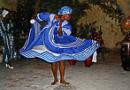
Attending Santiago de Cuba’s Festival of Fire to deliver a lecture on CLR James at a colloquium on Pan-Africanism in the Caribbean, Norman Girvan finds that ‘culture is to Cubans what shopping is to Americans’.
Recent developments at national and international levels with regards to anti-counterfeiting legislation and actions have raised debate about such laws not undermining access to affordable generic drugs. This policy brief produced by EQUINET, SEATINI and TARSC points to the separate measures and mandates needed to combat firstly fraudulent trade mark and intellectual property (IP) infringement in counterfeit medicines by IP authorities, secondly to ensure that any anti-counterfeit measures protect TRIPS flexibilities, including for access to generic medicines.
Groups from 13 developing countries have slammed UK climate loans to be given through the World Bank. Community leaders in countries including Nepal, Bangladesh, Mozambique and Yemen have written to British cabinet ministers Chris Huhne and Andrew Mitchell rejecting the loans the UK is providing to their countries to help them cope with climate change. In their letter they say the UK and other rich industrialised countries, who have done the most to cause climate change, owe a ‘climate debt’ to poor countries who are worst affected by the phenomenon. ‘Climate loans will only lock our countries into further debt, and further impoverish our people,’ reads the letter.
The Kenyan government is taking steps to incorporate screening for cervical cancer - one of the biggest killers of women of child-bearing age - into HIV care, but health workers say low awareness means the uptake of this vital service is low. Studies show that HIV infection increases women's risk of human papillomavirus (HPV) infection, a leading cause of cervical cancer. Cervical cancer screening is included as part of routine care for HIV-positive women under the country's national guidelines for HIV care. However, screening levels remain low; according to the UN World Health Organisation, just 3.2 per cent of Kenyan women aged 18-69 are screened for cervical cancer every three years, compared with 70 per cent of women in the developed world.
In its on-going efforts to provide support and assistance to the long-suffering people of Palestine, the South African Relief Agency (S.A.R.A) in conjunction with communities and other organisations has embarked on another humanitarian relief mission to Gaza. The mission is scheduled to depart from Durban and will travel overland through Africa to Gaza. The primary objective of the mission is to answer the call of the Palestinian people to conscientise the African continent and to break the immoral and illegal siege of Gaza and show solidarity with the beleaguered people in Occupied Palestine.
More details are available from the website.
Following years of discussion, representatives from the Economic Community of West African States (ECOWAS) are now testing joint disaster responses in light of increased flooding and more severe droughts in West Africa over the past decade, according to the African Centre of Meteorological Application for Development (ACMAD). 'Major efforts' are under way for 'south-south cooperation between member states', according to Andrea Diop, disaster focal point at ECOWAS, including setting up an Emergency Flood Fund for disaster response which individual countries can tap into; a natural disaster reduction task force; and an Emergency Response team.
Kenya has launched an Open Data portal, the first African country to make government data accessible to the ordinary citizen on an Internet-based platform. The portal will allow users to compare information at national, province and county levels. Users will also create maps and other visualisations and directly download data on their computer or mobile phone.
AIDS drugs designed to treat HIV can also be used to reduce dramatically the risk of infection among heterosexual couples, two studies conducted in Africa have shown for the first time. The findings add to growing evidence that the type of medicines prescribed since the mid-1990s to treat people who are already sick may also hold the key to slowing or even halting the spread of the disease. The research involving couples in Kenya, Uganda and Botswana found that daily Aids drugs reduced infection rates by an average of at least 62 per cent when compared with a placebo.
On 9 July 2011 the world witnessed the birth of a nation - South Sudan, Africa’s 54th country. In an interview with UN Women, South Sudan’s Minister of Gender, Child and Social Welfare Agnes Lasuba weighs in on the country’s independence and what it means for women. 'The women of South Sudan played various roles to achieve independence. During war they picked up arms. Others were mobilisers and others were taking care of the wounded, the sick and the elderly. And others were yearning for peace and they took it upon themselves to lobby other people and other countries, so that there could be peace for them and for their children,' says Lasuba in the interview.
As parts of the Horn of Africa experience their driest periods in 60 years, pushing the numbers needing aid to beyond 10 million, some have been quick to blame climate change. But no single event can be attributed to climate change, which involves long-term (decades or longer) trends in climate variability. There is, however, consensus in attributing the drought to the particularly strong La Niña event. The impact of climate change on the intensity and frequency of La Niña and El Niño in future is a big unknown. Philip Thornton, a senior scientist who works part-time with the Nairobi-based International Livestock Research Institute (ILRI) and the University of Edinburgh-based Institute of Atmospheric and Environmental Sciences, told IRIN via email that projections of the climate-change impact in East Africa were 'a problem' as the authoritative Inter-governmental Panel on Climate Change’s Fourth Assessment Report 'indicated that there was good consensus among the climate models that rainfall was likely to increase during the current century'.
'The NGO Working Group on Women Peace and Security is alarmed at the latest reports by its member organisations and the United Nations of mass rape and other crimes against civilians perpetrated in the Fizi area of South Kivu by troops of the armed forces of the Democratic Republic of Congo (DRC). The NGO Working Group urges the Government of the DRC, the United Nations and Member States to heed the voices of Congolese women, who have repeatedly stressed that such attacks stem from the persistent failure of the DRC authorities to advance equality for women and ensure justice for survivors.'
AfriMAP invites submissions of papers on the impact of the events in Tunisia, Egypt and Libya on governance in sub-Saharan Africa. Our objective is to encourage and promote new thinking and debate on issues that AfriMAP is exploring through its research. We are particularly keen to encourage submissions based on primary sources, personal research and innovative thinking.
THE REVOLUTIONS FROM TUNIS TO OUAGADOUGOU: OR IS IT THE RESPONSE OF AFRICAN MASSES TO 'THERE IS NO ALTERNATIVE'? (TINA)
Guy Marious Sagna
According to Jan Tibergen, '908 years is enough' to see the 'remedies' of the World Bank aimed at curing our countries of their social evils under structural adjustment. '908 years' is the response in 2011 of African masses from Tunis to Ouagadougou via Cairo – 'it is more than we can wait for. It is too much!'
******
FACED WITH THE CHALLENGE OF THE DEMOCRATIC JOKE: INVENTING THE DEMOCRACY OF TOMORROW
Samir Amin
In the wake of what he terms a 'democratic joke', Samir Amin raises a crucial question: ' Give up on elections?' The answer is no, but this begs for a new interrogation: 'How to associate new, rich and inventive forms of democratisation, which enable the making of an election a practice other than that conceived by conservative forces?' Such is the challenge, according to Amin.
******
FORMER MOROCCAN POLITICAL PRISONERS CONTINUE THE STRUGGLE
Naridah Khalid
Former Moroccan political prisoners are taking the European Union to task, which recently granted their country an 'advanced status' without actually respecting the criteria on human rights necessary for this status. In this letter the former political prisoners explain how they continue their struggle for their social rehabilitation after years of detention and torture.
Organisations are invited to sign an open letter calling on the United Nations and Member States to advance the human right to water and sanitation, including by taking a stand against the abuses of transnational corporations and safeguarding themselves from corporate influence.
The rights of access to information, public participation, and access to justice are essential to sustainable development. The 1992 Rio Declaration provided for these rights in Principle 10 and Agenda 21 moved them into reality in many countries. Now renewed commitment is needed for the full implementation of the rights in all countries. The Rio 2012 Summit provides an opportunity for governments to transform Principle 10 from aspirational goals into actionable rights. Governments and civil society should use the opportunity to commit together in adopting, implementing, and exercising these rights in support of sustainable development.