


Follow super-secret agent 86 Maxwell Smart in Mission Equatorial Guinea
Following a trip to Madrid’s archives, Agustín Velloso uncovers the history of Spain’s relations with the Democratic Republic of Congo (DRC) in the 1960s and the secret backing given to Moise Tshombe’s ‘subversive activities’, his use of Spanish state resources and institutions and ‘the support of the press and other fascist entities of the time’.
Spain’s willingness to allow an exiled Moise Tshombe entry into the country and to turn a blind eye to his criminal record may well have changed the course of the Democratic Republic of Congo’s (DRC) history, writes Agustín Velloso.
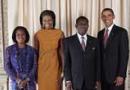
Equatorial Guinea’s President Teodoro Obiang Nguema Mbasogo may be welcome among the world’s most powerful people, who work for his favour behind the scenes in return for lucrative trade deals, but he is less favourably viewed by human rights defenders, development agencies and the citizens of his country. Agustín Velloso looks at Obiang’s controversial effort to obtain wider global respect and appreciation through the creation of an international prize in partnership with UNESCO.
Two Somali 'pirates' captured after they attacked a Spanish fishing boat are likely to spend a long time behind bars, Agustín Velloso Santisteban writes in this week’s Pambazuka News, given that they are also poor, black and Muslim. Highlighting the struggle for survival and hardships so many Somalis face, Santisteban suggests that there are other more dangerous ‘pirates’ out there that ought to be pursued and brought to book for far worse crimes.
August 2009 marks the 30th anniversary of Teodoro Obiang Nguema’s coup d’état against Macias Nguema, but it is not an occasion that many in Equatorial Guinea will be celebrating, writes Agustín Velloso. Yet for all his unpopularity, Obiang has won election after election with more than 95 per cent of the vote. Velloso shares with Pambazuka News Obiang’s strategy for playing ‘the democratic game’ in front of the international community.
http://www.pambazuka.org/images/articles/368/47869hospital.jpgAs the people of Equatorial Guinea continue to die from AIDS and other diseases, Agustin Velloso highlights the fact that the elite in power receive their medical care abroad. Spain, one of the country's more important trading partners, turns a blind eye to Equatorial Guinea's corrupt health-care industry.
In Madrid at the end of October 2007, President Zapatero promised to give 0.7% of GDP for development aid during workshops promoted by the Spanish Agency for International Development Cooperation (AECID) and presided over by Queen Sofía. As he did so, a boy we can call Miguel, sick with AIDS in Equatorial Guinea, lay dying in his mother's arms in the hospital in Malabo, the country's capital.
One of the objectives of the AECID is to train doctors in Equatorial Guinea to treat AIDS and to advise their clinical work with AIDS patients. So one is not dealing with witchdoctors here but doctors trained by the AECID. Yet they gave Miguel an extract of tree bark rather than the internationally recognised treatment, antiretrovirals. Antiretrovirals are available in Equatorial Guinea; international agencies donate them.
The reason Miguel did not receive the right treatment is corruption by the people responsible for caring for his health. According to ASODEGUE, the Association for Democratic Solidarity with Equatorial Guinea, the prime minister called a meeting several months ago of the national coordinators of the campaign against AIDS and of international agencies working in the country. Among them were delegates from the World Health Organisation (WHO) and AECID's experts who advise Equatorial Guinea's health ministry. A niece of President Obiang also took part. She is not a doctor but a businesswoman. She presented the meeting's participants with a project to produce the bark extract (called Fagaricine) to market as an AIDS treatment. She also asked their opinion about the project.
In its January 2008 Republic of Congo WHO Office Information Bulletin, the WHO notes ‘Fagaricine is not an AIDS drug’[1]. Whatever the experts’ opinion may have been, a tragedy took place shortly afterwards when a group of patients, including Miguel, attended their routine appointments in Malabo hospital to collect their antiretrovirals. Instead, they received Fagaricine. This group of guinea pigs included children and adults and at least one expectant mother. No explanation was given; most of the people did not even know.
The group soon began to get worse. Some died. The population became concerned. Despite foreign aid and government propaganda, AIDS treatment in the country is a disaster. Fagaricine is currently no longer prescribed in Malabo hospital but it is still sold in a few pharmacies.
Meanwhile, Obiang and his circle receive their medical care abroad. Some pay astronomical bills in private clinics in the United States, while others are treated for free in Spain's public hospitals. At the same time private clinics flourish in Equatorial Guinea, but only the very well-off can afford their services. President Obiang's wife owns several of them; most have his family members as partners.
The government is unable to provide health care to the population. As opposition leader Plácido Mico noted at the National Economic Conference in November 2007 ‘the health care situation in Equatorial Guinea, a multimillionaire country, is without doubt the best example of our deep inequalities, injustices and social exclusion, as is the distribution of wealth in the country. Apart from Mongomo, no general hospital in the country permits even a straightforward x-ray.’ [2]
Equatorial Guinea is one of the main producers of oil and gas in Africa and has been a most favoured beneficiary of technical and economic aid from Spain for decades. The AECID implements its health work there ‘via various projects with one common denominator: the formation of a framework permitting the institution building of the National Health System’. One of these projects, the control of endemic diseases, is carried out for AECID by Spanish state bodies – the National Centre of Tropical Medicine and the Carlos the Third Health Institute. With formidable funding they aim ‘to achieve the training and improvement in operative capacity of local technical personnel in the Health System and in the National Programmes’[3]. The main endemic disease is AIDS.
The argument used by the Ministry for Foreign Affairs and Cooperation in Equatorial Guinea to justify their expenditure is that it is being used to build ‘local capacity’ for each of the ‘National Programmes’.
Tuberculosis and AIDS are allowed to get out of control while discriminatory laws are issued against people who are HIV positive, such as Presidential Decree No. 107/2006 of 20 November 2007, which ordains ‘the requirement of an HIV/AIDS test certificate in order to obtain certain public services’.
During the recent electoral campaign in Spain, María Teresa Fernández de la Vega, the Spanish government's First Vice-President and Presidency Minister, promised, alongside Miguel Angel Moratinos, Minister for Foreign Affairs and Cooperation, and Leire Pajín, Secretary of State for International Cooperation, that Spain would ‘make history in the next four years’ and be ‘a leader in solidarity’. She also stressed that Spanish socialists believe in politics ‘as a means to make the world a better place’ and that, since we are the eighth biggest economy in the world ‘we have to take on the responsibility demanded by our place on the world stage’.[3]
Despite the sonorous propaganda about international aid, more resounding still is the silence about the Obiang family's corruption and the consequences of Spanish development cooperation in Equatorial Guinea.
*Agustín Velloso is professor of education sciences at the National University of Education in Madrid. This article was translated by Toni Solo, an activist living in Nicaragua.
**Please send comments to or comment online at www.pambazuka.org
*** For notes and references please click here
At the end of October 2007 in Madrid, Spanish President Zapatero promised 0.7% of GDP towards development aid during some workshops promoted by the Spanish Agency for International Development Cooperation (AECID) and presided over by Queen Sofía. As he did so, a boy we can call Miguel, ill with AIDS in Equatorial Guinea, was dying in his mother's arms in the hospital of Malabo the country's capital. His doctors administered an extract from tree bark instead of the internationally recognized treatment, anti-retrovirals.
Agustin Velloso advices those interested in plotting a coup in Equatorial Guinea "to choose one's travel companions for a coup d'état with care."
Starting April 1st, 2008, Lufthansa offers 295 seats, three times a week, in a superb Airbus for anyone wanting to travel from Frankfurt to Malabo, Equatorial Guinea's capital city. It now seems incredible that in the 90's only Iberia flew to Malabo, from Madrid on Sunday morning, and back the same evening with a group of civil servants, a bunch of nuns and priests plus some Equatorial Guinea nationals.
This new connection between Equatorial Guinea and the rest of the world beyond its closest African neighbors, joins those of Air France, Swiss International Air Lines, Royal Air Maroc, KLM, Spainair, Sonair, Jet Air and some others. Even flights from unspecified airports in Europe with airlines which are not IATA members - although they advertise as such- can be found on the Internet.
The airlines tell the public this intense activity is due to growing business opportunities and changes taking place in the African country: "Blessed by a growing economy in recent years, the country maintains numerous international trade relations, principally in the energy sector."
THREE MEN AND A HELICOPTER
However, seasoned travellers do not agree on this point. Simon Mann, a British mercenary once told the UK's television Channel 4 that "things were very bad" in Equatorial Guinea and that "regime change was badly needed". He added that "the regime was stumbling, the State was sinking" (http://www.asodegue.org/marzo1208.htm).
Mann is the model of the English gentleman. He studied in Eton, the world's most elitist school, cradle of renowned travellers since its foundation in 1440. After graduating he spent the next 30 years travelling the world together with other gunmen, shooting to order or off his own bat in order to make money. His last trip for that purpose, began in South Africa in 2004 and has landed him in Malabo's Black Beach jail, where he has just been imprisoned after being jailed for a time in Zimbabwe.
Many people learn at school that travelling is the best way to learn. Mann has certainly changed his opinions. A mere week at his Black Beach prison cell has led him to abandon his former negative image of Equatorial Guinea and to declare the country "has experienced an incredible change in four years".
On the same day in Madrid, where he lives as a Geneva Convention refugee, Severo Moto, president of Equatorial Guinea's government in exile, said the opposite : "I am coming back home!" in order to bring freedom and democracy to the country. (http://www.guinea-ecuatorial.org/modules.php?name=News&file=article&sid…)
Moto's travelling experience is the opposite of Mann's. The more he travels the world the further he gets from Equatorial Guinea. Seeking all kinds of support for his political return home, he has been to many different places. But none of them has taken him even half way to his apparent destination. What is worse, he has come close to losing both his life and his refugee status in Spain.
Mann and Moto are not alone in their plight. Since 2004, after a life of travel for pleasure, one of their main supporters, Mark Thatcher, son of former British Prime Minister, Margaret Thatcher, has some difficulty leaving Britain. Many countries refuse to grant him a visa precisely for his past involvement in adventures that were too big for him. How come his partners failed to notice that this true wet blanket has failed in virtually all the sports, business and financial projects he has undertaken?
Mann now complains that Moto and Ely Calil, another financial backer, cheated him. Thatcher says he thought the helicopter he rented for their botched plan, was meant to serve as an ambulance. Moto says he knows nothing at all about Mann's coup d'état. Calil, who made his fortune in the oil business, has left his fancy residence in London's Chelsea. His current whereabouts are unknown.
NOTIONAL COUPS, NOTIONAL OPPOSITION
The only clear thing emerging from this Marx Brothers remake is the advisability of choosing one's travel companions for a coup d'état with care. Opposition leaders inside the country know this all too well. That means cultivating relations with the most important foreign centres of political power. In other words: travelling from Malabo to the United States and European Union capitals.
Unfortunately, despite frequent invitations for these leaders to visit powerful countries with leverage over Equatorial Guinea, their visits have not borne fruit. On the eve of legislative elections due next May in Equatorial Guinea, Convergencia Para la Democracia Social (CPDS), an opposition party founded underground in 1990, today has two representatives in the national congress. The remaining 98 seats are held by supporters of Teodoro Obiang, President without a break since 1979.
One might say that the important thing is not the number of trips, but their quality. Up until now, it seems that CPDS secretary general, Placido Mico, has yet to learn what Moto knows: world governments are far more interested in Equatorial Guinea's oil than in its people's human rights. All those foreign trips have not taught Mico what Obiang and any other dictator who leans on US friendship knows: so long as they obey imperial policies, they will stay in power, unless their own people bring them down.
Mico never tires of declaring in every city he visits that CPDS "is a political party aiming to introduce changes in Equatorial Guinea once it gets power, which it will acquire by democratic means. For this, it works peacefully for the establishment of a democratic regime in Equatorial Guinea". It may seem incredible, but he adds that he is confident that the United States government may change its current policies towards Equatorial Guinea (http://cpds-gq.org/laverdad56/opinion3.html).
This and similar statements are sweet music to Obiang and the world leaders who support him. So they are more than happy to pay for Mico's air tickets and travel expenses. The Equatorial Guinea opposition leader gives them no trouble and above all guarantees that their corporations increasing investments and business in this small oil-rich African country are safe. Furthermore, this heavenly status quo means they can meet with Mico openly. So in the unlikely event that domestic public opinion questions Equatorial Guinea's lack of democracy, they can say they are doing their share to support it.
TYRANNY - GOOD FOR BUSINESS
No wonder more and more airlines are offering new connections to Malabo. International entrepeneurs have realised, as politicians have, that their businesses are not in peril with the current government or any other likely to succeed it. Such security does not apply to Equatorial Guinea's people, whose human rights are violated on a daily basis. It seems corporation CEOs do not get news about Obiang's policemen chasing after opposition leaders and sometimes torturing them to death. They also seem not to know that business is the preserve of the elite, that democracy is just a dream for the majority of the population either at home or in exile. (http://thereport.amnesty.org/eng/Regions/Africa/Equatorial-Guinea)
One learned observer of Equatorial Guinea who, oddly enough, does not travel there, explained last March 17 why businessmen choose this country for their activities:
"We have heard many times during the last years that Equatorial Guinea is changing. The truth is that real development has not taken place. What exists is an enormous development of Obiang's entourage's enterprises. These have made them incredibly rich while the majority of the population remains poor." (http://www.asodegue.org/marzo1708.htm)
He adds: "news coming from different parts of the country speak of little enthusiasm amongst the people entitled to register for the elections. They are tired of the same people governing all the time, no matter who the citizens vote for. Some reports also inform of irregularities." (http://www.asodegue.org/febrero01081.htm)
TRAVEL - THE GREAT EDUCATOR
In the meantime Obiang himself and his family also travel to Europe and the United States. On arrival he is greeted with flattery. In the April 12, 2006 press conference by United States Secretary of State Condoleezza Rice, she said: "thank you very much for your presence here. You are a good friend and we welcome you." (http://www.state.gov/secretary/rm/2006/64434.htm)
From time to time Obiang has to listen to "recommendations" and "suggestions" about governance and human rights on his trips abroad, but his bank accounts and properties keep on growing anyway. Neither do the admonitions affect the income of Western companies operating in Equatorial Guinea.
When criticism cuts him to the quick, he fights back and speaks his mind. He is right. Why the half-hearted criticism at the same time as they openly flatter him? This helps explain Obiang's growing interest in China: a country he has visited five times in the last few years. (http://www.embajadachina.org.mx/esp/xw/t217927.htm)
Obiang's trips to Europe and the United States, generate new ones in their turn, from Western Prime Ministers and Foreign Affairs Ministers, from other high government officials and from big corporation CEOs. If two sandals and an ass were all it took Herodotus to write impressive reports of the political and social events he witnessed in his travels, what will these people write from their first class seats in an Airbus A330-300, equipped with "two meter long beds, wine cellar, 5-star chef, musical classics and video"? (www.lufthansa.com)
Back home, after a two or three day visit to Equatorial Guinea, they declare the country has made important steps towards democracy, that the political situation has vastly improved, and last but not least, praise the outstanding environment for foreign investment. That is why people say travel broadens the mind. Maybe when Western airlines start giving seats to the thousands of people from Equatorial Guinea who have never flown with them, those people too will at last see the wonders of Equatorial Guinea so fulsomely described by foreign politicians and businessmen.
Moral: increase international air connections with Equatorial Guinea.
*Agustín Velloso is Professor of Education Sciences at the National University of Education in Madrid. This English version of the article was revised by toni solo.
**Please send comments to [email protected] or comment online at www.pambazuka.org
Equatorial Guinea produces a barrel of oil per person per day. In 2005, it had a budget of US$2 billion" more than sufficient to raise the standard of living of it’s 400,000 citizens. The country also has aid links: with school students in the United States, and church schools and small municipalities in Spain. Agustin Vellos argues that the so-called 'development cooperation' between Spain and Equatorial Guinea is nothing more than political rhetoric that supports the corrupt practices of President Obiang’s government and acts as a smokescreen for failed Western development models.
Development cooperation between Spain and Equatorial Guinea is an exercise in political rhetoric. Fine for soothing the consciences of sensitive citizens. Useful to dissemble the policies of both countries' governments. The citizenry think they are 'helping' the poor. While politicians cover up the way cooperation is useless for the African country's development; but good for increasing the scandalous wealth of the Obiang ruling clan, and for contributing to Spanish political and business expansion.
Some people think international cooperation and official development aid are matters of foreign policy. In the pre-democratic years, the governing class argued that Spain had been generous during its colonial era; and that the proof of this was the spread of Catholicism and civilization, as well as miscegenation. However, that generosity was not enough to produce doctors and engineers, or to leave a political and social infrastructure in Western Sahara and Equatorial Guinea. So. when independence came, frustrated in the Saharawi case, development cooperation was obligatory for Equatorial Guinea.
The same happened with the other colonial centres, England, France, and Portugal. They left nations independent politically, but not culturally or economically. Colonialism became neocolonialism. The powerful could no longer directly exploit the weak as before. But they worked out new systems: conditional loans, unfavourable trade deals, e.g., the Lomé Convention of 1975, exorbitant charges for services, the fiscal policies of the IMF, World Bank projects, and so on.
From independence in 1968 until approximately 1995, when the oil exploration years began, Spain worked on development with Equatorial Guinea in the fields of politics, economics, the armed forces and education. Ironically, one of the first agreements signed in 1979 was the Protocol on Cooperation on Hydrocarbon Matters.
It is surely surprising that cooperation between the tenth world power and its former colony of just 28,000 square kilometres, 400,000 inhabitants and abundant natural resources has not managed to pull the colony up from among the lowest rungs of the United Nations Development Program's Human Development Index in its first 30 years of independence. It is more surprising still when one considers the development cooperation from the United States, France, China and other countries, without counting the international bodies and agencies: the United Nations, The World Health Organisation, UNESCO, UNICEF and the European Economic Community.
Beginning in the last years of the previous century and the first years of the 21st century, Equatorial Guinea experienced unparalleled rapid growth. The reason was gas and oil: 81,000 barrels a day in 1998, 300,000 a day in 2004 and 420,000 barrels a day in 2005.
This led the Gross Domestic Product (GDP) to grow 18 percent in 2000, 66 per cent in 2001, 20per cent in 2002, 10 per cent in 2003 and 25 per cent in 2004. Per capita income has gone from some US$600 in 1998, US$2000 in 2000, to US$5300 in 2005.
The oil sector makes up 97 pr cent of the country's exports and 92 per cent of its GDP. But in addition there are timber, cacao, minerals, fisheries, agricultural produce and tourist potential. Once again, it is surprising that a country able to produce a barrel of oil per person per day, that can count on other resources and is a trade partner of the richest countries in the world, also depends on aid links with school students in the United States, and with church schools and small municipalities in Spain. All these links indicate what is commonly understood as development cooperation by rich-country citizens concerned for people in poor countries.
Karen Miller, former secretary of the Hatcher primary school (Kentucky, USA) moved to the capital of Equatorial Guinea, Malabo, and emailed her friend Jenny Johnson about the school needs in the country. The world's fifth largest oil company, Marathon Oil (www.marathon.com), which operates in Equatorial Guinea, published Jenny's response:
'I felt the need to help. I knew this was something God wanted me to do. I put up posters in the school. The only problem was making sure the books donated by teachers and pupils arrived. I want to thank all those who have helped with this project. First of all to God, our Father, for making this happen, to the school community and especially to Marathon for starting this aid project for the students of the island of Bioko.' The estimated cost to the company was some 35,000 Euros.
Last April, the municipality of Alcorcón, close to Madrid, signed a permanent cooperation agreement with the Organization of Ibero-American States. The fact that Equatorial Guinea is not exactly located in the ibero-american area does not stop the municipality saying: 'we are very proud as a city to join this project of a meeting between cultures. Material cooperation with Equatorial Guinea, initially of 60,000 Euros, will enable the start up of a reading project on the one hand, with school libraries and on the other hand, teacher training in Spanish and local languages and in mathematics'.
In the first week of June, the church schools of Monforte organised a solidarity fair to raise funds for their colleagues in Equatorial Guinea. According to a local daily paper, 'the jumble sale, dinner and dance and donations raised 7,794 Euros'. Unlike the reports above, no mention is made of the uses made of the money.
Perhaps the teacher, the mayor and the religious teaching staff are unaware that the government of Equatorial Guinea, with a budget of US$2 billion in 2005, could well afford to pay for some text books and school libraries.
Preoccupied with prayers, meetings and brunches, maybe they have not had the chance to get to know the reality of the country; but instead have collected over 100,000 Euros. Even if that sum reaches Equatorial Guinea, which may be unlikely, that money does not even come close to the 380,000 Euros paid for a Lamborghini sports car acquired in 2005 by Teodoro Nguema. a son of President Obiang and Minister of Agriculture and Forestry, according to a report in the South African Cape Times of July 20, 2007.
It can be argued that a similar effort by 16 other solidarity groups could match the money that Nguema might have used to benefit his people. This last alternative seems more likely to benefit the development of Equatorial Guinea, except one might prefer that people not live dependent on the charity of others. 27 solidarity groups with similar fundraising ability would be needed to match Nguema's penchant for luxury cars, since the same article reports he also spent 800,000 Euros that year buying a Bentley Arnage and a Bentley Mulliner.
Even so, it is hard for the good will of development workers, donors, sponsors and volunteers to keep up with the pace of spending: the US Forbes magazine, specialising in listing the world's wealthiest people, reported that on June 5, 2006 Nguema also rented the yacht of Microsft co-founder Paul Allen, the fifth wealthiest man in the world, for 600,000 Euros.
Teodorín, as he is known, has a mansion and a recording studio in the United States and various properties and interests in other countries. Global Witness, an organisation dedicated to uncovering corruption in countries rich in raw materials, reports that the mansion is worth US$35,000,000.
Although ordinary citizens are unaware of these facts, the government knows them very well, but still maintains cooperation links. With regard to state development aid, there is abundant information in various official and quasi-official sources, such as political parties, institutes and foundations
The Spanish State Secretariat for International Cooperation declares 'the government...bears collective responsibility for respecting and defending peace and human dignity and equality at the world level. Poverty reduction is an ethical duty for the world's most prosperous citizens and a political obligation for all the governments on the planet'.
Lofty aims that perhaps don't marry up too well with military spending of 17 billion Euros in 2007, 15th highest in the world, while expenditure on development aid is 3 billion. Loans that create more debt, debt forgiveness and so on must be subtracted from the latter amount. While that first figure for defence can be left out of the equation altogether until someone proves the link between arms spending and development.
Spanish development aid to Equatorial Guinea devoted nearly 4.5 million Euros to healthcare in 2004-5, spread over various projects: control of endemic diseases, water purification, community health and health workers. With that sum, President Obiang would have struggled to purchase his two mansions in Maryland in the US.
But we may say: It is not a matter of tracking down every last cent. These African countries are known for their idiosyncrasies. No one is perfect. Well, in that case, take the example of quality healthcare. Spain, for example, is placed 21st in the Human Development Index. Shile Equatorial Guinea is placed 121st. Per capita spending on healthcare is US$1,640 and US$139 respectively.
Development cooperation, galactic style, to use a fashionable term, would ensure that people in Equatorial Guinea enjoyed the same level of health care as people in Spain. Multiplying 450,000 people by US$1,640 works out at a little more than US$700 million. Coincidentally the same amount Obiang transferred to personal accounts in the unexpectedly extinct Riggs Bank, based, by the way, in the United States and, as luck would have it, the main investor in Equatorial Guinea.
We can look at it another way. Obiang spends about US$70,000,000 a year on 'security', a figure to be treated with caution, since the actual sum is unknown, even to the Stockholm International Peace Research Institute (www.sipri.se). But it can be inferred from purchases of war equipment. Spain, the United States and Israel have all sold Obiang military materiel and trained his troops and police. In ten years of oil exploration, it is not unreasonable to think that Obiang could have increased his people's life expectancy with such a sum. But life expectancy remains about half that of Spain's: 43.5 and 79.5 years respectively.
Or again, we could argue, development cooperation is very much more than money. According to Spain's International Cooperation for Development Law, drawn up in 1998, 'development processes will be promoted with respect to the defence and protection of human rights, basic liberties and economic and social welfare needs...'
Those processes do not exist as Spain knows very well. Although the Minister for Foreign Affairs omits to mention it and prefers to talk about other things. Parliamentarians who visited the country in 2007 'found improvements and returned optimistic'.
Political declarations, projects, reports and aid workers abound. But this is not development cooperation. To talk as if there were development cooperation is an insult to the people of Equatorial Guinea. In fact, we should talk about a development cooperation fraud.
* Agustin Velloso. UNED, Facultad de Educacion, Paseo Senda del Rey, nº 728040-Madrid, Spain.
* Please send comments to or comment online at www.pambazuka.org
Equatorial Guinea is basking in its new found oil wealth. It is diversifying its economy, modernising its infrastructure and investing in public health and education. But underneath the increased transparency in financial practices, the government is guilty of serious human rights abuses particularly against children and young people.
Equatorial Guinea, a tiny country of 28,000 square kilometres located in Western Africa, has a GDP of US $25.69 billion (2005 est.) and a GDP growth rate (2004 est. average) of 25.7 per cent. With a population of 540,109 (July 2005 est. - same source), its flourishing economy is based on its main natural resources: petroleum and timber.
Because of this, the country has recently become a target of international attention, including from the main world institutions - World Bank (WB) and several United Nations subsidiary bodies; some international organisations – Organisation for Economic Cooperation and Development (OECD), European Union (EU); individual state agencies – the United States Department of State; and some big corporations and non-governmental organisations (NGOs). In recent reports, made public by these observers, the country enjoys 'a spectacular abundance of oil revenues' (OECD); and consequently 'the world’s highest GDP growth between 1995 and 2001' (EU).
According to information provided by governmental sources, 'in 1995, Equatorial Guinea was found to have massive reserves of petroleum. Shortly thereafter, significant reserves of natural gas were also discovered. These findings have generated substantial revenue for Equatorial Guinea (EG), revenue which is being invested in increased transparency in its financial practices, and diversifying its economy, modernising its infrastructure, strengthening its public health system, and promoting education to build a strong foundation for the future of the country'. Impressive as this data appears, the information provided by foreign agencies and country officials should be compared to information provided by locals. Then a clearer picture of the country can be seen.
On February 27, 2007, the website posted a piece of news sent by the news agency EFE with the title: 'Seminar on poverty and conflict resolution opens in EG.' The information says: 'State radio made public today the government’s plan, together with oil companies operating in EG, to organise a seminar to discuss measures to fight poverty and issues related to transparency and technology transfer.'
But not all actions conducted by the government of EG are so public. Many things the government and its ministers get up to receive much less publicity.
For instance, on that very day in the mainland town of Acurenam, a group of children were bathing on the river bank as they always have. The Deputy Minister of Agriculture, who accompanies President Teodoro Obiang on his pre-electoral tours around the district, took some time off to swim. He ordered some children to wash his car while he went swimming. Afterwards, he noticed his watch and some clothes were missing. The children did not notice anything was missing, since they do not have watches and bathe with only their shorts on as that is all they have.
The deputy minister conducted himself in private that day the same way he conducts himself in his governmental affairs; he threatened to break all the children’ legs if the watch was not returned. When it wasn’t, he took them all in their wet clothes to the police station where some children were tortured, according to reports of the Comisión Ejecutiva Nacional de Convergencia Para la Democracia Social (CPDS) - press release, February 26, 2007 http://www.asodegue.org/febrero27071.htm.
16 children were detained. Most of the children were 15 years old, others were 17, eight, and the youngest was five. A similar number managed to escape. This means that 30 children were able to share in the spoils of the robbery – as a best case scenario: assuming they actually did take the watch.
Then, they could still count on a good US$60 by selling the watch on the black market. This would work out as US$2 per child. Ironically, two dollars a day is the exact amount which most people who don’t happen to be governmental ministers live on in Africa, as estimated by United Nations Development Programme (UNDP) scholarly reports.
In spite of this, these children with US$2 each have more than enough to wander through mud-covered streets, to jump over open-air sewage pipes and to play count the few traffic lights and signs. Those are the only games they can play in a land without libraries, book stores and civic centres, or any real public services.
General conditions in EG have been disastrous for its most vulnerable and young population. 44.2 per cent of the population is aged under 15. According to the UNDP Human Development Report, 56 per cent do not have access to clean water. 47 per cent have no proper sanitation infrastructure. In addition, 19 per cent of children under five are not an acceptable weight for their age (1995-2003). 65 per cent of births are not attended by qualified personnel (1995-2003). The country has 25 physicians per 100,000 inhabitants (1990-2004) to deal with these health problems and many others, such as malaria, other tropical illnesses, and human immunodeficiency virus (HIV).
A day out with the deputy minister is not that expensive for the children of Acurenam, especially if you take into account the free transport to the police station, threats, beatings and torture. All these services are covered by the Minister and President Obiang, a very generous leader as we can see. None of this is news to the US ambassador either.
On March 8, 2006, the US Department of State Report on Human Rights Practices in EG states that 'Members of the security forces tortured, beat, and otherwise abused suspects, prisoners, and opposition politicians. Further, security forces continued to arrest and detain persons arbitrarily and with impunity. Security forces often detained individuals "on orders from superiors" without any further legal process' http://www.state.gov/g/drl/rls/hrrpt/2005/61567.htm.
In other words, the state department quite accurately predicts the deputy minister’s behaviour a year beforehand. This is not a great mental feat since anyone who has seen or, worse, suffered 'conflict resolution' under Obiang, can similarly predict such things. This is something all embassies accredited to Malabo know only too well. The Department of State tells of other similar abuses of power:
'Policemen violently attacked the young people and those accompanying them, hitting them with the butts of their handguns, causing substantial injury to several of them, and leaving some girls in the group undressed in public. At least 10 were detained on police premises. They were released one week later.'
According to some foreign sources, never mind government’s sources, it seems that Equatorial Guinea is moving in the last years, in particular during the oil boom years, slowly but soundly, to higher standards of social and political development. Without doubt, credit has to be given to meetings held by EG ministers and UN high officials, business done by oil companies and cooperation programmes carried out by Western governments. Obiang is also a strong contributor to the wellbeing of his countrymen, mainly through his trips to the United States, France and Spain, where he always finds support for his policies.
But above all, most of the credit rests with foreign journalists. Their almost constant press coverage, and never ending courage to stand up to the oil companies have helped make Equatorial Guinea the household name around the world it has obviously become.
It is a shame that the children of Acurenam are so ungrateful and spend their time stealing from defenceless deputy ministers. Let us just hope that police station visits and their broken legs help them appreciate all that is done by Obiang, his government, and the international press in their name. Then, maybe in years to come they will be able to live on US$2.10 a day.
* Agustin Velloso, UNED, Facultad de Educacion, Paseo Senda del Rey, nº 728040-Madrid, Spain.
* Please send comments to [email protected] or comment online at http://www.pambazuka.org.
The English translation of the article by the author was reviewed by David Anderson, University of Oxford.
This piece was originally published in Cross Currents: http://www.crosscurrents.org.