


The New Vanguard: African Youth as the Awakened Intelligentsia of the 21st Century
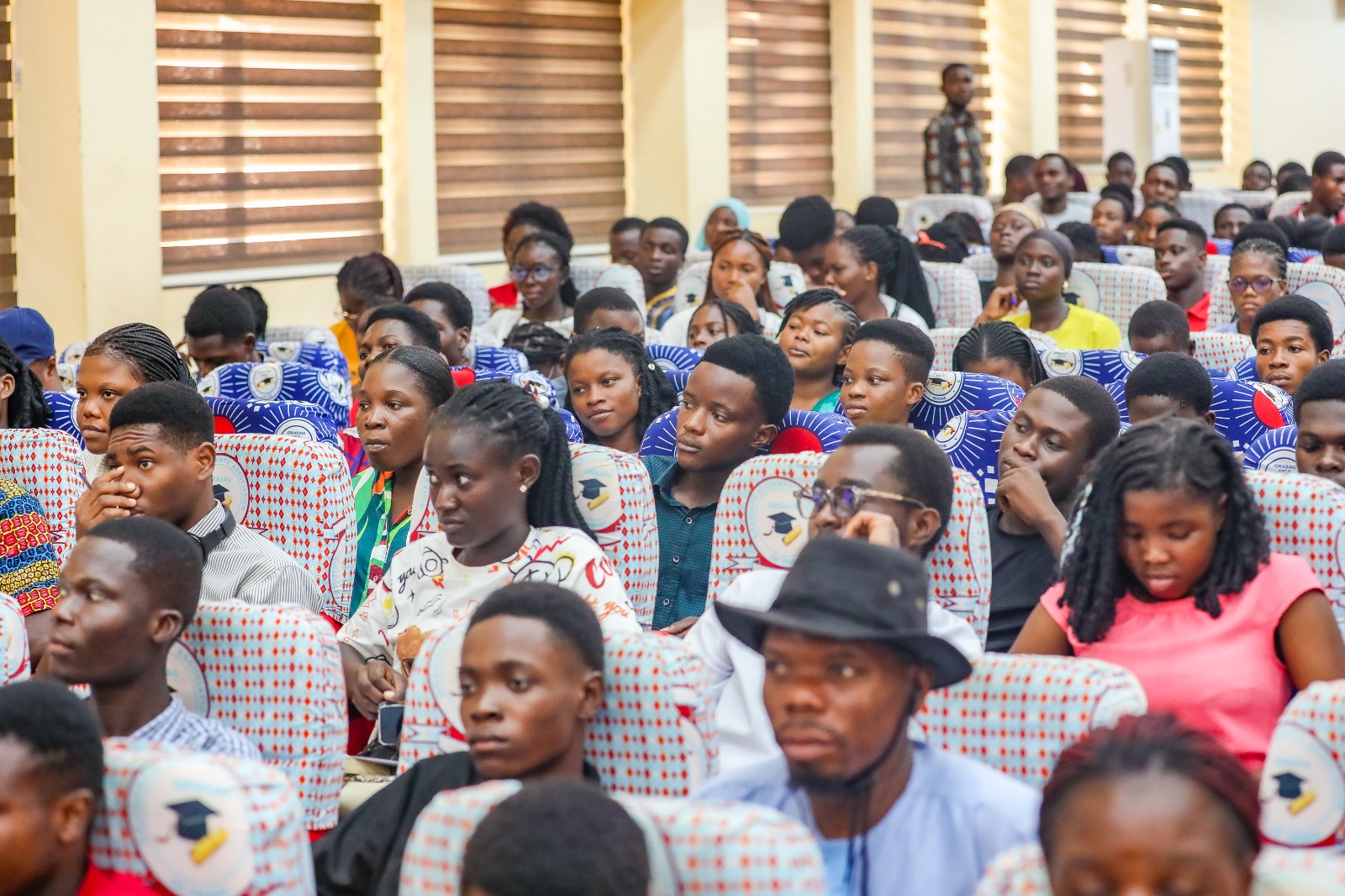
Kwame Nkrumah’s vision of an awakened African intelligentsia has found its heir in today’s digitally connected African youth, but whether their energy of refusal can build resilient, accountable institutions remains as urgent as it is unresolved.
“It is becoming axiomatic that colonial powers do not willingly retire from political control over any given land. Before they go, they make superhuman efforts to create schisms and rivalries which they hope to exploit after they’re gone.” Kwame Nkrumah in Africa Must Unite (1963).
Africa’s postcolonial political history is, in many respects, a history of disappointed promises. Across the continent, the transition from colonial rule produced constitutions that guaranteed popular sovereignty and systems of representation that promised accountability. Yet, in a pattern that has become structurally familiar, these formal democratic arrangements have repeatedly served to legitimise elite continuity rather than produce meaningful political transformation. Elections take place. Power changes hands, or does not. And yet the material conditions of the majority, particularly of the young, remain largely unchanged. It is within this structural disappointment that a new political subject has emerged. Across different states: Kenya, Cameroon, Senegal, Tanzania, Sudan, Morocco - young Africans have increasingly refused to accept the terms of political life as they have been handed down. Their refusal takes different forms: street protests, digital activism and solidarity across borders.[1] What unites these expressions is a recognition that the formal architecture of democracy has not delivered on its foundational promises, and that a different kind of politics, more confrontational, more continental, more self-determining, is both necessary and possible.
Postcolonial Leadership and Electoral Authoritarianism
The problems of African governance cannot be attributed solely to internal failures of character or leadership. They are, in significant part, structurally produced; shaped by colonial inheritances, by international financial architectures that constrain state autonomy, and by forms of external interference[2] that operate through diplomatic, economic[3], and military channels.[4] Siphamandla Zondi’s critique of international election observation is also instructive here: their presence, rather than serving ordinary Africans, functions as a geopolitical instrument that reinforces a Western epistemic framework, validating transitions favourable to local elites and foreign interests while leaving underlying structures of domination intact.[5]
Yet structural critique cannot absolve individual leaders of responsibility. Yoweri Museveni’s diagnosis in What Is Africa’s Problem?[6] identifies complacent leadership, ideological disunity, and limited industrialisation as Africa’s central ailments, a diagnosis that his own extended tenure has done more to confirm than to cure. Museveni’s trajectory is, however, not exceptional. It represents a recurring pattern across postcolonial African politics: the liberation hero who, upon seizing power, becomes its custodian rather than its distributor.[7] This becomes a systemic feature of political systems in which accountability mechanisms remain weak, where constitutions are rewritten to extend term limits, and where opposition is managed through patronage, or outright suppression.[8] Elections in such systems therefore, become rituals of legitimacy without accountability. Moments in which citizens perform consent for outcomes that were largely determined in advance through voter register manipulation, selective application of campaign regulations, media capture, or intimidation. Democracy becomes politically visible during elections and socially absent in daily life. It is this experience of democratic failure that has produced the generation of young Africans whose political consciousness this paper seeks to analyse.
The Intelligentsia Revisited: From Nkrumah’s Vanguard to the Digital Generation
Kwame Nkrumah’s anticipation of an awakened African intelligentsia in Africa Must Unite[9] reflected a particular theory of liberation: that political freedom required not merely the transfer of formal sovereignty, but the emergence of an educated, politically conscious population capable of directing Africa’s affairs on its own terms. He advances the argument that whenever an awakened intelligentsia emerges from an oppressed people, it tends to become the vanguard of the struggle against alien domination.[10] The colonial period itself seemed to confirm this argument: the lawyers, teachers, and journalists educated under colonial rule were frequently the ones who led the independence movements.[11] Museveni, as a young revolutionist, advanced a similar argument on the role of youth and political consciousness, emphasizing that Africa’s contemporary challenges are historically produced and require ideological awareness to confront them, and that youth must stand at the forefront of struggles for justice rather than privilege.[12]
The question that Nkrumah’s framework raises, but fails to fully resolve, is what happens when political consciousness survives the achievement of formal independence without the institutional conditions needed to give it effect. The educated generation that led independence often became the governing class that reproduced colonial administrative structures under new management. The intelligentsia, in Nkrumah’s sense, was transformed from a vanguard of liberation into an instrument of state power. A critical theory of Africa’s new youth vanguard must grapple with this historical irony rather than assume that consciousness alone is sufficient for structural transformation.
Steve Biko’s Black Consciousness offers a complementary but more psychologically grounded framework. He opines that liberation begins with the rejection of internalised systems of inferiority, the reclamation of psychological and political agency from within, rather than through frameworks handed down by former colonisers.[13] Contemporary youth mobilisation across Africa can thus be understood as protest against specific governments, as well as a broader awakening against the normalisation of conditions that limit dignity and participation. The Fees Must Fall movement in South Africa, for instance, was not simply a campaign for affordable university education but was also a revelation on how racial exclusion persisted even under majority Black political rule.[14]
In the 21st century, the digital sphere has expanded the terrain on which this consciousness operates. During the 2025 Tanzanian general elections, Kenyan youth used social media platforms to expose electoral violence across the border, revealing a transnational political awareness that bypassed formal state channels.[15] In Kenya, the 2024 Finance Bill protests were organised and amplified through digital networks, with young people coordinating street action, documenting state violence, and generating international attention simultaneously.[16] These are not trivial capacities. They represent new forms of political organisation that do not depend on conventional party structures or elite mediation,[17] and that carry real costs, as demonstrated by the deaths of protesters confronted by live ammunition.[18]
Ibrahim Traoré: A Symbol of Modern Revolution
No figure has attracted more symbolic weight among contemporary Pan-Africanist youth than Ibrahim Traoré of Burkina Faso. His expulsion of French military forces, his rhetorical alignment with Sankarist tradition, and his posture of defiance toward Western institutions have made him a hero for a generation frustrated with postcolonial dependence. The issues of revolution and resistance in Burkina Faso have long been integral to the country’s socio-political history.[19] Traoré’s emergence followed years of protests and uprisings against insecurity and external interference. His expulsion of French forces has come to embody a Pan-African defiance, and a significant symbolism that reflects a genuine and deeply felt demand across African states. His challenge to France’s postcolonial architecture speaks volumes, and France’s insecure behaviour confirms it. That France, having lost its footing in the Sahel, is now actively courting East African states is not incidental;[20] it reveals that postcolonial interference does not truly disappear, but rather tries to find new avenues through the pretext of diplomatic agreements at international summits. Prof. Willy Mutunga echoes this frustration, noting that even before France’s overtures, Kenyans had openly debated the wisdom of hosting foreign military bases without public participation; there has been an American base in Kenya, a British one, and now a prospective French presence. Each one, in Mutunga’s view, is a violation of national sovereignty, an exposure to the dangers of borrowed conflicts, and a humiliation of the Kenyan people.[21]
For many young Africans, therefore, the rise and popularity of Traoré embodies what Biko imagined as ‘freedom claimed on African terms and not granted through externally mediated frameworks’[22], while also reflecting a broader generational refusal of dependency, where sovereignty is understood as the capacity to define political and economic futures without external arbitration or approval.
The Fragility of the Vanguard: Co-optation and the Gaps Between
Youth mobilisation is not inherently emancipatory. This is perhaps the most important corrective that a serious analysis of Africa’s new vanguard must offer. In Kenya, the same generation that organised the Finance Bill protests has, in other contexts and at other moments, been recruited as instruments of electoral violence. Young men hired to intimidate opposition supporters, disrupt rallies, or enforce the will of local political bosses.[23] This is not a paradox to be swept aside; it is central to understanding how postcolonial political systems reproduce themselves. The same young person priced out of the economy and excluded from political life is, depending on the circumstance, either on the protest line or hired to break it.
Kenya’s youth unemployment rate of approximately 67% reads not as just an economic statistic,[24] but as Achille Mbembe terms it; a necropolitical condition. One that determines, before any individual choice is made, which lives are exposed to precarity, which are expendable, and which options remain available to those the state has already abandoned.[25] The normalisation of labour export as a government solution to domestic joblessness, with official encouragement of young Kenyans to seek work in the Gulf states[26], reflects a state that has outsourced its obligation to its youngest citizens while continuing to demand their loyalty and votes. The Gulf’s reliance on low-waged migrant labour reveals a global capitalist demand structure that intersects with postcolonial state weakness, producing a system in which African labour is externalised instead of being absorbed domestically, turning youth into a transnational labour surplus.
Gaddafi’s critique of representative democracy,[27] captures this dynamic. His call for a United States of Africa, however impractical and entangled with personal ambition, posed a question that remains unanswered: why has Africa, after decades of formal independence, remained unable to move beyond rhetorical Pan-Africanism toward meaningful political federation? The answer lies partly in the interests of the ruling elites who embrace Pan-African language while resisting any project that might expose their domestic failures to continental scrutiny or dilute the personal authority they have accumulated, or disrupt the global systems through which state power is converted into personal wealth.
A Continental Consciousness and Africa’s Democratic Future
Nevertheless, something is genuinely new about the political consciousness of this generation of African youth. Their solidarity does not wait for institutions to authorise it. Kenyan youth mobilised around Tanzanian elections; South African students connected Fees Must Fall to broader continental debates about access and exclusion; the hashtag became a medium of cross-border political organisation without requiring a Pan-African summit or an AU resolution. This kind of digital-conscious, politically emancipated generation may not be the intelligentsia imagined by Nkrumah when he envisioned educated, professionalised, state-adjacent, but something more diffuse, more urgent, and in some respects more democratic: a generation whose political formation has been shaped by shared experience of economic precarity and governance failure rather than by formal educational attainment.
Biko’s insight remains relevant, that political consciousness is not produced only by institutions, but by the accumulated experience of exclusion and the decision to refuse its normalisation. Here, institutions refer to the governance systems through which authority is organised and legitimacy is produced, including bodies such as courts, parliaments, and electoral commissions. What the streets of Nairobi, Khartoum, Ouagadougou, and Dar-es-Salaam share is a refusal of dynasticism, cosmetic democracy and the patience expected from populations that have been promised transformation and delivered stagnation.
The task for Pan-African advocacy organisations is complex, and requires building continental platforms that amplify youth-led movements without absorbing them into bureaucratic structures that dilute their struggle and sustaining a vision of continental unity that is structural rather than merely rhetorical. This is not work that can be done by the same governments that this generation is rising against. Nor can its burden fall entirely on the youth who are already bearing the cost of resistance. It falls, perhaps most urgently, on the awakened intelligentsia in its broadest sense: the thinkers, human rights activists, jurists, and advocates who stand between the energy of the streets and the architecture of lasting change. The role of this intelligentsia is not to lead the movement; paternalism has already failed, but to build the institutional conditions within which the movement’s energy can become both accountable and transformative.
Conclusion
Africa’s democratic future is neither predetermined by its past nor confined by the failures of its present. A generation of young Africans is already rejecting democracy as a mere ritual, and that rejection, wherever it appears, represents a genuine political achievement. But refusal alone does not bring about transformation. The gap between the energy of the streets and the stability of institutions remains Africa’s most pressing political challenge, and it is a gap that enthusiasm cannot close.
The infrastructure of Pan-African solidarity already exists in the consciousness of this generation. Democracy, understood beyond external influence and instead through genuine participation and transformed lives, stands both as a demand and a measure. What this generation has demonstrated is that consciousness without structure dissipates, and structure without consciousness calcifies. The task is to build independent institutions capable of sustaining and translating that consciousness into governance: accountable parliaments that reflect popular demands, independent judiciaries that restrain executive excesses, credible electoral systems that ensure legitimate transfer of power, and transparent public finance mechanisms that reduce elite capture. It also requires participatory structures, local assemblies, civic forums, and strengthened civil society spaces through which citizens remain continuously involved in decision-making rather than only during moments of protest. This must be matched by a principle against interference from external powers, in the spirit of the emerging Sahelian assertion of sovereignty, where political agency is not outsourced, and national futures are not negotiated under foreign strategic or military influence.
Carolyn W. Gatonye is a Pan-Africanist and legal researcher whose work interrogates the intersections of law and governance, with a particular interest in regional integration, protest cultures and human rights in the Global South. Social media-: X: @africancarolyn
Endnotes
[1] Heinrich-Böll-Stiftung, Digital Streets: How Africa’s Youth Are Redefining Protest https://www.boell.de/en/2026/04/19/digital-streets-how-africas-youth-are-redefining-protest
[2] Ngugi wa Thiong’o, Writers in Politics, p120 Ngugi defines neo-colonialism as “a situation where a client indigenous government is ruling and oppressing people on behalf of American, European capital … [and] never changes the colonial economy of development and uneven development.”
[3] Kwame Nkurumah, Africa Must Unite, p173 observes that under neo-colonialism, “the imperialist powers, fishing in the muddy waters of communalism, tribalism and sectional interests, endeavor to create fissions in the national front, in order to achieve fragmentation.”
[4] Valentine Bonus Ngororo et. al., (2026). Persistent Uncertainty in Africa: Postcolonial power, governance failures, and developmental challenges. 10.5281/zenodo.19415889. https://www.researchgate.net/publication/403505306_PERSISTENT_UNCERTAINTY_IN_AFRICA_POSTCOLONIAL_POWER_GOVERNANCE_FAILURES_AND_DEVELOPMENTAL_CHALLENGES_BY/citation/download
[5] Zondi Siphamandla, Of demons and angels: the international gaze on electoral democracy in Africa, In: International Journal of African Renaissance Studies: (2017), vol. 12, no. 1, p. 7-21
[6] Yoweri Museveni, (2000). What is the problem with Africa? University of Minnesota Press, pp.143-144.
[7] Africa centre for strategic studies, Term Limit Evasions and Coups in Africa: Two Sides of the Same Coin, https://africacenter.org/spotlight/term-limit-evasions-coups-africa-same-coin/
[8] Ibid
[9] Nkrumah, K. (1963). Africa must unite (pp. 43-49). Freidrick A. Praeger, Publisher.
[10] Ibid
[11] Ibid (p.46). Nkurumah argues, “There did come a time when colonial administrators found that it was too expensive for the local budget to import British officers for the lower grades of the service, and when the Europeans trading communities discovered a need for African workers with some degree of literacy. The colonial administration ten took a hand in providing facilities at primary and secondary levels...”
[12] Museveni, Y. (2000). What is the problem with Africa? (p.144). University of Minnesota Press.
[13] Steve Biko, (1987). I write what I like. (p.20) ProQuest LLC.
[14] Participedia, Participatory Democracy in the Digital Age: the case of #FeesMustFall, https://participedia.net/case/participatory-democracy-in-the-digital-age-the-case-of-feesmustfall
[15] DW, How Kenyan activism is fueling Tanzania’s democratic fire,https://www.dw.com/en/how-kenyan-activism-is-fueling-tanzanias-democratic-fire/a-74824449
[16] The Conversation, Kenya protests: Gen Z shows the power of digital activism - driving change from screens to the streets, https://theconversation.com/kenya-protests-gen-z-shows-the-power-of-digital-activism-driving-change-from-screens-to-the-streets-233065
[17] Heinrich-Böll-Stiftung, Digital Streets: How Africa’s Youth Are Redefining Protest https://www.boell.de/en/2026/04/19/digital-streets-how-africas-youth-are-redefining-protest
[18] Gatonye Carolyn., A Critique of Police Response to the Right to Peaceful Assembly, Demonstration, and Picketing in Light of the 2024 Finance Bill Protests (October 09, 2024). Kabarak Law Review Vol.3., Available at SSRN: https://papers.ssrn.com/sol3/papers.cfm?abstract_id=5609050
[19] Professor Sten Hagberg , The legacy of revolution and resistance in Burkina Faso, Stockholm International
Peace Research Institute, https://www.sipri.org/commentary/essay/2016/legacy-revolution-and-resistance-burkina-faso
[20] Al Jazeera English, Macron seeks new partnership with Africa during Kenya summit, https://www.youtube.com/watch?v=_awDYj8KQZw
[21] Willy Mutunga, Reading the International Situation Surrounding the Franco-Forward Summit 2026 in Nairobi, Pambazuka News, issue 922, 2026, May 15. https://www.pambazuka.org/Forward-Summit-2026
[22] Biko S. (1987). I write what I like. (p.20) ProQuest LLC.
[23] Gatonye Carolyn, ‘Kenya’s ‘Goons’, Necropolitics and the Ghosts of Kill Me Quick (Mwangi, 1973)’, Pambazuka News, https://www.pambazuka.org/Kenya-Goons
[24] RMF Global, Youth Unemployment in Kenya, https://rmfglobal.org/youth-unemployment-in-kenya/
[25] Mbembe, A., Necropolitics, trans. Steven Corcoran (Durham: Duke University Press, 2019).
[26] People Daily, Saudi Arabia needs 350K workers’ – Ruto promises to secure Kenyans jobs in Middle East
https://peopledaily.digital/news/ruto-promises-to-secure-kenyans-jobs-in-saudi-arabia
[27] Gaddafi, M. (1975–1981). The Green Book. Libyan People’s Committee.