


A recent World Bank report, The Changing Wealth of Nations 2018, offers evidence of how much poorer Africa is becoming thanks to rampant minerals, oil and gas extraction. Yet World Bank policies and practices remain oriented to enforcing foreign loan repayments and transnational corporate profit repatriation, thus maintaining the looting.
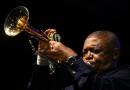
For over 60 years Hugh Masekela had been at the forefront of world revolutionary trends and made his mark at the site of the global anti-racist struggles. His sounds of struggle, inspiration, revolutionary change and love are now part of the history of revolutionary music of the end of the twentieth century and early twenty first century.
South Africa’s democracy is in trouble. The present situation is, in objective terms, a house divided; a house that is tottering on rotten foundations. Despite the more general advances that have been made under the ANC’s rule since 1994, power has not only remained in the hands of a small minority but has increasingly been exercised in service to capital.
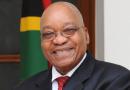
South Africa’s two main warring political blocs – the forces of Fiscal Patronage (‘Zuptas!’ in local parlance, referring to the immigrant Gupta family’s curious influence over the president’s family and government) versus the forces of Fiscal Prudence (‘Treasury neoliberals!’ to critics) – are still represented by two men who have begun to stumble on terrain potholed by what a Donald Trump aide terms ‘alternative facts.’

The prospect of South Africa joining the UN Security Council as a permanent member could explain President Zuma’s reported enthusiasm for the nuclear project. Being remembered as the president who gave Africa a greater voice on the global stage and secured South Africa’s role as the continent’s megaphone is probably too tantalizing for Zuma and his administration to forego.
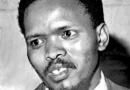
To think Black first is a revolutionary call to equip Black people with the necessary mental and practical capacity to liberate themselves from the bottom of society where white supremacy through slavery, colonialism and apartheid has condemned them. The legacy of Biko teaches that to think Black first is the means to end divisions among Black people and to forge a united front against white power.
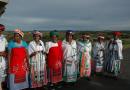
A manipulative form of nationalism that has been sanctioned over the past twenty years in neo-colonial South Africa seems determined to reconstruct a nation of disfigured memories and half-truths. Citizens must resist this manufactured nation building characterized by dispossession, coercive silencing and constant un-remembering.

In a judgement issued by the Broadcasting Complaints Commission of South Africa (BCCSA) the acting chairperson, Prof HP Viljoen, ordered that the television news channel ANN7 must broadcast a public apology to the Glebelands Hostel Community Violence Victims and admit to gross negligence in its recent coverage of an event held at Glebelands, which put some community members lives at risk.

The current student protests have their antecedents in the youth movements of 40 years ago. These students are fighting for their lives, their dignity and their humanity. Their resistance to white supremacy should provide inspiration to Black girls colonized in the US, Europe and around the world.
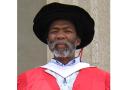
South Africa’s population is 86% black. Yet between 2010-2014, the Department of Politics at the University of Cape Town has graduated only two black MA students. In 2015, 97% of black applicants were denied admission to the Masters programme. To-date there is not a single black South African enrolled in the programme. Has this exclusion become a way of carving out the task of thinking and intellectual production as an exclusive white preserve?
Municipal elections in South Africa returned the poorest result for the ruling ANC party since coming to power at the end of minority white rule in 1994. But the ANC is not the only once-dynamic party in Africa that has been ruined by party leaders who get infected with a sense of entitlement after they have led their parties through successful struggles against white rule.
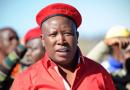
Last week’s local government elections in South Africa were marred by racial slurs, ethnocentric witch-hunting, mudslinging and outright physical elimination of political opponents. The country’s electoral commission remained indolent and incapable of taking bold steps to put an end to the blatant abuse of citizens’ right to choose their own leaders. Free and fair elections remain a big challenge in the rainbow nation.
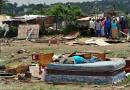
It is very disturbing that the very same municipality that gave permission for people to build and provided the building material is now illegally and violently tearing these shacks down. If the govrernment continues to rule impoverished people in a violent, unlawful, corrupt and criminal way, there will be a risk of retaliation from the oppressed.
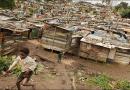
Started 10 years ago, South Africa’s shack dwellers movement Abahlali baseMjondolo has mounted a remarkable struggle – often at a terrible cost - to protect and promote the rights of impoverished people in the towns. This inspirational story shows what poor people can achieve when they organize themselves outside the state, political parties and NGOs.
The Soweto Uprising of June 16, 1976 did not just drop from the sky. The Black students of South Africa did not wake up one day and begin resisting Bantu Education. The uprising was carefully organized and led secretly by leaders of the underground political movement, most of them militants of the banned Pan Africanist Congress of Azania (PAC).
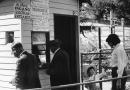
Racism has succeeded not just in making anti-Black violence a part of normal human existence, but it has also succeeded in making Black people numb to their own pain and suffering, and in many instances, made it normal for Black people to become participants in their own oppression.
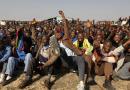
What is required is a non-sectarian political party of the working class that could go beyond unionism to defend the aspirations of the entire social class, not only those few with full-time employment. So, the leftists ought to clearly distinguish between unionism and activism if the working class is going to become a class-for-itself.

A new workers federation is being formed in South Africa that is intended to totally change the face of popular organising. Based on the principles of independence, concerted mass action and worker control, the new federation starts with a membership of 1.1 million workers drawn from 51 affiliates.
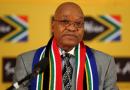
President Jacob Zuma’s continued disregard for the constitution, rule of law, independence of the judiciary and authority of independent institutions is increasingly translating into the lawlessness currently dominating KwaZulu Natal, where the police, courts and state security are used to protect political interests and suppress valid public discontent; where state torture and police criminality are endemic.
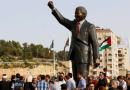
The Mandela that now stands erect in Ramallah has been incorporated into the zeitgeist of this city, particularly the rich and beaming neighborhood of massive white-stone villas and luxury cars. It would have meant much more if it had stood in the center of Gaza, a city that is withstanding an ongoing genocide.