


Following the African National Congress' victory in South Africa's latest local government elections, Hein Marais, author of the new book 'South Africa pushed to the Limit', examines the paradox of a political party that presides over one of the most unequal societies in the world, where close to half the population lives in poverty, and more than a third of workers are jobless – yet triumphs in election after election.
A radical rethink of current energy policy can cut South Africa's greenhouse gas emissions by 80 per cent in 2050 compared to 1990 levels. More than that - after an initial spike in investment - South Africans four decades down the line would pay 23 billion dollars per year less for their electricity compared to business as usual. This scenario is presented in a report titled 'The Advanced Energy [R]evolution: a Sustainable Energy Outlook for South Africa', presented on 25 May in Johannesburg by the European Renewable Energy Council (EREC) and Greenpeace.
The army and Ekurhuleni metro cops helped the police in 'unlawful raids' on shops owned by Somali nationals in Ramaphosa, east of Joburg.Details of the SANDF’s alleged actions are contained in an affidavit filed by the Somali Community Board’s (Scob) national secretary Amir Sheikh at the South Gauteng High Court. Scob, the representative organisation for Somali nationals in South Africa, successfully applied for an order to stop Greater Gauteng Business Forum (GGBF) members from 'intimidating, harassing, hindering and interfering with businesses owned by people of foreign extract'.
The City of Cape Town’s Anti-Land Invasion Unit established to prevent the illegal occupation of city and provincial land, is acting unlawfully says Lawyers for Human Rights. The announcement by the LHR comes after violent clashes between backyarders and police recently after over 4,000 backyarders occupied city-owned land in Tafelsig, Mitchell’s Plain. The Anti-Land Invasion Unit, established in 2008, demolishes about 300 illegally erected informal housing structures per month, according to the city.
South African competition authorities approved Wal-Mart's $2.4 billion bid for Massmart on Tuesday (31 May), saying the retailer must not fire workers for two years. The conditions imposed on the deal - including a programme for developing local suppliers - will likely be seen as a win for the world's largest retailer, which said it would walk away from the deal if targets were put on local procurement.
Unless drastic action is taken to reduce unemployment, South Africa may face another 1976 uprising, Cosatu general secretary Zwelinzima Vavi said. 'I have already over and over again pointed out the danger of a ticking bomb, that unless we can do something drastic about the crisis of unemployment, in particular youth unemployment, we risk another 1976 uprising,' he said in a speech delivered in Johannesburg. He was speaking at a discussion themed 'Critical conversations on prospects for a non-racial future in SA'.
Rights activists are mobilising to unleash a fresh wave of protests against the Protection of Information Bill, accusing the ANC of trying to bulldoze the contentious legislation through Parliament using its majority, without making any concessions. The Right2Know campaign said it believed the ANC’s position on what it has dubbed the 'Secrecy Bill' had hardened. Some opposition MPs agreed, suggesting that with the local government elections behind it, the ruling party was now determined to have its way.
Plans are underway to establish asylum reception centres on the country's borders. Home affairs director-general Mkuseli Apleni said this would also ensure that fewer foreigners entered the country. The department was recently ordered to relocate a reception centre in Crown Mines, Johannesburg, after the business community went to court claiming the large presence of refugees rendered conditions intolerable for business.
South Africa President Jacob Zuma arrived in Tripoli on Monday (30 May) for talks on ending the Libyan conflict as Nato said Muammar Gaddafi's 'reign of terror' was near its end. The South African presidency said Zuma is seeking an immediate ceasefire, to boost humanitarian aid and bring about the reforms needed to eliminate the cause of the conflict. But it rejected reports the talks would focus on an exit strategy for Gaddafi, saying the visit is part of African Union efforts to end the conflict between his forces and rebels fighting to oust him.
On 11 May 2011, the Department of Justice and Constitutional Development (DOJ&CD) gazetted regulations for the payment of educational assistance and health benefits exclusively to victims identified by the TRC. The regulations were gazetted after only a very superficial consultation process with victims and other stakeholders and do not address the key concerns expressed by these stakeholders, says this press release from the South African Coalition for Transitional Justice (SACTJ). 'The organisations comprising the SACTJ reject these regulations which fail to provide the full gambit of reparations needed by individuals who remained severely harmed as a result of apartheid atrocities. In rejecting the proposals, the SACTJ points to the actions of the post-apartheid state over many years in prioritising the needs of perpetrators over the needs of apartheid human rights violations victims and survivors. Measures to achieve political reconciliation in South Africa have not been balanced by redress measures for these severely harmed individuals. This represents the betrayal of a compact forged at the transition with victims of the anti-apartheid human rights struggle in South Africa.'
On 8–10 June 2011, key stakeholders from all over the world will gather in New York to review progress of the global response to HIV/AIDS and to plan the way forward. This forum has the potential to reinvigorate the commitment to HIV/AIDS nationally and internationally. In light of this, on 20 May, SECTION27, TAC, Médecins Sans Frontières, the World AIDS Campaign and the AIDS and Rights Alliance of Southern Africa sent a letter to the Director General for Health calling on the South African government to take the lead in setting ambitious and measurable targets, and encouraging similar commitments from other UN member states.
There is growing unease among green energy developers that there will be even more delays to the procurement of green power - the National Energy Regulator of South Africa (Nersa) announced it would release its revised tariffs for renewable energy only in mid-June. They were expected by the end of May. Besides having to wait for clarity about what they can expect to be paid for their power, broader policy uncertainty and other bottlenecks are contributing to unhappiness over the roll-out of green power, despite the government's commitments to boosting the development of renewable energy.
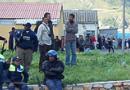
A documentary made by South African film-makers Dylan Valley and Aryan Kaganof tried to piece together the real story of what happened to the residents of Hangberg, Hout Bay, when police attacked the community and destroyed their homes in a forced eviction in September 2010. But when a magazine interviewed Kaganof about what he discovered, he found that the media still shies from talking truth to power.
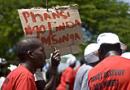
South Africans are told that voting is all about making their ‘own choice’, but in most cases, it’s ‘a very limited choice between two competing factions of the elite that are equally invested in scaling back people’s legitimate aspirations for a just society into an insanely unequal society contained with state violence, new forms of spatial segregation and “service delivery”’, observes Richard Pithouse.
In a review of Omar Barghouti’s 'Boycott, Divestment, Sanctions', Estelle Cooch praises the author’s profiling of the BDS (boycott, divestment, sanctions) movement, mixing of the analytical with the anecdotal and emphasis on Palestinian agency.
South African publisher Glenn Cowley, who ran the University of KwaZulu-Natal Press in the period 1998-2009, has passed away. Robert Molteno pays tribute.
South Africa's local government elections were officially declared over on Saturday night by the Independent Electoral Commission in Pretoria. At a closing ceremony attended by political leaders from across the spectrum, the governing African National Congress remained firmly in charge of the nation's municipalities, taking just under 62 per cent of the vote nationally. The opposition Democratic Alliance took just under a quarter of all votes - 23.94 per cent.
Foreign traders in many Johannesburg townships have closed their businesses and put their livelihoods on hold in response to a campaign of threats and intimidation launched in recent weeks by a group of local business people calling themselves the Greater Gauteng Business Forum (GGBF). In late April, the GGBF started distributing letters to immigrant shopkeepers in at least nine townships, giving them seven days to pack up and leave. The letter threatened drastic action against those who did not comply.
Municipal elections appear to have had a dampening impact on service delivery protests, according to research by Municipal IQ, which carries out a Municipal Hotspots Monitor. Municipal IQ reported that there were 10 protests in 2004. This jumped to 34 in 2005, dropped to just two in the last municipal election year in 2006, rose again to 32 in 2007, dropped slightly to 27 in 2008, but jumped steeply to 105 in 2009 and to 111 in 2010. There have been 23 so far this year.
In Cape Town, African women who think that AIDS is man-made are half as likely as other African women to have used a condom during their most recent sexual encounter, researchers report in the journal AIDS and Behavior. In addition, African men who believe that HIV is harmless while antiretroviral drugs are harmful are half as likely to use condoms as other men. There are important differences in the findings for men and women, which suggests that gender is crucial to understanding AIDS conspiracy and denialism in South Africa.