


Every five minutes she gives a hacking cough. Ndlaleni Ndzinisa (70) says she has continuously suffered from tuberculosis for the past five years. Because she cannot afford to pay for transport to the nearest hospital, she has repeatedly failed to adhere to her tuberculosis (TB) treatment. Ndzinisa’s doctor, Franklin Ackom, says it is highly unusual that she has not been diagnosed with the difficult-to-treat, multi-drug-resistant TB (MDR-TB) and extremely-drug-resistant TB (XDR-TB), which are strains that are resistant to treatment by first-line and second-line drugs, including Isoniazid and Rifampicin.
A new UNICEF report reveals there is still much to be done to reduce infant and maternal mortality in sub-Saharan Africa. Failure to improve care for pregnant women and newborns threatens to undermine progress on all health-related development goals. "Newborn deaths account for up to 40 percent of all under-five deaths around the world," UNICEF Chief of Health Peter Salama told IPS in Johannesburg.
Zimbabwe - where cholera has claimed more than 2,700 lives so far according to the Red Cross - is not the only southern African country facing increased disease as rains set in across the region. Malawi is also battling a cholera outbreak which has killed 19 people since the onset of the rainy season, an unusually high death toll. Up to 485 cases of the epidemic have since been registered and treated.
The government’s AIDS programme is heading for a funding crisis, deputy chairman of the South African National AIDS Council Mark Heywood has warned. Speaking to members of the Inter-Parliamentary Union’s (IPU’s) advisory committee on HIV/AIDS in Parliament yesterday, Heywood said the government had failed to budget in line with the cost estimates laid out in its National Strategic AIDS Plan (NSP). The five-year plan was launched 18 months ago, and put a R45bn price tag on meeting its targets, which include treating four-fifths of those in need by 2011.
Archbishop Desmond Tutu is among activists in southern Africa who have launched a fast and hunger strike in solidarity with the people of Zimbabwe. The new Save Zimbabwe Now movement says African leaders must abandon the policy of quiet diplomacy and recognise there is no legal government in Zimbabwe.
Awarding a journalist (print, electronic, and/or visual) who has in the prior year most effectively captured the essence of a major issue in global health and conveyed it to a broad audience. The Global Health Council recognises the vital role played by the media in informing the public, as well as decision-makers, and seeks through this award to highlight the important contributions to understanding and action made by the winner of the award.
Deadline: January 30 2009
In response to Horace Campbell’s : Unfortunately there are a tremendous amount of lies being floated on Cuito and the ramifications of Cuito. Fortunately one can at least find the accurate records of what came out of Cuito by looking at the original UN resolution 430 and the final signed outcome of Resolution 430. By simply reading the history of resolution 430 you can immediately see that it was not the Cubans that won the day for the liberation of Angola, Namibia and even South Africa.
Instead those racist South Africans were able to overturn resolution 430 to ensure that Namibia would be a democratic multi party system based on a capitialist economy and the same for Angola. The reality for all to see is that it was the racist South Africans that changed Angola to a multi-party democracy (based on capitalistic economy), Namibia and South Africa while ensuring that the last bastion of communism (Cuba) was evicted from Africa.
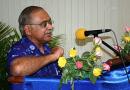
In this interview conducted by Marc Wuyts, Issa Shivji, one of Africa's revolutionary scholars long before the term public intellectual became vogue, shares his intellectual history, his analysis of Ujamaa, his take on the land question in Africa and the state of African political economy and much more.
The inhabitants of Sam Ouandja, an isolated diamond mining town in the northeast of the Central African Republic (CAR), were exposed to their first ever HIV awareness campaign in 2007. The focus was on HIV testing, but more than a year later, those who tested positive are still waiting for the arrival of HIV/AIDS services.
June and Paul Nyangweso*, a married couple living in the Kuria district of Nyanza Province in western Kenya, both tested positive for HIV recently, but only June visits the hospital to collect her monthly supply of antiretroviral medication, which she brings home and shares with her husband. "I do not want people to know that I am sick, so we just use her drugs and wait until it is time for her to go for another round," Paul told IRIN/PlusNews at their home.
At least 13 people have been killed in a southern region of the Democratic Republic of Congo (DRC) by what aid groups say is an outbreak of the deadly Ebola virus. Francois Dumont, the spokesman for Médecins Sans Frontières (Doctors Without Borders), said tests had so far confirmed the virus in four people and all of those had survived.
The Society for Aids in Africa (SAA) and the International Aids Society (IAS) call on Senegalese government to immediately release and drop charges against 9 men sentenced recently for 8 years each in prison based on sexual orientation. Among those arrested work towards providing critical HIV prevention, care and treatment services among men who have sex with men (MSM).
The Government requires Sh 32 billion to meet the shortfall caused by a poor harvest, among other things until the end of August. When making the appeal, at Kenyatta International Conference Centre, President Kibaki said an assessment from Kenya Food Security Steering Group indicates that Kenya requires Sh37 billion to meet all the needs of the current food emergency.
The new hit being sung by everyone in São Tomé and Príncipe goes like this: "Bleguê Bleguê ... A mi na mecê Bleguê, anda com bebê..." The lyrics, in São Tomé's Forro language, have two simple but important messages: when you go out, always take condoms with you, and when you have sex, always use a condom.
The latest UNAIDS Report estimated that 33 million people around the globe are living with HIV; 22 million in Sub-Saharan Africa alone. Around 2.7 million new HIV infections occurred worldwide in 2007. However, encouraging new data suggests there have been significant gains in preventing new infections in several African countries with high prevalence rates.
The Journal of Muslim Mental Health has an opening for an Editorial Assistant in Cairo, Egypt, who will work closely with the Editor-in-Chief for 12 hours per week for a period of one year starting February 1, 2009. The selected candidate will be considered a research assistant or research associate at the American University in Cairo and will be listed as an Editorial Assistant on the inside leaflet of the print journal and most promotion materials. THIS IS NOT A FULL TIME JOB.
The purpose of this thematic issue is to generate refugee-centered scholarship on theory development, research, education, practice, program development and policymaking. JMMH seeks empirical and conceptual articles related to forced migration of refugees and IDPs in their own countries, countries of first asylum, or in resettlement countries.
The Gender and Media Southern Africa (GEMSA) Network manager seeks the services of a senior policy and advocacy expert for its regional campaign on making care work count. The successful candidate will be expected to: Conceptualise and design research projects and model policies; Manage research projects; Analyse data; write and edit reports; Work with a team of facilitators across the region; Monitor and evaluate the impact of research and use this in refining future strategies
When Mary Muli and her husband failed to conceive a child, they followed the long-held tradition among the Kemba in Kenya's Eastern Province and brought another woman into their home to bear children for them. "We were married for 30 years when we realised we would die without children," Muli, 60, told IRIN/PlusNews from her home in Kitui District. "I brought Teresia to bear us children and to one day remain behind when we are all gone."
Voodoo rituals have long been inaccessible to anyone except disciples and priests. Even though certain practices like scarification carry a high risk of HIV infection, outsiders to the voodoo community have largely been unable to penetrate the secrecy that health officials say can be deadly to its followers.