


The Ivoirian government has extended a special period of free health care to help a population reeling from months of turmoil. But in a country where cost recovery for health services has long been the policy, an abrupt change to free care is posing challenges. Shortly after Alassane Ouattara took power in April 2011, he announced that public health services would be free until the end of May as a way to help people in the aftermath of widespread unrest and economic stagnation. Doctors reported 20-30 times the number of patients after free care was announced. Advocates of free care say the explosion of patients indicates that cost is one of the biggest barriers to access.
As donors gathered for a major meeting on funding vaccines for the developing world, campaigners called for vaccine production to be transferred to Africa to save money and contribute to the continent's broader economic development. The Global Alliance for Vaccines and Immunisation (GAVI), a public-private initiative, is asking for US$3.7 billion in funding over the next four years to immunise 243 million children against a variety of diseases. But vaccines supported by GAVI are produced almost entirely in Europe, North America, Latin America and Asia, said the Council on Health Research for Development (COHRED), based in Switzerland.
The Refugee Law Project (RLP), Faculty of Law, Makerere University, Kampala, Uganda, in collaboration with the African Transitional Justice Research Network (ATJRN) is accepting applications to its 2nd Institute for African Transitional Justice (IATJ), an annual week-long residential programme with a focus on Transitional Justice issues in the context of Africa. The Institute, which is scheduled to take place from 20-27 November 2011, in Kitgum, Northern Uganda has as its theme: 'Whose Memories Count and at What Cost?'
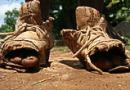
Life for the mentally ill in Sierra Leone is ‘incredibly hard’, writes Roland Bankole Marke, and even for those incarcerated in the psychiatric hospital, there is little to look forward to. Who is to blame for the situation and what should be done to improve access to good clinical care?
Government has slashed the HIV transmission rate from pregnant mothers to their babies to merely 3.5 per cent, potentially sparing some 67,000 babies from HIV infection. This success is due mainly to the health department vastly improving its programme for the prevention of mother-to-child HIV infection (PMTCT) from April last year. 'We have worked very, very hard to train staff to make the changes and we are so happy with the improvement,' said Precious Robinson, deputy director of government’s PMTCT programme, at the release of the new figures at the SA AIDS conference.
The Office of the US Global AIDS Coordinator (OGAC) has released new guidance for the massive US President’s Emergency Plan for AIDS Relief (PEPFAR), a US$48 billion dollar programme started by George Bush. The programme has come in for criticism for providing millions to church-run organisations promoting the unscientific prevention strategy of abstinence alongside providing no funding for programmes which address the needs of Men who have Sex with Men (MSM). The new guidance document shows strong leadership, said The Global Forum on MSM & HIV (MSMGF), in recognising that human rights, legal barriers and homophobia must be addressed as part of an effective HIV response.
World leaders began meeting in New York on 8 June to review progress made in the fight against HIV/Aids, 30 years after the pandemic first struck. The joint United Nations Programme on HIV/Aids (UNAids) says the meeting will also adopt new declarations and commitment to guide and sustain the global Aids response. UNAids says while progress has been made, more work remains to be done in coming years - especially in reducing the number of new infections. Globally, some 7,000 people get infected with HIV daily.
A leaked cable that has sparked a row between Britain and Malawi could give rise to rural hunger in the impoverished southern African nation. That is the upshot of the spiralling row that has seen Britain suspend aid including its support for a support for a highly successful seed and fertiliser programme in Malawi - and the government in Malawi stick to its guns despite the possible consequences for its people. The row, which we have been reporting on, stems from a leaked diplomatic cable that described Malawian President Bingu wa Mutharika as 'autocratic and intolerant of criticism'.
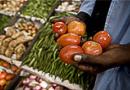
As part of the ‘Unga Revolution’, Kenyan civil society has been demonstrating over rising food prices and the escalating costs of living, writes Stephen Musau. And Kenyans should not feel alone in this struggle, Musau stresses, with the farmer-led movements across the global South like Via Campesina leading the fight for food sovereignty and the right to food.
In order to reduce instances where pharmacists are inflating the cost of subsidised malaria drugs, the Kenyan government has embarked on awareness campaigns through the media to inform Kenyans of the availability of the drugs, and the recommended prices per dose. According to Dr John Logedi, the deputy program manager at the Division of Malaria Control, the awareness campaign will help consumers make an informed choice and enable them to seek outlets that sell the drugs at the right price.
There are obvious gaps in access to the Internet, particularly the participation gap between those who have their say, and those whose voices are pushed to the sidelines. Despite the rapid increase in Internet access, there are indications that people in the Middle East and North Africa (MENA) region remain largely absent from websites and services that represent the region to the larger world. A research project is assessing the connection between access and representation - click on the URL provided to read more on this topic.
The head of the US Department of Agriculture recently announced an incentive program that would subsidise up to 75 per cent of the costs for establishing new US agrofuel plantations, in an 'effort to promote production of fuel from renewable sources, create jobs and mitigate the effects of climate change'. This 'incentive' is a hand-out to agribusiness, and despite the industry’s 'green' fuels hyperbole agrofuels could actually have a negative impact on atmospheric carbon when land use changes are factored in. These subsidies are a public handout to Monsanto, Cargill, BP and Chevron, says this article on the website of the Institute for Food and Development Policy.
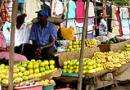
As Kenyans take to the streets in protest against the high cost of living, Okoth Osewe lays the blame for the food crisis on the government’s ‘liberalised’ economic policy.
Ten years ago, Khayelitsha, in Cape Town, was the first place to make antiretroviral drugs available to the public sector, marking a milestone in the beginning of the end of AIDS denialism and the fight for treatment in South Africa. With more than half its population unemployed, Khayelitsha is one of South Africa's largest and fastest-growing townships, and home to one of the highest burdens of HIV and TB infection nationally and globally. In 2009, antenatal HIV prevalence was 30 per cent. Alarming as the figures may be, Khayelitsha is a beacon of hope for the AIDS epidemic in South Africa, where the provision of ARVs had been fraught, marked by a bitter stand-off between AIDS activists and government over the slow pace of the rollout.
The rot in public hospitals in the country has been exposed in new reports by the anti-graft agency. Two studies conducted by the Kenya Anti-Corruption Commission (KACC) between 16 October and 20 December 2009, found that provincial general and district hospitals are on the sick bed, plagued by staff shortages, corruption and poor facilities. Cartels, in collaboration with management, have taken over the supply chain as overworked and demoralised staff merely watch, according to the reports. The majority of Kenyans, unable to afford health services, mainly go to these health institutions.
Bangladesh has leased tens of thousands of hectares of farmland in Africa as part of a government drive to improve food security in the poverty-stricken South Asian nation, an official said. Two Bangladeshi companies have leased 40,000 hectares of land in Uganda and Tanzania and another firm will sign a deal for a further 10,000 hectares in Tanzania this week, foreign ministry director Farhadul Islam said.
Mozambique's government will again attempt to curtail subsidy expenditures for essential foods and services, but this time its approach will be more nuanced so as to avoid a repeat of the cost-of-living protests in 2010. Antonio Cruz, director of policy analysis in the planning ministry, recently told local media that subsidies on fuel, bread and rice, estimated to cost the donor-dependent government millions of dollars each month, would be phased out by the end of June 2011. Planning and development minister Aiuba Cuereneia told the state-run newspaper, Noticias, that savings accrued from discontinuing the generalized subsidies would enable the introduction of a new food basket and transport benefits for families earning less than two dollars a day.
A recent report on Zimbabwe’s progress toward achieving the Millennium Development Goals, complied by the UN Population Fund (UNFPA), the UN Children’s Fund (UNICEF) and the World Health Organisation (WHO), said about 80 per cent of the posts for midwives were vacant in the public sector. 'The shortage of skilled and competent midwives can avert 80 to 90 per cent of maternal deaths. The shortage of skilled and competent midwives can result in women and their newborns dying from the complications that could be prevented by a health worker with the right skills, the right equipment and the right support,' the report pointed out.
Uganda is short on data on HIV among the country’s sex workers, but a new study shows that in the capital, Kampala, HIV prevalence among female sex workers could be more than four times the city’s average prevalence. The study, published in April in the Journal of the American Sexually Transmitted Diseases (STI) Association, recruited 1,027 women from the city’s red-light areas, and found 37 per cent to be HIV-positive, while 13 per cent had gonorrhoea and 10 percent had syphilis.
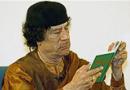
Yash Tandon explains the contradictions of ‘imperial finance capital’ in controlling neo-colonial states like Libya. While Gaddafi was being ‘accommodated’ by imperial powers, the ‘Arab Spring’ forced their hand, he says.