


Niger exports enough uranium to France to generate 50 per cent of the latter’s electricity supply, writes Khadija Sharife. But ordinary Nigeriens reap little benefit from France’s control of their country’s uranium resources, with over three-fifths of the population living below the poverty line and reports of radioactive contamination of water, air and soil by multinational mining operations.
With tens of millions of hectares of land across Africa auctioned off to corporations and governments in secretive deals, in this week’s Pambazuka News Khadija Sharife takes a closer look at a set of agreements between the Republic of the Congo (Brazzaville) and a group of white South African farmers. Will this partnership come at the expense of local people, Sharife asks, or could it generate models for freeing the continent from food insecurity through the sharing of resources and humanity?
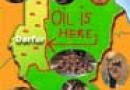
Sudan’s oil deposits have made it one of the fastest growing economies in Africa, yet ‘violence, disease and malnutrition’ continue to kill its people, Khadija Sharife writes in this week’s Pambazuka News. With access to natural resources from water to grazing land already at tipping point and cited as a root cause of the country’s conflict, Sharife assesses the role played by the Khartoum government and multinational interests in diverting much needed oil wealth from the Sudanese people.

Once perceived as an icon of progress in Africa thanks to wealth from its copper mines, today over 75 per cent of Zambia's population lives below the poverty line. In this week’s Pambazuka News Khadija Sharife recounts the country’s ‘riches to rags’ story – a story that is being repeated in former resource colonies across the continent, which although ‘politically liberated’ have ‘remained economically chained’.
The Lake Kivu basin, which Rwanda shares with the DR Congo, contains vast quantities of methane gas, which can be used to provide desperately needed electricity. But a deadly threat lurks beneath the waters of the lake, as Khadija Sharife finds out in this week’s Pambazuka News.

As developed nations attempt to secure supplies of food and biofuels to mitigate the impacts of climate change on the food and energy security of their populations, Khadija Sharife writes in this week’s Pambazuka News about the rush by foreign investors to buy up agricultural land across Africa, all too often at the expense of the wellbeing and livelihoods of local communities.
As a range of eminent scientists back genetically modified crops as the answer to food security in Africa, Khadija Sharife asks in Pambazuka News whether proponents of the ‘Green Revolution’ have the interests of the continent’s people and the environment at heart, or are more concerned with generating profits for the companies that control the technology.

Despite cheap available solar and wind options, the World Bank’s portfolio of Clean Development Mechanism (CDM) projects in Africa focuses on hydropower, methane-capture and other toxic investments, Khadija Sharife writes in Pambazuka News. Unpicking the links between energy, investment and ecological degradation across the continent, Sharife argues that rather than leading to real reductions in emissions of carbon dioxide, offsetting simply allows industrialised nations to ‘utilise Africa’s “underdeveloped” status as yet another exploitable resource'.
Tanzania is sitting on top of a US$39 billion ‘pot of gold’, Khadija Sharife writes in Pambazuka News, but unless the government can capture a more just proportion of royalties and taxes from the multi-nationals with concessions to mine the commodity, the country, one of the ten poorest in the world, is likely to get poorer still.
‘In Africa, political power is often used as a “get out of jail free” card, immunising the venal political elite through various mechanisms,’ Khadija Sharife tells Pambazuka News. But, says Sharife, while corruption may be ‘rampant’ in Africa, this is ‘only half the story’: Corrupt government leaders get away with graft much more easily and more frequently, thanks to international financial enablers, based in ‘transparent’ locations from London to New York. The key to addressing corruption, Sharife suggests, is to scrutinise unchecked and unregulated shadow economies 'in developed and developing countries alike'.
Huge, multi-billion-dollar dams are often seen as the only solution to Africa's critical shortage of power. In this week’s Pambazuka News Khadija Sharife asks whether this is really the case, given the environmental damage caused by dams and the suffering that the relocation of vast populations entails. In an article that looks at the reality behind the damming of Africa’s waterways, Sharife questions whether dams are the solution or the problem, arguing that they rarely benefit the poorest and often cause them greater hardship.
On 8 June, the oil giant Shell reached a settlement of US$15.5 million in a case brought against it in the US by 10 Ogoni plaintiffs, who accused the Anglo-Dutch company of complicity in the deaths of Ken Saro-Wiwa and 8 other Ogoni activists in 1995. In this week’s Pambazuka News, Khadija Sharife reports on a case that, as Ken Saro-Wiwa Jnr has said, ‘very clearly sets a precedent that corporations have to be very careful when they operate in places like Africa’ and that ‘you can be brought to trial in America for violations in Africa.’
We're 'skating on thin ice', warns Khadija Sharife: GDP has doubled over the past 25 years but the ecological costs have been steep, with over 60 per cent of the global environment critically exploited. A focus on boosting GDP figures – which measure the quantity rather than the quality of growth and do not take into account environmental impacts – is legitimising ecological plunder across Africa, and putting the ecosystems that support all life and livelihoods in peril.
 cc In one of the most significant legal rulings in the post-apartheid history of South Africa, victims of apartheid have finally received the green light from a US judge to sue multinational corporations that knowingly aided and abetted the regime. The implications of this ruling are colossal, writes Khadija Sharife, not only for Africa but for the world at large.
What is the true wealth of nations? Do GDP statistics provide an accurate pointer to economic progress? Why are resource-rich countries, particularly in Africa, poor, while resource-poor countries in the North are prosperous? How does one assess the value of the ecology? Khadija Sharife analyses a startling report from the World Bank that sets out to answer some of these questions.
 cc ‘Lone-ranger’ dictators Bongo (Gabon), Nguessor (Congo) and Obiang (Equatorial Guinea) have in fact been sustained by neocolonial relationships set up by France and the international financial system, writes Khadija Sharife. Françafrique, France's postcolonial Africa policy, was designed to create structural dependence and domination by reasserting geostrategic control over natural resources through the use of black 'governors', says Sharife. Illegitimate governments representing external interests have shaped and normalised the inherited legacy of colonialism, Sharife argues. These leaders, Sharife adds, have thus subsequently ‘internalised the economic, cultural, and political imperialism and cultivated an atmosphere of compliance concerning French interests in Africa.’ Unlike the United States, Sharife notes, ‘France treads lightly, attracts little or no attention, and leaves few footprints behind.’