



From the Seychelles to Liberia, African countries are creating financial centres that demand little or no taxation. Khadija Sharife provides a run-down of the places to hide away money from the taxman.
Petra Diamonds, the largest diamond-mining group listed on the UK's Alternative Investment Market (AIM), may deal in the glittering rocks that bring lovers together in holy matrimony. But the company’s activities behind the scenes may just be tearing people – and societies – apart, writes Khadija Sharife.

Media and entertainment giant Naspers ‘has engaged in the kind of “aggressive” tax planning devised to strategically move such assets into low-tax regions’, writes Khadija Sharife.

As multinational food processor Nestlé attempts to patent the well-known benefits of South Africa’s fynbos plants, Khadija Sharife explains the role tax havens play in enabling corporations to protect the value of intellectual property rights.
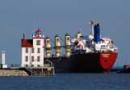
Using the example of apartheid South Africa, Khadija Sharife reveals the history of how huge oil companies have used flags of convenience in the shipping industry to secure corporate capitalism.
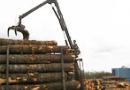
Using Norway-based Green Resources Ltd’s plantations as a case study, Khadija Sharife looks at whether clean development mechanism projects like those undertaken by Green Resources in East Africa can actually bring benefits to people on the ground.
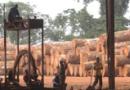
With raised consumer awareness about green issues, forestry companies have
scrambled to acquire environmental certification. But as Khadija Sharife
investigates, the credentials of those who keep an eye on the process is often
murky.

Kenya’s agriculture has a history of producing for lucrative exports while the government upholds the marginalisation of dispossessed groups and reports of famines, writes Khadija Sharife. Resources that should be sustainably used to tackle Kenya’s famines are depleted, Sharife argues, as part of a disturbing, broader trend which sees land completely dominated by elite interests and in which ‘[o]wnership that could be allocated to those requiring land for food production is instead shifted to those with capital (foreign) or political access.’
http://www.pambazuka.org/images/articles/494/66650_swiss_bank_tmb.jpgRu… Elmer, whistleblower and former CEO of Swiss bank Julius Baer’s Cayman Island operations, reveals the secrets of the murky world of offshore banking to Khadija Sharife. ‘Mauritius is in many ways the Switzerland of Africa,’ says Elmer, but there is another African nation vying to be the ‘golden’ financial gateway: Ghana.
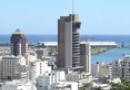
Neither the Organisation for Economic Co-operation and Development nor the country’s government agree that Mauritius is a tax haven, but Khadija Sharife’s investigations suggest otherwise.
‘Given the context of blood diamonds, the real conflict rests not with militias mining diamonds’, but with ‘the battle to control markets and pricing’, argues Khadija Sharife, in an assessment of the structure of the international diamond industry. For developing country governments ‘at the helm of diamond-producing economies, corporate control over diamond markets means limited choices and fewer opportunities to collect equitable revenue from diamond resources’, says Sharife.

South Africa's 2010 World Cup 'feel good' factor is addictive. At taxi ranks, street bazaars and tea-rooms, South African citizens everywhere are filled with elation - and pride. Just sixteen years ago, within living memory, non-white South Africans were deprived of basic human rights by the brutal apartheid regime. From stadiums – completed in advance to fulfill Fifa's (International Federation of Association Football) insistence on a six month ‘buffer zone', to airports and other infrastructure, South Africa has fulfilled Fifa's requirements to the tee. But, writes Khadija Sharife, all is not well.

Egypt’s majestic legacy of civilisation and empire appears to have lost its shine in the light of its current geopolitical positioning as ‘a brutal but glorified US ‘security guard’ at the expense of Egypt's citizens’, writes Khadija Sharife. Sharife explores the interaction between US foreign policy and this ‘draconian state’, which is ‘conveniently located astride both North Africa and the Middle East’.
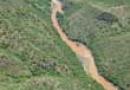
The construction of the Gibe III mega-dam in Ethiopia at an estimated US$2.1 billion threatens surrounding and down-river ecosystems and resident populations, writes Khadija Sharife. While civil society and members of the international scientific community flag disastrous environmental and human costs of damming the Omo river, the project is being fast-tracked by a convergence of government, foreign corporate and international monetary organisation interest. Sharife names major players and benefactors of the multi-billion dollar project and identifies the nameless thousands whose right to the ‘commons’ is being overlooked.

While China frequently comes under fire as the world’s biggest emitter of carbon dioxide, its per capita emissions – at five tonnes per person – are far lower than those of South Africa. Khadija Sharife takes a closer look at support for Eskom’s plans to build new coal-fired power plant Medupi, asking who the project’s real beneficiaries are and what it will cost.
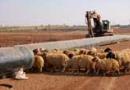
Sudan has emerged as a crucial foothold for China in its resource sourcing, writes Khadija Sharife. The political uncertainty surrounding the potential secession of the South has not deterred this economic giant from its quest for oil, but how will it feature in the complex arena of Sudanese politics?

There’s a difference between carbon emissions in developed and developing countries – that of ‘extravagant’ carbon versus ‘survival carbon’, for the provision of basic services such as electricity. But it is a distinction that market-based responses like carbon trading, driven more by financial interests than a desire for sustainable development, fail to consider. Khadija Sharife takes a closer look at UN carbon trading scheme REDD (Reducing Emissions from Deforestation and Forest Degradation).

Khadija Sharife investigates how the tax havens that prop small island economies up do so to detrimental effect. She argues that ‘as the G20 spends its time creating a carbon trade market that does little to reduce carbon emissions, multinationals continue to expand their extractive enterprises, dictators continue to siphon off capital, financial firms continue to cash in on pollution and this illicit capital continues to be laundered through offshore locations that are themselves threatened by the rising waters associated with global warming.’
Africa’s bargaining power has been increased, as Chinese interests open up alternatives to US and European investment in the continent, writes Khadija Sharife. But while China is free from colonial stigma and approaches resource-rich countries through the ethos of brothers-in-arms, a closer look at Beijing’s approach suggests that the benefits it brings to Africa do not include ‘justice and real development’.

Khadija Sharife looks at how commercial and political interests in the Democratic Republic of Congo’s mineral and natural resources have shaped the country’s history, with devastating consequences for its people, wildlife and environment. Will a new concession with China enable the Congolese to ‘really feel what all that copper, cobalt and nickel is good for’, as President Joseph Kabila says, or will the country continue to be seen as ‘a resource-rich bargain bin, open for business’?