


Herbert Ekwe Ekwe continues to disseminate his tenaciously held views about what many of us call the Biafran War of the late 1960s. It's important for Pamabazuka readers to know that much of his argument is challenged by most detached students of that terrible war. I hope others will jump into this debate to take on Mr. Ekwe in detail, so let me make only a few points here.
Who shot down President Habyarimana’s plane, triggering the 1994 genocide? A report by two French judges has definitively resolved one of the controversial mysteries of the late 20th century. Gerry Caplan considers the implications in the light also of the extradition of alleged genocidaire Leon Mugesera.
In this book review, Gerald Caplan takes a critical look at ‘’, edited by Scott Straus and Lars Waldorf and published by University of Wisconsin Press, Madison, 2011.
Following Norway’s terrorist atrocity, Gerald Caplan underlines the egregious double standards around discussing terrorism.
Commending a work which sets a ‘universal standard’ on assessing Rwanda’s gacaca courts – ‘the country’s remarkable experiment in transitional justice’ – Gerald Caplan reviews Phil Clark’s ‘The Gacaca Courts, Post-Genocide Justice and Reconciliation in Rwanda: Justice Without Lawyers’.
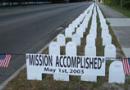
Gerald Caplan charts the bloodthirsty history of ‘the most awesome military power the world has ever known’. 'Look forward to a future of permanent war in the pursuit of peace,' he writes.
Responding to Edward Herman and David Peterson's critique of his review of their book, Gerald Caplan continues to challenge the notion that the Rwandan genocide never took place: 'Since the authors and I are never going to agree, the only point of continuing this exchange is not to change each other's minds but to persuade readers whose minds remain open.'

The 1994 genocide of the Rwandan Tutsi never happened. This is this unfounded and disturbing allegation at the heart of a new book by Edward S. Herman and David Peterson, writes Gerald Caplan. Instead the authors claim that that it was part of an elaborate American conspiracy to “gain a strong military presence in Central Africa, a diminution of its European rivals' influence, proxy armies to serve its interests, and access to the raw material-rich Democratic Republic of the Congo”. Why they want to create such gratuitous hurt for the survivors of the genocide in Rwanda is ‘impossible to fathom’, says Caplan, but their ‘egregious views’ ‘relegate them squarely to the lunatic fringe’.
Before Canada considers sending troops to the UN’s military mission in the DRC, it should first engage in serious debate about its international role and ‘the usefulness of a serious Canadian military presence’, argues Gerald Caplan. ‘With a disturbing presence of Western – including Canadian – resource giants and a history of “white” interference, social responsibility is an essential part of the discussion that must happen before any decision is made to dispatch troops to another conflict zone,’ Caplan writes.

The anniversaries of the Rwandan and Armenian genocides and the Jewish Holocaust all occur in April, writes Gerald Caplan, but last month’s memorial service at Tufts University in Boston was unusual in bringing together survivors from all three affected communities to bear witness together.
Gerald Caplan responds to Professor René Lemarchand's criticism of his article on the Mutsinzi Report into the assassination of Rwandan President Habyarimana in 1994.
Debate over who was behind the assassination of Rwandan President Juvenal Habyarimana has raged for nearly 16 years, writes Gerald Caplan. But a new report, prepared by an ‘Independent Committee of Experts’ appointed by the government of Rwanda, makes ‘a major contribution to settling the great question of who was responsible’ for Habyarimana’s death on 6 April 1994, two days before the genocide began.
Gerald Caplan reviews Linda Melvern's 'A People Betrayed: the Role of the West in Rwanda's Genocide', praising its success in dispelling Western governments' claims of ignorance of developments in Rwanda leading up to the genocide.
Abousfian Abdelrazik, cleared of accusations of having ties to al-Qaeda, has returned home to Canada after spending six years in a Sudanese prison, Gerald Caplan tells Pambazuka News. But Abdelrazik’s ordeal is not over, says Caplan, with his name placed on the ‘1267’, a United Nations terrorist blacklist that imposes a total asset freeze on anyone on it. The Canadian government has told him he must get himself off the list, but without their help, this is impossible.
Gerald Caplan reviews , edited by Phil Clark and Zachary D. Kaufman. Commending a multi-author work able to bring together a stimulating variety of often competing viewpoints, Caplan strongly recommends the title and its contribution to Rwanda's post-genocide reconstruction.
Following Barack Obama's visit to Ghana last week, Gerald Caplan questions the US president's grasp of African affairs. Obama's comments around good governance as a pre-condition for foreign investment are simply false Caplan points out, as any glance at apartheid-era South Africa or contemporary Nigeria and Angola would confirm. If Obama is serious about supporting Africa, he should seek to break with the entrenched twin burdens of self-interested leaders and exploitative Western policies holding back the continent, Caplan concludes, and not merely perpetuate them.
 cc Having been asked in 1998 to write a report on Rwanda's 1994 genocide by the Organisation of African Unity (OAU), Gerald Caplan outlines a series of 10 broad lessons about genocide. Stressing his conviction that the ultimate purpose of knowing about genocide should be to have something to say about its prevention, the author argues that there should be no hierarchy when considering genocides committed around the world. Citing the ultimate conclusions of Primo Levi, a Jewish–Italian survivor of Auschwitz, Caplan underlines the troubling reality that rather than increasing the resolve not to see history repeated, the existence of one genocide merely affirms the possibility of future tragedy elsewhere in the world. While history suggests that there is ample reason for cynicism, Caplan concludes however that committed action on the part of the public and civil society represents a genuine means of forcing the UN Security Council to put the welfare of those suffering above its members' interests.
 cc While most of the world is familiar with Rwandan genocide, fifteen years later the influence of a small band of deniers is growing thanks to the embrace of the deniers' arguments by a small but influential number of left-wing, anti-American journals and websites, cautions Gerald Caplan.
 cc. As he laments Bruce ‘The Boss’ Springsteen’s willingness to cuddle up to the Bridgestone tyre corporation and mega-market Wal-Mart, Gerald Caplan explores the exploitative history of Bridgestone and its Firestone subsidiary in Liberia. Alluding to many African countries’ ‘double jeopardy’ in the shape of avaricious leaders and self-interested rich-country policies, Caplan discusses the outrageous working demands imposed upon Firestone’s rubber-tappers, demands which often see workers obliged to draft in unpaid family members in order to fulfil quotas. With the company largely impervious to the campaign of elected union leaders to improve working conditions, the author highlights the struggle of the Stop Firestone Coalition for greater labour equity.
I came across this book, published sometime last year, completely by accident. Surfing for something else, I found an interview on National Public Radio in the US with Nicole Itano, a name I'd never heard before, discussing her book that I'd never heard of before. This is now the third popular study of AIDS in Africa in the past year, if we include Alan Whiteside's little book which, while more general, pays most attention to Africa.