


For the Nigerian Left, the strongest lesson of what may now be called Nigeria’s #RevolutionNow—that is, the 5 August mass protests organised by some young fragments of the movement—may be formulated as a warning.
There is need to re-look at the word “revolution” and what it currently means in politics and history, especially when compared to other forms of government change.

The author argues that the Nigerian Left, if well organised, could represent a concrete revolutionary platform for restructuring politics in the country.
In discussing the disparities in the distribution of “development,” wealth, power and poverty in Nigeria, many people—most of them young, but educated—seem not to be conscious of two important factors, namely: the factor of history and the factor of capitalism.
The author argues that the conduct of Nigeria’s 2019 general elections demonstrated how the country had moved far away from even the lowest known standards of electoral democracy let alone being free and fair.
It should be agreed that there are different ways of apprehending and describing the situation in Nigeria as the country draws near “Election 2019”, the general elections beginning on 16 February 2019. But I have chosen, naturally and unsurprisingly, an angle and a perspective informed by the burning interests of the working, toiling and poor masses of the country.
The author argues that the Nigerian Left is the only political formation that can bring about genuine change in Nigeria, as the country’s ruling class has not been able to produce a winning alliance of parties that can offer Nigerians anything new.
In this essay, the author asserts that, despite the incumbent President of the Federal Republic of Nigeria, Muhammadu Buhari, appearing to be in a strong position before the 2019 general elections, the opposition candidate Atiku Abubakar would not be a “walk-over” in the contest.

For almost a year now, since I resumed writing for publication in the media, I have deliberately referred to the Nigerian Left—my primary concern in this ideological and political enterprise—as if it were a homogenous or monolithic entity. But I know that most of my readers know, as much as I do, that the Nigerian Left—described here as the aggregate of Nigerian Marxists, socialists and pro-people radical democrats—is neither homogenous nor monolithic and has never been.
The author discusses about Nigeria’s history of military regimes and whether some of them could be categorised as “democratic” or simply as “dictatorships”.
The author calls on the Nigerian Left to revive the journal “In defence of history” in order to assist young people to know, understand and appreciate the history of Nigeria and the history of the world.
This piece is a dialogue with Nigerian Leftists—and all those who feel they share essential attributes with Leftists (socialists and pro-people radical democrats) but, for one reason or another, reject the “label” Leftists. The dialogue is driven by current political happenings and is here presented in form of notes, observations and propositions.

In this special tribute, the author narrates how the writings of Samir Amin helped him to answer many questions he was confronted with, as a young revolutionary socialist and Marxist.
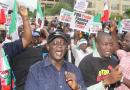
By “the people,” Leftists include, principally, “those people who do not exploit other people, but are themselves exploited; those who stand at the lowest point of the social ladder, those who are essentially excluded from the governance of their country; those who, strictly speaking, have little or nothing to defend in the present social order; and those who cannot liberate themselves without liberating society as a whole”.
For Nigerian Leftists currently studying or re-studying Nigerian politics, the month of July 2018 has offered fresh and interesting materials. But for me and some close comrades, what has so far happened this month further clarifies—not by any means solved—several existing problems that may here be grouped into four tasks.
The article provides historical illustrations on the current political alliances in Nigeria.
Some reflections on the various political alliances involving the Nigerian Left.
Although participation in “bourgeois politics”—as we used to call electoral politics—has never been absent from the Nigerian Left’s general programme, it has also not been made a “categorical imperative”. I am, however, now persuaded that it has become generally accepted in the ranks of contemporary Nigerian Leftists that intervention and participation in the country’s electoral struggle—for office or for power, as an organised political force and in alliance or acting separately—have become both categorical and urgent.
The political terrain in Nigeria, today has two colossal parties—PDP and APC—vying for power at the national level. However, it appears to be merely déjà vu as the binary trend has had similar appearances in Nigeria’s chequered history and experiment with democratic politics. Indeed, they have all been alignments and realignments of Nigeria’s ruling elite classes.

Nigeria’s Fourth Republic, which is currently running, was born on 29 May 1999—with Olusegun Obasanjo as inaugural executive president. A year later, on 29 May 2000, the president proclaimed 29 May of every year Nigeria’s “Democracy Day”. The day was also added to the list of the country’s national public holidays. It was a unilateral executive decision—by which I mean that neither the proclamation of “Democracy Day” nor the declaration of public holiday was endorsed, before the acts, by the constitution or any legislative body or any other institution of the Nigerian state or any organised public opinion.