


Neither the state nor the corporate sector, let alone civil society, is monolithic. There comes a time when various sections of these entities come in unison on matters of national interest. This is Tanzanians ought to learn from Norway.
The poetry is a journey into the quest for self-determination. Resonating with Ngugi's ‘Re-membering Africa’, Onsando's text focuses on selves that constitute Africa's dismembered self.
Victor Nee and Sonja Opper’s (2012) book on Capitalism From Below: Markets and Institutional Change in China is an ambitious attempt at explaining, theoretically and empirically, the country’s economic miracle. It is also a bold attempt at prescribing a model for replicating such a success in other reforming countries.
The authors’ bold attempt to provide a theoretical framework for explaining the great divergence in living standards between the prosperous and poor countries in the world, unfortunately, fails to take account of the historical context of uneven relations between particular societies
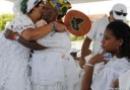
Understanding gender as the primary way of signifying relationships of people enables one to see that even racial and class relations are constructed in relation to gender. One is not simply racialized as black, or classed as working class, but as a black man/woman and as a working class man/woman respectively
An examination of the nationalist struggles in India and those in Africa reveals a historiography that is splashed with personalities. But these did not simply emerge as elite phenomena
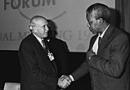
'The Fact of Blackness', the seminal 1952 essay by Frantz Fanon, is still relevant today, argues Chambi Chachage. 'It is relevant simply because Du Bois’ problem of colour line has not yet disappeared.'

‘Dar es Salaam is abuzz. It’s giving birth to a novel artistic landscape,’ says Chambi Chachage. ‘Well, at least new in scope.’
In a review of Abdul Sheriff’s ‘Dhow Cultures of the Indian Ocean: Cosmopolitanism, Commerce and Islam’, Chambi Chachage urges readers ‘get hold of the book and navigate through its fascinating pages’.

Agriculture is back on the international agenda on Africa, but at the heart of the matter is the question of land use – and control, writes Chambi Chachage.

Why is it that the image of legendary Congolese leader Patrice Lumumba continues be so important to Africa? Chambi Chachage explores.

With Egypt setting up a ‘Nile Basin Tournament’ for countries across the region, Chambi Chachage considers football’s political role and the broader diplomatic stakes surrounding the tournament.
Anna Tibaijuka, until recently the executive director of the UN Habitat, has been appointed to the Tanzanian cabinet. Chambi Chachage writes to her and offers some sage advice.
http://www.pambazuka.org/images/articles/500/10_500.gif
Pambazuka News has fostered debate about the 'whole spectrum of political colouring' and in so doing played a crucial role in turning ideas into pro-African action, writes Chambi Chachage.
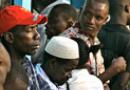
Tanzania's general elections are slated for October. One presidential candidate has changed the political landscape in more ways than one, writes Chambi Chachage.

A political scrap between a young challenger and a veteran politician points towards a possible candidate for future Tanzanian president, writes Chambi Chachage.

A report released by the East African literacy project Uwezo shows that educated parents – even just at the primary school level – make for better-educated children, Chambi Chachage writes. As well, the Tanzanian system has focused too long on education ‘inputs’ such as teachers and classrooms, rather than ‘outcomes’ such as high literacy, critical thinking and creativity.

Drawing on the works of intellectuals Issa Shivji, Kwesi Kwaa Prah, Ngugi wa Thiong’o and Paul Zeleza, Chambi Chachage discusses competing concepts of Africa. ‘Those who claim to be of Africa ought to truly seek its intellectual and material prosperity,’ he argues, ‘It is such an Africa-centred progress that will surely undo the yoke which has continually left us fragmented.’

As part of a broader effort to consider who’s who in Tanzanian society, Chambi Chachage discusses the reproduction of the country’s elite class and stresses that if you want to understand the underprivileged, you must also study the privileged.

‘Any attempt to strictly define Africa and Africans in terms of one race or culture without acknowledging its diversity is discriminatory,’ writes Chambi Chachage. ‘What we now know as Africa is such a complexity. A cursory look at its history shows that it has always contained a variety of practices and peoples. Its dynamic nature – for every cultural and geographical entity is not static as the theory of relativity shows us – has allowed it to give and take from other continents.’
