


South Africa, African Migrant Exclusion, and the Selective Critique of African Thought
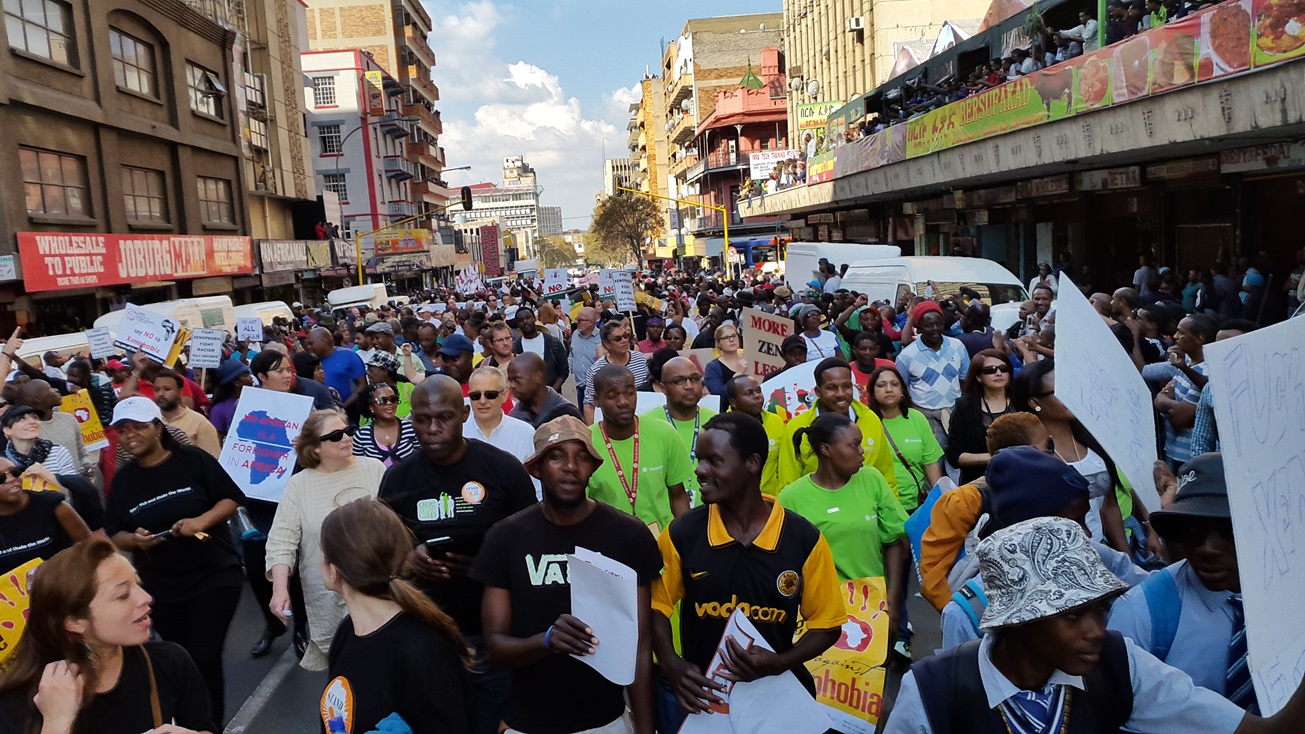

A critical examination of South Africa’s anti-migrant tensions, neoliberal political economy, and the selective critique of African intellectual traditions within contemporary liberal policy discourse.
In his recent article, “South Africa and the Limits of Identity,” published on the Council on Foreign Relations website on May 18, 2026, Ebenezer Obadare raises important concerns regarding violence directed toward African migrants, economic instability, and political frustration in South Africa.[1] Yet while the article correctly identifies tensions between constitutional ideals and exclusionary politics, it ultimately reveals a deeper intellectual asymmetry embedded within strands of elite African liberal discourse. Specifically, the article aggressively interrogates African philosophical traditions such as ubuntu and decoloniality while leaving comparatively unexamined the European philosophical and economic traditions that have also shaped South Africa’s contemporary crisis.
This asymmetry matters because the way South Africa’s crisis is interpreted shapes how policymakers, intellectuals, and the public imagine possible solutions.
The current wave of hostility directed toward African migrants cannot be understood outside the unfinished economic project inherited from South Africa’s colonial-apartheid political economy. South Africa remains one of the most unequal societies in the world, with official unemployment consistently exceeding 30 percent and youth unemployment hovering near or above 40 percent in recent years.[2] Land inequality persists, wealth concentration remains deeply racialized, and informal economies have expanded under conditions of exclusion and scarcity. Public frustration is therefore not emerging in a vacuum, nor can it be reduced merely to the excesses of identity politics or the failures of African philosophical discourse.
One of the article’s most significant omissions is its insufficient engagement with the historical political economy of postcolonial South Africa itself. Missing almost entirely is a sustained examination of the African National Congress’s transition from the Reconstruction and Development Programme (RDP) to the Growth, Employment and Redistribution (GEAR) strategy during the democratic transition.
In the immediate post-apartheid period, the ANC initially advanced the RDP as a framework designed to address inequalities inherited from colonialism and apartheid through redistribution, housing, public investment, employment creation, and social development. By the mid-1990s, however, the government increasingly shifted toward GEAR, embracing fiscal austerity, privatization, trade liberalization, and market-oriented restructuring. While these measures were presented as necessary for macroeconomic stabilization and investor confidence, critics argued that the transition marked a significant departure from redistributive transformation toward neoliberal governance.[3]
Although a Black middle class expanded under post-apartheid governance, many Black working-class and poor communities remained trapped within chronic unemployment, spatial inequality, and economic insecurity. In townships and informal settlements, frustrations over housing, informal trade, employment opportunities, and access to limited state resources increasingly intersected with resentment toward African migrants residing within these same marginalized spaces. The deeper crises, however, originated within unresolved economic structures inherited from colonialism, apartheid, and uneven post-apartheid development.[4]
Under such conditions, violence directed toward African migrants becomes not simply a moral failure, but also a symptom of unresolved economic and social tensions.
Yet these tensions did not emerge solely from post-apartheid governance failures. They are rooted in much older regional systems of labour extraction that tied South Africa’s industrial growth to migrant labour across Southern Africa.
For decades, the mining industry relied heavily on migrant labour recruited from Mozambique, Lesotho, Malawi, Zimbabwe, and neighbouring territories. Cheap African labour was not incidental to South Africa’s industrial development; it was foundational to it. The apartheid state simultaneously constructed racialized borders while depending economically upon transnational African labour systems that supplied mines, farms, domestic labour, and critical public services.[5]
These labour systems were not only documented in economic history; they were memorialized in African cultural production itself. Hugh Masekela’s iconic song Stimela (Coal Train) remains one of the most powerful artistic indictments of South Africa’s migrant labour system under colonialism and apartheid.[6] In the song, Masekela describes trains carrying African workers from “all the hinterland of Southern and Central Africa” into the mines of Johannesburg to labour “sixteen hours or more a day for almost no pay.” Stimela captures both the transnational foundations of South Africa’s industrial economy and the human costs of extractive labour systems that separated African workers from their lands, families, and communities.
Even highly skilled African labour was selectively incorporated when economically necessary. During her time living in the Eastern Cape as a Fulbright Scholar, Dr. Jill M. Humphries spoke with an ophthalmologist whose family history reflected these lesser-discussed dimensions of African labour mobility under apartheid. In a casual conversation during a medical appointment, the ophthalmologist shared that her father, a Ghanaian physician, had been recruited to work within healthcare systems serving African communities in the so-called “independent homelands,” or Bantustans, during apartheid. Having arrived in South Africa as a child, she ultimately remained in the country and later became an ophthalmologist herself.[7]
While anecdotal, the exchange reflects broader historical realities documented by scholars of apartheid-era healthcare: racially segregated and under-resourced African communities frequently faced severe shortages of medical professionals, creating dependence upon external African and internationally trained Black medical labour.[8]
At another level, the experience illustrates that forms of practical Pan-African cooperation rooted in professional exchange and human capital mobility have long existed across the continent. The movement of African medical professionals, educators, engineers, and skilled workers across borders demonstrates that Pan-Africanism is not merely symbolic rhetoric; it can also function as a governance and development strategy for addressing uneven institutional capacity and labour shortages across Africa.
Present-day hostility toward African migrants therefore obscures a deeper historical reality: South Africa’s economic development was never purely national in character. It was regionally interconnected and materially dependent upon African labour from beyond its borders.
Contemporary mobilization against African migrants should therefore be understood not as a sudden social rupture, but as part of a longer tension within South Africa’s political economy: the simultaneous dependence upon African labour and resistance to African incorporation into full social, economic, and political belonging.
The tensions surrounding African migrants also expose unresolved contradictions within post-apartheid sovereignty itself. South Africa emerged in 1994 as a constitutional democracy and sovereign republic committed to universal rights, equality before the law, and African reintegration after decades of apartheid isolation.[9] As a constitutional state, South Africa retains both the legal authority and sovereign responsibility to regulate immigration, enforce its laws, and manage borders consistent with domestic constitutional principles and international legal obligations. South Africa’s constitutional framework and international commitments also place obligations upon the state to uphold the dignity and legal protections of refugees, asylum seekers, and migrants within the bounds of the law.
At the same time, migrants and non-citizens residing within the Republic also bear obligations to respect South Africa’s constitutional order, legal institutions, and democratic sovereignty.
The issue, therefore, is not whether the Republic possesses the right to govern migration, provide lawful distinctions between citizens and non-citizens, or address legitimate concerns regarding security, labour markets, and public administration. Rather, the deeper tension lies in how persistent unemployment, inequality, and social precarity increasingly politicize questions of citizenship, belonging, and access through struggles over who possesses legitimate claims upon the resources and protections of the democratic state.
Importantly, the hostility is not uniformly directed toward all foreign populations. It is overwhelmingly concentrated against Black African migrants residing within economically marginalized Black townships and informal settlements. This reality suggests that the crisis cannot be fully understood through conventional notions of xenophobia alone. Rather, it reflects tensions involving class precarity, postcolonial citizenship, uneven development, labour competition, and unresolved spatial inequality rooted in the colonial-apartheid order.[10]
As Obadare aptly points out, violence directed toward African migrants in South Africa is neither new nor episodic. Major outbreaks occurred in 1998, 2008, 2015, and 2019, resulting in deaths, displacement, and retaliatory attacks against South African businesses elsewhere on the continent.[11] These recurring tensions reveal broader crises connected to economic insecurity, uneven urban development, labour precarity, weak local governance, and declining trust in political institutions. Reducing these tensions primarily to the failures of identity politics alone is therefore analytically insufficient and historically incomplete.
Yet rather than centering these material and historical tensions, Obadare redirects analytical scrutiny toward ubuntu, decoloniality, and Pan-African political discourse. Ubuntu is portrayed as a romanticized fiction of African communal harmony detached from material reality. But one must ask: why are African philosophical traditions subjected to this level of suspicion while European intellectual traditions escape equivalent critique?
Why is ubuntu treated as a philosophical artifact requiring exposure, while liberal capitalism and Enlightenment universalism are often positioned as politically neutral frameworks?
This question matters because European modernity itself evolved alongside colonial conquest, extractive empire, racial hierarchy, and transatlantic slavery. In line with Martin Legassick (1974), as Cedric Robinson argued, capitalism did not emerge separate from race but through racialized systems of accumulation.[12] Ngũgĩ wa Thiong’o’s critique of the “colonization of the mind” further underscores how systems of knowledge production continue to privilege European epistemologies while compelling African intellectual traditions to justify themselves before Western standards.[13] Achille Mbembe similarly argues that contemporary African political realities cannot be understood outside the enduring afterlives of colonial power and global modernity.[14]
The issue is therefore not whether African traditions should be subject to critique, but whether critique is being applied consistently across intellectual traditions.
None of this suggests that African philosophical traditions should be insulated from criticism. Ubuntu, Pan-Africanism, and decolonial discourse have at times been deployed selectively by political elites and detached from institutional implementation. Romanticized appeals to African unity can obscure class tensions, patriarchy, corruption, authoritarianism, and exclusionary nationalism. Likewise, decolonial discourse can become rhetorically performative rather than institutionally transformative. These are legitimate debates.
However, critique must remain intellectually consistent.
If one is prepared to interrogate ubuntu as insufficiently universal or economically impractical, then one must also interrogate liberal capitalism’s role in producing staggering inequality and social fragmentation in postcolonial societies. If decoloniality is accused of mythologizing the African past, then liberal internationalism must also answer for mythologizing Western modernity as the singular pathway toward political rationality and development.
The article’s treatment of Julius Malema further illustrates this interpretive imbalance. While one may legitimately critique aspects of Malema’s rhetoric or populism, his opposition to violence directed toward African migrants has not emerged suddenly nor opportunistically. Malema and the Economic Freedom Fighters have consistently articulated Pan-African positions defending African immigrants against exclusionary violence.[15] Yet rather than engaging this consistency, the article speculates primarily about “hidden self-interest” and “political calculation.” This framing is revealing because it suggests that certain forms of radical African political expression are approached primarily through suspicion and presumed opportunism, while actors aligned with liberal institutional politics are more readily granted legitimacy and rational intent.
The issue is not whether Malema should be beyond criticism, but whether analytical standards are being applied consistently across ideological and class positions.
What emerges in Obadare’s article is therefore not merely a critique of South African politics, but a broader epistemological positioning reflective of cosmopolitan African intellectuals embedded within Western policy institutions. From this vantage point, African identity-based political discourse appears irrational or regressive, while liberal institutional frameworks are positioned as the preferred horizon of political maturity.
Yet this framing itself deserves scrutiny.
Many of the institutions now celebrated as guardians of constitutional order failed to prevent the conditions producing contemporary unrest: mass inequality, economic exclusion, collapsing infrastructure, declining public trust, and widening social fragmentation. Under these conditions, dismissing African-centered political thought without equally interrogating the failures of neoliberal governance risks reproducing the very alienation the article claims to critique.
The deeper issue at stake is who possesses the authority to define legitimate knowledge and acceptable pathways to modernity and development in postcolonial Africa.
The challenge facing South Africa is not whether it should abandon African philosophical traditions in favour of supposedly universal liberal frameworks. Nor is the solution a retreat into romanticized identity politics detached from material realities. Rather, the challenge is whether the country—and the continent more broadly—can construct governance models capable of integrating economic justice, constitutional democracy, historical repair, and social cohesion simultaneously.
That task requires confronting the unfinished economic architecture inherited from colonialism and apartheid that continues to shape land ownership, labour precarity, wealth concentration, spatial inequality, and social exclusion in postcolonial South Africa.[16] It also requires confronting the limitations of postcolonial neoliberalism, the failures of elite governance, and the global political economy that continues to structure inequality across the African continent.
History is indeed upon South Africa. But history is also upon those who continue to selectively critique African intellectual traditions while leaving the ideological foundations of Western modernity comparatively unexamined.
Dr. Jill M. Humphries is a Fulbright U.S. Scholar to South Africa (2023–2024), Council on Foreign Relations Higher Education Ambassador (2024–2025), transnational social justice scholar-activist, and governance strategist specializing in international affairs, political economy, African and Black diaspora engagement, and community-centered democratic governance.
Rev. Kelvin Sauls is a South African-born transnational faith-rooted community organizer whose work is grounded in Los Angeles and extends across global Black liberation struggles. A Senior Fellow with the Atlantic Institute, his areas of specialization include racial justice, equitable belonging, migration, and liberative Pan-African theological frameworks. He is the Co-Founder of the Black Alliance for Just Immigration (BAJI) in the United States and the Co-Founder of the Beloved Community Coalition (BECOCO) in South Africa.
This essay was originally published by the Los Angeles Progressive on May 25, 2026, as a featured Africa Day commentary piece.
Endnotes
[1] Obadare, E. (2026) 'South Africa and the Limits of Identity', Council on Foreign Relations, 18 May. Available at: https://www.cfr.org (Accessed: 18 May 2026).
[2] Statistics South Africa (2024) Quarterly Labour Force Survey. Pretoria: Statistics South Africa; World Bank (2022) Inequality in Southern Africa: An Assessment of the Southern African Customs Union. Washington, DC: World Bank.
[3] Bond, Patrick (2000) Elite Transition: From Apartheid to Neoliberalism in South Africa. London: Pluto Press; Marais, Hein (2011) South Africa Pushed to the Limit: The Political Economy of Change. London: Zed Books; Terreblanche, Sampie (2002) A History of Inequality in South Africa, 1652–2002. Pietermaritzburg: University of Natal Press.
[4] Bond (2000); Marais (2011); Terreblanche (2002).
[5] Wilson, Francis (1972) Labour in the South African Gold Mines 1911–1969. Cambridge: Cambridge University Press; Moodie, T. Dunbar (1994) Going for Gold: Men, Mines, and Migration. Berkeley: University of California Press.
[6] Masekela, Hugh. 1974. Stimela (Coal Train). Chisa Records.
[7] Humphries, Jill M. (2024) Informal conversation with ophthalmologist regarding Ghanaian medical labour migration under apartheid, Eastern Cape, South Africa, October 2024.
[8] Digby, Anne (2006) Diversity and Division in Medicine: Health Care in South Africa from the 1800s. Oxford: Peter Lang.
[9] Constitution of the Republic of South Africa, 1996.
[10] Landau, Loren B. (2011) Exorcising the Demons Within: Xenophobia, Violence and Statecraft in Contemporary South Africa. Johannesburg: Wits University Press.
[11] Landau, Loren B. (2011) Exorcising the Demons Within; Misago, Jean Pierre (2019) Political Mobilisation as the Trigger of Xenophobic Violence in Post-Apartheid South Africa. Johannesburg: African Centre for Migration & Society.
[12] Legassick, Martin "South Africa: Capital Accumulation and Violence," Economy and Society 3, no. 3 (1974): 253–291; Robinson, Cedric J. (1983) Black Marxism: The Making of the Black Radical Tradition. Chapel Hill: University of North Carolina Press.
[13] Ngũgĩ wa Thiong’o. 1986. Decolonising the Mind: The Politics of Language in African Literature. London: James Currey.
[14] Mbembe, Achille. 2001. On the Postcolony. Berkeley: University of California Press.
[15] Economic Freedom Fighters (EFF) (2015–2026) official statements and public addresses concerning African migrants, xenophobic violence, and Pan-African solidarity. Available through EFF media statements and public archives.
[16] Bond (2000); Marais (2011); Terreblanche (2002).