


Migration and Global Africa: People, Borders, Football and Precarity
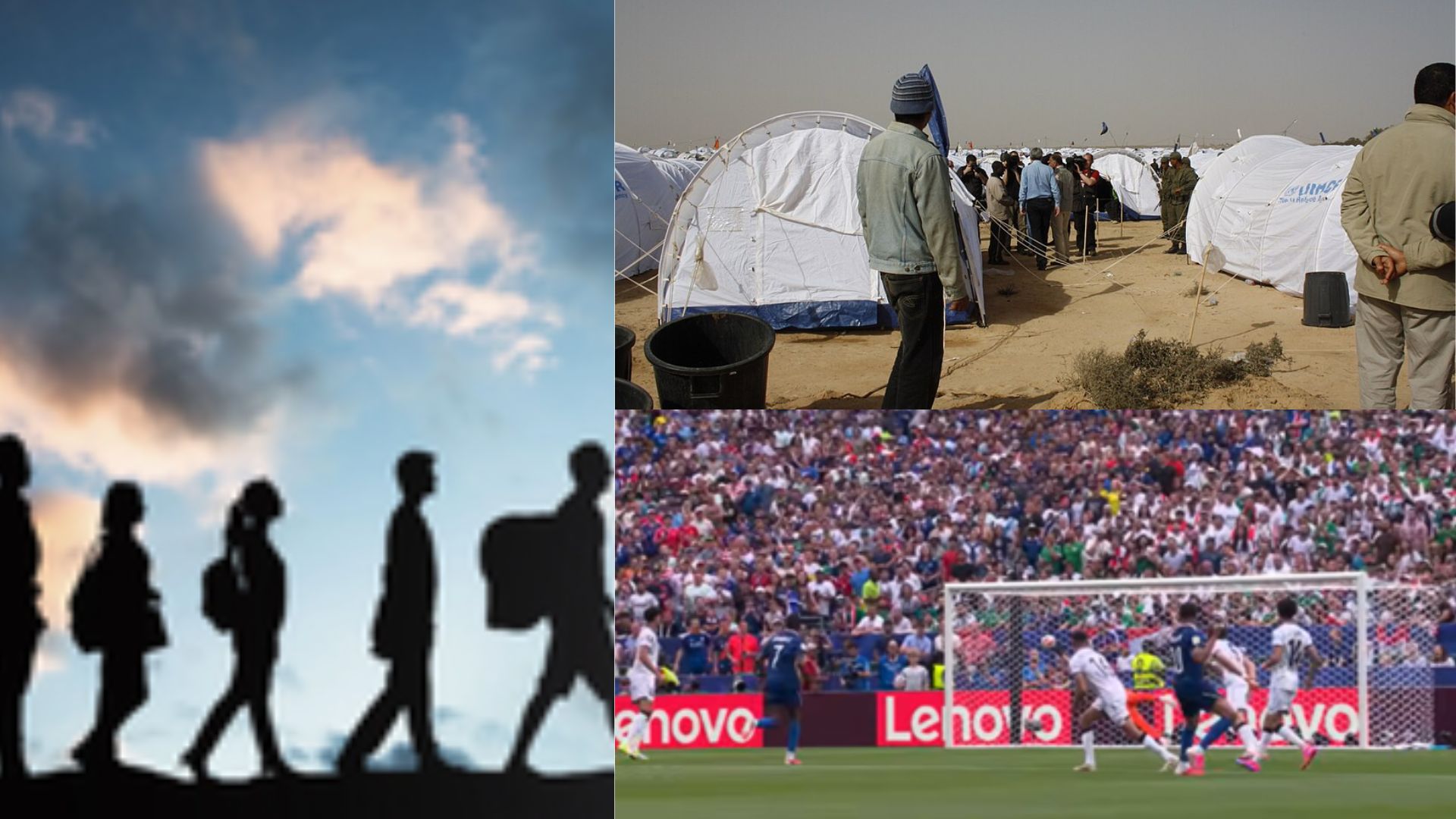
Across Global Africa, people's lives are shaped by border regimes, whose contradictions are played out in arenas such as football and reflected in tensions between contribution and precarity. Issue 925 of Pambazuka News explores different and too often violent realities of movement and migration of Global Africans.
In April 2026, videos surfaced of marches in Pretoria and Johannesburg in which hundreds of Africans called for an end to illegal migration by fellow Africans. The demonstrations highlighted a bitter irony in a country whose anti-apartheid struggle relied heavily on support from those same Africans. In the last few decades, Africa has witnessed several xenophobic dispositions. At this time, when there is a more urgent call for a borderless and united Africa, xenophobia and associated demands for intra-African deportations threaten the gains towards free movements of peoples, trade, and services across Africa. Most African migrants move within the continent, with South Africa, Côte d'Ivoire and Uganda hosting the largest number of migrants. Many African countries also continue to host Africans forced to migrate during some of the conflicts and climate change disasters recorded on the continent. While African migrants across western, eastern, and southern Africa increasingly confront political exclusion and xenophobia, Africans from these regions who migrate to North Africa face conditions bordering slavery and other forms of abuse. African peoples who suffered history’s gravest crime against humanity also face several barriers to humane treatment within the continent. The xenophobic attitudes and intra-state deportations and barriers not only contradict the Pan-African solidarity (central to the history and future of liberation of the continent) but continue to be shaped by migration policies and funding decisions beyond the continent.
The African Union declared 2025 the year of “Justice for Africans and People of African Descent Through Reparations” and has declared 2026-2036 as the decade of reparations. The 17-19 June conference in Accra hosted by the AU Champion for Reparations, H.E. John Dramani Mahama on “Next Steps High-Level Consultative Conference on Reparatory Justice” offers some collaborative paths across Global Africa in the struggles for reparative justice and healing. The initiatives must be accompanied with concrete material steps to lower the material burdens of descendants of enslaved and forcefully displaced Africans who seek to return and settle on the continent, and those who want to move between their ancestral homelands and consequent abode emanating from the horrors of the transatlantic enslavement. The border and citizenship regimes that frustrate the return of Africans outside the continent exist while the collaboration between the AU and the Caribbean Community gradually assumes a new momentum where African and Caribbean states continue to forge new and renewed bilateral relations. The movement of states and governments, however, trails far behind the aspirations and realities of Global Africans.
In contestation to making Africa home to Global Africans - from Haileselassie and Kenyatta’s policies to contemporary Ghana and the AU’s Sixth Region - is Europe and America’s attempt to make the continent a destination for the management of the West’s migration challenges, from hosting deportees to curtailing non-white immigration into Europe through violent systems that commit immigrants to suffer governance regimes that strip them of dignity and humanity.
The very language used to describe migrants, from immigrant to expat, and refugee to economic migrant, is never neutral. It reflects and reinforces power structures that shape who is welcomed, who is tolerated, and who is turned away. Undergirding these terminologies are material realities: structural inequalities, unequal economic integration, and policy frameworks based on white supremacy that too often subject those in the Global South to precarious, dangerous, and undignified conditions of movement.
The articles in this special issue take on a range of these realities by exploring the violence of bordered worlds alongside the solidarities, resilience, creativity, and contributions of migrant communities globally. Readers were invited to participate in examining the impact of migration on Global Africa in all its manifestations.
Roadmap to Articles in the Special Issue
Patricia Daley examines the inhumane treatment of immigrants and the continuities in colonial violence that shape the realities of migrants today. In the United Kingdom and across Europe, mob actions against immigrants have been increasingly recorded depicting the rise in far-right politics and anti-immigrant rhetoric with support from the global millionaire and billionaire class that is pushing for the free flow of capital and the militarized containment of humans.
The violence across Europe is happening at a time where both the US Vice President, JD Vance and Secretary of War, Pete Hesgeth, have referred to migration as an invasion; the latter having gone as far as comparing migrants arriving on boats as a threat comparable to the Nazis invading Europe, thus invoking militarized “white” defense. The 33-page National Security Strategy of the US identifies Europe as being faced with “civilizational erasure,” but for those of us watching the 2026 World Cup, it is undeniable that the coerced movement of peoples from the Global South to the Global North only continues to enhance Western civilization.
As immigrant labour is projected in the football triumphs of the West, from the USA to France, the majority of Black immigrants are treated without dignity and subjected to harsh immigration policies. Mahder Serekberhan contrasts the excellence of African descendants playing for European and North American national teams, with the experience of the majority of immigrants, not only to highlight the capacity of Global Africa, but also to criticize the Euro-American contradiction of cheering a national team of African descendants while criminalizing their very existence. Mahder’s analysis draws from the Book of Shame, a publication authored by African refugees and their allies, to highlight the continuity of repressive migration regimes at home in the West, and in outsourced factories in Africa. The lived experiences replete across the pages of the “Book of Shame” reveals the hollowing encounters of refugees, asylum seekers, and other immigrants under the humanitarian control of NGOs and multilateral entities whose roles are implicated in the attempts to contain migrants from Mauritania to Libya from reaching Europe while exploiting their labor.
The anti-immigration push in the Global North has manifested in policies of externalization to include the containment of migrants in and third country deportation to parts of Africa through a web of funding agreements, bilateral compacts, security partnerships, and diplomatic conditionalities that shift responsibility for migration and asylum governance outward onto non-EU, non-Western countries of origin, transit, and destination. Daana Taana Smith examines the coloniality, securitization, containment, and violence that continue to shape externalization of migration while Africans bear the cost of the outsourced migration management from the West. The alternative vision Taana pens requires institutional transformations beyond the resolution of the African Commission on Human and Peoples’ Rights (ACHPR) that cautions against externalization arrangements and calls African nations to uphold their human rights obligations in migration partnerships.
Emmanuel Agbor Oben not only holds African governments accountable to their decision in cooperating with Western regimes, but he analyzes the price they pay in complying with forced migrant deportation from the European Union, the United States, and Gulf and African countries. Oben demonstrates how African governments often accept coercive return arrangements through unequal relations and in exchange for security cooperation, diplomatic support, and political legitimacy at the expense of migrant protection, weakened continental human rights commitments, and potential migrant-integrated development.
Amid deepening economic hardship and unresolved historical injustices, xenophobic and Afrophobic rhetoric has emerged as a form of political social engineering that redirects legitimate public anger misdirected from entrenched structures of power toward African immigrants who often share the same experiences of exclusion, dispossession, and precarity. Serving as convenient scapegoats, these immigrants become targets of resentment generated by structural inequalities they neither created nor control.
Jill Humphries and Kevin Saul examine the conditions underlying xenophobia in South Africa and criticize approaches that provide an interpretation focused on identity politics and divorced from political economy. Invoking the theory of racial capitalism, and illustrating a history of the contributions of African migrant labour to the country's economy through South African Jazz legend Hugh Masekela’s Stimela (Coal Train), they provide an analysis of the industrial growth of South Africa that depended on the extraction of African migrant labour and refocus the discussion on viewing migrants as a development strategy. It is not migrants that are the problem as proven by South Africa’s socioeconomic developments, but rather the nature of their politicization and criminalization.
Masilo Sepaela explains how politicization and criminalization of migrants must be anchored in a historical context of the mobility of Africans under coloniality, racial capitalism, labour exploitation, and global asymmetries of power. The reader is invited to grapple with a recurrent necessity that the future of Global Africa depends on building solidarities that transcend colonial borders and challenge systems that displace people, and profit from displacement while criminalising displaced peoples.
The critical examination and historicization of the migration context of South Africa is extended by the South African Human Rights Association (SAHRA) in their call for accountability for the atrocities and inhumane acts that have characterized Operation Dudula, March and March movements, and related mob actions. The SAHRA calls on South African authorities to hold vigilante groups responsible for xenophobic attacks targeting foreign nationals.
The articles in this issue demonstrate that xenophobia in South Africa may have reached new heights and detention camps in Libya have come to reproduce conditions of enslavement, but neither xenophobic attacks and policies, nor containment camps for immigrants are unique to these countries. From Cameroon and Nigeria that have kicked out peoples from neighboring African countries, to Tunisia and Egypt where anti-blackness is being institutionalized, African governments have been unable to keep up with the reality of mobility and necessity of concrete Pan African solidarity on the continent. As Europe and the United States actively threaten the humanity and dignity of Global South migrants through externalization and migration governance regimes extended well beyond their borders, both Smith and Ogbor’s articles show that the logic and incentives that generate brutal conditions for immigrants in Africa are ultimately inherited and serve the objectives of external actors. Whereas Sepaela’s article shows some steps that have already been taken to ensure the free movements of African peoples, Ogbor and Smith caution on the necessary actionable steps, and Serekberhan demonstrates how African refugees themselves are not mere victims. African refugees are in fact self-organized human rights defenders challenging their dehumanization, and in the process, they have named those enabling their conditions, including the European Union and the United Nations High Commissioner for Refugees (UNHCR).
When Global Africans are provided the opportunity for dignified mobility, their journeys have included a vast musical repertoire drawing on sounds from Jamaica through the Americas to South Africa and other parts of the African continent. The musical legacy of Global Africa continues to travel across borders and generations, which is why it is fitting to honor one of the continent’s famed Jazz icons, Abdullah Ibrahim of South Africa, who joined the ancestors on June 15, 2026. Yusuf Bangura pays homage to this global icon in this special issue on migration.
As the footprints of the ancestors and contemporary football stars shine, the struggles to secure the dignity of racialized working peoples, be they immigrants or labour in their respective countries of origin and destination, require renewed energy and new forms of organising. Understanding how the exploitation of working peoples and the extraction of surplus value works through practices of devaluing labor that project racialized images of immigrants, the statement from The Declaration of the Conference of the Left in this issue is timely.
Consisting of “political parties, trade unions and federations, community and social movements, co-operative and solidarity economy formations, youth and women's formations, student formations, faith and religious formations, traditional leadership structures, progressive intellectuals, international solidarity organisations, and fraternal continental and global organisations of the Left” the Conference of the Left was held in South Africa from 29 to 31 May 2026, and declares in part:
The Left must answer this moment with clarity. The enemy is not the migrant, the unemployed neighbour, the informal trader, the poor household, or the worker from another country. The enemy is the system that produces unemployment, hunger, low wages, inequality, dispossession, violence and despair.
The statement anchors the inseparability of problems faced by migrants from the challenges confronting working peoples amid deepening structural crises across the world. The interconnected realities calls for renewed commitment to the collective struggles of oppressed peoples on the basis that transformation can only be won through organised struggle from the grassroots.
Rosemari Mealy’s article reflects on the solidarity rally held by Blacks4Cuba, a citywide coalition of individuals and organizations representing people of African descent and the African in defense of Cuba. The solidarity rally, organized from the historic site where Malcolm X and Cuban President Fidel Castro met more than six decades ago, highlights the need to intensify solidarity and defense of one another based on the understanding that the struggles of working and oppressed peoples across Global Africa are interconnected.
People will continue to move regardless of the most draconian domestic and externalized migration policies and regimes. And neither refugees and migrants, nor progressive Africans in places where xenophobia is instigated have remained silent. In releasing the special issue on migration, Pambazuka News joins the voices advocating for dignified and free peoples movement not only because it is a human right that adds value and capacity, but because it is a necessary conversation about the millions on the move, coerced under racial capitalism.
The thrills, victories and skillful displays in the 2026 World Cup, much like the 2024 Summer Olympics, are revealing patterns in migration policies where immigrant labour is selectively harnessed to profit countries who are yet to view all immigrants as deserving of human dignity.
Enjoy the Special Issue.