



The Council for the Development of Social Science Research in Africa (CODESRIA) wishes to officially inform members of the African intellectual community of the passing on of Professor Samir Amin on Sunday, 12 August 2018. For CODESRIA, this marks nothing less than the end of an era in the history of African social research given the many pioneering roles the late Professor Amin played as a scholar, teacher, mentor, friend, and revolutionary.
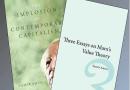
Celebrating his legacy, the author offers a critical analysis of a number of Samir Amin's books.

On Sunday, 12 August 2018, shortly after 4pm (local) Professor Samir Amin passed away in a hospital in Paris, France where he had been flown for emergency treatment at the end of July.

Egyptian economist Samir Amin observed the dangers of our world but also its possibilities.

With the demise of Samir Amin—an indispensable component of the new genre of the Radical Political Economy School of Marxism—the global South has lost an important intellectual prime mover of its history.

Samir Amin, already a major figure in the political economy of development, was the author of the first article in the first ever issue of ROAPE, in 1974. As the editorial noted, the article was “a summary of his basic model of the workings of the international system as a whole, presented at length in his two recent books” (the two- volume Accumulation on a World Scale, Monthly Review Press, 1974).

The author looks at the theories of one of Africa’s greatest radical thinkers.

I was a friend of the late Samir Amin – we met a number of times in our long and peripatetic lives and never without personal warmth and delight at the shared opportunity to compare and contrast our opinions and to further discuss them.

I met Samir Amin only once. I was lucky though as our meeting was spread over three days at a conference and I later interviewed him by telephone for The Review of African Political Economy. I described him to friends and colleagues, who heard that I had been fortunate enough to spend time with him, as indefatigable – he would stride out ahead of the group to locate the baladi (local) place to eat and places to visit.

The anti-imperialist scholar was very critical of the models of development and of the institutional structures of nation-states in developing countries that slavishly imitated the West, which he felt enabled colonialism to easily transmogrify into neo-colonialism.

Samir Amin revolutionised economics by centering the global South. The Real News Network’s Ben Norton explores the radical legacy of the Egyptian-French anti-imperialist Marxist with scholar Ali Kadri.