


The Last Colony is the Home: Patriarchy, Social Reproduction, and the New Enclosures of Care
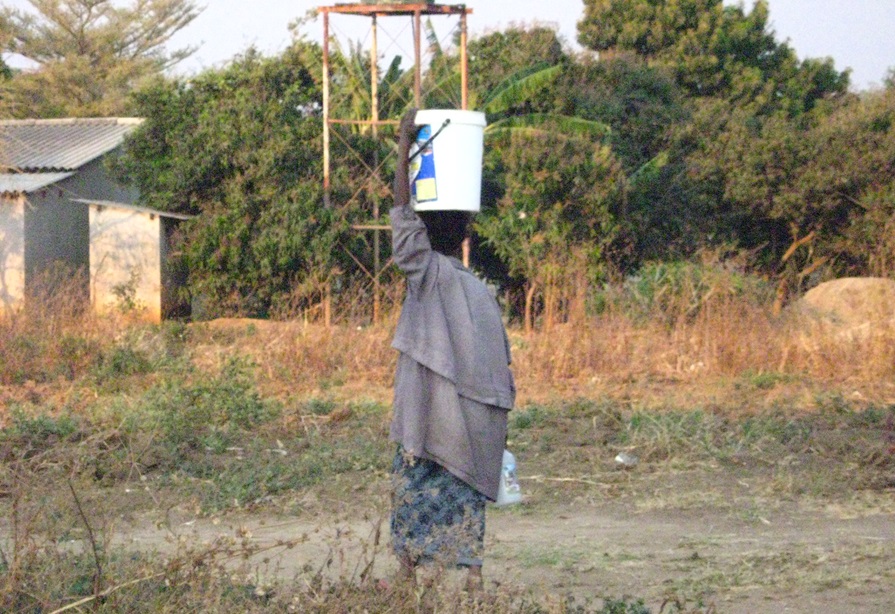

An exploration of how colonialism, austerity, and neoliberalism privatize care, turning African women's labor and resilience into an invisible infrastructure of economic survival.
"The unpaid labor of women has been the hidden subsidy upon which the entire architecture of capital rests, converting the reproduction of life into an invisible natural resource."
— Silvia Federici, Caliban and the Witch
Before Care Became Invisible
Before care became invisible labor, it was a public covenant.
Across much of Africa, the work of reproducing life was never imagined as the private obligation of an isolated woman. Children belonged to lineages before they belonged to households. Rivers nourished communities before they serviced municipalities. Grandmothers were archives as much as caregivers, carrying medicinal knowledge and ritual memory alongside infants on their backs. Harvests, births, mourning, cooking, storytelling, and conflict resolution formed a single ecology of mutual obligation in which life reproduced itself through relationship rather than contract.
This is not an argument for a romantic, precolonial Eden; African societies knew hierarchy and were neither static nor universally egalitarian. But social reproduction — the labor of making and remaking human life — was embedded within communal worlds whose organizing principles differed profoundly from those later imposed by colonial modernity.
Colonialism did not invent patriarchy where none existed. It accomplished something more enduring: it reorganized existing relations of authority around property, wage labor, racial hierarchy, and the nuclear household. Relational authority became proprietary authority. Care ceased to be a shared responsibility and was recast as the natural obligation of women within privatized domestic space.
Every empire advances through successive enclosures: land severed from the commons that once sustained collective life; labor reorganized around extraction rather than reciprocity; memory fragmented through the discrediting of indigenous knowledge; and, in our own century, attention itself enclosed, as platforms convert presence into commodity.
Today we confront another frontier.
The Enclosure of Care
As debt regimes deepen and austerity hollows out public institutions across Global Africa, states increasingly withdraw from the work of sustaining life. In Kenya alone, debt-servicing costs consumed an estimated fifty-six percent of government revenue in the 2025–26 fiscal year; successive IMF-backed fiscal consolidation programs have required cuts to health and social spending even as new levies on fuel and health insurance provoked nationwide protest in 2024.[1] Clinics close. Water systems deteriorate. Schools become unaffordable. Yet the labor required to keep people alive does not disappear when the state retreats.
It is displaced.
Onto the household. Within the household, onto women.
The crisis is not simply that care has become invisible — it was never invisible within the relationships that depended on it; it was just never built to be legible to the ledgers that replaced them. It is that care has become the final commons available for extraction — the site where women's uncompensated labor absorbs the failures of states, markets, and international financial institutions. Their time absorbs fiscal crises. Their bodies cushion debt — when a fuel levy or a health-insurance premium rises to satisfy a loan review, it is women who quietly absorb the difference, in the kitchen and the sickroom.
Much contemporary gender discourse continues to treat this reality as a question of identity, representation, or culture. Yet the more fundamental question is structural: who reproduces the world when the institutions responsible for reproducing it withdraw?
The answer is not hidden in economic reports or national budgets.
It is found:
In kitchens.
In maternity wards.
In communal wells.
In informal markets.
In the weary hands of women who continue, against impossible odds, to reproduce not simply labor, but worlds.
To speak of women's liberation today, therefore, is to go further than to seek equality within inherited institutions. It is to ask which institutions were built upon the privatization of care in the first place — and what it would mean to return the work of sustaining life to the commons from which colonial modernity first enclosed it.
The Colonial Reorganization of Intimacy
If the first enclosure was land, the most enduring enclosure was intimacy.
Colonial conquest did not stop at seizing territory or extracting labor; it reached into the architecture of everyday life — how people married, inherited, and cared for one another. Empire understood a truth that development policy still refuses to acknowledge: to govern a people sustainably, one must first govern the relationships through which they reproduce life.
European capitalism had already begun this project at home. As Silvia Federici argues in Caliban and the Witch,[2] the transition to capitalism depended upon reducing women's reproductive labor to an invisible, unpaid subsidy for the emerging wage economy. But colonial Africa was not merely another terrain for this model; it was a laboratory where existing systems of kinship and reciprocity were dismantled and rebuilt to serve empire.
This required a new social imagination, one built on a category that was not universal. Oyèrónkẹ Oyěwùmí has argued that pre-colonial Yoruba society was organized far more around seniority and lineage than around a fixed male/female binary;[3] colonial administration and missionary education together installed gender as the primary organizing category it had not previously been. Ifi Amadiume's study of Igbo Nnobi society shows a comparable flexibility[4] — institutions such as "female husbands" and "male daughters" that allowed women to occupy roles Western gender categories would code as exclusively male. What colonialism enclosed, then, was not only labor and land, but a way of organizing relationships that never mapped onto the binary it imposed.
This is also where feminism and womanism, and the African traditions that sit uneasily alongside both, begin to contest one another — though the contest is less a clean binary than it first appears. Liberal feminism is not a monolithic expression of feminism: alongside its equality-within-institutions strand runs a materialist feminist tradition, Federici's among it, that treats reproduction itself as the terrain of struggle. Womanism, in turn, is not simply the more structural of the two; building on Alice Walker's coinage,[5] and departing from it in Africana womanism's emphasis on family and community over individual liberation, it insists on centering race, colonial history, and communal life — categories that are themselves structural, not merely markers of identity. Some African feminists find in womanism's emphasis a necessary corrective to a Eurocentric feminism that mistook its own history for the human condition; others worry that its emphasis on motherhood can quietly re-inscribe the domestic roles patriarchy assigned. Neither tradition alone resolves the question this essay is asking: not which framework best names women's experience, but which institutions continue to extract unpaid labor from women regardless of what we call them.
Taxation compelled men into migrant wage labor, separating families across vast distances and making cash employment the primary measure of masculine worth, even as legal regimes recognized men as heads of household while customary land stewardship collapsed. Missionary education and colonial courts entrenched patriarchal legal categories imported from Europe in place of indigenous forms of authority.[6]
Women became responsible for sustaining households increasingly deprived of land, labor, and public investment — cultivating food, raising children, caring for elders, preserving cultural memory — while men's labor subsidized colonial accumulation elsewhere. Cheap colonial wages were possible because women absorbed the true costs of reproducing the labor force outside the formal economy.
Patriarchy was therefore not simply preserved under colonialism; it was re-engineered — authority detached from reciprocal obligation and attached to property. That inheritance still shapes the present: when governments celebrate women's empowerment while cutting expenditure on healthcare, water, or food systems, they reproduce the same colonial logic through different institutions. The language has changed. The architecture has not. The unfinished project of decolonization is not only the recovery of land or political sovereignty. It is the recovery of those communal institutions that once understood care as a shared obligation rather than a privatized burden.
The Everyday Economy of Keeping the World Alive
The violence of an economic system is rarely announced in the language of economics. It reveals itself in the extra kilometers a woman walks because the nearest borehole has run dry; in the grandmother who becomes a nurse after the local dispensary runs out of medicine; in the daughter who misses school to care for younger siblings while her mother searches for work.
This is what austerity looks like. It does not just reduce public expenditure. It redistributes the work of survival.
Across Kenya, every withdrawal of the state quietly enlarges the household.
When water systems fail, women become infrastructure.
When clinics deteriorate, grandmothers become hospitals.
The crisis migrates from the national budget into the human body.
Yet this labor remains largely invisible because it produces no commodity that national accounts easily measure. Kenya's 2021 Time Use Survey found that women spend roughly four and a half hours a day on unpaid care and domestic work against fifty-four minutes for men;[7] a follow-up valuation by the Kenya National Bureau of Statistics placed the worth of that unpaid labor at over two trillion shillings a year — a sum the country's GDP does not record. The pattern is not unique to Kenya: the International Labour Organization has found that, globally, women perform roughly three times more unpaid care work than men, with the gap widest precisely where public care services are thinnest.[8] Gross Domestic Product records the construction of a highway but not the hours spent nursing a sick relative after healthcare has been privatized.
This invisibility is politically convenient, and the contemporary debt economy depends upon it. For decades, structural adjustment, debt servicing, and fiscal consolidation have demanded that African states reduce public expenditure in the name of macroeconomic stability. Hospitals become understaffed. Water infrastructure remains unfinished. But the work itself does not disappear — someone still fetches the water, bathes the elderly, sits awake through the night beside a feverish child. The state quietly transfers these costs into the household, absorbed without wages, pensions, or recognition. This is the hidden subsidy upon which neoliberal development depends.
Increasingly, even this invisible labor is being financialized. The expansion of digital lending platforms and mobile credit facilities has transformed everyday survival into a profitable market. Families borrow not to build wealth but to reproduce life itself — to buy food before payday, cooking fuel, school levies. Debt no longer finances investment; it finances dinner. Care is enclosed twice: first through unpaid labor, then through financial extraction.
Nor does this process end at the border. Every year, women leave East Africa to work as domestic workers in the Gulf, caring for children and the elderly under conditions often precarious and abusive[9] — labor whose remittances stabilize national economies while the conditions that compelled migration remain unchanged. One household survives by emptying another; one nation earns foreign exchange by exporting the labor of care. This is often celebrated as opportunity. It is more accurately the globalization of social reproduction.
Against this reality, the language of empowerment begins to sound strangely hollow. Corporate campaigns celebrate resilient women while relying on supply chains sustained by their underpaid labor — the Mother's Day post and the "girl boss" campaign function, as feminist media scholars have argued, as a kind of commodity feminism that sells the image of empowerment in place of its material conditions.[10] Representation has become a substitute for redistribution. Recognition has become a substitute for repair.
The question is not whether African women are resilient — history has already answered that. The question is why resilience has become an economic policy. What is celebrated as resilience is often the final expression of a system that has learned to live from the exhaustion of those who keep the world alive.
When Care Becomes a Colony
If care has become the final frontier of extraction, then liberation cannot be measured solely by who occupies positions of power. It must also be measured by whether the work of sustaining life remains organized through exhaustion.
Too often, liberation is imagined as inclusion — more women in parliament, in boardrooms, leading corporations and financial institutions. These gains matter. But representation alone cannot dismantle an economy that depends upon the continuous extraction of reproductive labor. The question is not simply whether women have entered institutions. It is whether the institutions themselves still live from the privatization of care.
This is why the distinction between gender as identity and gender as structural location matters. When gender is approached primarily as identity, politics gravitates toward recognition — visibility, inclusion, symbolic representation. These struggles have expanded political possibility in important ways. Yet they do not necessarily alter the economic architecture through which life is reproduced. A materialist analysis asks a different question: who bears the costs when societies fail? Whose labor quietly repairs the fractures left behind by markets and states?
The same withdrawal of public institutions that displaces care onto women is also reorganizing what is demanded of men. Where the wage economy that once anchored masculine identity contracts under austerity and unemployment, religious conservatism and militarized state power move into the vacuum, offering men a restored authority that costs the state nothing to grant. Amina Mama's work on militarism and gender in Africa[11] traces how armies and militias become alternative economies of male worth precisely where formal employment disappears — patriarchy re-armed rather than dismantled by crisis.
This dispossession is not new; austerity has only given it fresh urgency. Colonial capitalism performed a comparable maneuver a century earlier, stripping men of the land, cattle, and communal standing that had anchored their authority while installing them, through mission schools, colonial courts, and the tax registers of migrant labor, as legal heads of household whose authority no longer required anything to sustain it. Masculinity became symbolic where it had once been material — a title without a treasury. Contemporary austerity repeats the maneuver: when wage labor disappears and men can no longer provide as patriarchal norms still demand, what remains available to them is rarely land, credit, or public standing, but authority over the household itself, cheaply granted because it costs the state nothing. The question, then, is not only what forms of masculinity persist once wage labor is gone, but which institutions keep manufacturing patriarchal authority precisely because it is the one form of power crisis has not yet learned to enclose.
Pan-African feminist and womanist traditions have long insisted that care is not just domestic activity but political labor. Across generations, African women have sustained families and communities through slavery, colonial conquest, structural adjustment, and neoliberal abandonment — preserving languages, rituals, seeds, healing practices, and collective memory under conditions designed to destroy them. They have not simply reproduced labor. They have reproduced worlds.
Yet history has produced an uncomfortable paradox: the very capacities that enabled African communities to survive colonialism have become resources through which neoliberalism now governs. States withdraw because they know communities will improvise. Budgets shrink because mothers will stretch meals. Hospitals deteriorate because grandmothers will nurse the sick. The system survives because care refuses to surrender.
This is perhaps neoliberalism's greatest innovation: it has learned to convert love into infrastructure, to govern not through coercion or markets alone, but through the moral impossibility of abandoning those we love. To celebrate resilience without transforming the conditions that demand it is to romanticize exhaustion. There is nothing liberatory about endless adaptation to injustice.
The task is not to make women better managers of austerity, nor simply to insert women into institutions that continue to privatize the reproduction of life. The task is to dismantle the conditions that require care to function as an invisible subsidy in the first place.
Returning Care to the Commons
If colonialism reorganized intimacy in order to govern life, then decolonization must begin by reorganizing it differently — by returning the work of sustaining life to the commons.
This is not nostalgia for an imagined past, nor a call to revive precolonial societies exactly as they were. But no future can be built on an economic order that treats care as an inexhaustible resource, extracted from women without recognition, redistribution, or rest.
To reclaim care as a commons is first to insist that the reproduction of life is a public and political responsibility. Healthcare cannot remain a privilege purchased through debt. Clean water cannot depend upon the unpaid labor of women walking ever greater distances. Food security cannot rest upon the invisible labor of grandmothers subsidizing broken agricultural systems.
This requires rebuilding public institutions capable of sustaining collective wellbeing — not as acts of charity, but as expressions of democratic obligation. Budgets must be judged not by the confidence they inspire in financial markets but by whether they reduce the amount of invisible labor required to keep communities alive.
Yet states alone cannot complete this work. Across the continent, traditions of mutual aid — chamas, communal farming, rotating savings associations, cooperative childcare, neighborhood kitchens — continue to embody ways of organizing life beyond both market individualism and bureaucratic abandonment. These should not remain emergency responses to permanent crisis. They are living political traditions that remind us interdependence is not a sign of underdevelopment but one of humanity's oldest technologies of freedom.
The task before us is therefore double: to rebuild the public institutions that austerity has dismantled, and to defend and renew the communal institutions that colonial modernity sought to fragment. Neither project is sufficient without the other. The future will not be secured by choosing between the state and the community, but through new relationships between democratic public institutions and the living commons that have always sustained African societies.
For too long, development has been measured by highways, skylines, and quarterly growth statistics — none of which tell us whether a society is truly flourishing. A nation cannot call itself developed if its prosperity depends upon women working themselves into exhaustion simply to reproduce everyday life.
The last colony was never simply the nation.
It was the home.
It was the kitchen where scarcity became ingenuity.
It was the hospital a grandmother became after the clinic closed.
It was the water system a daughter became after the borehole failed.
And it was women themselves — not colonies, but the colony's most exhausted laborers — whose bodies absorbed the costs that states, markets, and empires refused to bear.
If every empire begins by reorganizing intimacy, then every liberated future must begin by reclaiming it. The work before us is not just to free women from an unjust economy. It is to build an economy that is finally worthy of the labor that has always kept the world alive.
The struggle for land was never separate from the struggle for labor.
The struggle for labor was never separate from the struggle for memory.
And none of these can be separated from the struggle over care.
For it is through care that civilizations endure, that worlds are remade.
Until care ceases to subsidize extraction, extraction will continue to call itself development.
Tafahri Munjatta is a Kenyan writer and cultural critic whose work explores power, ecology, technology, African futures, and the ways colonial histories continue to shape contemporary life. His essays draw on decolonial thought, political economy, indigenous knowledge, and speculative imagination to examine how societies might organize themselves differently.
Endnotes
[1]International Monetary Fund, "Kenya: Seventh and Eighth Reviews Under the Extended Fund Facility and Extended Credit Facility Arrangements," IMF Country Report No. 24/316, 2024; Kevin P. Gallagher and Njuguna Ndung’u, "Escaping the IMF Austerity Trap," Project Syndicate, 2026.
[2]Federici, Silvia. Caliban and the Witch: Women, the Body and Primitive Accumulation. Autonomedia, 2004.
[3]Oyěwùmí, Oyèrónkẹ. The Invention of Women: Making an African Sense of Western Gender Discourses. University of Minnesota Press, 1997.
[4]Amadiume, Ifi. Male Daughters, Female Husbands: Gender and Sex in an African Society. Zed Books, 1987.
[5]Walker, Alice. In Search of Our Mothers' Gardens: Womanist Prose. Harcourt Brace Jovanovich, 1983.
[6]Mamdani, Mahmood. Citizen and Subject: Contemporary Africa and the Legacy of Late Colonialism. Princeton University Press, 1996.
[7]Kenya National Bureau of Statistics (KNBS). Kenya Time Use Survey Report, 2021.
[8]International Labour Organization. Care Work and Care Jobs for the Future of Decent Work. Geneva: ILO, 2018.
[9]Kenya National Assembly / Senate Standing Committee on Labour and Social Welfare. Report on the Inquiry into the Plight of Kenyan Migrant Workers in Middle East Countries. Parliament of Kenya, 2021.
[10]Banet-Weiser, Sarah. Empowered: Popular Feminism and Popular Misogyny. Duke University Press, 2018.
[11]Mama, Amina. "Sheroes and Villains: Conceptualizing Colonial and Contemporary Violence Against Women in Africa." In Feminist Genealogies, Colonial Legacies, Democratic Futures, edited by M. Jacqui Alexander and Chandra Talpade Mohanty. Routledge, 1997.
Suggested Further Readings
Amadiume, Ifi. Male Daughters, Female Husbands. Zed Books, 1987.
Federici, Silvia. Caliban and the Witch. Autonomedia, 2004.
International Labour Organization. Care Work and Care Jobs for the Future of Decent Work. Geneva: ILO, 2018.
International Monetary Fund. "Kenya: Seventh and Eighth Reviews Under the Extended Fund Facility and Extended Credit Facility Arrangements." IMF Country Report No. 24/316, 2024.
Kenya National Assembly / Senate Standing Committee on Labour and Social Welfare. Report on the Inquiry into the Plight of Kenyan Migrant Workers in Middle East Countries. Parliament of Kenya, 2021.
Kenya National Bureau of Statistics (KNBS). Kenya Time Use Survey Report, 2021.
Mama, Amina. "Sheroes and Villains: Conceptualizing Colonial and Contemporary Violence Against Women in Africa." In Feminist Genealogies, Colonial Legacies, Democratic Futures, edited by M. Jacqui Alexander and Chandra Talpade Mohanty. Routledge, 1997.
Mamdani, Mahmood. Citizen and Subject: Contemporary Africa and the Legacy of Late Colonialism. Princeton University Press, 1996.
Oyěwùmí, Oyèrónkẹ. The Invention of Women. University of Minnesota Press, 1997.
Banet-Weiser, Sarah. Empowered: Popular Feminism and Popular Misogyny. Duke University Press, 2018.
Walker, Alice. In Search of Our Mothers' Gardens. Harcourt Brace Jovanovich, 1983.