


Gendering Masculinity as Quintessential Patriarchal Privilege
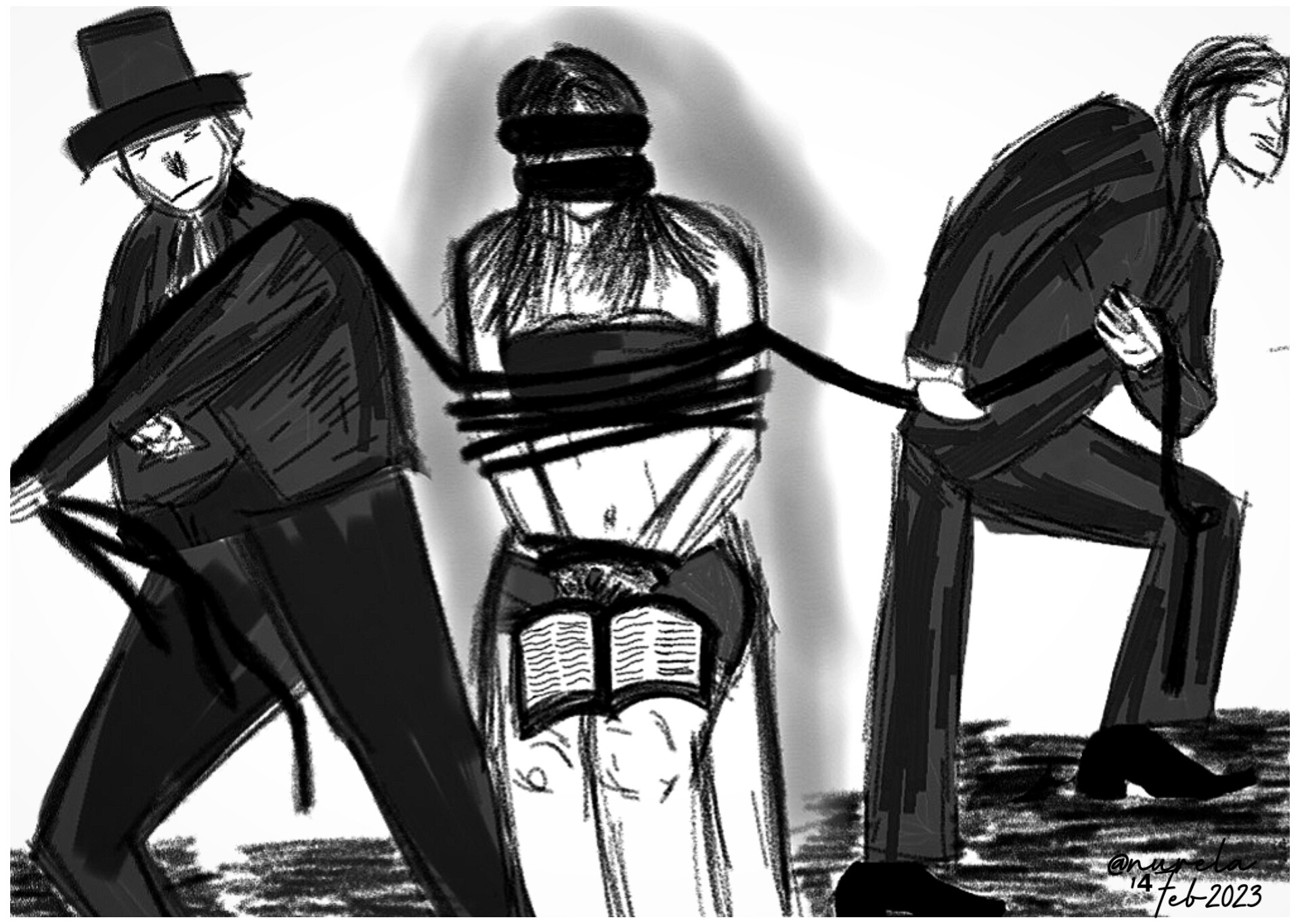

A historical account of masculinity and a challenge to traditional arguments that view masculinity as benevolent versus toxic forms within patriarchal structures and hides the inherent violence in both.
The Origins of Masculinity – Embedded in the Foundations of Patriarchy
All existing masculinities are inherently patriarchal and male-privileging. In order to get beneath this seemingly controversial pronouncement, one must position the phenomenon of being masculine within the larger framework of patriarchy as the oldest and most deeply entrenched privilege system humans have invented thus far.
The masculine or feminine identity is the very first marker to be inscribed onto the human body as an acknowledgement that one is becoming human. With the masculine identity comes the fanfare and celebration allotted to all males that they belong to the club of special humans who ‘naturally’ inherit privilege and various forms of power which they are expected to exercise and enjoy throughout their lives. They are expected to become men and to defend their maleness.
For the feminine identity, the more female children a woman had, the greater the risk that she would either be replaced with another woman or be declared a failure in a marriage. The pressure on women to breed males persists, in spite of reproductive evidence that being born male or female in biological terms is simply a throw of the dice.
By the very act of being born into human society, every human embarks immediately upon the journey of becoming gendered, and either inherits the status of being important and valued (privileged), or of being relegated to being the property of a male and the servant of a family.
Males are expected to become husbands and owners of property (including women, female children and other sentient beings like cattle, etc.) and females generally become the wives and unpaid workers of some men. Both destinies are considered naturally occurring phenomena in all human societies, with minor variations. This is still by and large the case in most if not all African societies (as well as in Asian and other societies of the South), in spite of the chorus of objections I can imagine will greet this factual assertion.
However, the gendering of humans at the moment of birth is not a naturally occurring phenomenon. It is central to the social construction of identity and to the allocation and eventual exercise of power and control over the most critical resources in any society. Masculinity plays a crucial role in this process of inclusion or exclusion, and gendering remains a lifelong experience for all humans.
Gendering the Masculine through Hetero-normativity
Patriarchy can be understood as a broad social framework made up of key institutions which males invented and protect through rituals, taboos, conventions, laws and practices (both traditional and contemporary). The hetero-sexual family form is the oldest and most resilient of these institutions, and can only be reenacted by males, through a marriage contract with the State. Women can form households, but men establish hetero-sexual families.
Although in more recent times, and in very limited societal cases, Queer humans have secured the right to establish families as legally recognized socio-cultural entities, these rights remain both fragile and under persistent attack from the religious right and reactionary neocolonial regimes across the continent. In the era of dying neo-liberalism and with the proliferation of conservative ideological movements demanding a return to ‘family values’ and the supposed protection of children from ‘sexual perverts’, the reversal of a more diverse worldview on all social matters, but particularly on sexual relationships, seems inevitable unless more concerted social movements and new forms of resistance are initiated and sustained.
Masculinity is the ideology that drives the claim that males become and remain men by continuing to own and define hetero-sexuality as the hegemonic sexual form.
Becoming Males – the Binary with Femininity
In all patriarchal societies, one of the key ways that males become men is by having children with women. However, because children have been socially and culturally considered a form of male property for millennia – through naming and various other privatizing practices – it is normal practice for men to refer to children as ‘my children’ rather than ‘our children’. This very basic expression of privatization is treated as casually normal and expected, even if the male has played no role at all in the raising of that child or children.
The so-called ‘fathering’ of children which does not necessarily mean assuming all the responsibilities of raising a vulnerable and dependent human beyond the contribution of a minuscule sperm, which is vetted by the female egg in any case, is premised on the patriarchal assumption that males are the progenitors of humans. Feminist biologists have debunked this unscientific claim, but most people remain unaware of its fallacy.[1]
Key to the persistence of male claims that they create children and therefore own them is the ideology of femininity, which exists in a binary relationship with masculinity. From birth, in almost all societies, and with rare exceptions, females are taught that the only way they can become women is by breeding for men. They have to become wives (or concubines) and bear children on behalf of males, in order to access the status of womanhood. This construction of womanhood through the ideology and practices of femininity is still very widespread and deeply entrenched through Patriarchalization - the process by which girls and women are socialized to accept that men own and control power and social resources, and that this is the normal status quo.
Women - who through an embrace of Feminism - resist this injunction and rebel against the hegemonic dominance of maleness (and the compliance of other females to this so-called natural order) are systematically vilified, demonized and excluded from the major domains of the society. The backlash against resistance to patriarchal hegemony is often swift and lethal, with many women experiencing severe harm and often death.[2]
Patriarchy is an intolerant and essentially brutal system which operates on compliance and submission by women and younger males. Often, both these groups are required to prove their loyalty to the system, or face social and cultural sanction and other punitive measures. For females, compliance is assured through very conservative forms and expressions of femininity and submission to the rule of the patriarch. In its most essential form, masculinity is hegemonic and punitive.
Hegemonic Masculinity and the Fallacy of Toxic Masculinity
As an expression and practice of privilege and power, masculinity is anchored in the practice of violence and impunity. All institutions, systems and ideologies that derive from Patriarchy and embedded in racial capitalism are founded on the violation of most humans by a small but dominant group in all societies. Men are the inventors and controllers of violence – in the hetero-normative family, in the public sphere, in theaters of war and pillaging – everywhere that power is performed and exercised. It is the hatred and fear of women, which manifests as Misogyny – that drives Masculinism and the need to dominate and control the female body and EROS through violation and impunity.
Of course, these forms of hegemonic power are dressed in all manner of socio-cultural and supposedly natural and neutral garb – such as affection, love, solidarity, empowerment, equality – and these forms have taken on normal and largely uncontested features. No doubt, all humans are born with the innate ability and desire to love and give affection. However, beneath the social veneer of patriarchal normality lurks the dynamic of power and the ability to deploy it.
Widespread cases of sexual violation and specifically rape in marriage, in the work place, on the public transport, during a date, in war zones, etc. – the essential character of masculinity reveals itself as hegemonic violence. A tone or a gesture on the part of a woman can quickly be interpreted as insubordination and result in ‘disciplining’. Domestic violence is the norm in all patriarchal relationships.
I am therefore critical of the conceptual and activist distinction that has been made between Masculinity (as a natural and innately male phenomenon) and what is described as toxic masculinity – which is supposedly a perverse version of real masculinity.
My argument is that Masculinity as constructed and practiced within patriarchal societies, is both toxic and hegemonic and it must be reconstructed by males in order to transform the hetero-sexual family and the power relations that define it. Males will have to critically theorize hetero-normativity so that they can understand how their male identities as heterosexuals are embedded in a complex and historically violent system of privileging and exclusion. When men form movements claiming that women are ‘denying them their rights as fathers’, this is an expression of the Backlash against women’s demands and entitlements to a different relationship with their children, beyond being just breeders for males.
Patriarchal masculinity is learnt and it can be unlearnt through a reconstituted notion and practice that rejects patriarchal privilege and the violence in which it is embedded. This is the imperative facing all men – inclusive of Queer males who have not questioned the given notion and practice of being men in conventional terms.
Patricia McFadden is a Radical Eco-feminist who aspires to a life of Freedom and Joy. She lives as an organic vegan on an ancient mountain in Eastern Swaziland, in Southern Africa, where she strives towards a balanced, respectful relationship with Nature, encompassing all sentient beings, while searching for new feminist impetuses and insights from her eco-feminist reality. Recent Publications include ‘Women’s Freedoms are the Heart Beat of Africa’s future: a Sankarian Imperative’ 2018; ‘A Feminist Conversation: Situating our Radical Ideas and Energies in the Contemporary African Context’ (with Patricia Twasiima); ‘Critiquing Conventional Discourses on Girls and Gendered Female Identities in Africa’ 2018; ‘Contemporarity: sufficiency in a Radical African Femi 2018; ‘The Nexus of Neo-liberalism and Precarity: Struggles for Alternative Societies,2022; Learning to love the Earth: Eco-feminism is the way back to Nature through love of the self, 2024; ‘Subjectivity is the Critical Foundational Expression of Feminist Contemporarity’, Meridians,2025.
Endnotes
[1] Donna Haraway whose work on Primate Visions: Gender, Race, and Nature in the World of Modern Science (1989) examines males projection of patriarchal corporate hierarchies onto human evolution and behaviour of primates; and Sarah Blaffer Hrdy, author of “Mother Nature and Mothers and Others” (1999) who advanced the idea of cooperate bleeding, are two examples who challenged such patriarchal fallacies.
[2] UN Women document violence, (death) threats, and misogynistic and gendered hate speech directed towards feminist and women’s human rights defenders that has been recorded in different reports. Specific cases can be found in this read: UN Women, “How women human rights defenders are under threat worldwide.” November 26, 2024. https://www.unwomen.org/en/articles/explainer/how-women-human-rights-de…