


Hubris of White Supremacy and the Limits of U.S. Psychological and Information Warfare in Global Africa
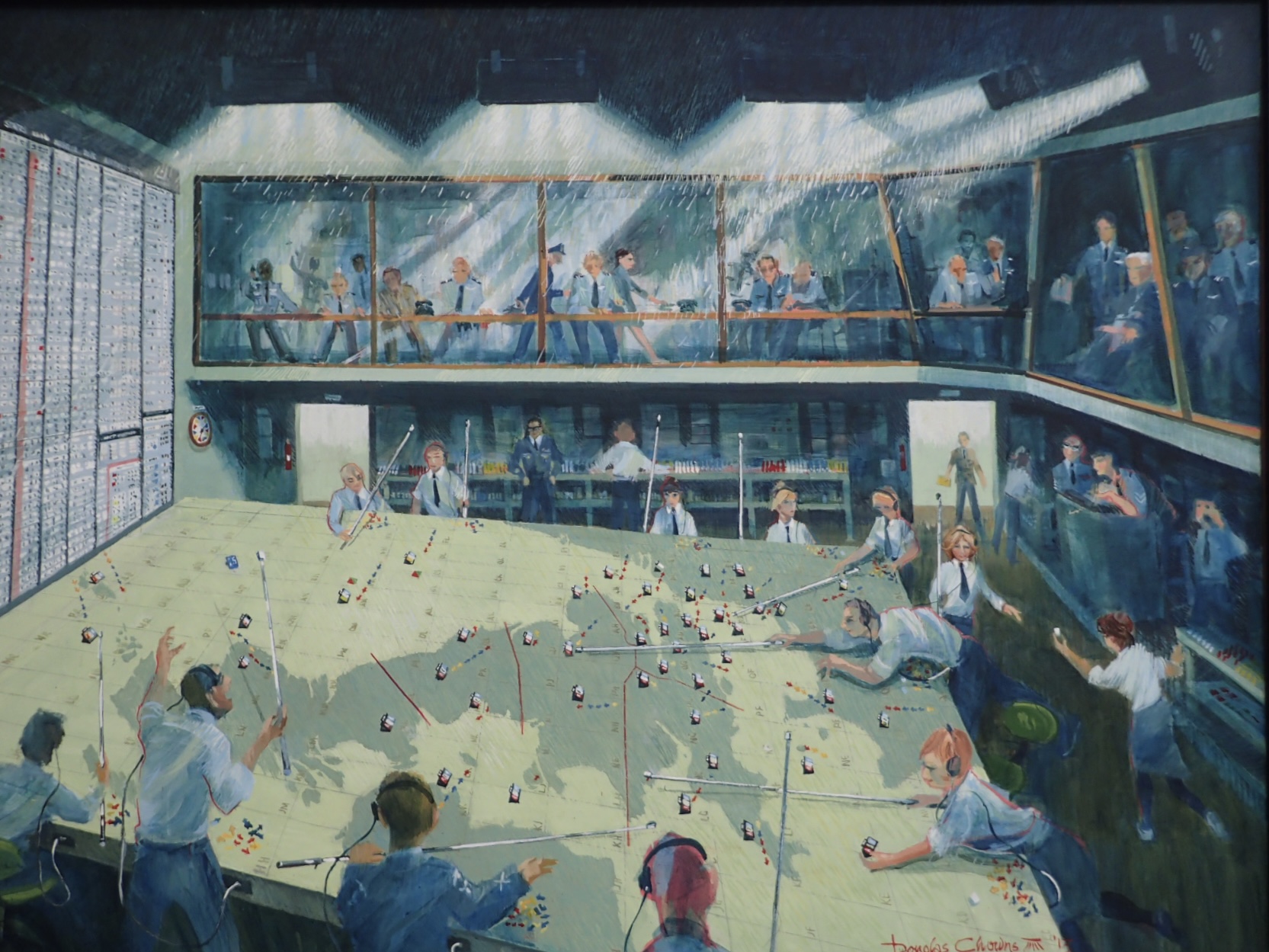

The U.S. Army's July 15, 2026 activation of “Drongo Company,” a new Psychological Operations company within the 7th Psychological Operations Battalion, marks an important development in Washington's expanding information and psychological operations capabilities in Africa. The Army describes the unit as part of its effort to conduct psychological operations across “contested environments,” while reporting identifies its mission as supporting U.S. Africa Command.
The activation of the U.S. Army's "Drongo" Company under U.S. Africa Command (AFRICOM) illustrates a persistent imperial illusion: the belief that profound shifts in global power and anti-colonial political consciousness can be managed through strategic communication, behavioral influence, and psychological manipulation. Although presented as an operational innovation, this development is better understood as part of a longer historical project in which U.S. military power functions as the enforcement arm of a white supremacist international order designed to discipline the Global South, secure imperial interests, and preserve the much-touted military dominance of the United States.
The creation of Drongo Company raises questions that extend well beyond the effectiveness of any particular psychological operation. What conception of psychology informs the U.S. military's effort to influence African populations? More fundamentally, who defines the African subject that is to be influenced? Psychological warfare rests on the assumption that perceptions, attitudes, and behavior can be shaped in accordance with externally defined strategic objectives. This framework reduces African peoples to objects of intervention rather than recognizing them as historical and political actors capable of generating their own knowledge, interpreting their own realities, and determining their own futures. AFRICOM openly acknowledges that its psychological operations employ print media, radio, television, text messaging, social media, and online platforms, and that these capabilities continue to expand. AFRICOM's expanding investment in these capabilities is not occurring in a historical vacuum. It is unfolding after decades of military interventions that failed to secure durable political outcomes across the Global South.
The expansion of psychological operations emerges not from strategic confidence but from the accumulated failures of U.S. military and political projects across the Global South. From Vietnam and Angola (Cuito Cuanavale) to Afghanistan and Iraq, repeated defeats have exposed the limits of coercive power. The persistence of this approach reflects a white supremacist conception of political agency in which resistance is recognized but stripped of its historical rationality and political legitimacy. Opposition to U.S. power is interpreted as a problem of perception to be managed rather than a struggle against imperial domination to be understood.
This framework encounters growing resistance from anti-capitalist and anti-imperialist movements that increasingly reject political assumptions on which psychological warfare depends. Across Africa and the wider Global South, expanding radical Pan-African movements are advancing projects of decolonization, regional integration, food sovereignty, resource sovereignty, and social transformation. Drawing on the intellectual traditions of Frantz Fanon and generations of Black psychological scholarship, these movements recognize information warfare as a contemporary expression of imperial paternalism. The assumptions underlying psychological warfare encounter growing limits. Across Africa and the wider Global South, anti-capitalist and anti-imperialist movements increasingly reject the political premises on which such operations depend. Escalating political polarization, recurring manifestations of institutional racism, the public targeting of senior Black military leaders such as General C. Q. Brown, strategic defeats in West Asia, and growing domestic opposition to U.S. backed military campaigns expose deep fractures within the national security state.
This intervention argues that the activation of Drongo Company is not evidence of renewed strategic strength but a symptom of imperial decline. It reflects an effort to manage the contradictions of a global order whose crises are multiplying across political, economic, military, and ideological fronts. The analysis unfolds through several interconnected themes. It begins by examining the activation of Drongo Company as a contemporary expression of imperial information dominance. It situates this initiative within a longer history of failed interventions across the Global South. It then explores the institutional cultures and ideological formations that have shaped modern projects of recolonization before turning to the expanding agency of Pan African movements that are contesting imperial power and advancing alternative futures. Drawing on Fanonian and Black psychological traditions, the essay demonstrates the limitations of influence warfare when directed against politically conscious populations and organized anti colonial resistance. It subsequently examines the internal crises of the American security state, including persistent racial contradictions, strategic overreach, and recurring crises of legitimacy. Ultimately, the essay advances a framework for scholars, activists, and political movements committed to anti-imperialist solidarity, demilitarization, and the defense of African sovereignty.
Fort Bragg and Psychological Warfare, AFRICOM, and the "Drongo" Company
The activation of Delta Company, known as the “Drongo” Company, within the 7th Psychological Operations Battalion represents the latest expansion of the U.S. military's information warfare apparatus, particularly its psychological operations capabilities directed toward Africa. Activated at Fort Bragg, North Carolina, in July 2026, the company is designed to conduct psychological operations in Africa and to influence the perceptions, reasoning, motives and behaviour of targeted populations. Its deployment within the AFRICOM area of responsibility signals that information warfare is no longer a peripheral component of U.S. military strategy in Africa. It is becoming an increasingly central instrument of continental engagement which is now more important than bases and lilypads.
This development has a long history. The United States has used information operations, assassinations, propaganda, psychological warfare, and covert political action in Africa since its early alliance with European colonialists, when these instruments became formally integrated into U.S. national security policy. During the anti-colonial war in Kenya, the United States aligned politically and strategically with British counterinsurgency efforts associated with figures such as Frank Kitson and the campaign against the Land and Freedom Army.[1] Later, in the Congo, U.S. disinformation and psychological warfare matured into a systematic instrument for undermining African sovereignty and defeating the political aspirations of the independence movement. In June 1964, U.S. Information Agency Director Carl Rowan warned President Lyndon Johnson that Washington might need to mount an ‘informational-psychological offensive’ in the Congo comparable to the campaign being waged in Vietnam. Rowan called for an integrated political, psychological and informational campaign to secure support for the central government of Mobutu. Following the assassination of Patrice Lumumba in January 1961, CIA covert operations and the military intervention known as Operation Dragon Rouge in 1964 sought to consolidate a political order favourable to U.S. interests, contributing to patterns of military dictatorship, warfare and political destabilization that persisted for decades. Similar combinations of political intervention, covert action and psychological operations accompanied U.S. policy toward Angola, Mozambique, South Africa and other African liberation struggles. The contemporary psychological operations apparatus is therefore not a new departure but the technological and institutional evolution of a much older strategy of political influence and control.
What distinguishes the contemporary period is not the objective of political influence but the scale, technological sophistication and conceptual framing of these operations. The media operations associated with the Iraq and Afghanistan wars have increasingly been incorporated into a broader architecture of information warfare that includes the manipulation of social media platforms, algorithmic amplification, data-driven behavioural targeting and what has increasingly been described as cognitive warfare, or more provocatively as ‘brain hacking’: the use of psychological, informational and computational techniques to exploit cognitive vulnerabilities and shape perception, emotion, decision making and behaviour. [2] The activities associated with companies such as Cambridge Analytica demonstrated how the harvesting and analysis of personal data could be integrated with social media platforms to construct highly targeted political messages, pointing toward a model of information warfare in which perception management, behavioural influence, counter-influence and the cognitive dimensions of conflict become increasingly intertwined. The Drongo Company embodies a broader strategic transition in contemporary warfare, one in which the African mind is increasingly constructed as a battlespace to be shaped through information operations, cognitive influence, and behavioral manipulation. Even its name is revealing. The African drongo is known for vocal mimicry and deceptive alarm calls that alter the behavior of other species. The metaphor captures the core logic of psychological operations: dominate the information environment in order to influence how populations perceive threats, interpret events, and make political choices.
The significance of this enterprise, however, lies not only in the company itself but in the military and political ecosystem from which it emerges. The entire Fort Bragg region functions as a strategic center for the development and projection of cognitive warfare capabilities. Far more than a logistical installation, Fort Bragg serves as one of the principal institutional sites where military doctrine, Special Operations training, information warfare, psychological operations, intelligence activities, and private defense contracting converge. The installation is embedded within a regional political economy shaped by military capital, conservative political networks, and longstanding histories of white supremacist organizing. From this perspective, Drongo should be understood not as an isolated initiative but as a product of a larger ecosystem in which the management of perception, narrative, and consciousness has become an increasingly important dimension of U.S. military power. Investigations involving white supremacist personnel and organizations have repeatedly drawn attention to Fort Bragg and its surrounding networks, making the region a recurring focus of scholarship and journalism examining the intersections of militarization, extremism, and information warfare within the United States military.[3]
Fort Bragg is the institutional center of U.S. Army Special Operations and the broader infrastructure through which Washington has projected military power, intelligence capabilities, and unconventional warfare across the Global South. The concentration of psychological operations capabilities at Fort Bragg places Africa within a wider architecture of special operations, intelligence, surveillance, and information warfare. The significance of the region extends beyond formal military institutions. Fort Bragg and its surrounding ecosystem have long served as a hub for private military and security contractors, including networks associated with Erik Prince, whose companies emerged from and operated within the broader military contracting environment of North Carolina. Prince's 2024 public call for the recolonization of African countries, including his assertion that external powers should "put the imperial hat back on" and govern societies deemed incapable of governing themselves, exposed the persistence of explicitly neo-colonial thinking within segments of the security and military contracting world. Such statements are significant not because they represent official policy but because they illuminate the ideological environment in which military intervention, private force, destructive extractivism, and cognitive warfare are increasingly intertwined. The issue, therefore, is not merely the establishment of another military unit but the institutionalization of a multidimensional capacity to intervene in the political, informational, and cognitive environments of African societies. From this regional nexus, the management of perception, narrative, and social behavior becomes integrated into a wider system of power projection that extends well beyond conventional military operations.
The scale of the U.S. psychological warfare apparatus is illustrated by the Pentagon’s use of the British public relations firm Bell Pottinger, which received approximately $540 million between 2007 and 2011 for information and psychological operations in Iraq. The operation produced material designed to resemble independent Arabic media, as well as fake insurgent and al-Qaeda videos, demonstrating how the U.S. war on terror increasingly relied on private communications corporations to shape perceptions of terrorism and political violence. This Iraq experience became part of a broader architecture of information warfare subsequently deployed across the wider U.S. ‘war on terror,’ including Africa, where AFRICOM increasingly integrates psychological operations, strategic communications and ‘countering violent extremism’ into its military mission.
Psychological Warfare and Destruction in Africa
The significance of this expansion becomes clearer when considered against the history of U.S. and Western military intervention in Africa and the broader Global South over the past two decades. In my book Global NATO and the Catastrophic Failure in Libya, I argued that information operations and psychological warfare were not peripheral features of the 2011 NATO intervention but integral components of it. Long before the military campaign reached its decisive phase, struggles over narrative, legitimacy, and public perception were already shaping the conditions under which intervention became possible. Libya demonstrated that contemporary warfare operates simultaneously in the military and informational domains, where the construction of political reality becomes as important as the deployment of force.
The destruction of the Libyan central government produced prolonged political fragmentation, intensified regional arms trafficking, contributed to military destabilization across the Sahel, and created conditions in which migrant exploitation and the re-emergence of slave markets became possible. Presented as a humanitarian intervention undertaken to protect civilians, the operation instead generated forms of political disintegration that were subsequently recast as enduring security threats requiring further external engagement. Libya thus exposed a recurring dynamic in which intervention creates the very crises later invoked to justify expanded military and security involvement.
From this perspective, the creation of specialized cognitive and information warfare capabilities directed toward Africa represents not a new departure but the institutional consolidation of lessons drawn from previous interventions. The objective is no longer simply to project force into African societies but to shape the interpretive frameworks through which political developments are understood, contested, and governed. The growing emphasis on cognitive operations reflects a doctrine in which the struggle over consciousness, meaning, and perception has become an increasingly important complement to military, intelligence, and security power.
Samir Amin subsequently used the concept of “Somalization” to describe the disintegration of sovereign states into fragmented political and military territories, warning in 2011 that NATO’s intervention in Libya risked producing the “Somalization” of the country.[4] Where external powers cannot secure influence through a stable comprador regime, as represented historically by figures such as Mobutu Sese Seko, fragmentation itself can become a mechanism of control. Sovereign authority is displaced by competing armed groups, military entrepreneurs, mercenary networks NGO subcontractors and externally supported political factions. Fragmentation thus becomes both a consequence of intervention and a justification for its continuation. AFRICOM’s mission of ‘countering violent extremism’ then provides the institutional rationale for disrupting and degrading violent extremist organizations (VEOs), including al-Shabaab in East Africa and armed groups across the Sahel.
Sudan provides one of the most devastating contemporary illustrations of this trajectory. The destruction of the Sudanese central government and the catastrophic war between the Sudanese Armed Forces and the Rapid Support Forces have created conditions in which external powers can pursue competing strategic and economic interests while Sudanese millions perish and sovereignty continues to erode. The role of regional actors, including the United Arab Emirates, and the circulation of weapons, finance and gold through transnational networks demonstrate that contemporary imperial management operates through complex systems of proxy warfare and subcontractors for empire, such as the UAE power rather than through direct colonial occupation alone.
The emergence of the Drongo Company must therefore be understood within this longer trajectory. The central question is not simply what messages the United States seeks to communicate about Africa, but who possesses the power to define African political reality, determine which populations are constructed as security threats, and establish the conceptual categories through which African societies are understood. Psychological operations provide one mechanism through which those categories are produced and circulated. The expansion of psychological operations under AFRICOM therefore represents more than an effort to influence military outcomes. It represents an effort to shape the cognitive and political frameworks through which Africa is interpreted and governed.
Information Warfare and the Reproduction of Failure
The history of U.S. psychological warfare and information operations reveals a persistent pattern of failure. As Roberto J. González and David H. Price have shown, military institutions repeatedly assume that social knowledge can be converted into an instrument of control.[5] The Human Terrain System sought to transform anthropological and social scientific knowledge into operational intelligence for counterinsurgency in Iraq and Afghanistan.[6] Rather than addressing the political roots of anti-imperialism and resistance, it reduced complex social relations to technical problems of information and communication. Its inability to reverse insurgent mobilization exposed the limits of treating culture as a military resource rather than as a product of historical and political struggles.
The same pattern appears across broader U.S. information warfare strategies. [7] Several recurring failures stand out. First, domestic narrative management has repeatedly mobilized public consent for war through claims of humanitarian intervention, democracy promotion, or imminent threat. As Norman Solomon argues, these narratives often succeed in securing short-term support but erode public trust when the promised outcomes fail to materialize. Second, psychological operations frequently project American assumptions onto societies shaped by different histories and political realities, producing what amounts to strategic deafness. Third, efforts to win ‘hearts and minds’ are routinely undermined by the material realities of occupation, bombing campaigns, detention, and military violence.
These failures do not lead to fundamental reassessment. Instead, defeat is typically reinterpreted as a deficiency of information, communication, or technology. The result is an institutional cycle in which each failure becomes the justification for more advanced systems of surveillance, data collection, algorithmic prediction, and artificial intelligence. The digital era therefore represents less a break with earlier forms of psychological warfare than their technological intensification. The ambition remains the same: to manage political outcomes through increasingly sophisticated forms of information control.
The repeated failures of information warfare point to a deeper crisis. The problem is not simply inadequate intelligence or imperfect technology. It is the inability of military and political institutions to confront the underlying social and political contradictions that generate resistance in the first place. This contradiction is becoming increasingly significant within the United States itself, where growing social polarization, declining public trust, and crises of legitimacy are exposing fractures that information management alone cannot repair. Even as Pan-African initiatives emphasize reconstruction, reconciliation, and social transformation, the activation of the U.S. Army's "Drongo" Company underscores how military planners continue to seek technological solutions to political problems, a development that must be understood against the backdrop of mounting crises of legitimacy, white supremacy, and growing tensions within U.S. society and its armed forces.
Seeking to Roll Back African Independence and Unification
AFRICOM has failed and has been widely discredited. Yet the effort to contain African self-determination has repeatedly reappeared in new forms. When Zimbabwe broke the shackles of Rhodesian settler colonialism, international financial institutions imposed structural adjustment programs that undermined the economic foundations of political independence. When the apartheid military machine was defeated in Southern Africa, the United States responded by steadily expanding its military footprint on the continent, culminating in the establishment of AFRICOM. Despite these initiatives, the strategic setbacks of the United States in West Asia intensified efforts to contain African aspirations for sovereignty, the unification of Africa, and freedom of movement.
This strategy required close collaboration with French military and European economic interests in Africa. The shifting balance of global power, sharpening divisions within the Atlantic alliance, military setbacks in West Asia, and mounting resistance to external intervention have fundamentally undermined the assumptions on which this strategy rested, exposing the contradictions between imperial aspirations and political realities across Africa. These contradictions have been further sharpened by the global exposure of Israel's genocidal campaign against the Palestinian people. In late 2023, South Africa's case before the International Court of Justice helped place questions of genocide, occupation, racism, and international accountability at the center of global political debate. The renewed international push for peace, reconstruction, and reparative justice simultaneously revived the unfinished agenda of the Durban Declaration and Programme of Action against racism and colonial domination that came out of the Third World Conference Against Racism in 2001.
The growing momentum behind peace, reconstruction, and reparative justice underscores a reality that U.S. military planners cannot escape: they do not possess the capacity to dictate the terms of the debates on peace and reparative justice. From the Pan-African struggles for decolonization to contemporary demands for economic sovereignty, African political thought has repeatedly identified territorial fragmentation, externally imposed borders, and dependence on foreign capital and military power as fundamental obstacles to genuine liberation. The contemporary push for repair and African unification represents a direct challenge to the geopolitical assumptions that have long underpinned U.S. military influence and systems of domination. Despite their limitations, the African Union, the African Continental Free Trade Area, the Alliance of Sahel States, and renewed Pan-African movements all express, in different ways, the search for greater political coordination, peoples rights, and collective security. Their significance lies not simply in institutional integration but in the possibility of overcoming colonial inheritances rather than merely managing them.
It is precisely at this point that African aspirations for sovereignty confront the logic of contemporary information warfare. Political movements seeking regional integration and democratic control over natural resources can be represented within Western security discourse as sources of instability, extremism, or vulnerability to foreign influence. The struggle is therefore not only over territory and resources but over the authority to define Africa's political future. African unification challenges the premise that security must be provided through external military structures and that political stability depends on continued Western intervention. It advances instead the possibility of collective African sovereignty, where political borders, economic institutions, security arrangements, and inherited colonial structures become subjects of transformation rather than permanent constraints.
The emergence of these initiatives must therefore be understood alongside the expansion of AFRICOM's information and psychological operations. The more African peoples and social movements seek to overcome inherited fragmentation, the greater the effort to shape the narratives through which those projects are interpreted. The struggle over Africa's future is consequently both material and ideological. It concerns not only control over territory, resources, and institutions, but also the power to define security, democracy, development, and political legitimacy.
At its deepest level, however, this is a struggle over consciousness itself. The effort to fragment Africa territorially has always been accompanied by efforts to fragment African political imagination, historical memory, and collective identity. This insight was central to Frantz Fanon's analysis of colonial domination. Fanon understood that imperial power sought not merely to occupy territory but to shape the mental universe of the colonized, producing forms of alienation that reproduced domination long after formal colonial rule had ended. Contemporary information warfare operates within this same terrain, making the struggle for African sovereignty inseparable from the struggle over perception, identity, dignity, and psychological liberation. It is to this question of Fanon, Black psychology, and the battle over consciousness that we now turn.
Fanon, Black Psychology, and the Limits of Information Warfare
At its deepest level, the struggle over African sovereignty is a struggle over consciousness. Frantz Fanon argued that colonial domination depended not only on military conquest and political control but also on the reorganization of the colonized subject's understanding of self, history, and possibility. Political liberation therefore required more than the transfer of state power. It required the recovery of agency and the reconstruction of collective consciousness. Fanon's insights helped shape the development of African-centered and Black psychology. Rather than reducing racism to individual prejudice, Black psychologists understood white supremacy as a system of power that organizes institutions, knowledge, economic relations, and social life. The psychological consequences of domination are therefore not incidental to political rule but part of the machinery through which domination is maintained.
Dr. Bobby Wright captured this dynamic through the concept of mentacide, the systematic destruction of a people's historical memory and cultural foundations. Building on this tradition, scholars such as Na'im Akbar and Kobi Kambon examined how psychological disorientation emerges when oppressed peoples are compelled to interpret themselves through the categories and values of the dominant order. What appears as personal dysfunction often reflects wider structures of political and cultural subordination.
The history of drapetomania reveals the political character of such frameworks. In 1851, the physician Samuel Cartwright described the desire of enslaved Africans to escape bondage as a psychiatric disorder. The concept was absurd, yet politically revealing. It transformed resistance into pathology and converted a demand for freedom into evidence of illness. Drapetomania exposed a recurring feature of domination: the authority to define reality often accompanies the authority to rule. Whether expressed through the language of race science, colonial administration, or modern security doctrine, opposition to oppression is frequently recast as irrationality, disorder, or deviance.
This critique provides a useful lens for understanding the limits of contemporary information warfare. AFRICOM's social science initiatives, like earlier counterinsurgency programs, rested on the assumption that complex societies could be rendered legible through external categories and managed through technical intervention. Historical struggles, political grievances, and cultural traditions were reduced to variables within a strategic framework.
The result is a recurring form of ethnocentrism in which Western assumptions about rationality, authority, and political behavior are projected onto societies shaped by different historical experiences. Just as African-centered psychology challenged frameworks that measured Black life through Eurocentric standards, the failures of information warfare reveal the limits of strategies that seek to manage populations without understanding the histories that have produced their political consciousness.
The persistence of these failures points to a deeper contradiction. Information warfare assumes that political behavior can be engineered through the manipulation of perception. Fanon, Black psychology, and African-centered thought begin from a different premise: consciousness emerges through lived experience, social relations, and collective struggle. This contradiction becomes increasingly visible as the United States confronts its own crises of legitimacy. The difficulty of influencing external populations through information operations increasingly mirrors the inability of dominant institutions to resolve the accumulated contradictions of white supremacy, militarism, inequality, and social fragmentation at home.
Black Psychology and the Struggle Against White Supremacy
The history and current variations of psychological warfare must also be read against the intellectual and political interventions of engaged Black scholars and psychologists who refuse to be intimidated by the forces claiming to Make America Great Again. Black psychologists and psychiatrists demonstrated that psychological life cannot be separated from structures of racial domination. Fanon extended this critique into the colonial world, showing in Black Skin, White Masks and The Wretched of the Earth how colonialism penetrates consciousness, producing alienation, internalised domination and distorted relations between coloniser and colonised. His work provides a crucial counterpoint to military psychological operations: where PSYOP seeks to manipulate consciousness in the interests of imperial power, Fanon examined how liberation requires transforming the material and psychological structures through which domination is reproduced. The contemporary struggle over psychology is therefore also a struggle over who defines African consciousness, political agency and the meaning of liberation.
This brings the discussion back to the intensification of racial power within the United States itself. The rise of Elon Musk, Peter Thiel, Palmer Luckey and other figures associated with the contemporary techno-military right, alongside the consolidation of MAGA politics, has brought together technological power, private capital, militarism and increasingly explicit forms of racial nationalism. The contradiction is stark: the United States is expanding its capacity to shape the political and psychological environments of African societies at precisely the moment when racial inequality, white nationalism and authoritarian tendencies are intensifying at home. The contemporary treatment of Black leadership within the military is part of this contradiction. The removal of General Charles Q. Brown Jr. as Chairman of the Joint Chiefs of Staff, alongside broader efforts to challenge or remove senior Black military officers under the banner of “politicisation” and institutional reform, cannot be separated from the wider racial and ideological conjuncture.
The contradiction becomes sharper when these domestic developments are placed alongside Washington's claim to be promoting democracy, security and development in Africa. A state confronting intensified racism and the political consolidation of white nationalism at home while expanding psychological operations abroad presents itself as an agent of African security and democratic relations. This contradiction raises a fundamental question: how can an institution reproduce racial hierarchy within its own political and military structures while claiming the authority to engineer the political consciousness and future of African societies?
Conclusion: From Epistemological Questions to Political Organization
These questions point beyond critique toward the necessity of political education, organization, and mobilization. If imperial power operates partly through the production and circulation of knowledge, resistance must cultivate its own institutions of inquiry, memory, and analysis. Political education becomes a practice of liberation through which people interrogate the categories imposed upon them, recover suppressed histories, and connect local experiences to the wider structures of global domination.
Organization transforms critical understanding into collective force. Information warfare seeks to fragment political consciousness by isolating communities, individualizing grievances, and recasting social struggles as security threats. Pan-African movements, workers' organizations, students, intellectuals, women's movements, farmers, youth, and community organizations provide the means to overcome this fragmentation by linking struggles across borders, generations, and social classes.
Mobilization gives practical expression to this political project. The goal is not simply to challenge dominant narratives emanating from Washington, London, Brussels, or Paris, but to assert African control over political, economic, and security priorities. This requires confronting foreign military infrastructures, resisting extractive economic relations, deepening continental integration, strengthening democratic sovereignty, and dismantling the colonial structures that continue to shape African states and societies.
The struggle against psychological warfare is therefore ultimately a struggle over power. The most effective response to an imperial information system is not a competing apparatus of manipulation, but politically conscious communities capable of acting collectively in pursuit of their own historical interests. The central question is not how to improve the management of imperial power, but how to overcome the systems of domination that reproduce dependency, fragmentation, and social destruction.
At stake is more than control over information. The deeper challenge is whether humanity can break with the intertwined structures of racial capitalism, militarism, and imperial hierarchy that continue to generate war, dispossession, and genocide. For Africa, the struggle for sovereignty, unification, reparative justice, and peace is inseparable from the struggle to dismantle the historical systems of domination that sustain them. The task is not to secure a more favorable position within the imperial order, but to build the political forces capable of transcending it and creating new foundations for human liberation. The expansion of information and psychological warfare must also be understood in the context of the broader crisis of U.S. power. Numerous commentators, including this scholar, have argued that Washington's strategic setbacks in its confrontation with Iran reveal a widening gap between the power the United States claims and the power it can actually exercise, raising the possibility that the United States is experiencing its own "Suez moment" of imperial overreach and decline.
It is precisely under such conditions of imperial decline that states often intensify rather than abandon the instruments of coercion, surveillance and psychological warfare. The task of African movements is therefore not simply to contest imperial narratives but to transform political education, organization, and mobilization into instruments of liberation. The 2026 activation of the Africa-focused "Drongo Company" within the U.S. Army's psychological operations apparatus brings this analysis full circle. At the very moment that Pan-African initiatives are advancing projects of sovereignty and regional integration, the United States is expanding its capacity to shape perceptions and influence political environments across the continent. The persistence of such initiatives reveals a fundamental contradiction: the more resources devoted to managing perceptions, the clearer it becomes that the principal challenge to imperial power arises not from hostile narratives but from organized peoples determined to dismantle the conditions of domination themselves.
Horace Campbell is a peace and social Justice activist. He is also Professor of African American Studies and Political Science at Syracuse University and Chairperson of the Global Pan African Movement, North American Chapter. He is the author of Rasta and Resistance: From Marcus Garvey to Walter Rodney, Africa World Press, 1987.
Endnotes
[1] Marouf Hasian Jr, “The deployment of ethnographic sciences and psychological warfare during the suppression of the Mau Mau rebellion,” Med Humanit. 2013 Sep;34(3):329-45. doi: 10.1007/s10912-013-9236-6. PMID: 23728849.
[2] Nilsson, Per-Erik, Andreas Haga, and Kristina Hellström. 2026. “Definitional Ambiguity in Cognitive Warfare: A Critical and Systematic Conceptual Review through Ideal-Type Analysis.” Frontiers in Big Data 9: 1762571. https://doi.org/10.3389/fdata.2026.176257
[3] Pete Simi, American Swastika: Inside the White Power Movement's Hidden Spaces of Hate (Lanham, MD: Rowman & Littlefield, 2010); Southern Poverty Law Center reports on extremist recruitment in the military; and reporting by WRAL, Army Times, and Stars and Stripes on extremist activities connected to Fort Bragg. [fox6now.com], [wral.com], [armytimes.com], [stripes.com]
[4] Amin, Samir. “Libye: un risque de désintégration sur le modèle somalien.” Pambazuka News, no. 204, 12 September 2011.
[5] Price, D. H. (2011). Weaponizing anthropology: Social science in service of the militarized state. AK Press.
[6] González, R. J. (2009). American counterinsurgency: Human science and the human terrain. Prickly Paradigm Press.
[7] Solomon, N. (2006). War made easy: How presidents and pundits keep spinning us to death. John Wiley & Sons.